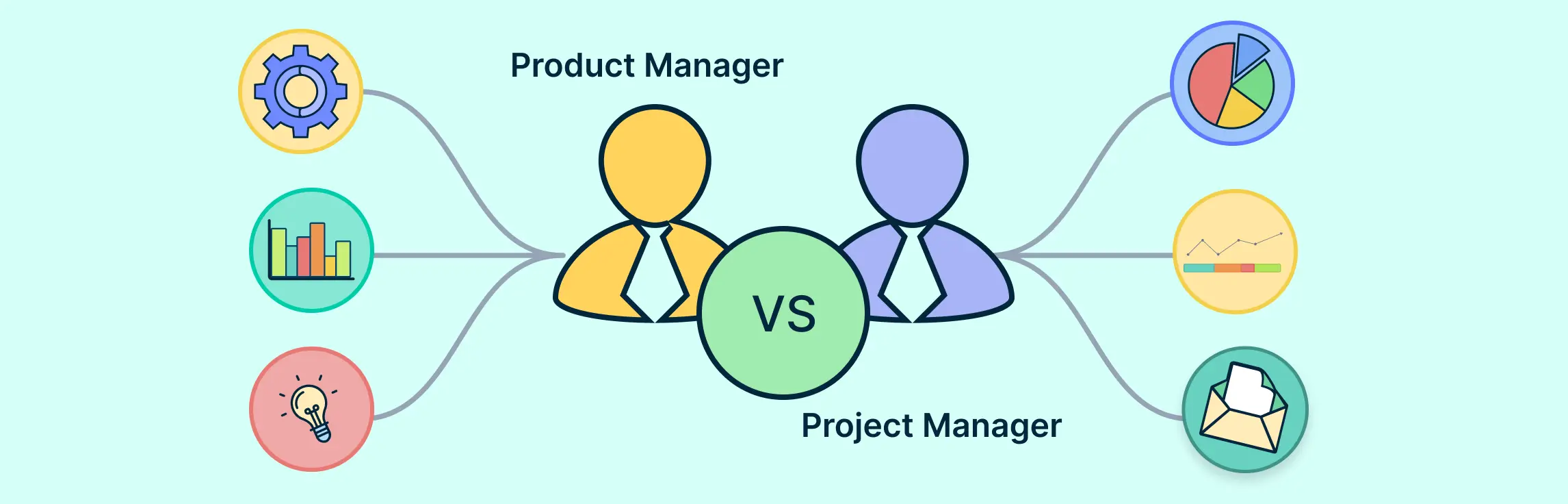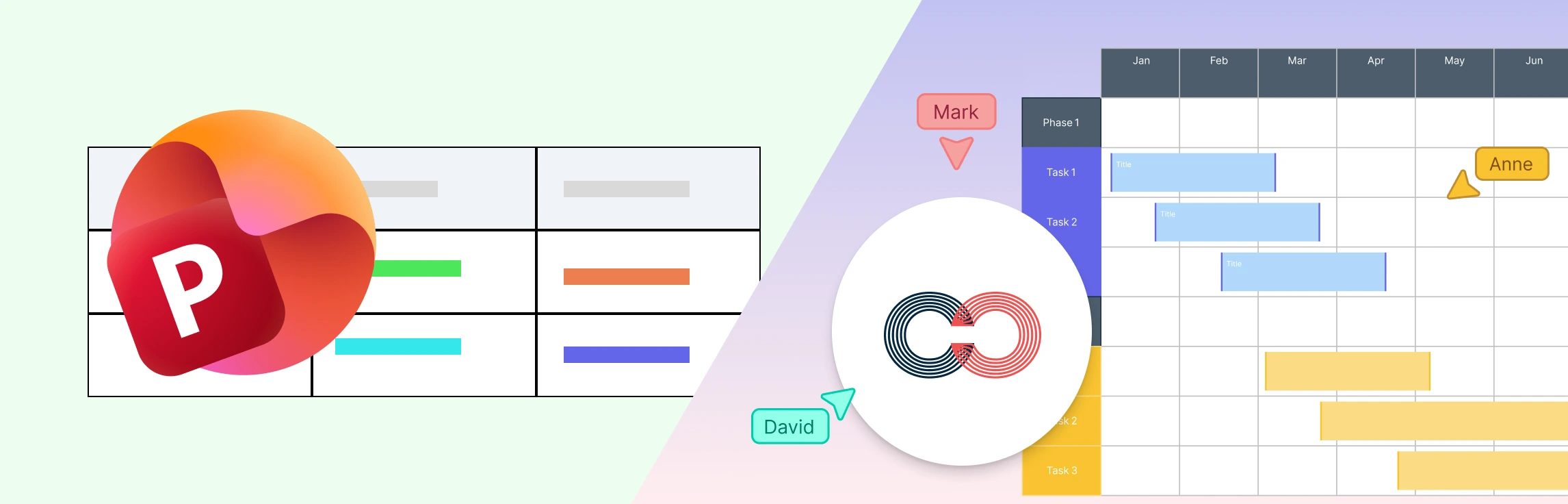
In today’s competitive business landscape, product management is key to driving innovation and market success. A product manager is central to this process, overseeing a product lifecycle from ideation to launch and beyond. By understanding the different types of product managers, companies can harness specialized skills to meet customer needs and achieve strategic goals.
What Is a Product Manager?
A product manager is at the heart of product management, serving as the critical link between business objectives, technological capabilities, and user needs. When discussing the types of product manager, it’s important to recognize that each role—from strategic to technical—plays a unique part in shaping a product’s lifecycle.
In essence, product management involves a range of types of product manager roles. Whether it’s a technical product manager, a growth product manager, or another specialized role, each one contributes distinct expertise that drives innovation. By understanding the various types of product manager, organizations can better align product features with market demands and business strategies.
Key skills that every product manager—and every type of product manager—should possess include:
- Strategic Thinking: Crafting a clear vision and roadmap, essential for every type of product manager role.
- Communication: Collaborating effectively with cross-functional teams, a vital trait for all types of product managers.
- Technical Acumen: Understanding technology trends, crucial for technical types of product manager roles.
- User-Centric Design: Prioritizing customer needs and feedback, a common requirement across all types of product manager.
- Analytical Skills: Leveraging data to make informed decisions, a fundamental aspect for every type of product manager.
Recognizing the diversity among the types of product manager not only highlights the versatility required in product management but also helps companies deploy the right expertise at the right time to achieve market success.
The Main Types of Product Managers
What are the different types of product managers? Understanding the various types of product manager is essential for effective product management. Each type has distinct responsibilities, skills, and examples that illustrate their role within an organization.
Product management hierarchy refers to the structured career progression within product management, from entry-level roles like Associate Product Manager to leadership positions such as Director of Product and Chief Product Officer. While the types of product managers focus on functional specializations (e.g., Growth, Technical, or Data Product Managers), the hierarchy defines seniority and decision-making authority within an organization.
Below is an overview table summarizing each product manager type, followed by detailed sections for each role.
Types of Product Managers: Overview Table
| Type of Product Manager | Key Responsibilities | Key Skills | Example |
| 1.Generalist Product Manager | Oversee the entire product lifecycle, handling diverse tasks and cross-functional coordination. | Versatility, adaptability, broad business acumen | Multi-functional product lines |
| 2.Technical Product Manager (TPM) | Manage tech-heavy products; collaborate with development teams. | Technical expertise, collaboration, problem-solving | AI, cloud, or API-based products |
| 3.Growth Product Manager (GPM) | Drive user acquisition, retention, and monetization. | Product analysis, marketing, A/B testing | SaaS companies optimizing freemium models |
| 4.Platform Product Manager | Oversee internal platforms, APIs, and infrastructure. | Systems thinking, integration, technical skills | Cloud platforms or developer tools |
| 5.Data Product Manager | Lead analytics, machine learning, and AI-driven decision making. | Data analytics, machine learning, strategic thinking | Fintech or healthcare data initiatives |
| 6.Consumer Product Manager | Develop customer-facing products and enhance user experience. | UX/UI design, market research, communication | E-commerce, social media, or mobile apps |
| 7.Enterprise Product Manager | Manage B2B products with long sales cycles. | Strategic planning, relationship management, negotiation | ERP software, cybersecurity tools, or HR platforms |
| 8.Fintech Product Manager | Specialize in financial products, ensuring compliance and security. | Regulatory knowledge, risk management, technical acumen | Payment systems, banking solutions, or blockchain projects |
| 9.AI/ML Product Manager | Focus on integrating AI and machine learning into product development. | AI/ML concepts, data analytics, innovative thinking | AI-powered solutions |
| 10.Mobile Product Manager | Focus on mobile app development and optimization. | Mobile UX, app analytics, agile development | iOS/Android applications |
| 11.Hardware Product Manager | Manage physical product development and manufacturing. | Hardware design, supply chain management, quality control | Consumer electronics, IoT devices |
| 12.Product Marketing Manager | Align product positioning with market needs and drive adoption. | Marketing strategy, communication, competitive analysis | Product launches and go-to-market strategies |
| 13.Innovation/Product Strategy Manager | Define long-term product vision and strategy, fostering innovation. | Strategic foresight, market research, ideation | Disruptive or emerging technology products |
| 14.Product Operations Manager | Optimize product processes, workflows, and cross-functional coordination. | Process improvement, data analysis, project management | Streamlined product development cycles |
| 15.Ecosystem/Partner Product Manager | Manage relationships with partners and integrate external products into the product ecosystem. | Partnership management, negotiation, ecosystem strategy | Platform ecosystems, third-party integrations |
Detailed Overview of Each Type of Product Managers
Below is an expanded look at the different types of product manager roles. Each section provides a brief introduction, outlines key responsibilities, and highlights important facts that distinguish each role within product management.
1. Generalist Product Manager
A generalist product manager is a versatile professional who adapts to every phase of the product lifecycle—from conceptualization to launch and beyond. Known for wearing multiple hats, they ensure products continuously evolve to meet market demands and organizational goals.
Key Attributes:
- Strategic Foresight: Anticipates market trends and shifts, keeping products innovative and competitive.
- Market Analysis: Keeps a pulse on industry benchmarks and consumer behaviors to align product strategies with evolving audience needs.
- Cross-Functional Management: Efficiently leads diverse teams by integrating technology, design, and business strategies, ensuring smooth coordination across all departments.
By understanding the full spectrum of the product lifecycle, generalist product managers navigate complexities and drive cohesive product outcomes.
2. Technical Product Manager (TPM)
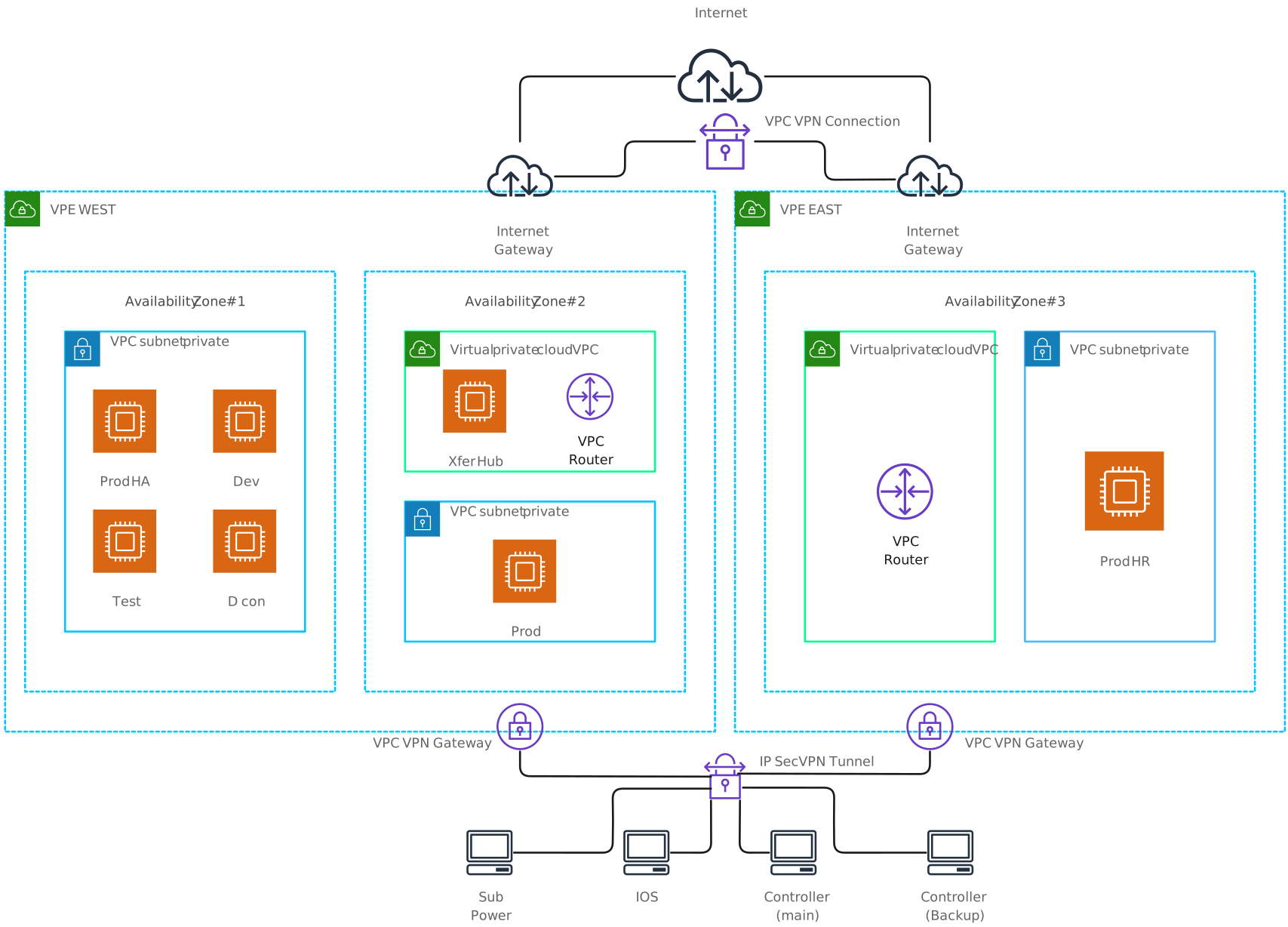
The technical product manager specializes in engineering and tech-heavy products. This role is vital in bridging the gap between technical teams and business strategy. In an agile team, they ensure that iterative development and rapid feedback loops are effectively integrated, enabling swift adaptations to changing market demands.
Key Responsibilities:
- Collaborate closely with engineering teams to ensure technical feasibility.
- Translate complex technical requirements into clear product features.
- Oversee the development and integration of APIs, cloud services, or other tech components.
Important Facts:
- TPMs must have strong technical acumen and an understanding of software architecture.
- They play a critical role in products where technology drives competitive advantage.
- Often involved in cutting-edge fields like AI, cloud computing, and API-driven services.
Template Recommendation:

3. Growth Product Manager (GPM)
A growth product manager focuses on scaling products through user acquisition, retention, and monetization strategies. This role is central to driving revenue growth and market expansion.
Key Responsibilities:
- Develop strategies to boost user engagement and conversion.
- Work with marketing and data teams to analyze user behavior and optimize growth channels.
- Conduct A/B testing to refine product features that enhance customer retention.
Important Facts:
- GPMs often operate in dynamic environments, such as SaaS companies with freemium models.
- They rely heavily on data-driven decision-making to identify growth opportunities.
- Their work directly influences key performance metrics like customer lifetime value and churn rates.
Template Recommendation:
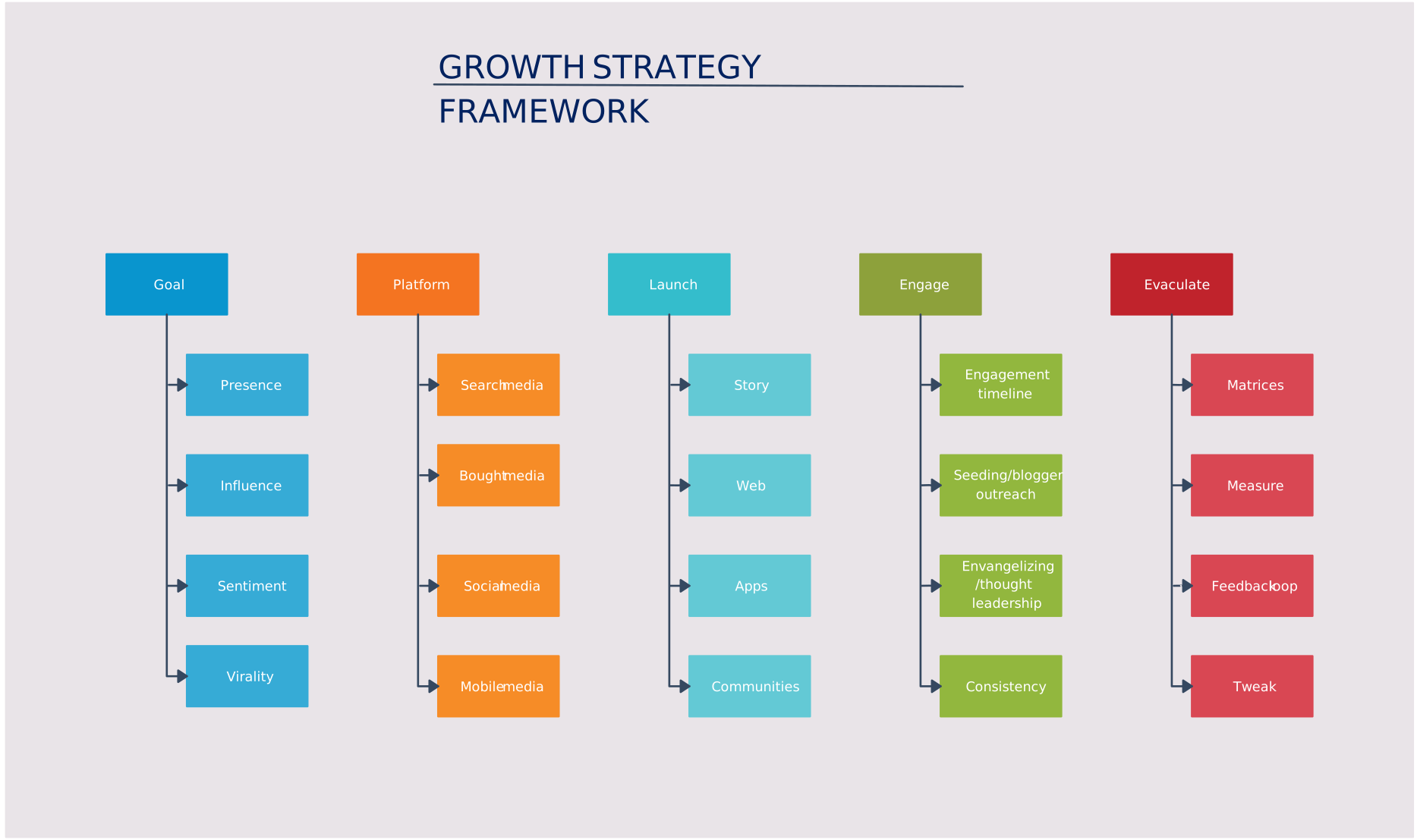
4. Platform Product Manager
The platform product manager oversees the development and management of internal platforms, APIs, and infrastructure, ensuring seamless integration across systems.
Key Responsibilities:
- Manage the roadmap for internal tools and platforms.
- Ensure robust integration between different systems and external partners.
- Focus on scalability and security of the platform infrastructure.
Important Facts:
- This role requires a deep understanding of system architecture and integration challenges.
- Platform product managers are crucial for companies that depend on complex backend systems.
- They help ensure that internal platforms support the overall product strategy and external partnerships.
Template Recommendation:
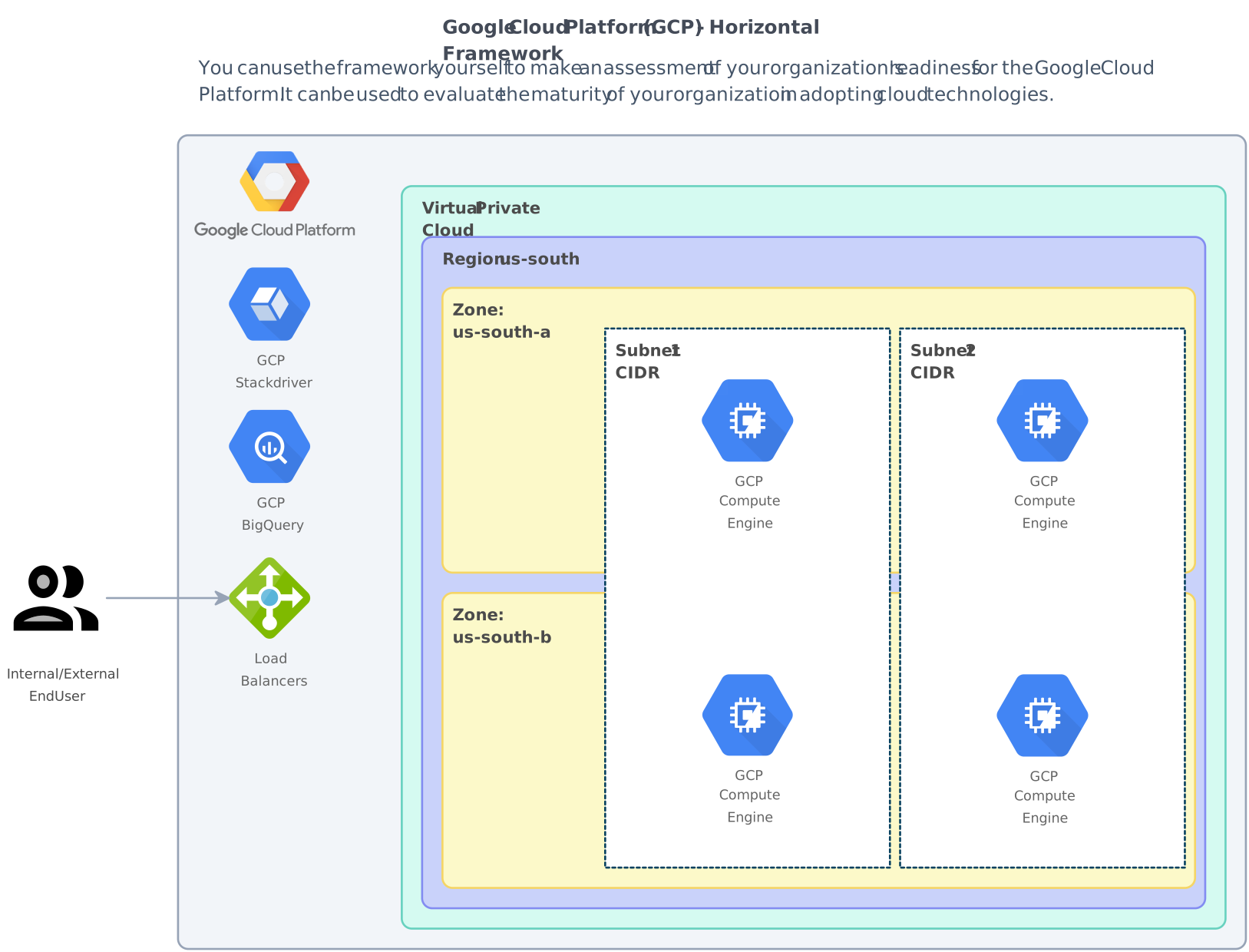
5. Data Product Manager
Data product managers leverage analytics, machine learning, and AI to drive data-centric decision-making within product management. Their role is increasingly critical in data-driven industries.
Key Responsibilities:
- Lead initiatives to incorporate analytics and AI into product features.
- Collaborate with data scientists to interpret and act on data insights.
- Use data to inform product decisions and measure success.
Important Facts:
- They are key in industries like fintech and healthcare, where data informs strategy.
- Data product managers need strong analytical and statistical skills.
- Their work enables a proactive approach to product improvements based on real-time data.
Template Recommendation:
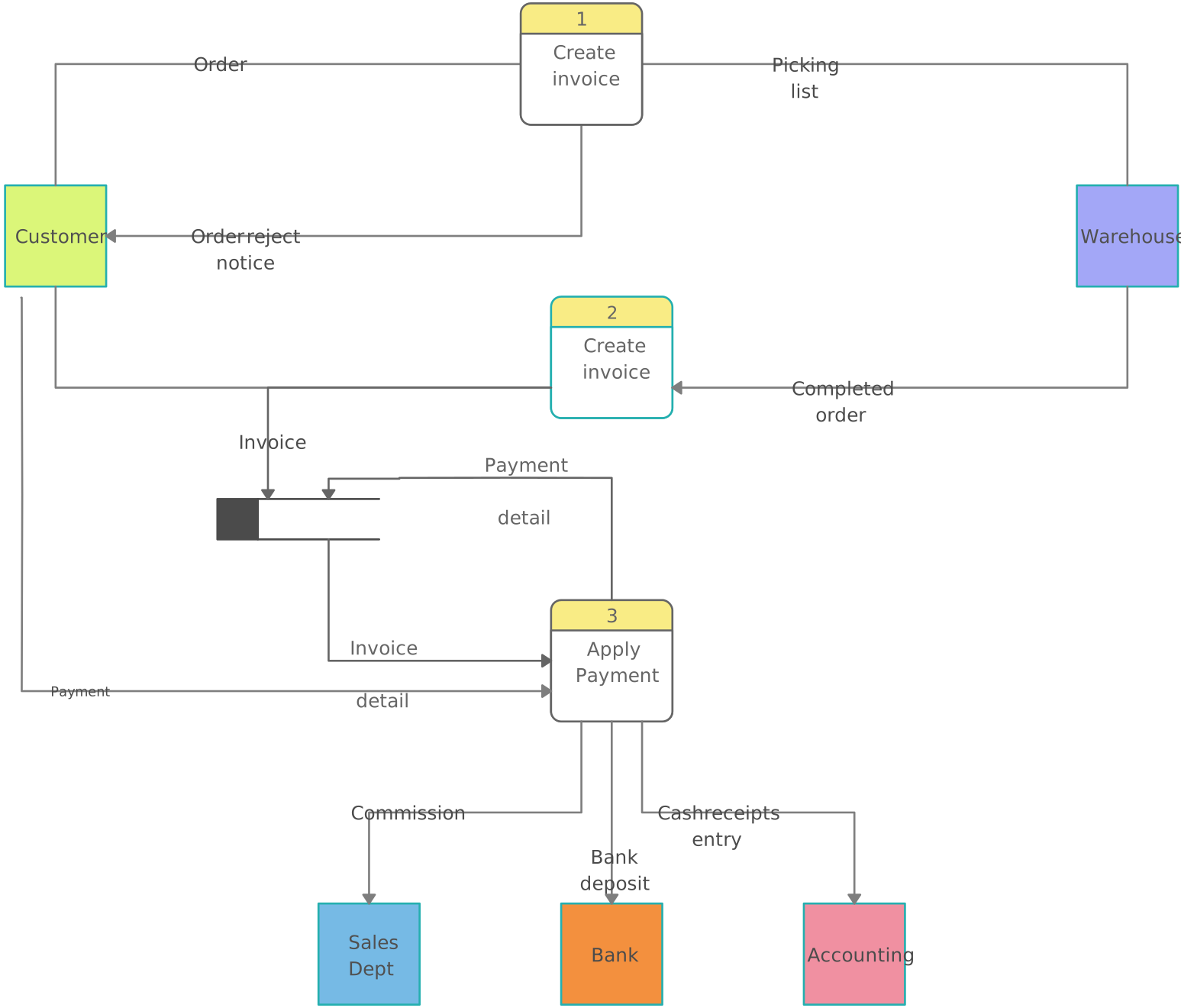
6. Consumer Product Manager
A consumer product manager focuses on designing and refining products that are directly used by end consumers. This role is centered on enhancing the user experience.
Key Responsibilities:
- Develop product features based on user research and market trends.
- Collaborate with UX/UI designers to create intuitive and engaging interfaces.
- Monitor customer feedback and iterate on product design accordingly.
Important Facts:
- They are pivotal in industries like e-commerce, social media, and mobile apps.
- Success in this role depends on a deep understanding of consumer behavior.
- Consumer product managers often work closely with product marketing teams to align the product with brand strategy.
Template Recommendation:
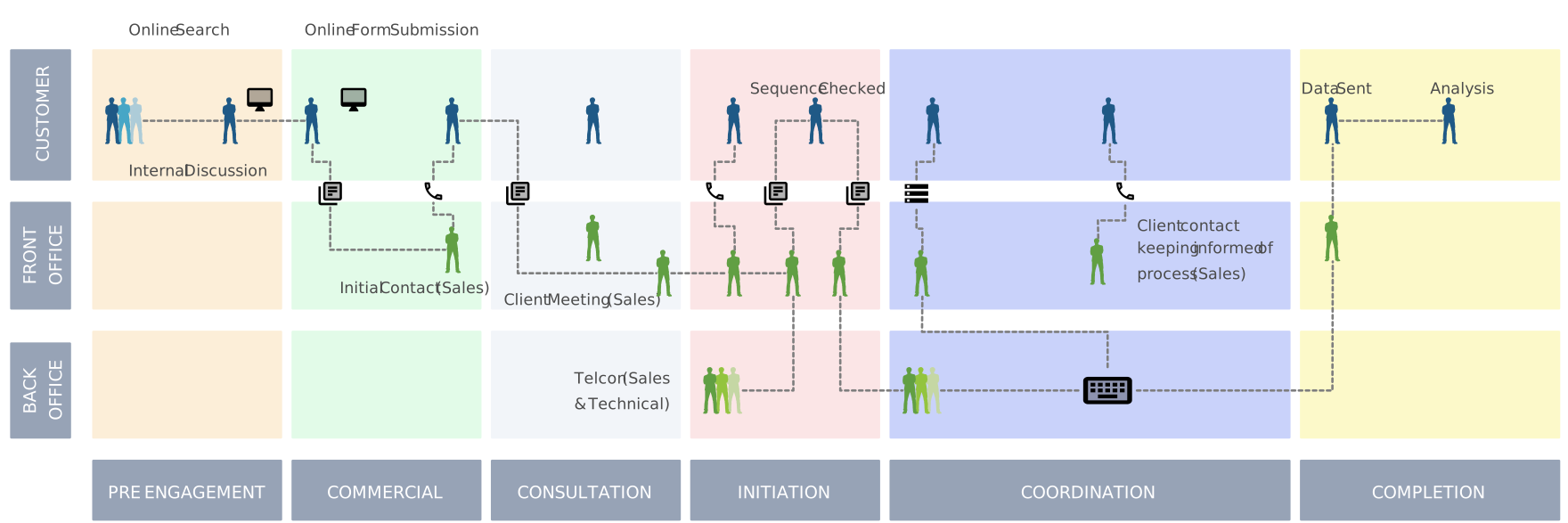
7. Enterprise Product Manager
Enterprise product managers handle B2B products, focusing on long sales cycles and complex customer needs. They ensure that products meet the demands of large organizations.
Key Responsibilities:
- Develop strategies tailored to enterprise clients.
- Manage relationships with key stakeholders in client organizations.
- Coordinate with sales, customer success, technical and product teams to deliver bespoke solutions.
Important Facts:
- Their role is crucial in markets like ERP software, cybersecurity, and HR platforms.
- Enterprise product managers must be adept at managing long-term projects.
- They often balance technical product features with strategic business requirements.
Template Recommendation:
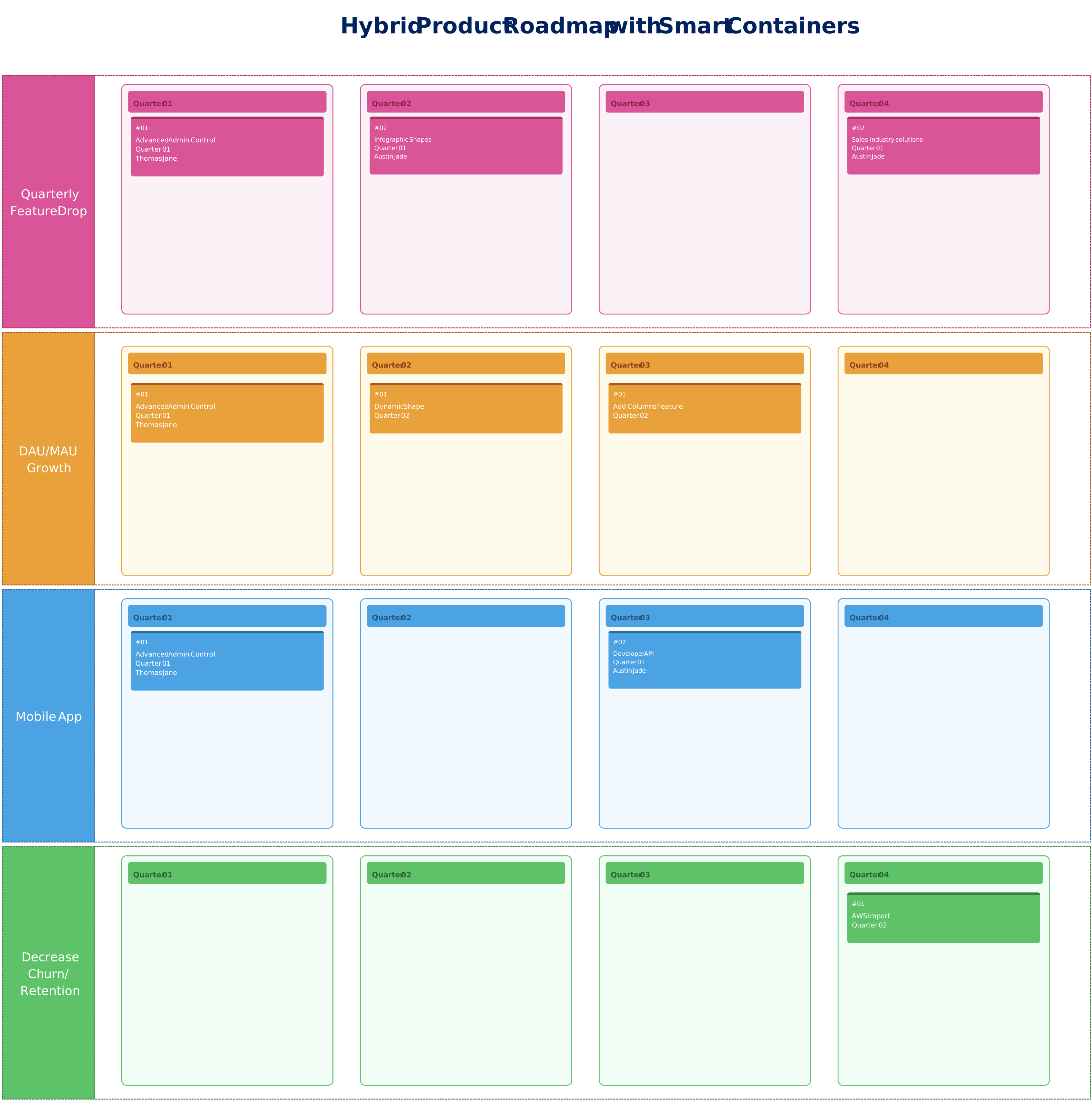
8. Fintech Product Manager
The fintech product manager specializes in financial products, such as payments, banking, and blockchain solutions. Their expertise is critical in navigating regulatory landscapes and ensuring secure, compliant products.
Key Responsibilities:
- Oversee product development in compliance with financial regulations.
- Collaborate with risk management and security teams to safeguard product integrity.
- Innovate financial products that meet modern digital demands.
Important Facts:
- They require a blend of financial industry knowledge and technical skills.
- Fintech product managers are instrumental in driving innovation in financial services.
- Their work often involves close collaboration with regulatory bodies and compliance teams.
Template Recommendation:
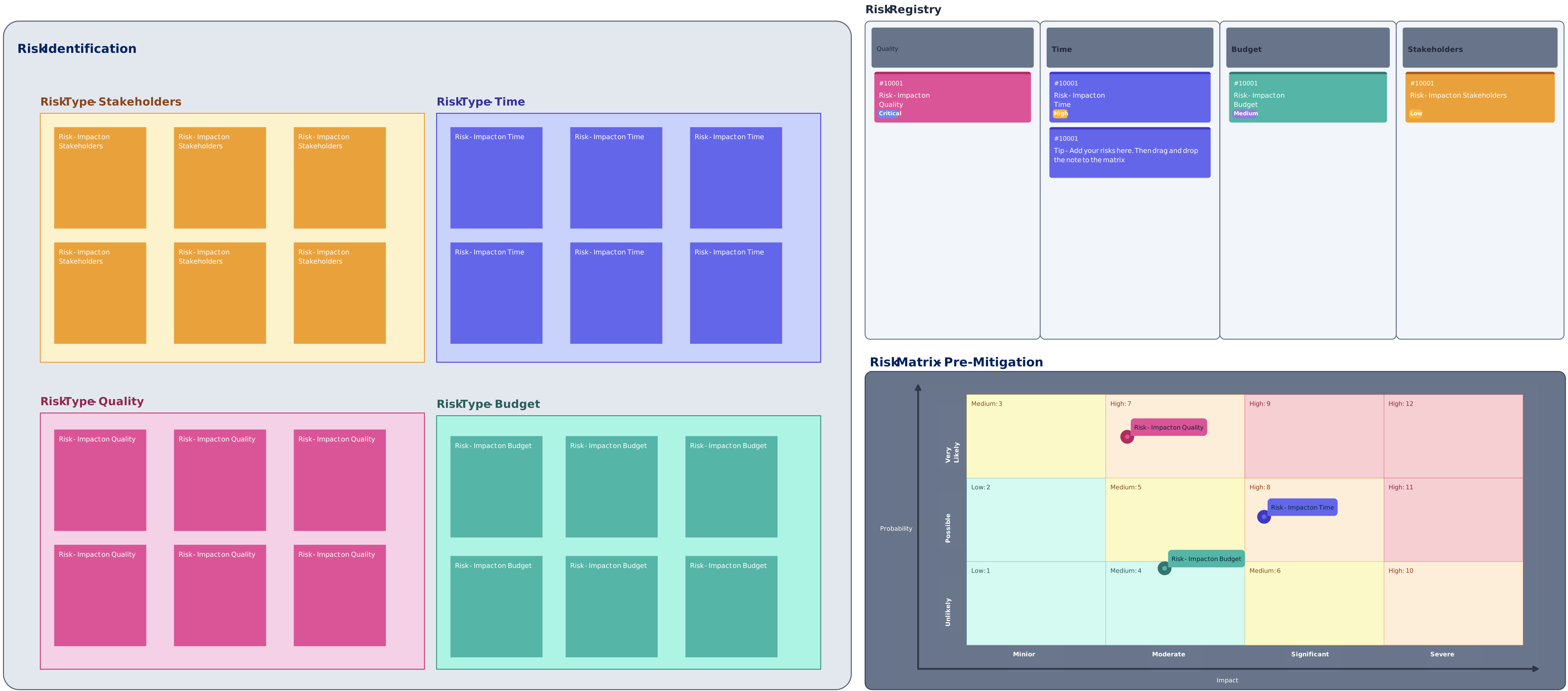
9. AI/ML Product Manager
The AI/ML product manager focuses on products that integrate Artificial Intelligence and machine learning. With the advent of big data and enhanced computational power, AI evolved to include predictive analytics, natural language processing (NLP), and automated AI decision-making. This emerging role is at the forefront of technological innovation.
Key Responsibilities:
- Define the vision and strategy for AI-driven products.
- Work with AI engineers and data teams to implement machine learning solutions.
- Monitor advancements in AI technology to keep the product competitive.
Important Facts:
- This role requires a solid foundation in AI/ML concepts and emerging technologies.
- AI/ML product managers play a critical role in industries looking to leverage automation and predictive analytics.
- They are essential for driving innovation in products that depend on data-driven insights.
Template Recommendation:
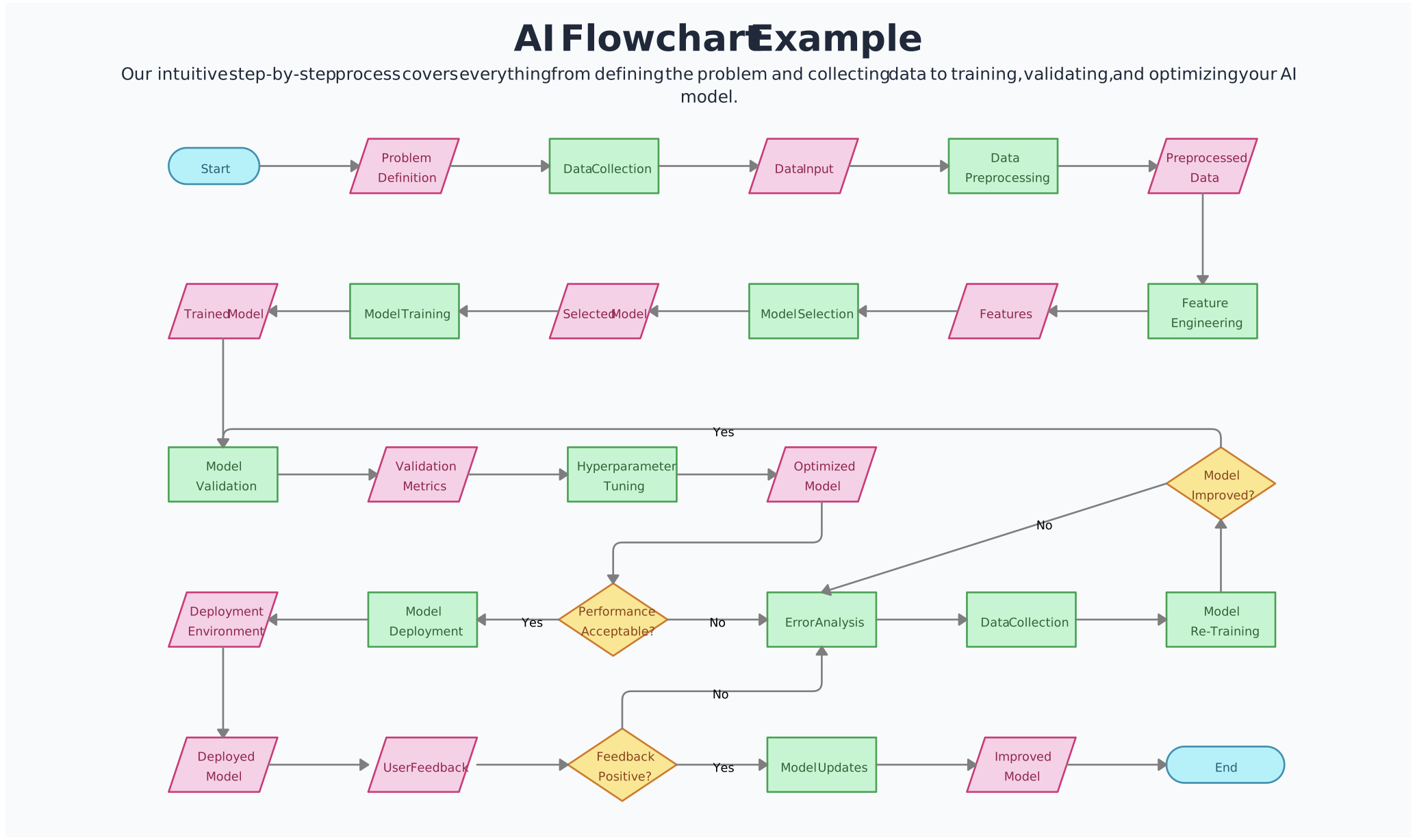
10. Mobile Product Manager
A mobile product manager focuses on the development and optimization of mobile applications. They ensure that mobile products deliver seamless user experiences and high performance across devices.
Key Responsibilities:
- Oversee the development and continuous improvement of mobile apps.
- Collaborate with designers to create engaging mobile user interfaces.
- Analyze mobile usage data to drive iterative improvements.
Important Facts:
- Requires expertise in mobile UX and agile development.
- Focuses on enhancing performance and user satisfaction on mobile platforms.
- Plays a crucial role in a competitive mobile app market.
Template Recommendation:
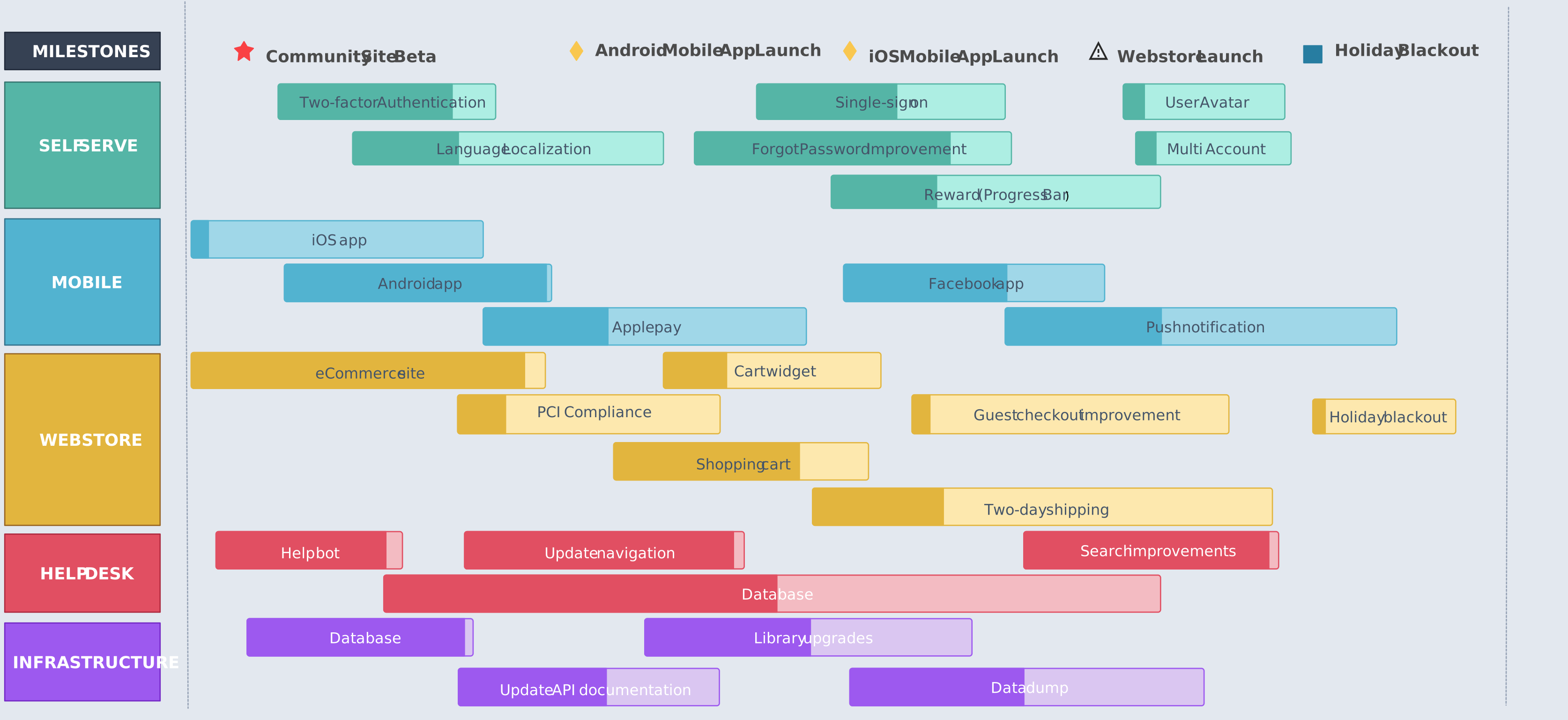
11. Hardware Product Manager
A hardware product manager oversees the development, production, and quality control of physical products. They balance design, manufacturing, and supply chain considerations to deliver high-quality hardware solutions.
Key Responsibilities:
- Manage the end-to-end hardware product development process.
- Coordinate with design, engineering, and manufacturing teams.
- Oversee quality control and supply chain management.
Important Facts:
- Requires expertise in hardware design and production.
- Balances technical specifications with manufacturing constraints.
- Critical in industries such as consumer electronics and IoT.
Template Recommendation:
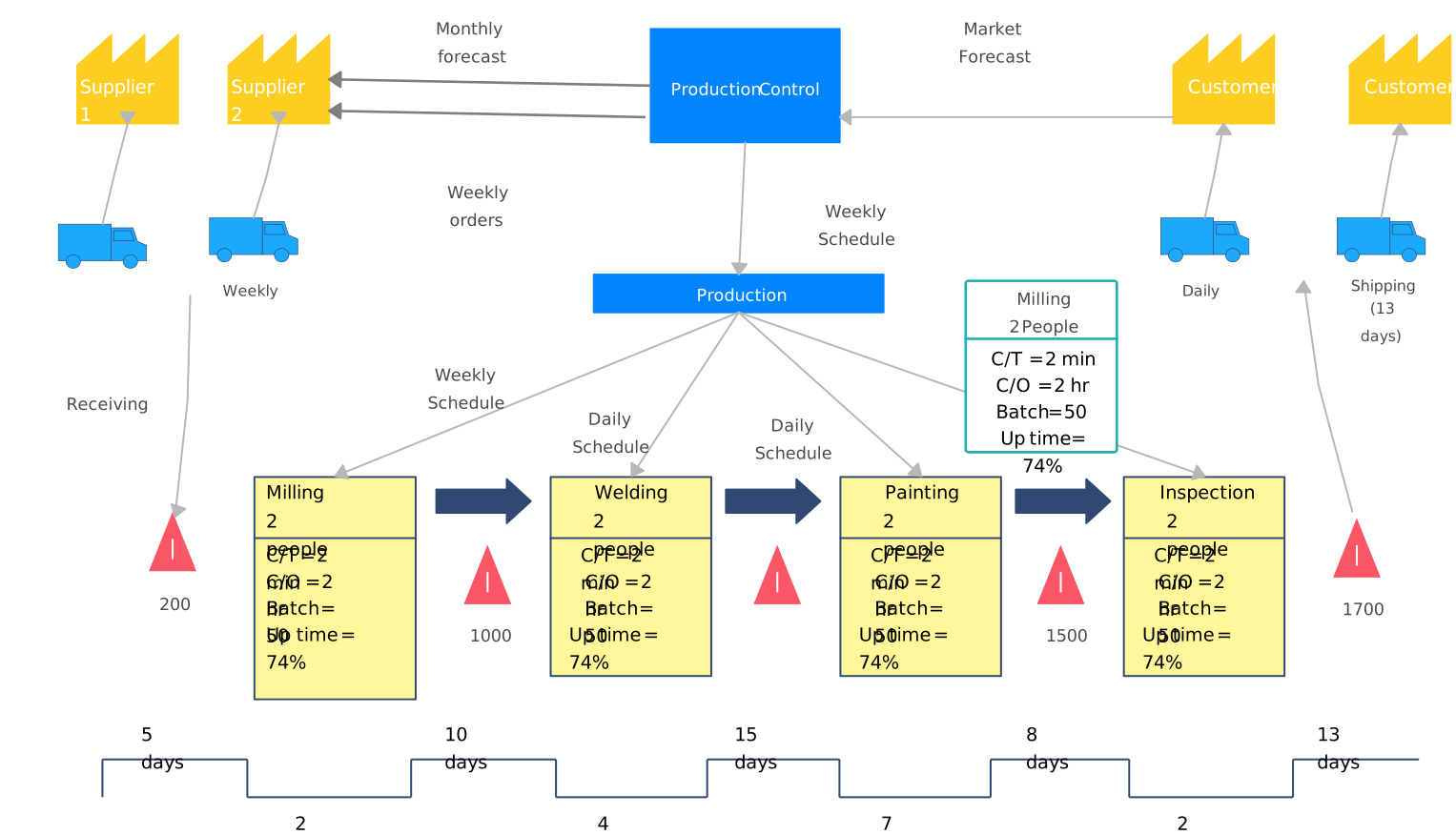
12. Product Marketing Manager
A product marketing manager aligns product positioning with market needs to drive adoption and revenue. They bridge the gap between product development and market strategy to ensure successful product launches.
Key Responsibilities:
- Develop and execute product positioning and messaging strategies.
- Collaborate with sales and marketing teams to drive product adoption.
- Analyze market trends and competitor strategies.
Important Facts:
- Requires strong marketing, communication, and analytical skills.
- Integral to successful product launches and go-to-market strategies.
- Balances technical product details with market demands.
Template Recommendation:
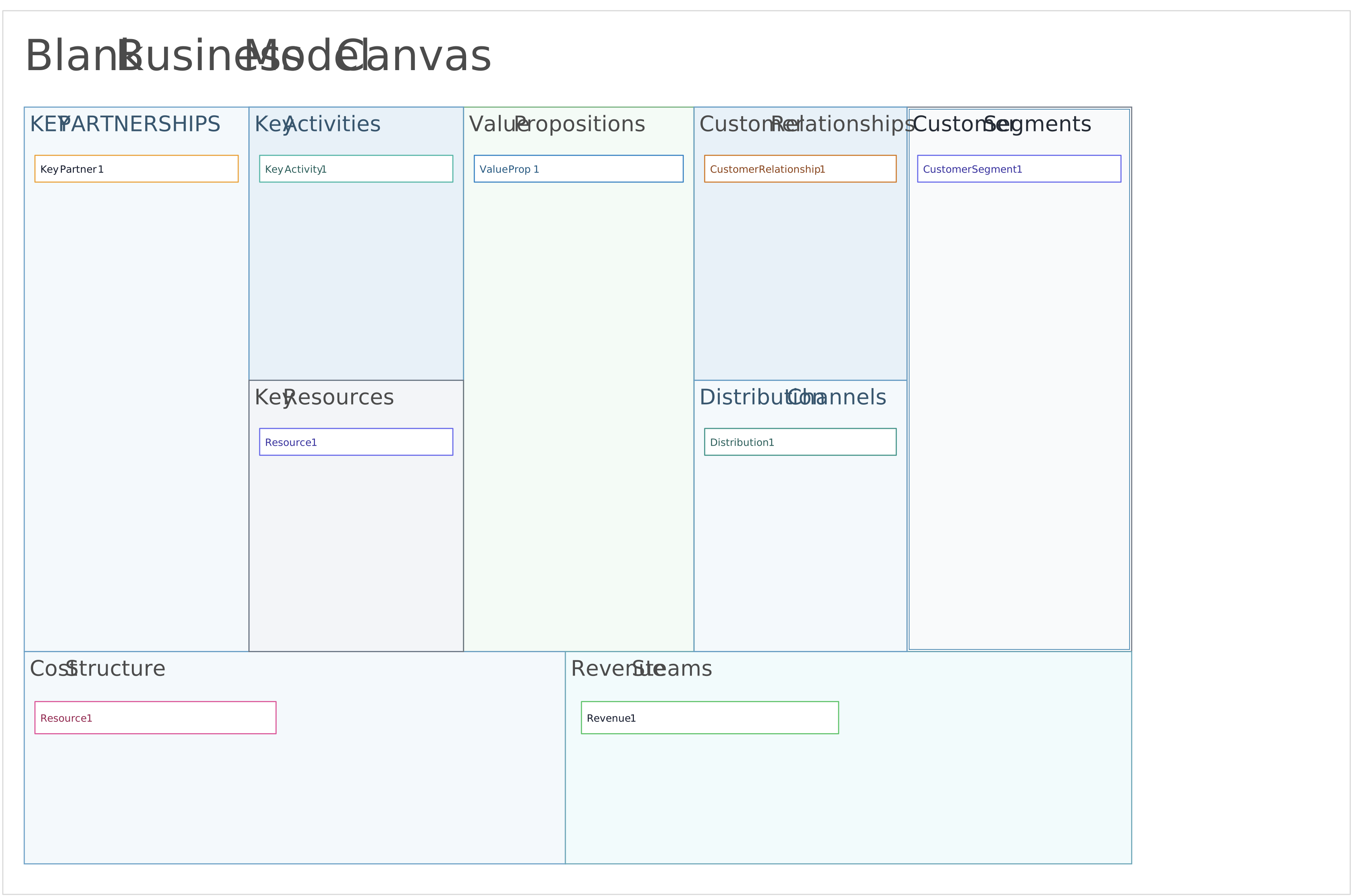
13. Innovation/Product Strategy Manager
An innovation/product strategy manager defines the long-term vision and strategic direction for products. They foster a culture of innovation and guide product development to meet future market trends.
Key Responsibilities:
- Define and articulate the long-term product vision and strategy.
- Conduct market research and ideation sessions to fuel innovation.
- Align product development initiatives with emerging trends.
Important Facts:
- Requires strategic foresight and creative problem-solving skills.
- Drives disruptive innovation in product development.
- Balances current market needs with future opportunities.
Template Recommendation:
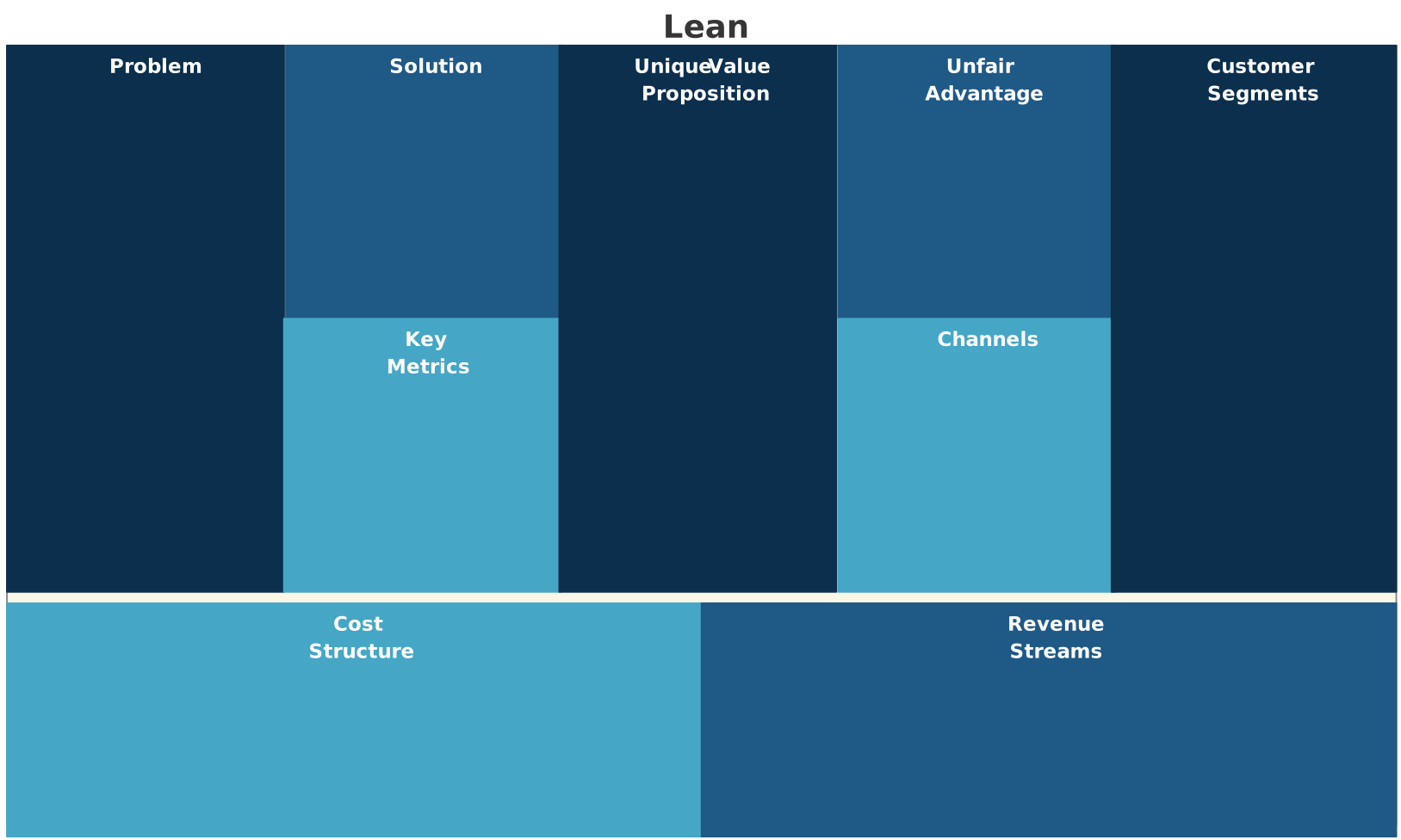
14. Product Operations Manager
The product operations manager optimizes processes and workflows to ensure efficient product development and delivery. They focus on continuous improvement and effective cross-functional coordination.
Key Responsibilities:
- Optimize product development processes and workflows.
- Monitor and analyze key performance metrics to drive improvements.
- Coordinate across teams to ensure seamless product operations.
Important Facts:
- Requires strong process improvement and project management skills.
- Plays a vital role in ensuring operational efficiency and product delivery.
- Acts as the communication hub across various teams.
Template Recommendation:
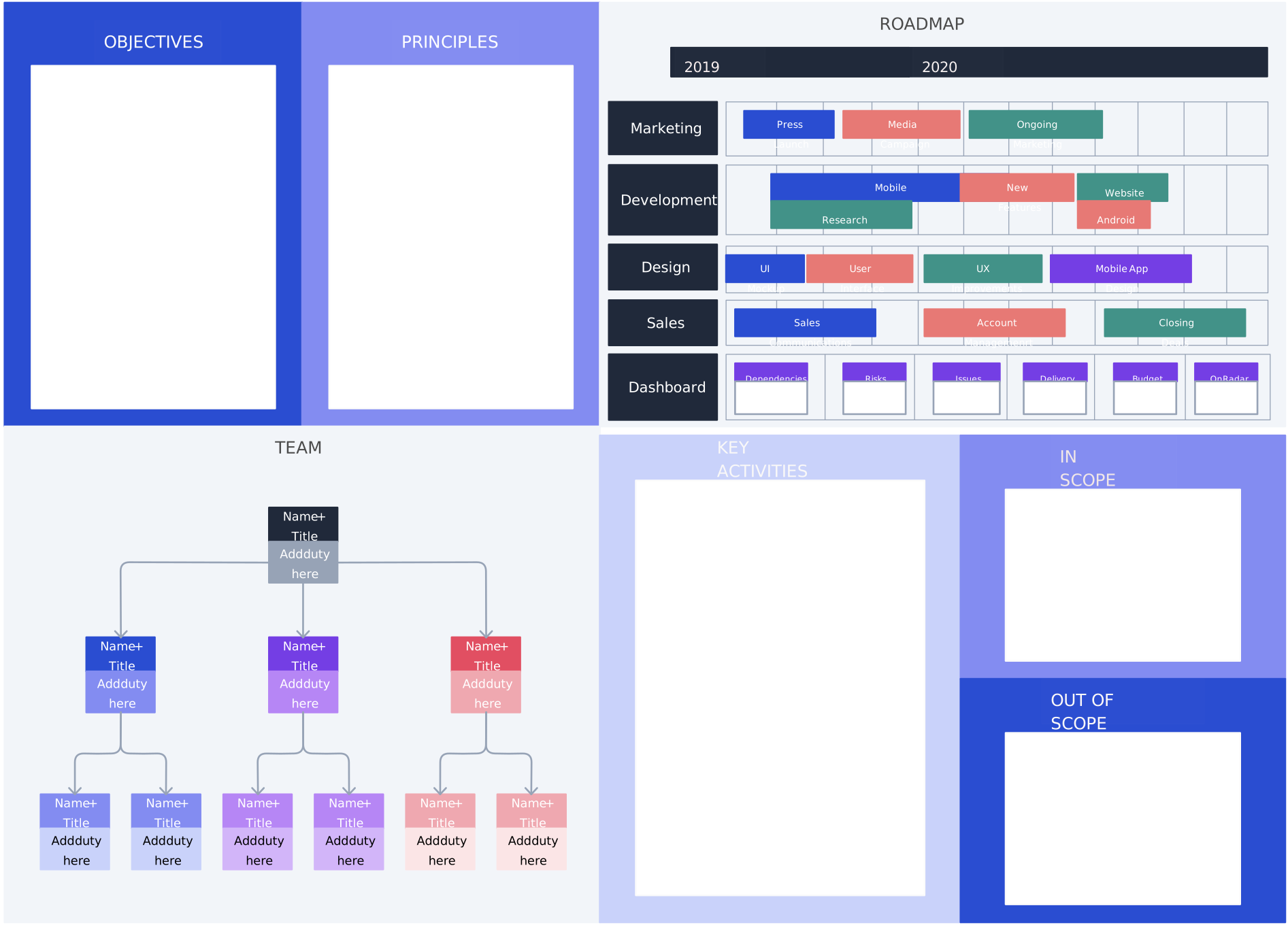
15. Ecosystem/Partner Product Manager
The ecosystem/partner product manager focuses on managing relationships with external partners and integrating third-party solutions into the product ecosystem. They create a cohesive network that enhances overall product value.
Key Responsibilities:
- Manage relationships with strategic partners and external stakeholders.
- Develop integration strategies to incorporate third-party solutions.
- Ensure alignment between internal product development and partner offerings.
Important Facts:
- Requires strong negotiation and partnership management skills.
- Critical for building and maintaining a robust product ecosystem.
- Bridges internal strategies with external collaborations.
Template Recommendation:
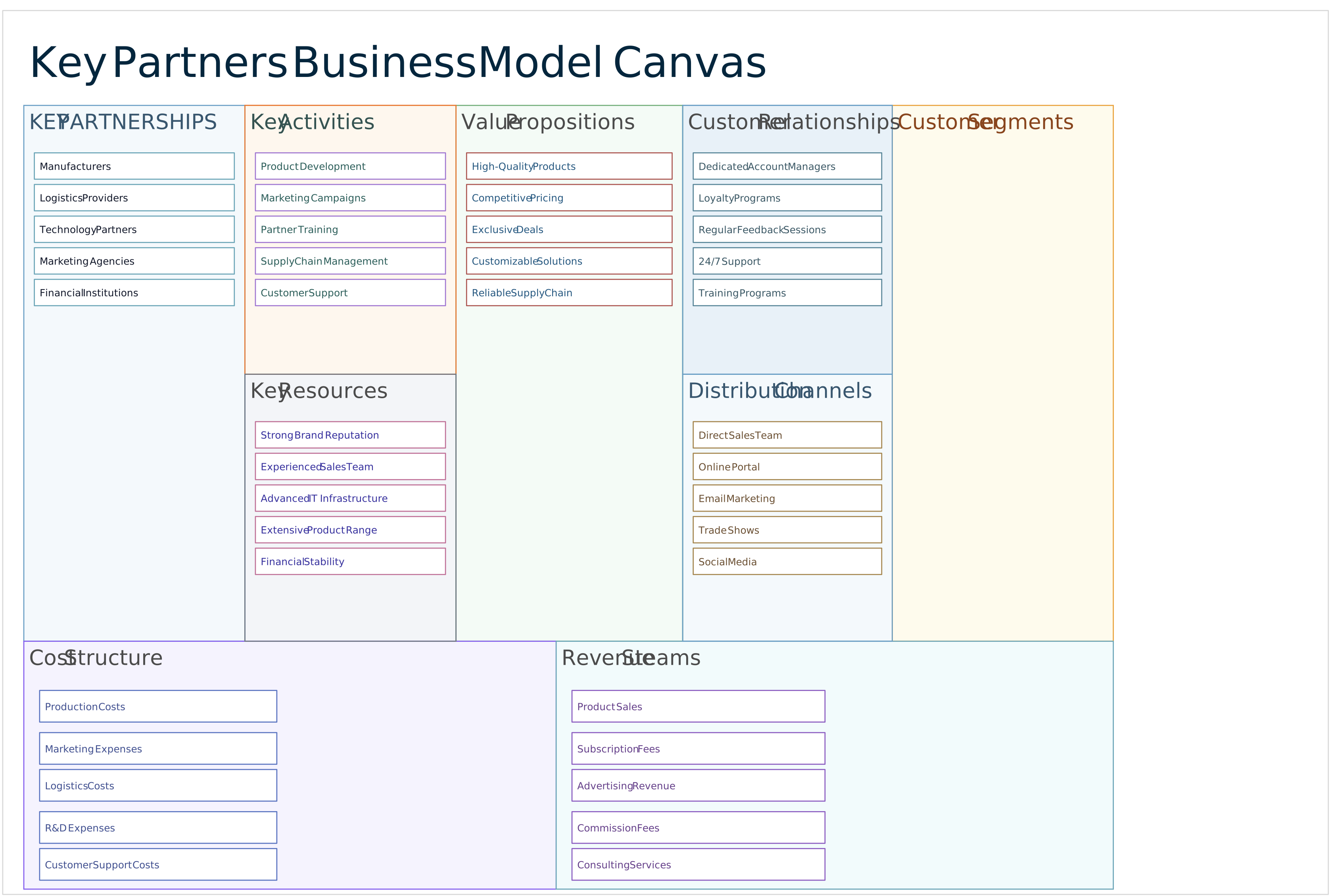
Each of these types of product managers brings a unique set of skills and perspectives to product management. By understanding these roles, companies can better align talent with the specific challenges they face, driving innovation and success across all stages of product development.
Why Are There Different Types of Product Managers?
Product management isn’t one-size-fits-all. Variations in industry, company stage, and product complexity create a demand for different types of product manager.
Industry: Different sectors have unique needs—what works for tech may not work for healthcare. Each industry requires specific types of product manager to address its unique challenges.
Company Stage:
- Startups: Need versatile product managers who can cover multiple roles to achieve market fit quickly.
- Mature Companies: Benefit from specialized types of product manager, such as technical or growth product manager, to manage complex products.
Product Complexity: More complex products require focused expertise. For example, a technical product manager is essential for intricate development challenges, while a growth product manager drives user acquisition and retention.
By deploying the right type of product manager, companies ensure that their product management efforts are perfectly aligned with market demands and business goals, driving sustained innovation and success.
Popular Creately Templates for Product Managers
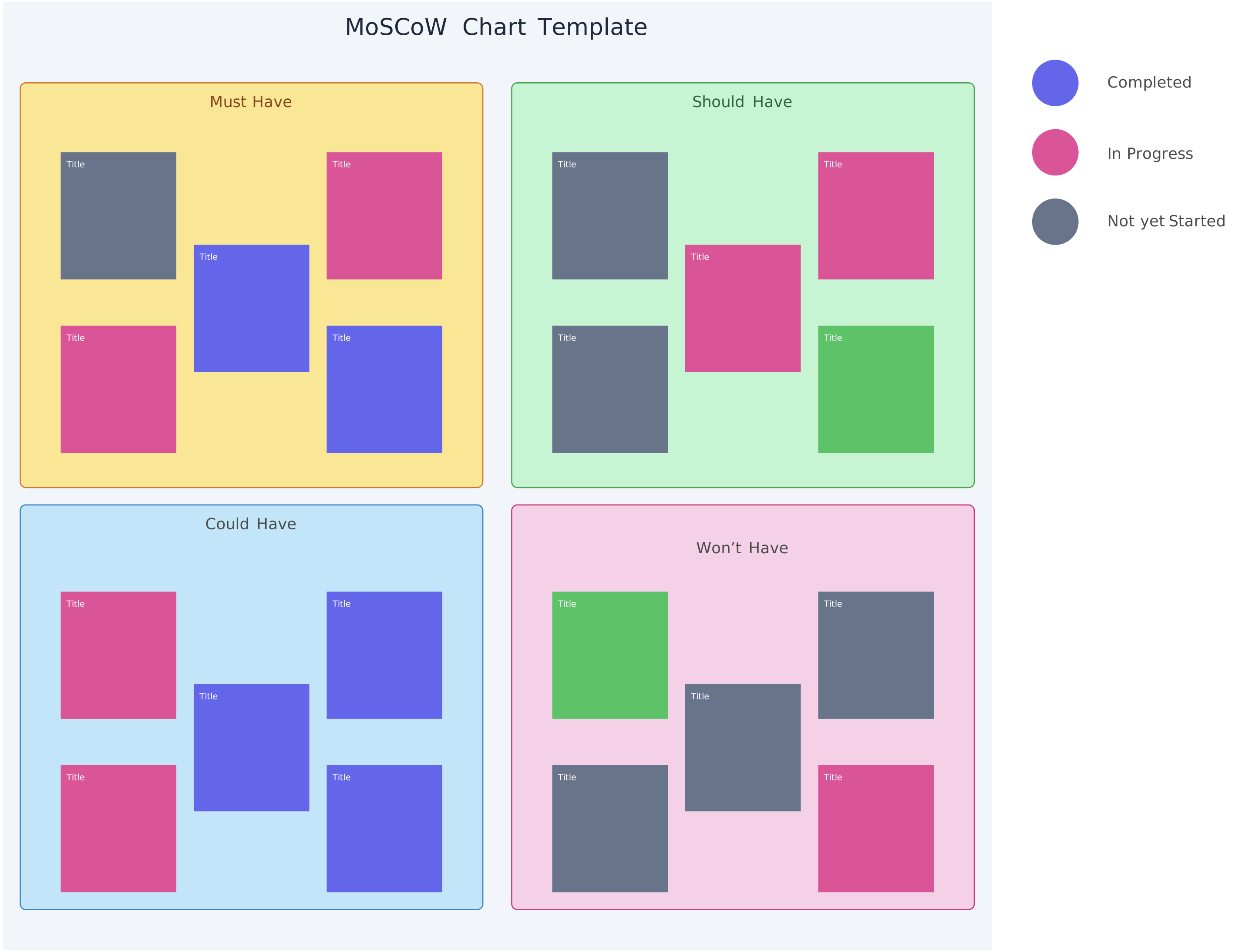
- Moscow Prioritization Grid Template: Visualize and rank features based on business impact.
- Industry Analysis Template: Analyze competitive landscape and market opportunities.

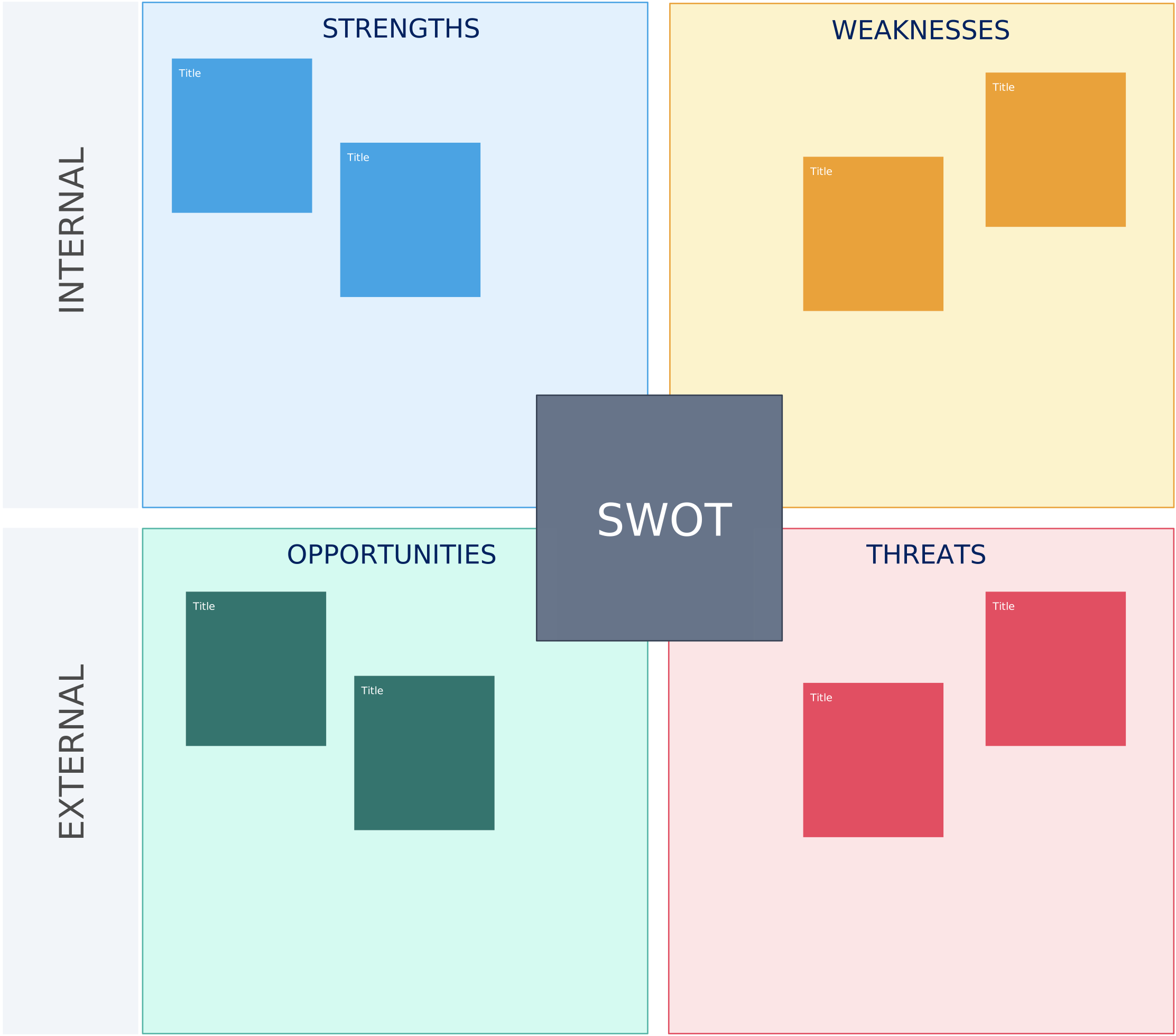
- SWOT Analysis Planning Template: Assess strengths, weaknesses, opportunities, and threats in your talent management strategy with a targeted SWOT analysis approach.
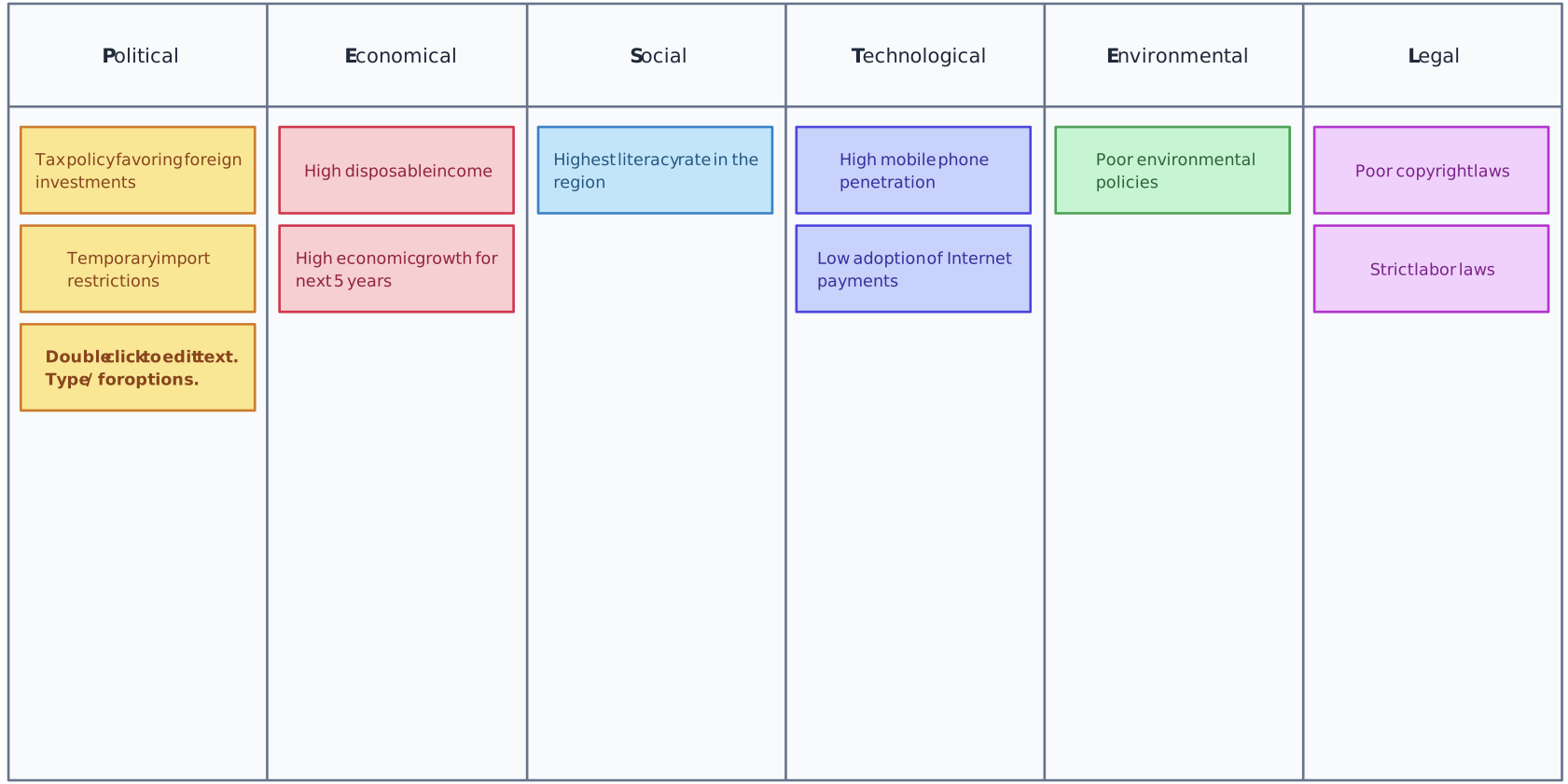
- PESTLE Analysis Template: Evaluate external macro-environmental factors—Political, Economic, Social, Technological, Legal, and Environmental—to gain comprehensive insights into market dynamics and inform strategic planning.
Creately for Every Type of Product Manager
Creately is a versatile diagramming tool that empowers every type of product manager with customizable templates and visual aids. Below is a unified overview of how Creately enhances workflows across various roles:
| Product Manager Type | Overview | Key Use Cases | Creately Benefits |
|---|---|---|---|
| 1. Generalist Product Manager | Operates across the entire product lifecycle, handling diverse tasks and cross-functional coordination. | Develop holistic product roadmaps, process flowcharts, and cross-functional project timelines. | Provides a comprehensive overview of the product lifecycle; adapts to various scenarios with flexible templates. |
| 2. Technical Product Manager (TPM) | Specializes in tech-heavy products, bridging the gap between engineering and business. | Diagram system architectures, API integrations, and technical workflows. | Enhances technical communication; simplifies complex data into actionable visuals. |
| 3. Growth Product Manager (GPM) | Focuses on driving user acquisition, retention, and monetization. | Map user acquisition funnels, customer journeys, and A/B testing frameworks. | Offers clear visualizations for growth initiatives; aligns cross-functional teams around data-driven strategies. |
| 4. Platform Product Manager | Manages internal platforms, APIs, and system integrations. | Create diagrams of internal platform structures, integration points, and system interdependencies. | Clarifies complex system interactions; facilitates seamless integrations. |
| 5. Data Product Manager | Leverages analytics, machine learning, and AI to drive product decisions. | Visualize data pipelines, analytics dashboards, and data processing workflows. | Transforms complex data processes into easily understandable visuals; supports informed decision-making. |
| 6. Consumer Product Manager | Designs and refines customer-facing products with a focus on user experience. | Develop user experience flows, customer feedback loops, and product feature maps. | Enhances user-centric design; bridges communication between design, marketing, and product teams. |
| 7. Enterprise Product Manager | Manages B2B products and complex, long-term projects. | Develop comprehensive product roadmaps, stakeholder maps, and multi-department coordination charts. | Simplifies the management of intricate projects; improves collaboration among diverse teams and enterprise clients. |
| 8. Fintech Product Manager | Specializes in financial products, focusing on compliance, security, and innovation. | Diagram compliance workflows, risk management processes, and secure transaction flows. | Clarifies regulatory and security requirements; enhances collaboration between technical, legal, and financial teams. |
| 9. AI/ML Product Manager | Focuses on integrating artificial intelligence and machine learning into product development. | Map AI/ML model architectures, data pipelines, and experiment tracking charts. | Facilitates detailed planning of AI initiatives; supports seamless collaboration between AI engineers, data scientists, and product teams. |
| 10. Mobile Product Manager | Focuses on mobile app development and optimization. | Oversee mobile app user experience, track performance metrics, and manage app updates. | Provides clear visual templates for mobile roadmaps and UX flows; enhances collaboration between design and development teams. |
| 11. Hardware Product Manager | Manages physical product development and manufacturing. | Diagram product development processes, supply chain workflows, and quality control systems. | Simplifies complex production and manufacturing workflows; improves cross-functional coordination. |
| 12. Product Marketing Manager | Aligns product positioning with market needs to drive adoption and revenue. | Develop product launch plans, marketing strategies, and competitive analysis charts. | Enhances communication of product value; bridges the gap between product development and market strategy. |
| 13. Innovation/Product Strategy Manager | Defines long-term product vision and strategy, fostering innovation. | Create strategic planning documents, innovation roadmaps, and market trend analyses. | Helps visualize long-term strategies; supports ideation and iterative planning. |
| 14. Product Operations Manager | Optimizes product processes, workflows, and cross-functional coordination. | Map out operational workflows, set performance metrics, and monitor process improvements. | Streamlines operations; enhances efficiency through clear visual process mapping. |
| 15. Ecosystem/Partner Product Manager | Manages relationships with partners and integrates external products into the ecosystem. | Create partner maps, integration workflows, and collaborative roadmaps. | Improves coordination with external stakeholders; visualizes complex partnership networks. |
By leveraging Creately’s powerful visual tools, every type of product manager can streamline planning, enhance communication, and drive success across all stages of product development.
Creately’s Unique Features for Product Management
Creately offers an integrated suite of tools designed to empower every type of product manager. By combining visual collaboration, robust planning, and real-time communication features, Creately bridges the gap between strategy and execution, enabling teams to deliver successful products faster. Below is an organized overview of Creately’s unique features for product management:
Integrated Collaboration & Communication
- Integrated Data: Sync with tools like Jira, GitHub, and more to ensure data is always up-to-date.
- Unified Workspaces: Provide a shared, real-time platform for team collaboration and progress tracking.
- Dynamic Feedback & Adaptation: Enable agile adjustments through easy editing, commenting, and continuous feedback.
- AI-Enhanced Pre-Built Templates: Leverage intelligent templates that streamline planning, execution, and decision-making across product management initiatives.
Product Planning & Execution
- Objective Definition & Milestone Setting: Define clear product objectives, establish key milestones, and assign responsibilities from the start.
- Integrated Roadmapping: Develop long-term product roadmaps and timelines that provide clear strategic direction. Use Creately’s roadmap maker and advanced roadmapping tools to visually align strategic initiatives with business goals. Plan and share strategic initiatives with the Product Roadmapping Software and Roadmap Maker. These tools enable you to design clear, data-driven product roadmaps that guide your product management efforts and align with business goals.
Task & Workflow Management
Visual Task Tracking: Utilize Kanban boards and Gantt charts to visualize workflows, track progress, and manage tasks effectively. Use the Gantt Chart Maker and Kanban Software to create visually appealing project timelines and visualize workflows, prioritize tasks, and enhance collaboration in product management processes.. This tool is ideal for product management, allowing you to plan, monitor, and adjust project schedules with ease.
Resource Allocation: Optimize workloads by balancing resource allocation across team members, ensuring efficient task management.
Visual Collaboration & Strategic Planning
- Intuitive Diagrams & Workflows: Use detailed diagrams and workflows to clarify complex processes and align teams seamlessly.
- Product Strategy Mapping: Create visual representations of the product positioning strategy that align business objectives with product development efforts.
- Feature Prioritization Frameworks: Rank product features based on customer demand, feasibility, and overall impact to drive informed decision-making.
- Market & User Research Documentation: Organize and present insights from market research and user feedback to support a data-driven approach.
By leveraging these comprehensive features, Creately enhances communication, planning, and execution across all aspects of product management. This holistic approach improves collaboration, increases efficiency, and ultimately leads to faster, more successful product delivery.
How to Choose the Right Type of Product Manager Role
Selecting the ideal type of product manager role involves aligning your expertise, interests, and long-term career aspirations with the right opportunities in product management. Here are some key factors to consider:
1. Industry Preference
Different industries demand different skills and approaches:
- Tech: Emphasizes innovation and software development, making it ideal for roles that require technical problem-solving.
- Fintech: Focuses on regulatory compliance, security, and risk management—perfect for those interested in financial products.
- Healthcare: Requires an understanding of compliance, data privacy, and user safety, aligning with roles that prioritize user-centric and secure product development.
Choosing an industry that matches your passion can help you zero in on the right type of product manager.
2. Skillset
Assess your strengths to determine which type of product manager suits you best:
- Technical Product Manager: Best for those with a background in engineering or software development.
- Data Product Manager: Ideal if you excel in analytics, machine learning, or artificial intelligence.
- Growth Product Manager: Suits individuals with strong data analysis, task analysis and marketing skills, focused on driving user acquisition and retention.
- Consumer/Enterprise Product Manager: Perfect if you have a knack for market research, user experience, and strategic planning.
Identifying whether you lean toward technical, data-driven, or business-oriented skills will guide you to the right type of product manager role.
3. Career Goals in Product Management
Your long-term vision is critical in choosing the right role:
- Entry-Level Roles: Start with positions that offer broad exposure across multiple facets of product management to build a strong foundation.
- Specialization: If you aim to become an expert, focus on specialized roles like technical, growth, or data product manager.
- Advancing to Senior Roles: For those targeting leadership positions, gaining experience in various types of product manager roles can be a stepping stone to roles such as Senior Product Manager or Group Product Manager. These positions involve:
- Strategy Development: Crafting a long-term vision and roadmap for product portfolio.
- Mentorship: Guiding less experienced product managers and building cohesive teams.
- Stakeholder Engagement: Managing relationships to secure buy-in and resources for product initiatives.
As you progress, roles become more strategic, requiring a blend of technical expertise, business acumen, and leadership skills.
Best Practices for Transitioning Between Roles
- Continuous Learning: Stay current with industry trends and emerging technologies relevant to your field.
- Networking: Connect with peers and mentors across different product management roles to gain insights and advice.
- Skill Development: Identify any gaps in your skillset and pursue additional training or certifications.
- Cross-Functional Exposure: Work closely with diverse teams to gain a comprehensive understanding of product management.
- Portfolio Building: Document your successes and challenges in various roles to showcase your experience and expertise.
By considering your industry preference, skillset, and career goals, you can choose the right type of product manager role to set the stage for a successful career in product management. Each role offers unique challenges and opportunities, paving the way for continuous growth and advancement in this dynamic field.
Future Trends in Types of Product Management Roles
As product management evolves, new specializations are emerging to meet shifting market and technology demands.
Emerging Product Management Specializations
- AI/ML Product Managers: Leverage artificial intelligence and machine learning to build smarter, data-driven products.
- Sustainability Product Managers: Focus on eco-friendly products and sustainable business practices to drive long-term success.
- Web3 Product Managers: Lead efforts in decentralized technologies and blockchain to create secure, transparent platforms.
Evolving Product Management Roles with Technology
- Advanced Tech Integration: Modern product managers must understand and incorporate trends like AI and blockchain.
- Specialized Skill Sets: The rise of niche roles allows companies to address unique challenges across industries.
- Holistic Strategic Approach: Balancing broad oversight with specialized expertise is key to staying competitive.
These trends highlight how product management is continuously adapting to technology and market shifts, ensuring innovation and success in a dynamic environment.
Conclusion
In today’s dynamic market, understanding the various types of product manager is key to effective product management. Whether you are a technical, growth, or generalist product manager, each role plays a unique part in bridging business strategy with customer needs. As industries evolve and technology advances, specializing in roles like AI/ML, sustainability, or Web3 will only enhance your competitive edge. Embracing these trends not only drives innovation but also paves the way for a rewarding career in product management.
Resources:
Product School (n.d.) Types of Product Managers: The Complete Guide. Available at: https://productschool.com/blog/career-development/types-product-managers
Aha! (n.d.) What are the Types of Product Managers? Available at: https://www.aha.io/roadmapping/guide/product-management/what-are-the-types-of-product-managers