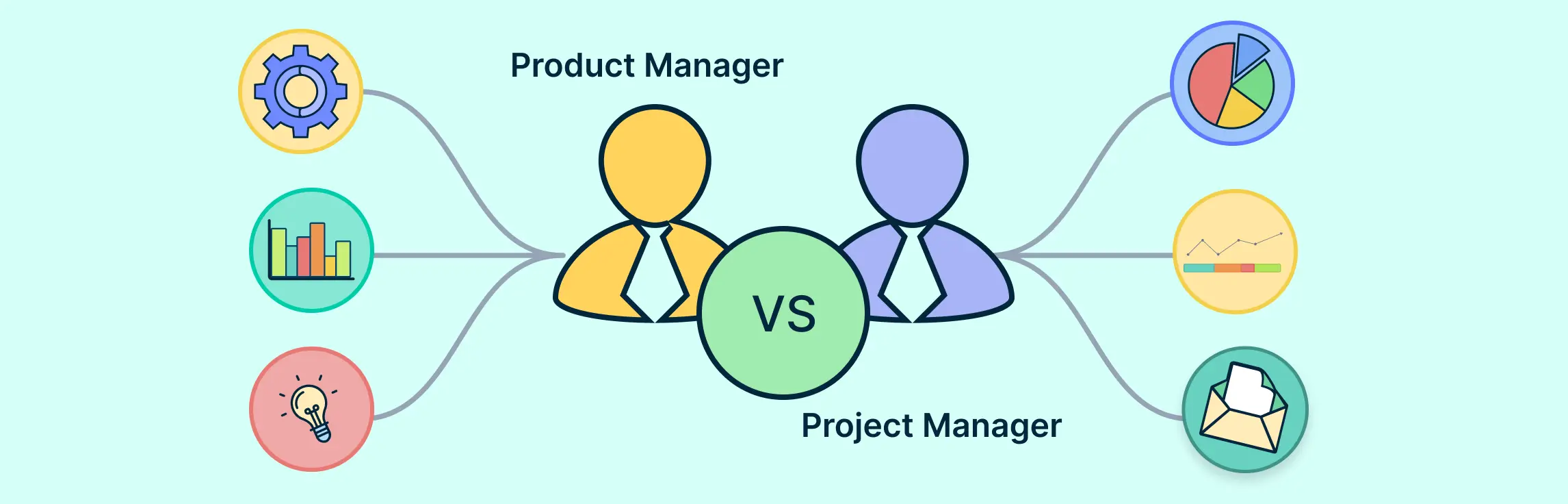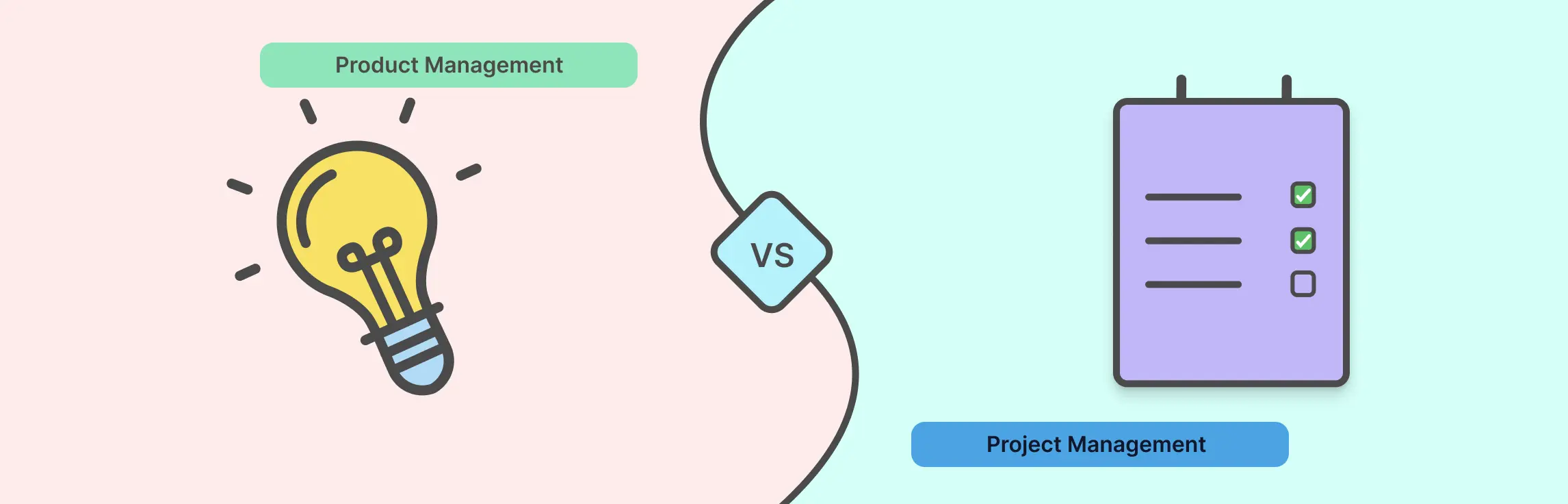
Product management defines a product’s vision and ensures it meets customer needs and business goals, while project management focuses on executing plans, managing resources, and delivering results. Together, these roles drive successful organizational strategies by aligning vision with execution.
The table below outlines the main differences between product management vs. project management, helping clarify their unique roles and responsibilities while also addressing the common comparison of product manager vs. project manager.
| Aspect | Product Management | Project Management |
| Primary Focus | Strategic product vision, roadmap, and market fit | Tactical project execution, timelines, and deliverables |
| Key Objective | Deliver a product that meets customer needs and drives business value | Complete projects on time, within budget, and to specifications |
| Scope | Broad, encompassing the entire product lifecycle | Narrow, focused on specific projects or initiatives |
| Core Activities | Market research, user feedback, feature prioritization | Task planning, resource allocation, risk management |
| Tools Used | Product roadmaps, user personas, market analysis templates | Gantt charts, Kanban boards, project charters |
| Time Horizon | Long-term focus on product evolution | Short to medium-term focus on project completion |
| Success Metrics | Customer satisfaction, revenue growth, product adoption | On-time delivery, budget adherence, stakeholder satisfaction |
| Stakeholder Interaction | Collaborates with customers, executives, and development teams | Collaborates with cross-functional teams and external vendors |
| Collaboration Tools | Product roadmaps, Creately for strategic planning | Creately for project workflows, dependency mapping, and timelines |
| Leadership Style | Visionary, influencing product strategy | Operational, driving team execution and coordination |
| End Deliverable | A successful product | A completed project that contributes to the product or business goals |
Understanding the differences between product management vs. project management helps organizations assign the right responsibilities to each role, fostering a collaborative environment. For those comparing product manager vs. project manager, this distinction clarifies how their expertise contributes to both long-term product success and efficient project execution. Together, these roles form a cohesive strategy, balancing visionary planning with tactical execution to deliver successful products and projects.
Understanding Product Management vs Project Management
What is Product Management?
Product management is the process of overseeing a product’s lifecycle, from concept to market delivery and beyond. It focuses on aligning the product’s vision with business goals and customer needs while ensuring seamless collaboration across teams. Product managers define market opportunities, understand customer pain points, and translate these into actionable product requirements.
A key distinction in the product manager vs project manager debate is that product management emphasizes the “what” and “why” of a product, focusing on its long-term strategy and success. In contrast, project management handles the “how” and “when” of executing specific tasks to deliver outcomes efficiently. While their responsibilities differ, both roles are essential for achieving business objectives, with product managers driving strategic vision and project managers ensuring timely execution.
Key Aspects of Product Management
- Vision and Strategy: Defining the product’s purpose and aligning it with business goals.
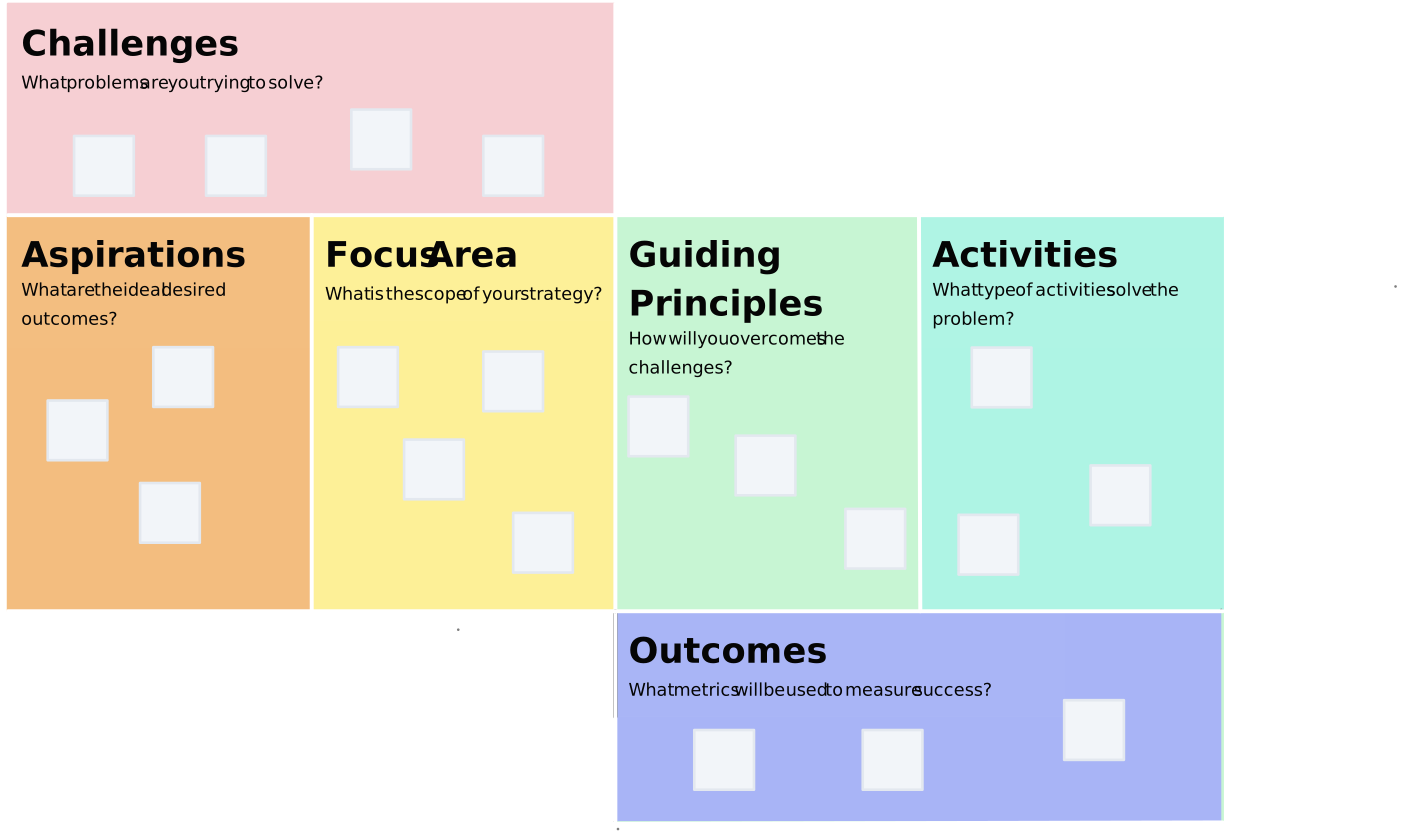

- Market Research: Analyzing consumer needs and competition to identify opportunities.
- Requirement Definition: Turning insights into product specifications and features.
- Cross-Functional Collaboration: Coordinating efforts across teams to bring the product vision to life.
By balancing strategic planning with tactical execution, product management ensures that organizations deliver innovative products that meet user needs and drive success. In the context of Product Management vs. Project Management, product managers define the goals, while project managers focus on execution—working together to deliver value efficiently.
Role of a Product Manager:
- Vision and Strategy: Product managers concentrate on the product lifecycle, shaping a vision that aligns with long-term business goals and customer needs. They focus on high-level planning, market research, and defining product requirements, which guide the development process towards sustainable success.
- Metrics of Success: Success for product managers is often measured by product performance metrics such as revenue growth, market share, customer satisfaction, and innovation outcomes.
- Challenges: They frequently face the challenge of balancing innovation with practicality while managing cross-functional team dynamics to bring a product concept to life effectively.
What is Project Management?
Project management is the discipline of planning, organizing, and executing tasks to achieve specific goals within defined constraints like time, budget, and resources. Unlike product management, which emphasizes strategy and long-term vision, project management focuses on tactical execution—turning plans into actionable steps to ensure timely and successful project delivery.
In the discussion of product manager vs project manager, project management revolves around the how and when of execution. While product managers define the what and why, project managers ensure the work is completed efficiently and effectively, making them essential to operational success.
Key Elements of Project Management
- Planning and Organization: Developing detailed timelines, assigning tasks, and coordinating efforts to prevent bottlenecks.
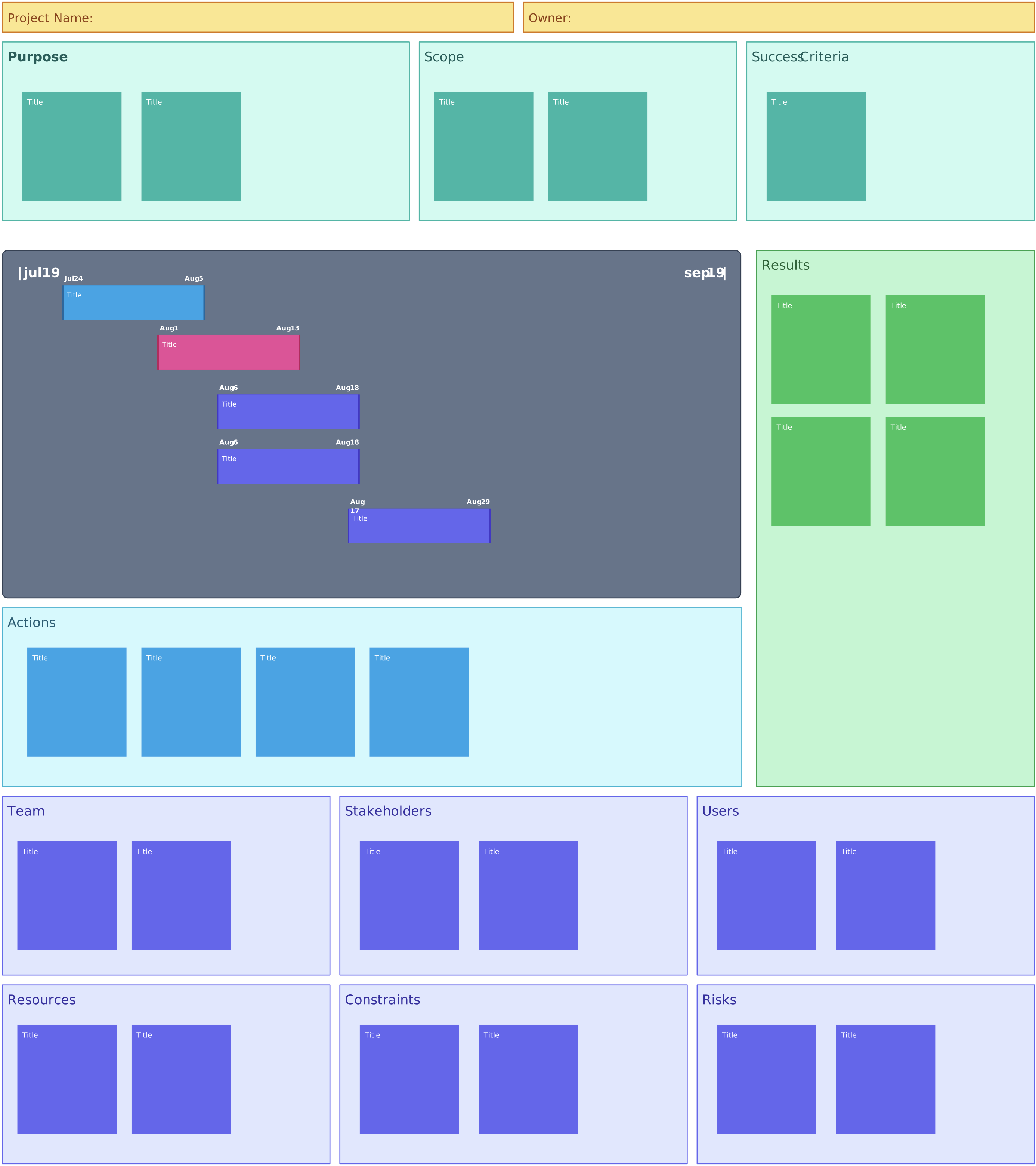
- Budget Management: Controlling project expenditures to stay within budget without compromising quality.
- Timeline Adherence: Creating schedules to track progress, meet deadlines, and maintain productivity.
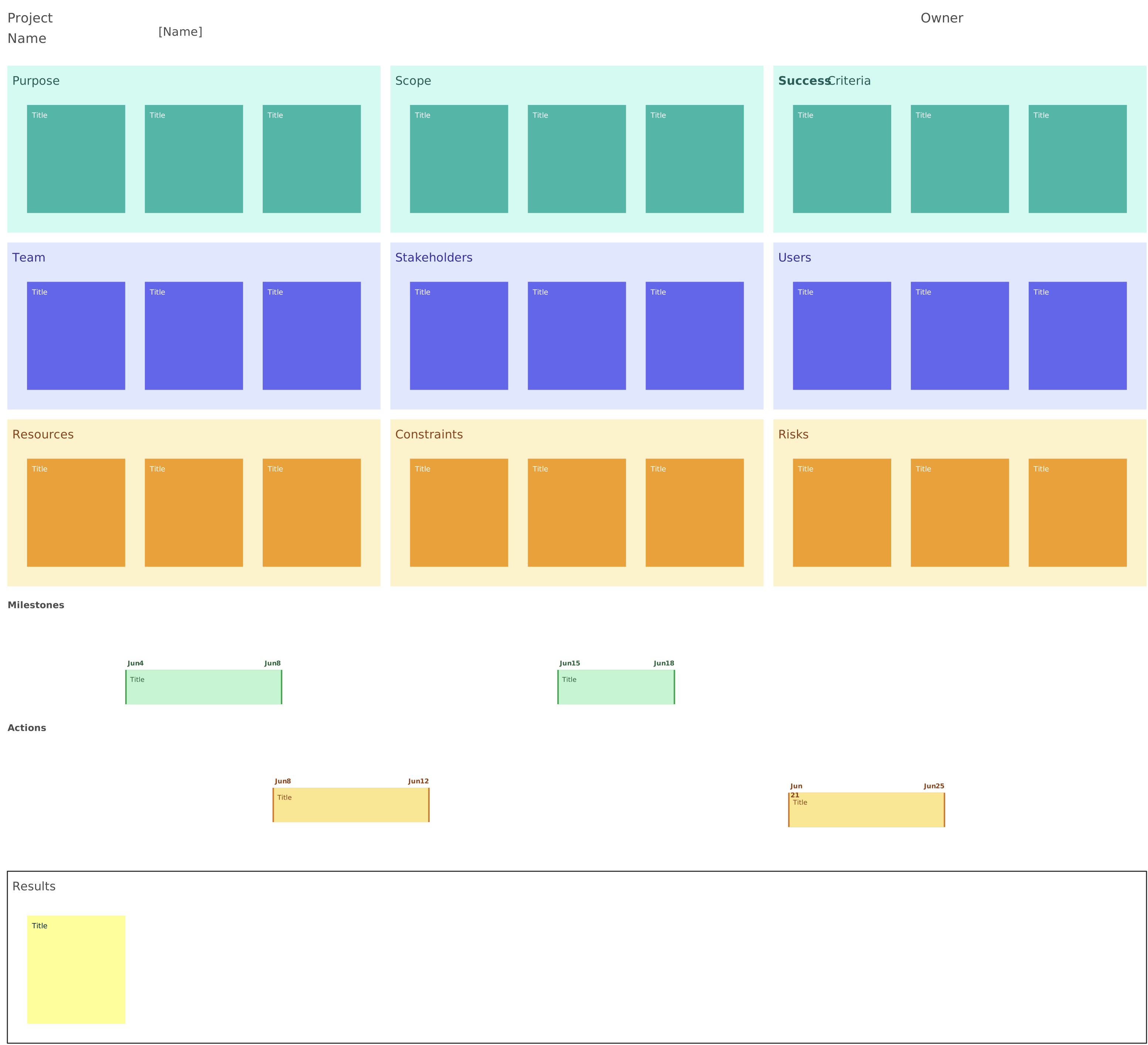
- Resource Allocation: Managing available resources efficiently to maximize output and minimize waste.

- Stakeholder Communication: Maintaining transparency through clear communication and regular updates to ensure alignment and trust.

Effective project management leverages tools like the RACI Matrix to clearly define roles and responsibilities, ensuring every team member understands their part.
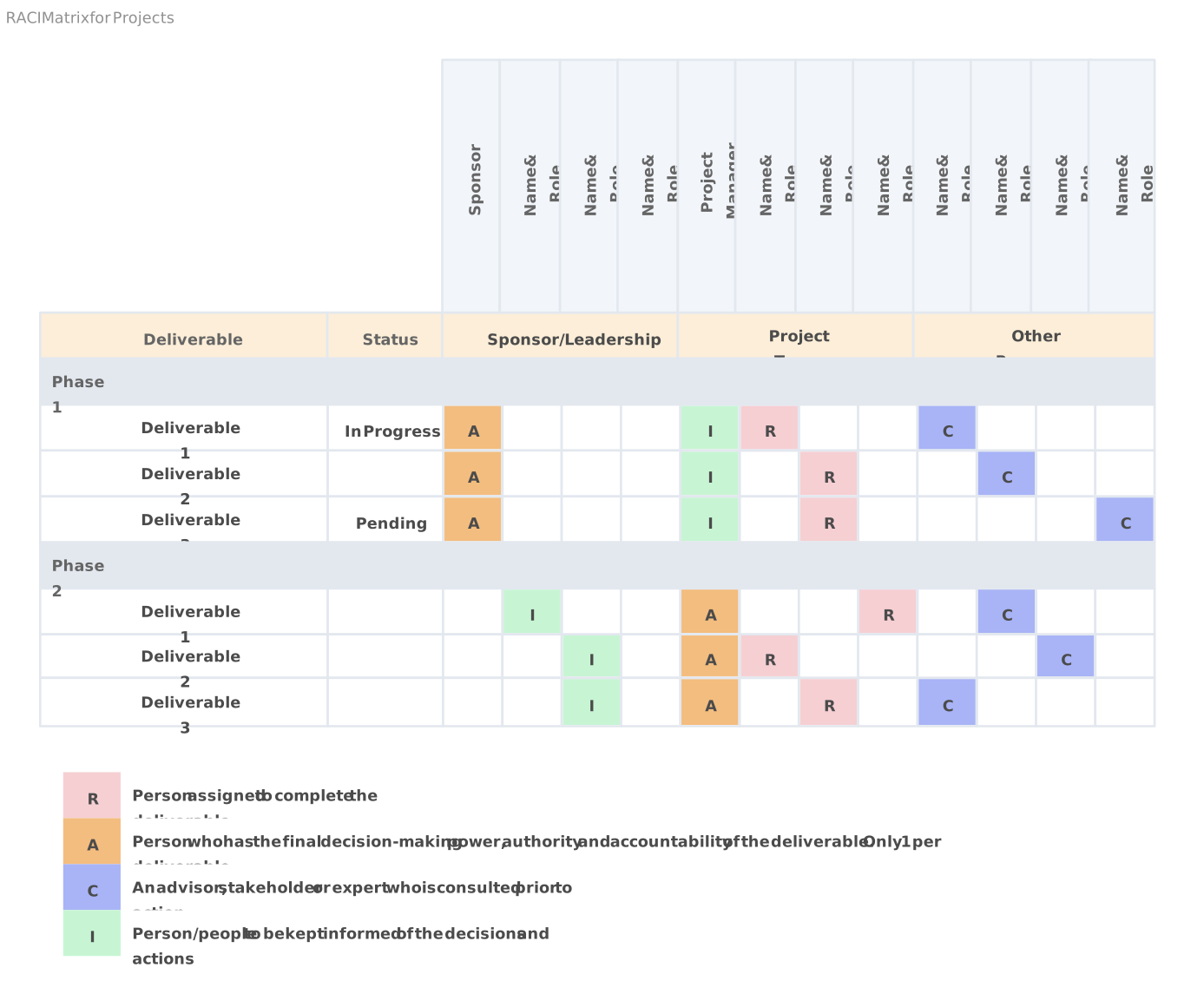
While Product Management vs. Project Management highlights the distinct focuses of these roles—strategic versus tactical—their collaboration is crucial. Product managers set the vision, while project managers transform that vision into reality through meticulous planning and execution. This synergy drives successful outcomes for organizations.
Role of a Project Manager
- Planning and Execution: In contrast, project managers are charged with executing strategic plans. They focus on the detailed breakdown of tasks necessary to complete a project, adhering strictly to timelines, budgets, and resource allocations.
- Metrics of Success: Their success is evaluated based on specific project deliverables—timeliness, adherence to budget, stakeholder management, and meeting project specifications.
- Challenges: Common challenges include navigating changing project scopes, resource constraints, and maintaining team motivation throughout the project lifecycle.
Product Manager vs Project Manager: Key Differences
While both roles are essential in delivering successful products, they focus on different aspects of the process:
- Product Managers focus on defining what should be built and why—driving long-term strategy.
- Project Managers ensure how and when it gets delivered—managing execution and deadlines.
Product manager vs project manager vs collaboration ensures that business goals align with execution, balancing vision with timely project completion.
The below table compares Product Managers and Project Managers, highlighting their distinct roles. Product Managers focus on vision, strategy, and long-term product success, while Project Managers handle execution, timelines, and resource management. Both roles work together to ensure product development aligns with business goals and is delivered efficiently.
| Aspect | Product Manager | Project Manager |
| Primary Focus | Defines product vision, strategy, and market fit | Ensures projects are executed efficiently |
| Key Objective | Develops a product that meets customer and business needs | Delivers projects on time, within scope & budget |
| Scope | Broad—covers entire product lifecycle | Specific—focused on a particular project |
| Core Activities | Market research, user needs, feature prioritization | Planning, scheduling, resource allocation |
| Time Horizon | Long-term product success | Short to mid-term project execution |
| Success Metrics | Adoption rate, revenue, customer satisfaction | On-time delivery, budget adherence, project success |
| Stakeholder Interaction | Customers, executives, developers, marketing | Cross-functional teams, vendors, leadership |
| Collaboration Tools | Roadmaps, personas, Creately for strategic planning | Gantt charts, Kanban boards, Creately for workflows |
| Leadership Style | Visionary—drives product innovation | Operational—ensures team alignment & efficiency |
| End Deliverable | A successful product | A completed project that supports business goals |
Key Differences in Product Management and Project Management
product management vs project management serve distinct yet complementary roles within an organization. While they often work collaboratively, their focus areas, responsibilities, and objectives differ significantly. Understanding these differences is critical for organizations to effectively utilize both roles and achieve strategic and operational success.
Overview of Key Differences:
| Aspect | Product Management | Project Management |
| Focus Areas | Defines the what and why of a product, aligning vision with customer needs and business goals. | Manages the how and when, ensuring tasks and resources are handled efficiently to deliver on time and within budget. |
| Responsibilities | Strategy, market research, defining product requirements. | Execution, resource management, risk mitigation. |
| End Goals | Ensures the product meets market demands and delivers value. | Ensures the project is executed efficiently and achieves its scope. |
Product management vs project management are two distinct disciplines that often work hand-in-hand to achieve organizational success. While product managers focus on crafting the product vision and aligning it with market needs, project managers concentrate on executing the processes necessary to bring that vision to life.
Similarities in Product Management vs. Project Management
While product management vs project management have distinct roles, their collaboration is key to organizational success.
Key Overlaps in Product Management vs. Project Management
- Communication and Leadership Both roles require strong communication and leadership to align teams, manage stakeholders, and ensure goals are met.
- Strategic and Tactical Alignment Product managers focus on strategic goals, while project managers handle tactical execution. Together, they ensure long-term visions are effectively implemented.
- Risk Mitigation Collaborative efforts help identify and address risks early, minimizing delays and ensuring adherence to budgets and timelines.
- Shared Tools Visual tools and management software enable both roles to track progress, map dependencies, and maintain alignment, fostering collaboration and efficiency.
By leveraging these overlaps, product management vs. project management collaboration ensures that strategic goals are realized through seamless execution.
Helpful Resources
An online Kanban board to organize your everyday workflows and set your team up for success. Visually organize and track progress of any kind of work collaboratively.
Effortlessly create a roadmap to clarify vision, enhance communication, and improve execution
Rather than adhering to one-size-fits-all processes, agile workflows embrace fluidity, allowing teams to focus on what really matters and adapt as needed.
This guide delves into the various stages of the product development process and helps you use the framework as a compass to guide you as you go about developing a product.
A single connected visual platform to collaborate on planning, tracking and running your Scrum projects.
Are agile teams more effective in getting work done faster than traditional teams? Are they better structured and optimized to achieve success every time?
Creately: Empowering Collaboration in Product Management vs. Project Management
Creately stands out as a versatile platform designed to bridge the gap between product management vs. project management. Its comprehensive suite of features enables teams to work together efficiently, ensuring alignment between strategic vision and tactical execution. Whether you’re a product manager defining goals or a project manager driving deliverables, Creately offers tools tailored to your needs.
Key Features for Product Management
For product managers, Creately simplifies the process of translating a product vision into actionable strategies:
- Product Roadmaps: Create detailed, visually engaging roadmaps to outline goals, prioritize features, and track progress throughout the product lifecycle. Use Creately’s roadmap maker to visually plan and align your product and project strategies effectively.
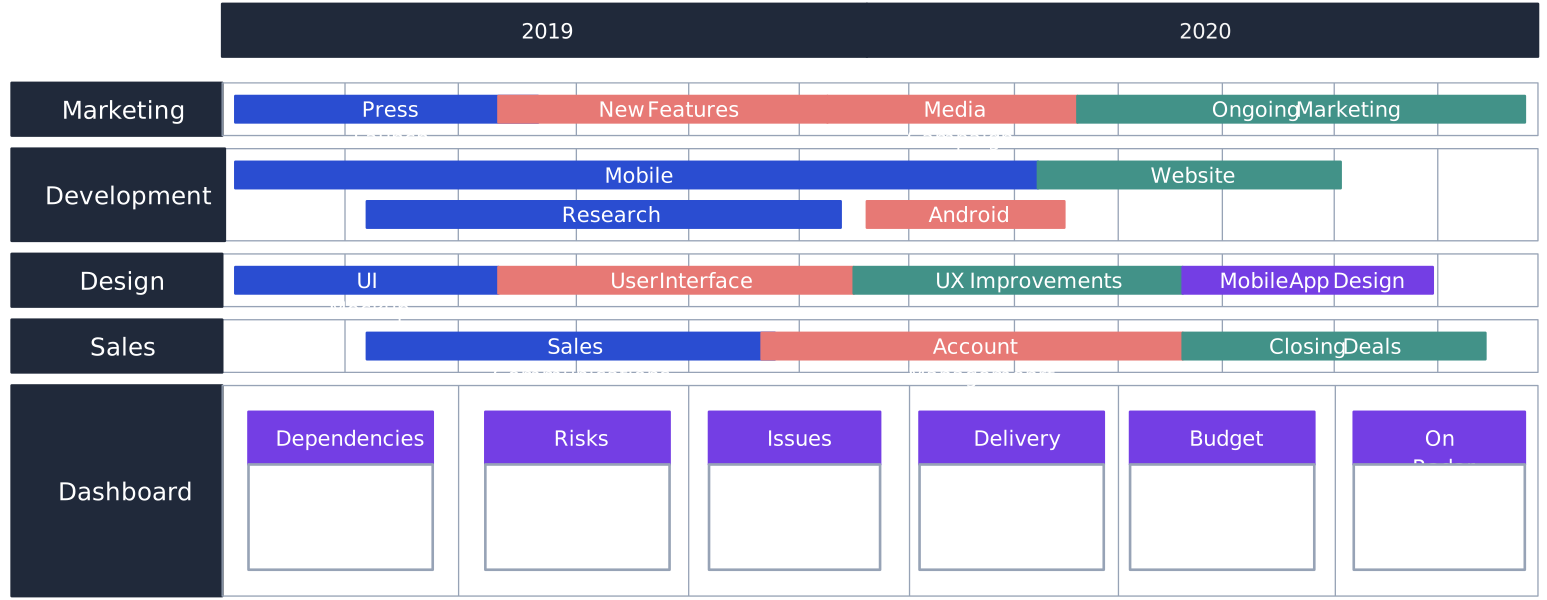
Dependency Mapping: Identify and manage task dependencies to align product development efforts across teams.
Market Analysis Templates: Use templates to document insights from market and user research, ensuring products meet customer needs and remain competitive.

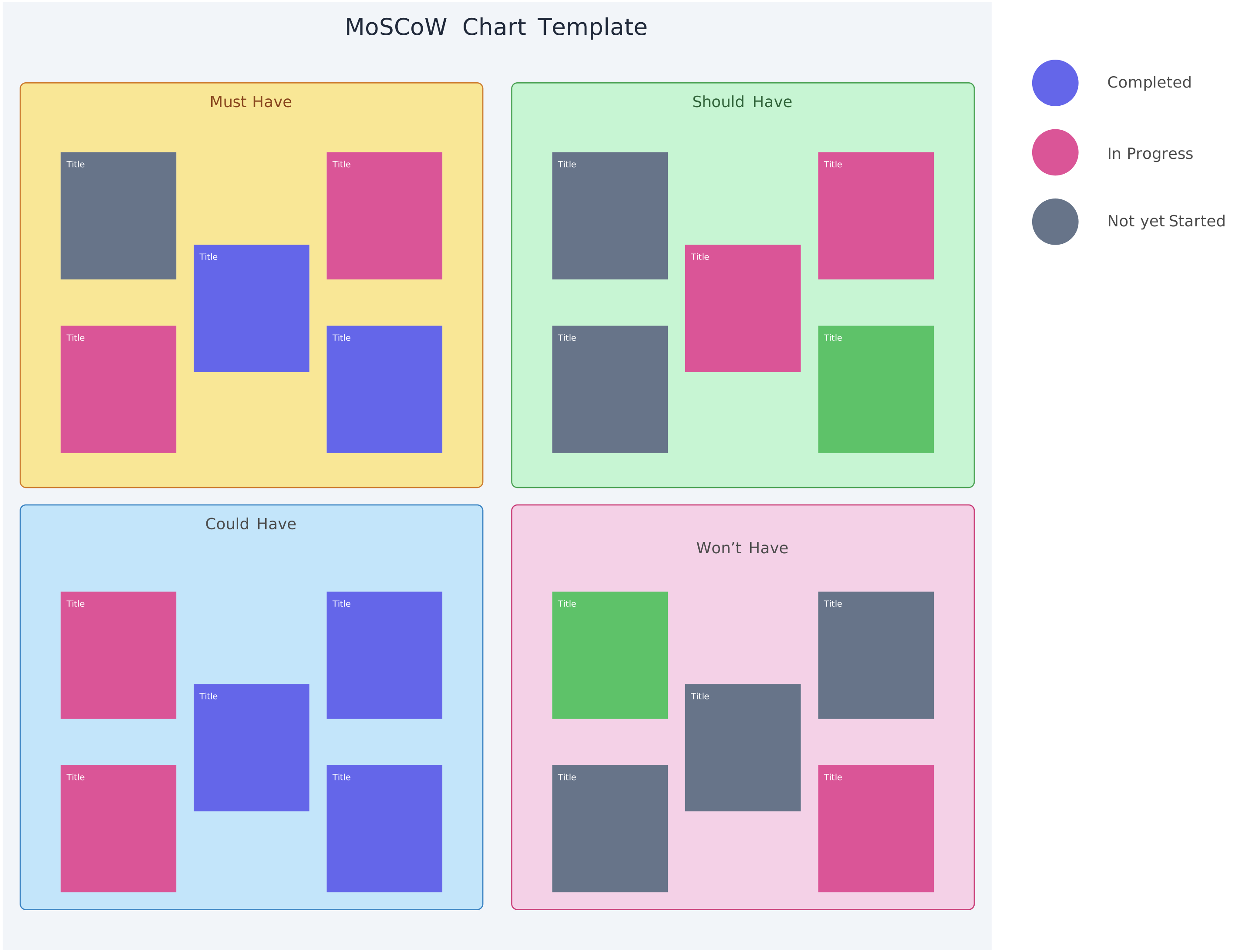
- Feature Prioritization Tools: Rank product features visually based on customer demand, business value, and technical feasibility, streamlining decision-making. Explore how Creately’s prioritization grid guide can help streamline decision-making by visually ranking tasks and features.
Essential Tools for Project Management
Project managers benefit from Creately’s ability to enhance tactical execution through features that ensure projects are completed on time and within scope:
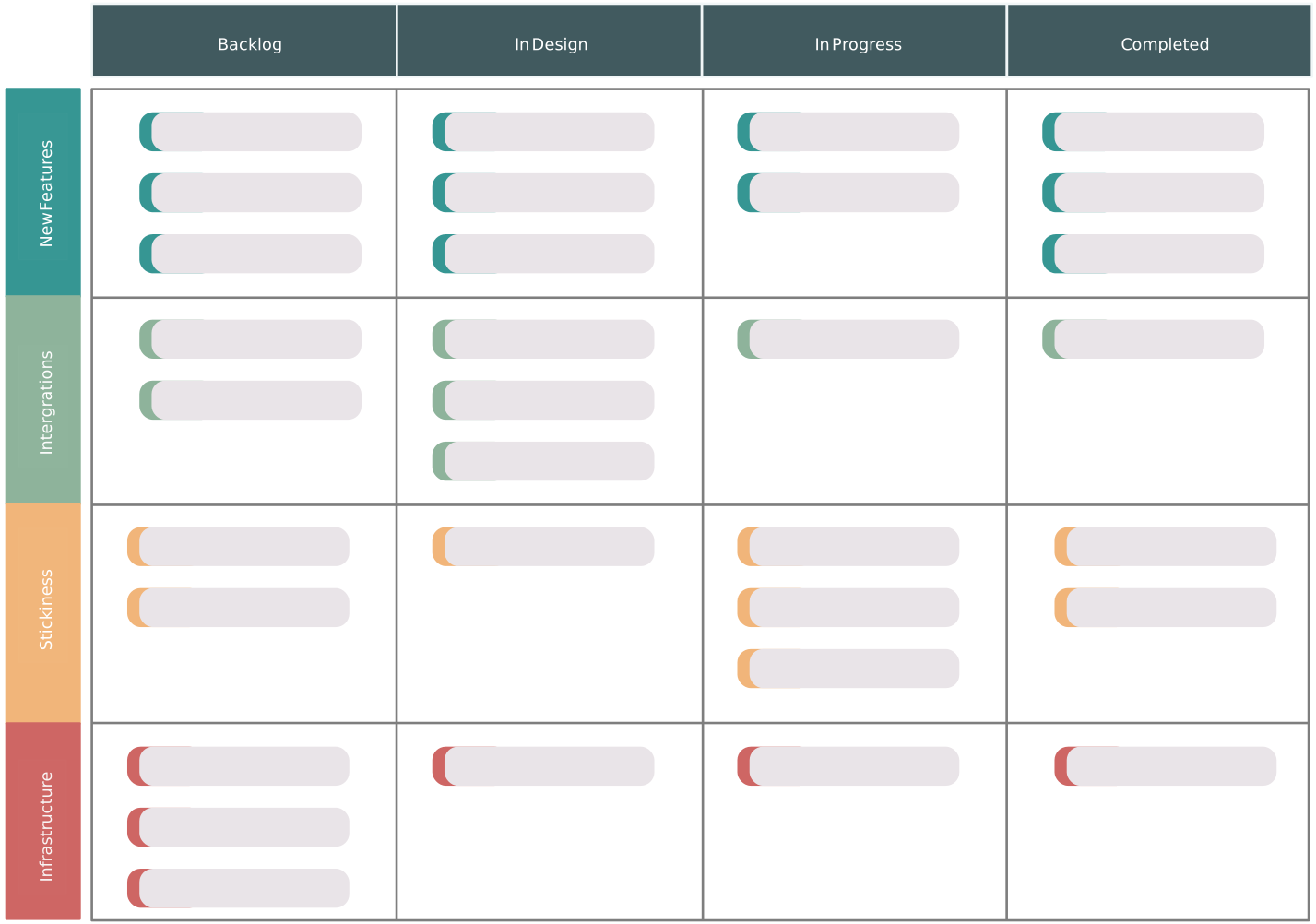
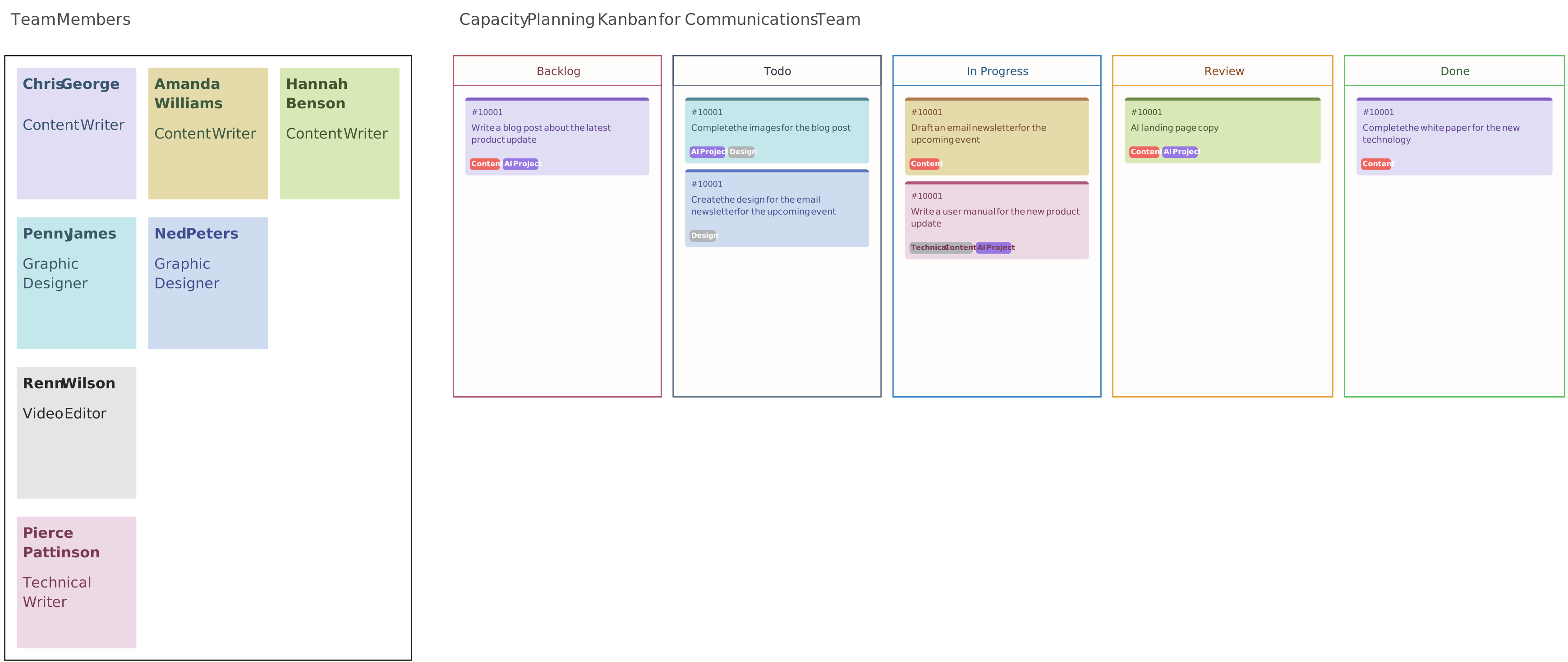
- Kanban Boards: With Creately’s Kanban Software you can visualize workflows, track task progress, and manage resources effectively to maintain team alignment and productivity.
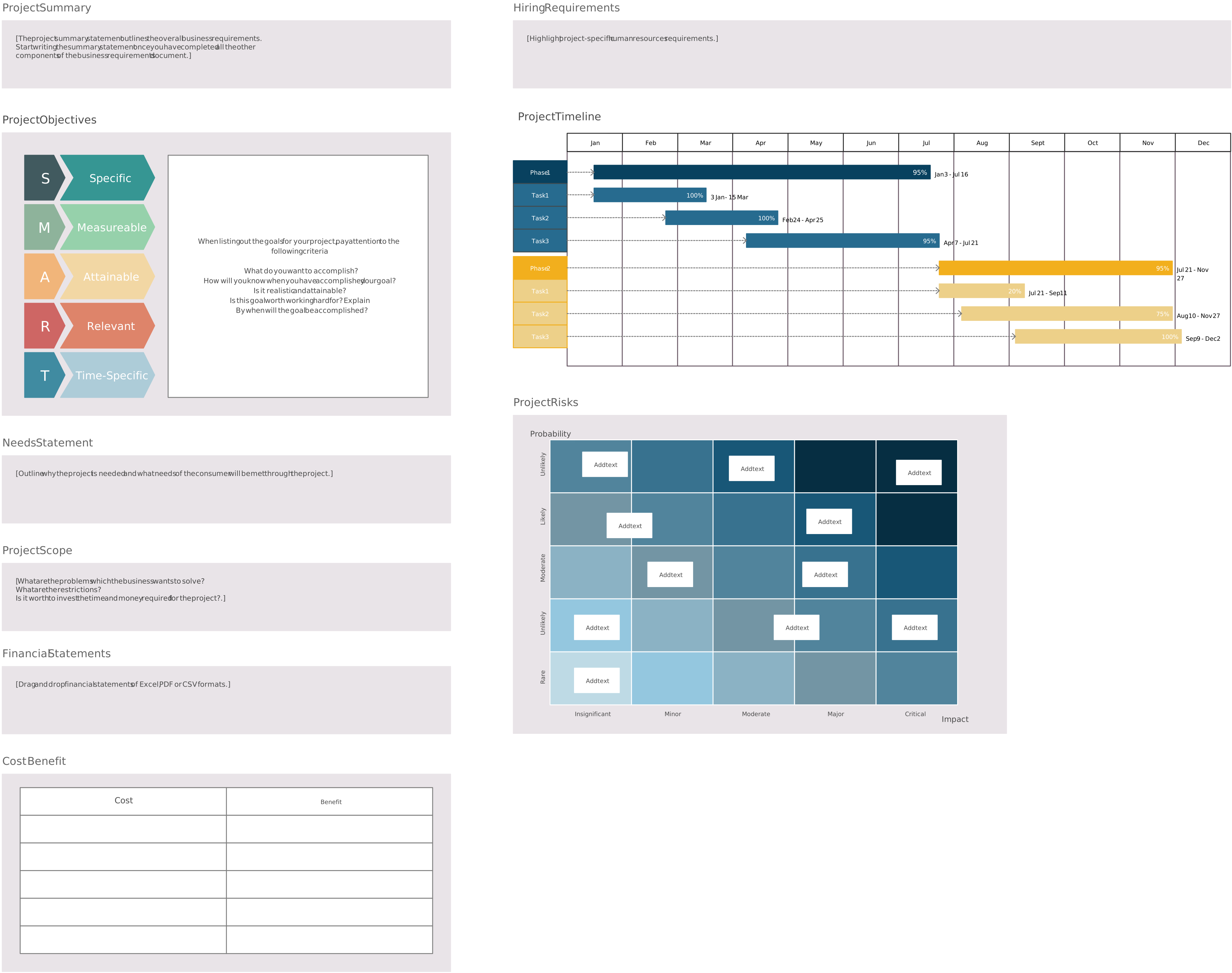
Project Charters: Provide a blueprint for projects, ensuring clarity in scope, objectives, and stakeholder roles from the outset.
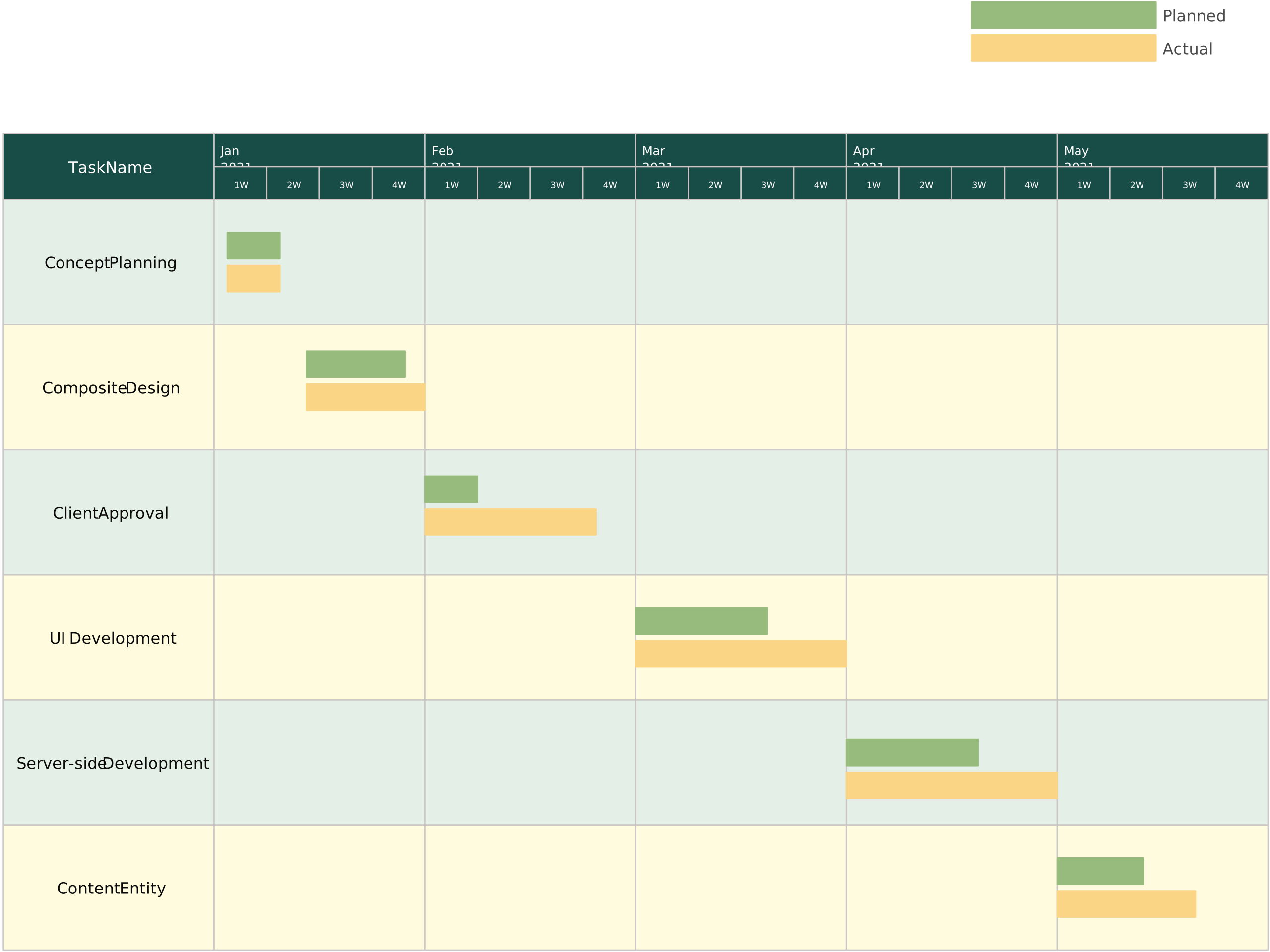
Timelines and Gantt Charts: Creately’s Gantt Chart Maker helps plan project schedules visually, track deadlines, and adjust plans dynamically as projects progress.
- Team Collaboration: Centralize communication and document sharing to promote transparency and keep everyone on the same page.
Bridging the Gap in Product Management vs. Project Management
Creately excels at fostering collaboration between product managers vs project managers, helping them align their efforts seamlessly.
- Integrated Data: Two-way sync with tools like Jira, GitHub, and Azure DevOps to ensure all team members work with up-to-date information, fostering a cohesive approach to product management vs. project management.
- Unified Workspaces: Both roles can work together on a single platform, enabling real-time updates, shared documentation, and synchronized progress tracking.
- Visual Collaboration: Teams can create diagrams, charts, and workflows that clarify complex processes and ensure mutual understanding.
- Feedback Loops: Dynamic editing and commenting features allow teams to adapt quickly to changes, integrating feedback into their plans without disrupting workflows.
Why Choose Creately?
In the ongoing collaboration between product management vs. project management, Creately’s visual tools act as the glue that holds strategic and tactical efforts together. By offering solutions for roadmap creation, task management, and stakeholder alignment, Creately helps organizations:
- Improve team collaboration and communication.
- Enhance productivity by reducing manual effort and errors.
- Achieve faster project and product delivery.
Whether you’re defining a long-term product vision or driving short-term project execution, Creately equips you with the tools to succeed. By integrating Creately into your workflow, teams can bridge the divide between product management vs. project management, unlocking higher efficiency and delivering superior outcomes.
Conclusion
Understanding the distinctions and synergies between product management vs project management is essential for achieving organizational success. While product management defines the “what” and “why” of a product’s vision, project management ensures the “how” and “when” of its execution. Together, they create a cohesive strategy, balancing long-term planning with tactical precision to deliver value efficiently. Platforms like Creately empower teams to bridge this gap, fostering collaboration, improving productivity, and driving successful outcomes. By leveraging the strengths of both roles and tools, organizations can ensure seamless alignment and sustained growth.
Resources:
Educase Review (2021). Project Management vs. Product Management. [online] EDUCAUSE Review. Available at: https://er.educause.edu/articles/2017/4/project-management-vs-product-management
Jabian Journal (2022). The Intersection of Product and Project Management. [online] The Jabian Journal. Available at: https://journal.jabian.com/the-intersection-of-product-and-project-management/