A leadership team can announce a new direction while employees continue making the same decisions as before. The message may have reached them without explaining what should change in their work.
To communicate vision, describe the future you want to create, explain why it matters, and connect it to choices people can make now. Use a consistent core message, adapt the examples for each audience, and make room for questions that could expose gaps in the plan.
This guide shows how to communicate your strategic vision through messages, visuals, roadmaps, and recurring team conversations. It includes a worked example and editable templates you can use to prepare your own communication.
What Does Communicating a Strategic Vision Involve?
A strategic vision describes a desired future for an organization and the people it serves. Communicating it means helping people understand that direction and its implications for their decisions.
Keep three ideas distinct:
| Element | Question it answers | Example |
|---|---|---|
| Vision | What future are we working toward? | Customers can get started confidently without relying on repeated support calls. |
| Strategy | What choices will help us move toward it? | Prioritize clearer onboarding and early customer feedback over adding more optional setup features. |
| Roadmap | What will we work on, and in what sequence? | Research the main obstacles, pilot a simpler setup path, then expand what works. |
The example is hypothetical. Its purpose is to show how the message becomes more useful when the destination, choices, and work are connected.
How to Communicate Vision in Eight Practical Steps
1. Clarify the Future and the Reason for Change
Before preparing a presentation, agree on the future you are asking people to work toward. Explain who benefits and what will be meaningfully different for them.
Use a short working brief:
- Today: What problem or opportunity are we responding to?
- Future: What experience or outcome do we want to create?
- Reason: Why does this matter now?
- Choices: What will we prioritize, and what will we stop or defer?
- Evidence: What observations support the direction, and what remains an assumption?
Resolve conflicting interpretations among leaders before asking managers to explain the vision. If a major decision is still open, name it as open rather than presenting an unsettled plan as a commitment.
2. Write a Core Message People Can Repeat
Turn the brief into plain language that links the destination to a practical implication. Avoid a string of abstract ambitions such as “innovation, excellence, and transformation” without explaining what they change.
Try this structure:
We want [people we serve] to experience [desired future]. This matters because [reason]. We will focus on [priorities], which means [a practical choice]. For now, we need [next action or decision].
For the onboarding example:
We want new customers to complete their first useful task confidently, without repeated support calls. Our current setup journey leaves too many questions unanswered. We will focus on clearer guidance and faster feedback before adding more optional setup features. Each team will identify one obstacle to test in the next pilot.
Label the example as a draft message and test it with a small group. Ask what it means to them and which words need explanation. Their interpretation is more useful than asking only whether they like the wording.
3. Adapt the Narrative to Each Audience
Keep the destination and priorities consistent while changing the explanation of relevance. A frontline team, an executive sponsor, and a customer need different details.
| Audience | Question to address | Useful example or evidence | Next conversation |
|---|---|---|---|
| Executives and sponsors | What choices and resources does this require? | Priority tradeoffs, major risks, and decision points | Confirm sponsorship and resource decisions |
| People managers | What changes for our team? | Work to start, stop, or sequence differently | Translate priorities into team plans |
| Employees | How does my work contribute? | A realistic task or decision that changes | Identify obstacles and propose next actions |
| Customers or partners | What will this mean for us? | Approved commitments and implications for their experience | Validate needs and address concerns |
Use stakeholder mapping to identify who is affected, who influences the work, and whose perspective is missing. Include people who experience the change even if they have little formal decision-making power.
Avoid making incompatible promises to different audiences. Track concerns and decisions in a shared record so that the core message remains consistent as the plan develops.
4. Choose Visuals That Answer Specific Questions
A visual should make part of the vision easier to explain. Choose it according to the audience’s question, rather than fitting every message into the same diagram.
| Visual | Best question to answer | What to include | Limit to keep in mind |
|---|---|---|---|
| Business vision board | What future do we want people to recognize? | Desired experience, themes, examples, and short explanations | Images alone do not explain priorities or commitments |
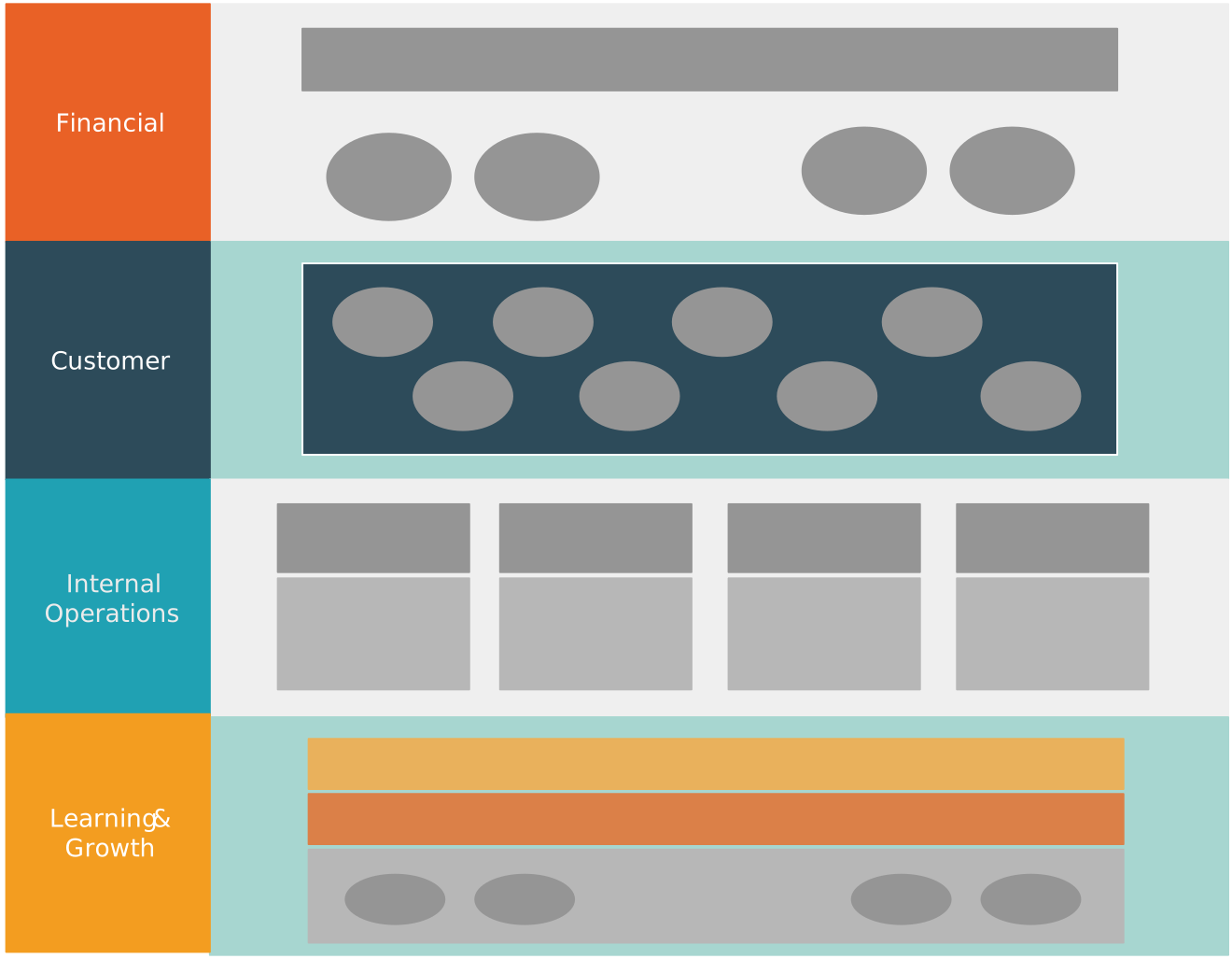
| Strategy map | How do our objectives support the direction? | A small set of objectives and their expected relationships | Connections express strategic assumptions, not proven causation |
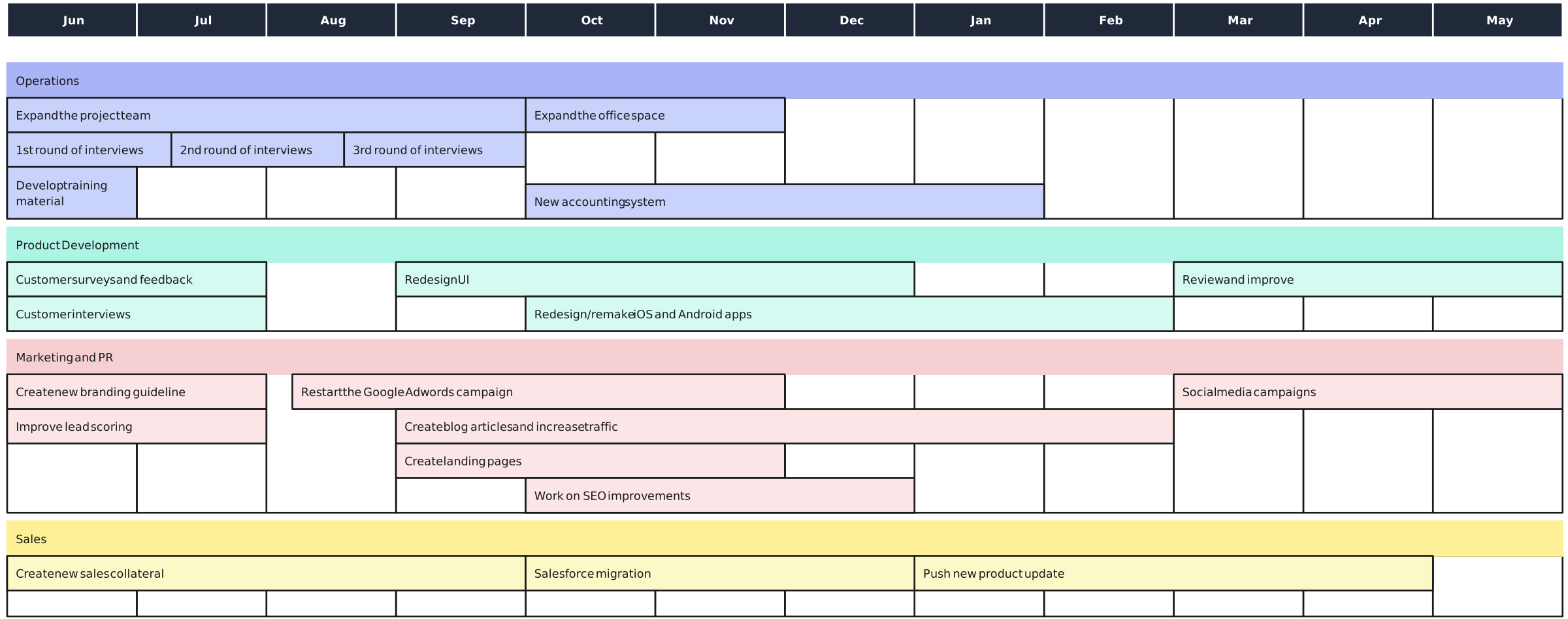
| Business roadmap | What happens first, next, and later? | Initiatives, milestones, owners, and dependencies | Uncertain dates should not look like approved promises |
| Stakeholder map | Who needs to be involved and heard? | Affected groups, relationships, concerns, and involvement needs | A map needs discussion to capture people’s actual views |
| Communication plan | Who will discuss what, when, and how? | Audience, message, sender, channel, feedback, and follow-up | Sending a message is not the same as achieving understanding |
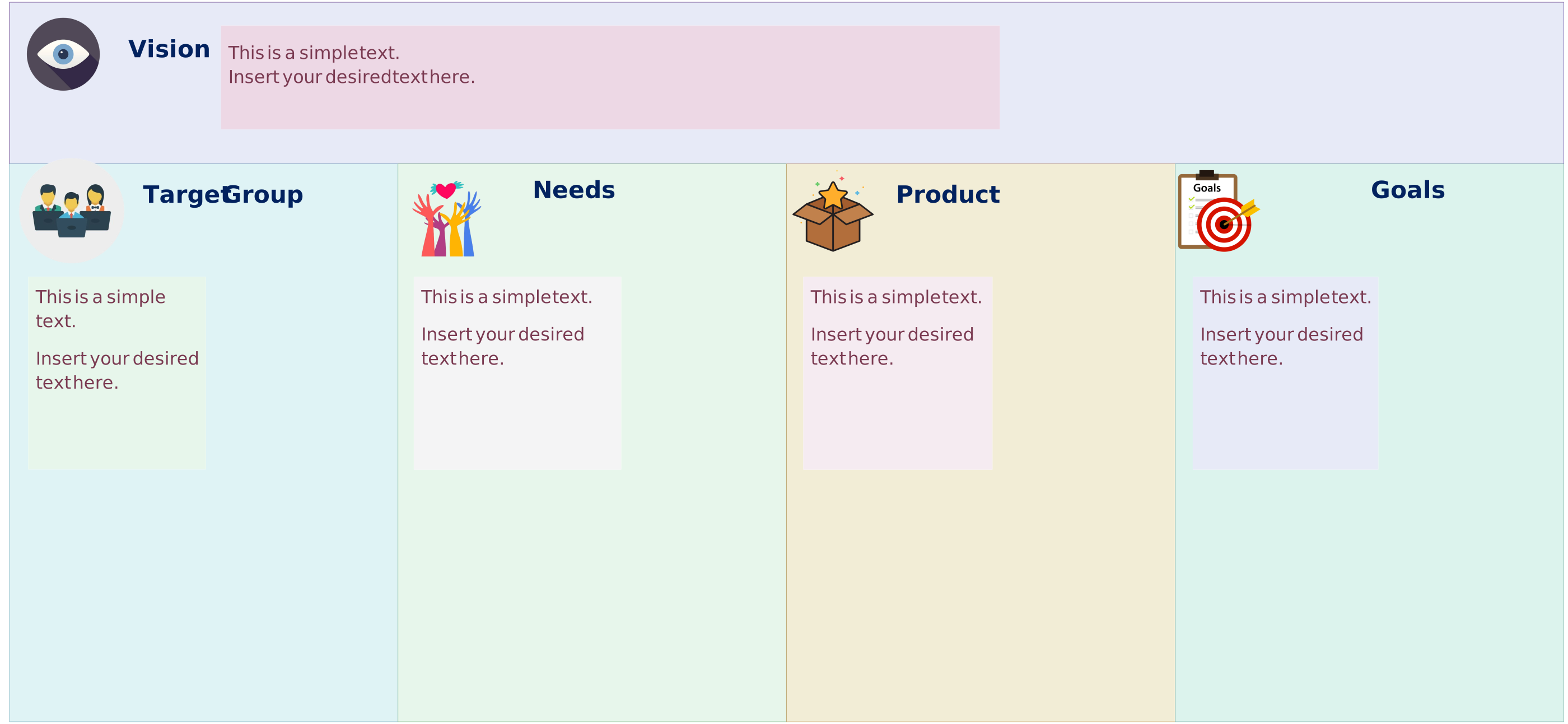
A business vision board can anchor a workshop around the desired future. Add captions that explain why each theme matters, then connect those themes to priorities rather than leaving the board as a collection of inspirational images.

5. Connect the Vision to Priorities and a Roadmap
After explaining the destination, show which objectives and initiatives support it. This is where the vision starts to influence resource and sequencing decisions.
For the onboarding example, the team might propose:
- Build a shared understanding of common setup obstacles.
- Improve guidance for the first useful customer task.
- Test whether the revised journey reduces confusion.
- Expand changes that meet the agreed acceptance criteria.
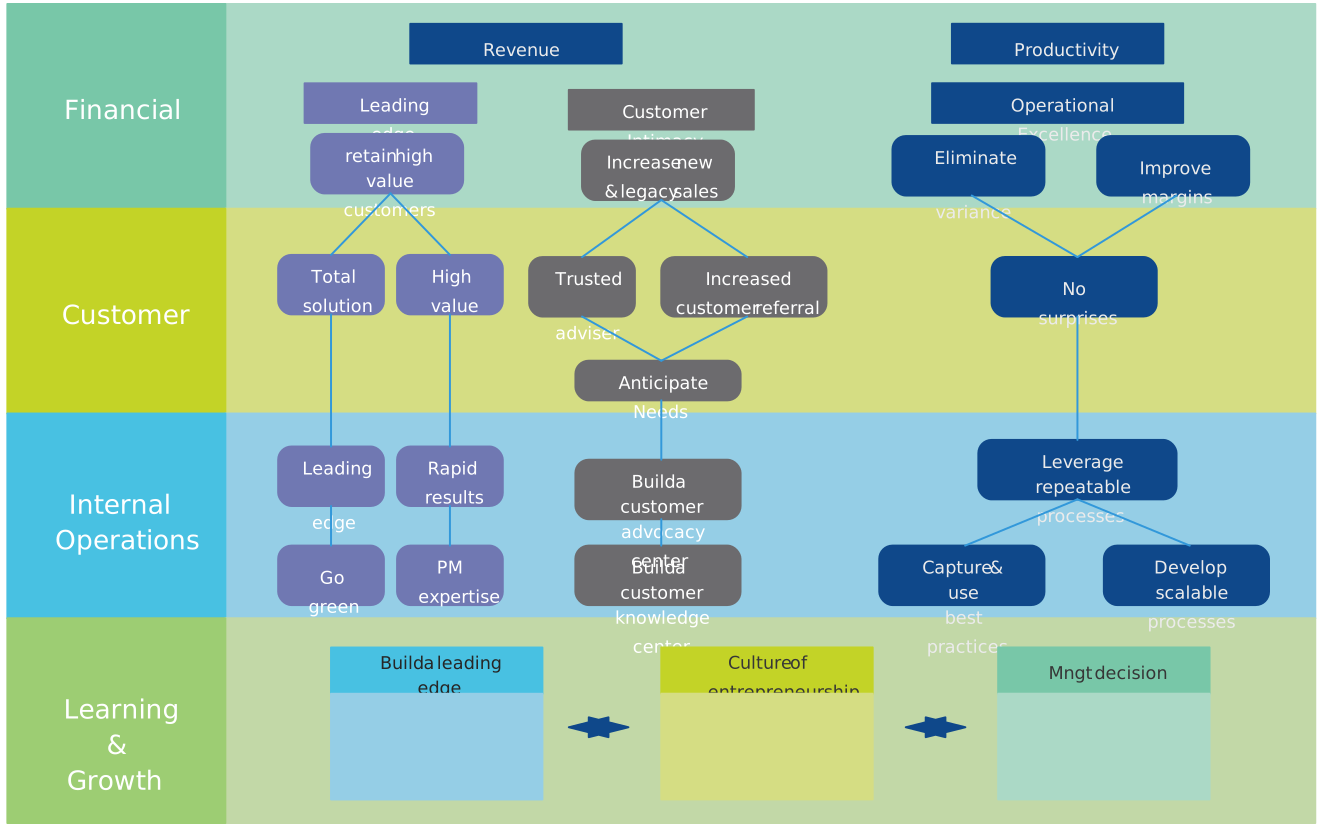
Use a strategy map to show how capabilities, process improvements, and customer outcomes are expected to connect. Then use a business roadmap to sequence the work and surface dependencies.
For each initiative, record an owner, the next milestone, and the evidence needed for the next decision. State what you are deferring. Without those tradeoffs, a new vision can become extra work layered onto an unchanged priority list.
6. Equip Leaders and Managers for the Conversation
Give leaders and managers more than presentation slides. Prepare a short explanation, a relevant example, known questions, unresolved decisions, and a route for raising concerns.
Prosci’s communication guidance distinguishes messages about the organization’s reasons for change from messages about personal impact: senior leaders should explain the broader reasons, while people managers help teams understand the implications for their work.
Make preparation practical:
- Ask managers to explain the vision in their own words before the team discussion.
- Agree on which facts and priorities must remain consistent.
- Provide team-specific examples and a record of what is still undecided.
- Give questions an owner and a response date.
Leaders also need to demonstrate the priorities through decisions. If the message favors simpler onboarding but every investment rewards additional setup complexity, employees will notice the contradiction.
7. Build Recurring Alignment Conversations
Use an announcement to introduce the direction, then revisit it where people plan and review work. Repetition is useful when it adds context, answers questions, or explains a decision.
The following cadence is an illustrative starting point, not a fixed requirement:
| Moment | Purpose | Visual or record | Conversation to hold |
|---|---|---|---|
| Initial leadership briefing | Explain the direction and choices | Core message and strategy map | What is changing, and what remains open? |
| Team planning session | Translate the direction into local work | Roadmap and team priorities | What do we start, stop, or defer? |
| Regular team check-in | Surface obstacles and conflicting priorities | Actions and questions log | Where is current work pulling against the vision? |
| Monthly progress review | Compare activity with intended outcomes | Measures and roadmap updates | What evidence supports continuing or changing course? |
| New colleague or partner onboarding | Maintain a shared explanation | Current vision and supporting examples | How does this role or relationship contribute? |
Adapt the timing to the scale and pace of the work. Use a stakeholder communication plan to assign senders, channels, feedback routes, and follow-up responsibilities.
8. Check Understanding and Act on Feedback
Measure more than attendance, email opens, or presentation views. Those show exposure to the message, not whether people can use it.
Ask a small set of practical questions:
- Can people explain the desired future without reading the slide?
- Can each team name a priority that supports it?
- Can people identify a decision the vision would change?
- Are concerns being answered, assigned, or explicitly left open?
- Does the roadmap reflect what leaders say matters?
Use interviews, short surveys, and planning conversations to find recurring misunderstandings. In the onboarding example, a team that interprets the vision as “remove all support” needs a different explanation from one that understands it as “help customers succeed with fewer avoidable obstacles.”
Change the message when the explanation is unclear. Reconsider the plan when feedback exposes an unsupported assumption or a practical constraint. Communicating vision includes listening to information that might improve it.
Example: Turn a Vision into a Communication Plan
Here is how the fictional onboarding initiative could connect its message to action:
| Communication element | Worked example |
|---|---|
| Desired future | New customers complete their first useful task confidently |
| Reason for change | Research has identified confusing setup instructions; the team must validate which obstacles matter most |
| Core priorities | Clear guidance, early feedback, and a bounded pilot |
| Tradeoff | Defer optional setup features until the pilot provides evidence |
| Team implication | Product and Support jointly review recurring setup questions |
| Visuals | A vision board for the experience, a strategy map for objectives, and a roadmap for the pilot |
| First request | Each participating team identifies one obstacle and a proposed test |
| Feedback route | Team discussion and a shared questions log with named owners |
| Understanding check | Teams explain why their proposed test supports the vision |
| Progress check | Compare pilot results with an agreed baseline and acceptance criteria |
All details are illustrative. Use your own research and approved commitments before presenting a similar plan as fact.
Use Creately to Make the Vision Easier to Discuss
Creately’s strategic planning workspace supports visual strategy planning and collaborative discussion. Use its editable diagrams to give people a shared view of the direction and the work that follows.
Start with a business vision board, then build a strategy map and roadmap using consistent objective names. Keep the audience plan nearby so that each presentation has a clear purpose and next action.
In a working session, use comments to collect questions, add notes or links for supporting context, and present the relevant visual to the group. Share the material with appropriate access or export the view for people who need it outside the workspace. Creately’s vision board maker supports these visual collaboration and sharing workflows.
Assign someone to maintain the communication materials and record the review date. A shared canvas helps people discuss the strategy; the team still needs to validate its assumptions, resolve tradeoffs, and make decisions.
Templates for Communicating Your Strategic Vision
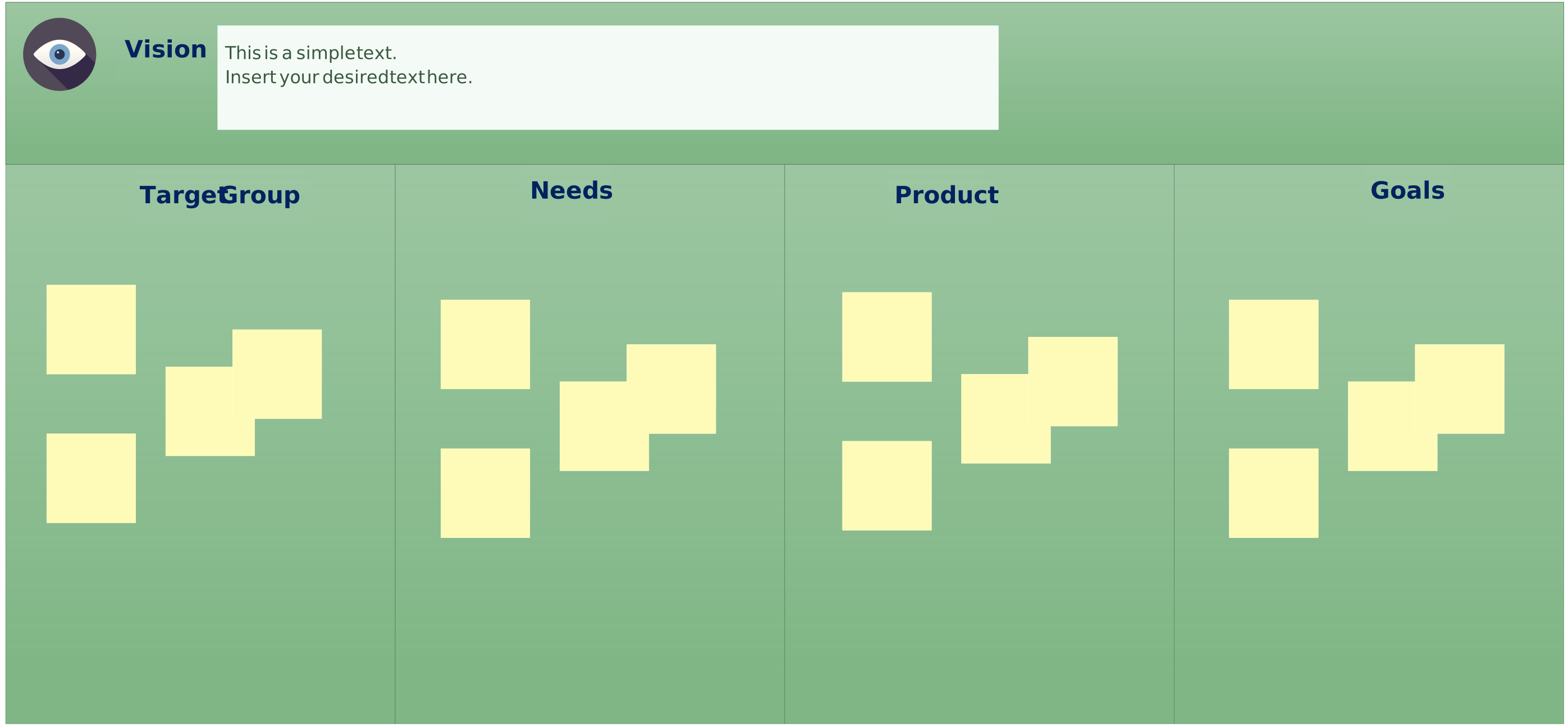
Use the vision board to describe the destination, the strategy map to connect objectives, the roadmap to explain sequencing, and the stakeholder tools to plan involvement. These existing templates can be adapted for this workflow without creating a new template first.




Common Mistakes to Avoid
- Using the same presentation for every audience: Keep the core message, but change the examples and discussion to address people’s actual concerns.
- Showing an inspiring destination without a practical choice: Explain a priority, tradeoff, or next action the vision should influence.
- Presenting assumptions as certainty: Distinguish hypotheses, approved decisions, and unresolved questions in the visuals.
- Treating questions as a communication failure: Use them to discover ambiguity and improve the plan.
- Letting different versions circulate: Keep an identifiable current version and explain material changes.
- Counting reach as alignment: Check whether people can explain the direction and use it in decisions.