Service blueprint software helps teams map both the customer-facing and behind-the-scenes parts of a service. It’s a key tool for improving experiences and operations. In this guide, we’ve rounded up the best service blueprint software available today — covering both free and paid options. Whether you’re looking for deep collaboration features, flexible templates, or just a simple way to visualize service processes, this list has you covered.
The service blueprint methodology is a structured way to understand and improve how a service works—both for customers and the teams behind the scenes. Unlike a one-time diagram, it’s a repeatable process that helps businesses design better experiences, fix gaps, and align everyone involved in delivering a service.
Process maps and service blueprints make complex work easier to understand, but they answer different questions. A process map shows how work flows through a process, while a service blueprint connects the customer journey with the frontstage and backstage activities that deliver it. A service blueprint vs process map comparison helps teams choose the right view, identify gaps, and improve both operations and service experiences. This guide compares their purposes, components, similarities, and use cases, then explains how to turn a process map into a service blueprint.
A service blueprint is a visual map that shows how a service works—from what the customer experiences to what happens behind the scenes. It helps teams see the full picture, align better, and improve how services are delivered.
In this guide, we’ll show you how to create a service blueprint step by step. Whether improving support, onboarding, or checkout, a blueprint helps you see the full picture—including behind-the-scenes processes. If you’re new to service blueprints, check out our what is a service blueprint guide first.
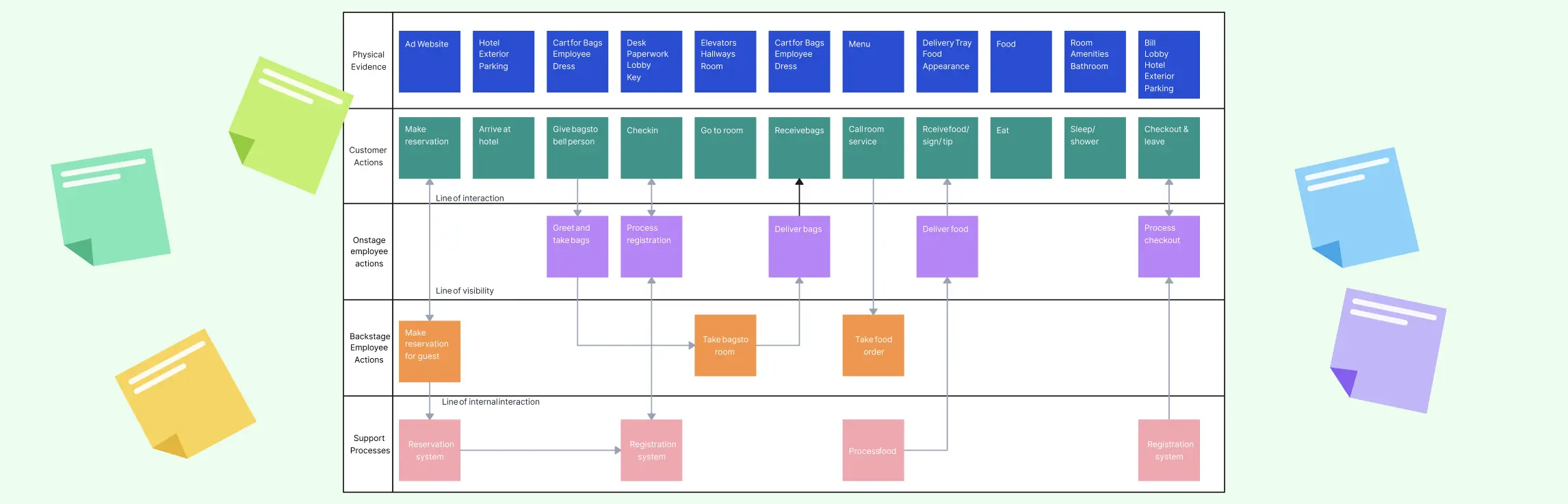
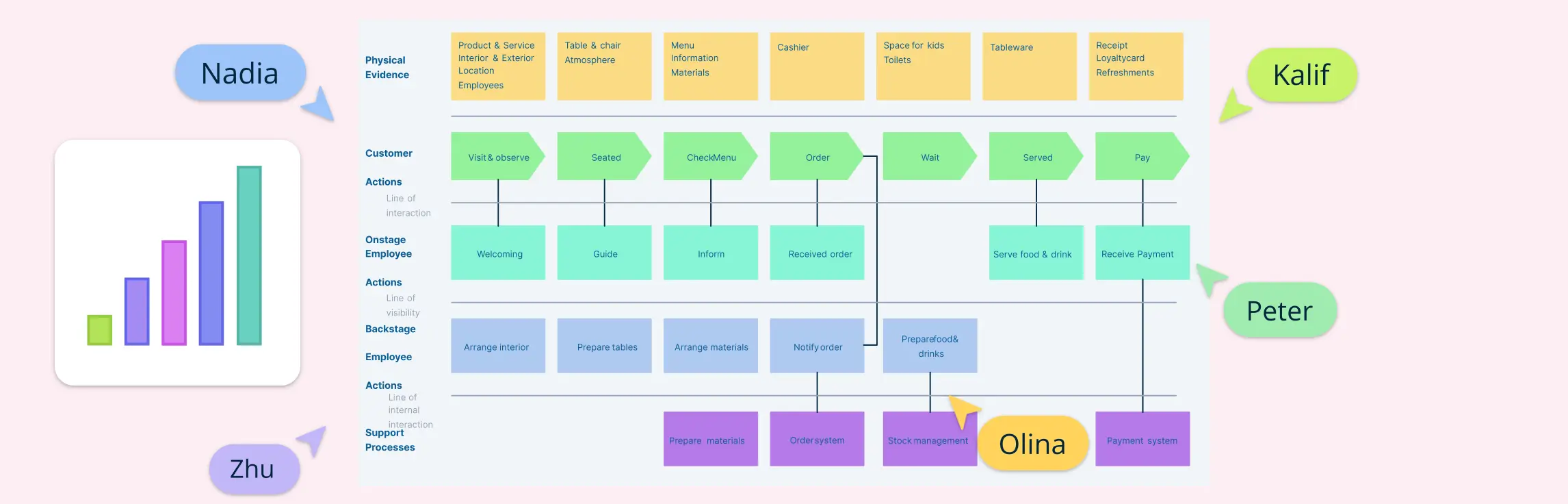
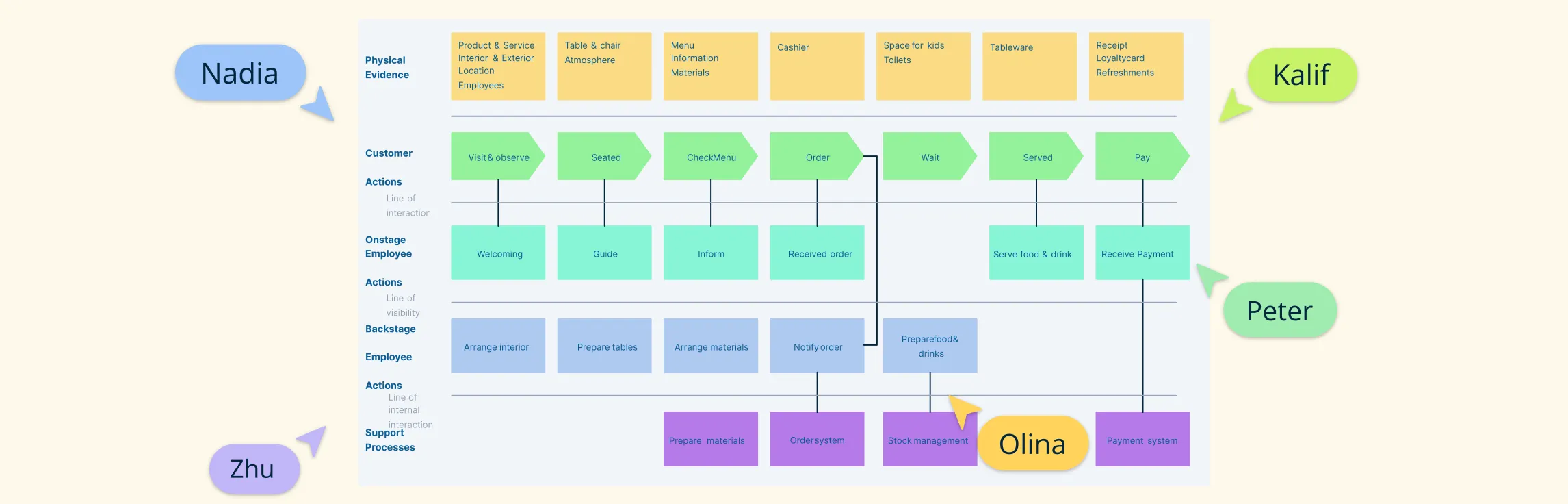
What Are Service Blueprints A service blueprint is a visual tool that shows how a service is delivered—from what the customer experiences to the behind-the-scenes processes that support it. It breaks down each step of the service, including what the customer does, what employees do (both seen and unseen), and the internal systems involved.
Service blueprints visualize how a service works—from what customers experience to the people, systems, and processes behind each touchpoint. They can help teams surface dependencies, failure points, unclear ownership, and improvement opportunities across digital, physical, and internal services.
What Is a Service Blueprint? Service blueprints help teams visualize how a service is delivered across customer touchpoints, employees, systems, and supporting processes. This guide explains the core components, when to use a blueprint, how to read one, and how to build one step by step with practical templates. It also shows how to assign ownership, examine backstage handoffs, and keep the blueprint current as the service changes.