An enterprise architect may be planning how several systems should work together while a software architect is deciding how one of those systems should be built. Both decisions affect the same outcome. If the two views stay separate, a well-designed application can still create duplicate data, conflict with a shared standard, or depend on an integration no one planned.
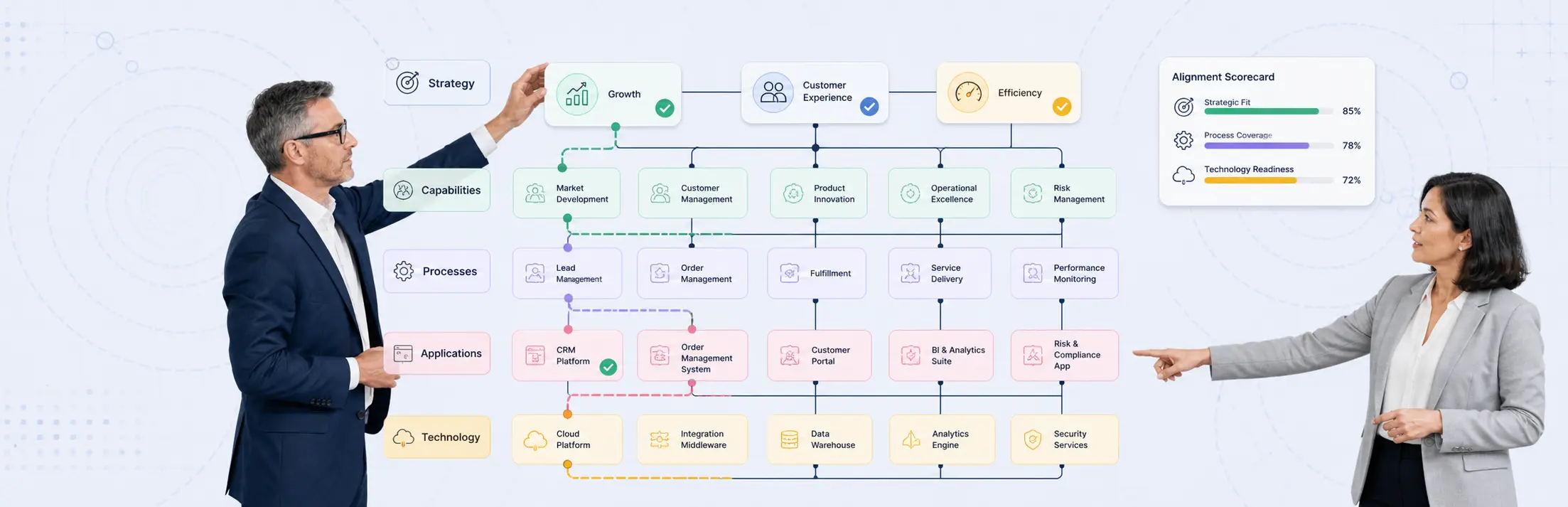
An organization may have a clear strategy and still struggle to see which systems, data, and teams must change to carry it out. Enterprise architecture (EA) makes those relationships visible. It gives decision-makers a shared view of how the business operates today, what it needs to become, and the changes required to get there.
The right EA and strategy-alignment tool is the one that supports your next decision without creating more repository work than your team can sustain. Use a collaborative visual tool when the job is alignment, scenario comparison, and executive communication. Choose a traditional enterprise architecture suite when you need governed metamodels, portfolio analytics, lifecycle controls, and formal traceability across a large technology estate.
Business architecture maps what the business needs to do through capabilities, value streams, and operating context. Enterprise architecture coordinates business, data, application, and technology architectures to guide enterprise-wide change. Use business architecture when the main job is strategic alignment and capability design; use enterprise architecture when the main job is coordinating business and technology change across the organization.