Agile Product Management is a flexible approach to developing products that focuses on continuous improvement, adaptability, and teamwork. Unlike traditional methods that follow a fixed plan, Agile allows teams to make adjustments as they go, ensuring that products evolve based on customer feedback and market changes.
Understanding Agile Product Management
Agile Product Management is an iterative approach that emphasizes flexibility, collaboration, and customer-driven innovation. It follows Agile Work Management, which focuses on continuous improvement, rapid adaptation, and incremental value delivery. Agile works in short cycles, often called sprints, where teams develop, test, and refine products step by step.
Agile uses short development cycles (sprints) to refine products based on ongoing feedback, helping businesses respond quickly to market changes while reducing risks. Stakeholder engagement is key, ensuring alignment between product managers, developers, designers, and customers through regular check-ins and transparent communication.
By breaking projects into smaller tasks, Agile enhances efficiency, speeds up delivery, and keeps teams focused on real value. It is widely adopted in technology, finance, healthcare, and manufacturing for its adaptability and fast-paced execution.
The Evolution of Agile Product Management
Agile product management has evolved significantly, shifting from rigid, plan-driven methodologies to flexible, iterative approaches that prioritize customer needs and rapid innovation.
1. Traditional Product Management (Pre-Agile Era)
Before Agile, product management followed waterfall methodologies, where planning, development, and release phases were sequential. This approach often led to long development cycles, delayed feedback, and products misaligned with market needs.
2. Introduction of Agile Principles (Early 2000s)
The Agile Manifesto (2001) revolutionized product management by emphasizing:
- Customer collaboration over rigid contracts
- Iterative development over fixed planning
- Quick adaptability over long-term roadmaps
This led to the adoption of Scrum, Kanban, and Lean frameworks, allowing product teams to release features incrementally and adjust strategies based on real-time feedback.
3. Agile Scaling and Cross-Functional Teams
As Agile gained traction, organizations adopted Scaled Agile Framework (SAFe), Scrum@Scale, and LeSS (Large-Scale Scrum) to manage complex product ecosystems. This evolution enabled cross-functional teams, DevOps integration, and continuous delivery to improve speed and efficiency.
4. Agile Product Management Today
Modern Agile product management blends:
- Data-driven decision-making using AI and analytics
- Design Thinking for user-centric innovation
- Lean Portfolio Management for aligning strategy with execution
- Remote and hybrid collaboration powered by digital tools like Creately for roadmaps, workflows, and real-time planning
5. The Future of Agile Product Management
With advancements in AI, automation, and predictive analytics, Agile will continue evolving, focusing on:
- Hyper-personalization in product experiences
- More adaptive, decentralized decision-making
- AI-driven backlog prioritization and workflow automation
Agile product management has transformed from a development methodology into a strategic mindset, enabling companies to stay competitive, customer-focused, and innovation-driven.
Agile Product Management: Principles, Levels, and Processes
Agile Product Planning is a dynamic, iterative approach that helps teams align product development with business goals and customer needs. It emphasizes flexibility, collaboration, and continuous improvement. Below are key components that define Agile planning:
12 Principles of Agile
The Agile Manifesto outlines 12 guiding principles that shape Agile development:
- Customer Satisfaction – Deliver valuable software early and continuously.
- Embrace Change – Adapt to changing requirements, even late in development.
- Frequent Delivery – Release working software in short iterations.
- Collaboration – Foster close cooperation between developers and stakeholders.
- Motivated Teams – Build projects around empowered, self-organizing teams.
- Face-to-Face Communication – Prioritize direct communication for efficiency.
- Working Software – A functional product is the primary measure of progress.
- Sustainable Development – Maintain a consistent pace without overburdening teams.
- Technical Excellence – Focus on quality, design, and continuous improvement.
- Simplicity – Maximize work not done to improve efficiency.
- Self-Organizing Teams – Encourage autonomy for better innovation and ownership.
- Reflection and Adaptation – Regularly review and adjust processes for improvement.
These principles ensure Agile teams remain adaptable, efficient, and customer-focused.
Agile Planning Onion
The Agile Planning Onion represents different levels of planning in Agile, balancing long-term strategy with short-term execution.
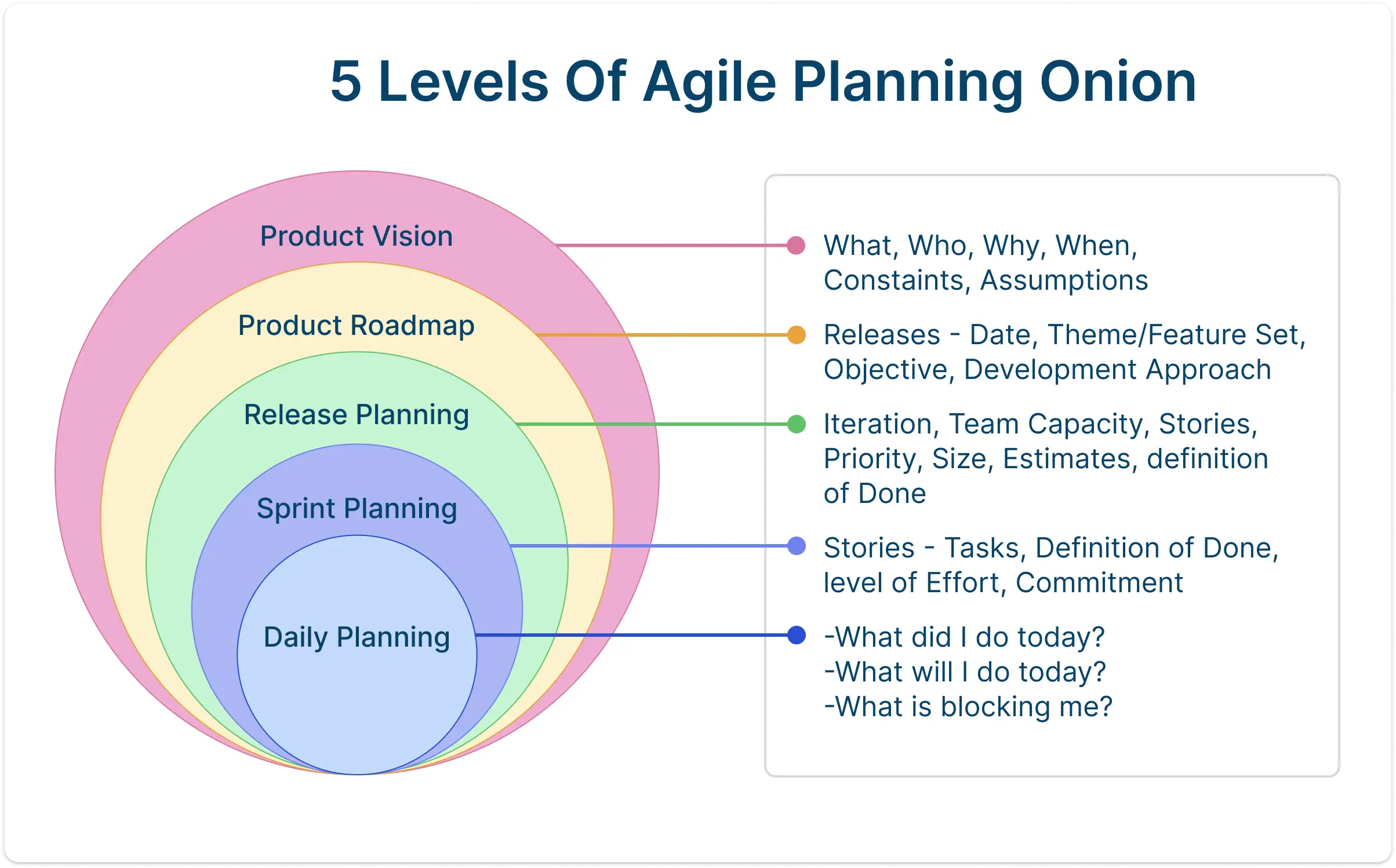
It consists of five interconnected layers, each contributing to a structured yet flexible planning approach:
- Vision – Defines the long-term business objectives and market impact of the product.
- Roadmap – Outlines the high-level strategy, key milestones, and directional goals over time.
- Release Planning – Plans for delivering functional increments of the product in scheduled releases.
- Iteration Planning – Focuses on short-term sprints, selecting tasks from the backlog.
- Daily Planning – Aligns team members through stand-ups, tracking progress, and addressing blockers.
This model helps teams balance strategic goals with Agile execution.
Agile Product Planning Process
Agile product planning is a continuous, customer-driven process that adapts to market needs. The key steps include:
- Define Vision & Strategy – Establish long-term goals and business objectives.
- Customer & Market Research – Gather insights through user feedback and competitive analysis.
- Develop a Dynamic Roadmap – Prioritize themes and epics for incremental delivery.
- Backlog Prioritization – Rank features based on impact, feasibility, and dependencies.
- Release & Sprint Planning – Break work into short iterations (sprints) for continuous delivery.
- Continuous Feedback & Iteration – Use stand-ups, reviews, and retrospectives to refine the process.
- Measure & Adapt – Track key metrics and adjust the roadmap as needed.
By following these Agile planning frameworks and principles, teams can ensure their products evolve efficiently while staying aligned with business goals and customer expectations.
3 Common Agile Product Management Frameworks
Agile methodologies are supported by several frameworks that provide specific structures and practices for implementation. Below is an overview of the most widely used Agile frameworks:
1. Scrum
Scrum is one of the most popular Agile frameworks, designed for managing complex projects through short, time-boxed iterations called sprints (typically 1–4 weeks). Each sprint focuses on delivering a usable increment of the product. A well-defined Scrum workflow helps teams structure their processes, ensuring smooth collaboration and continuous improvement.
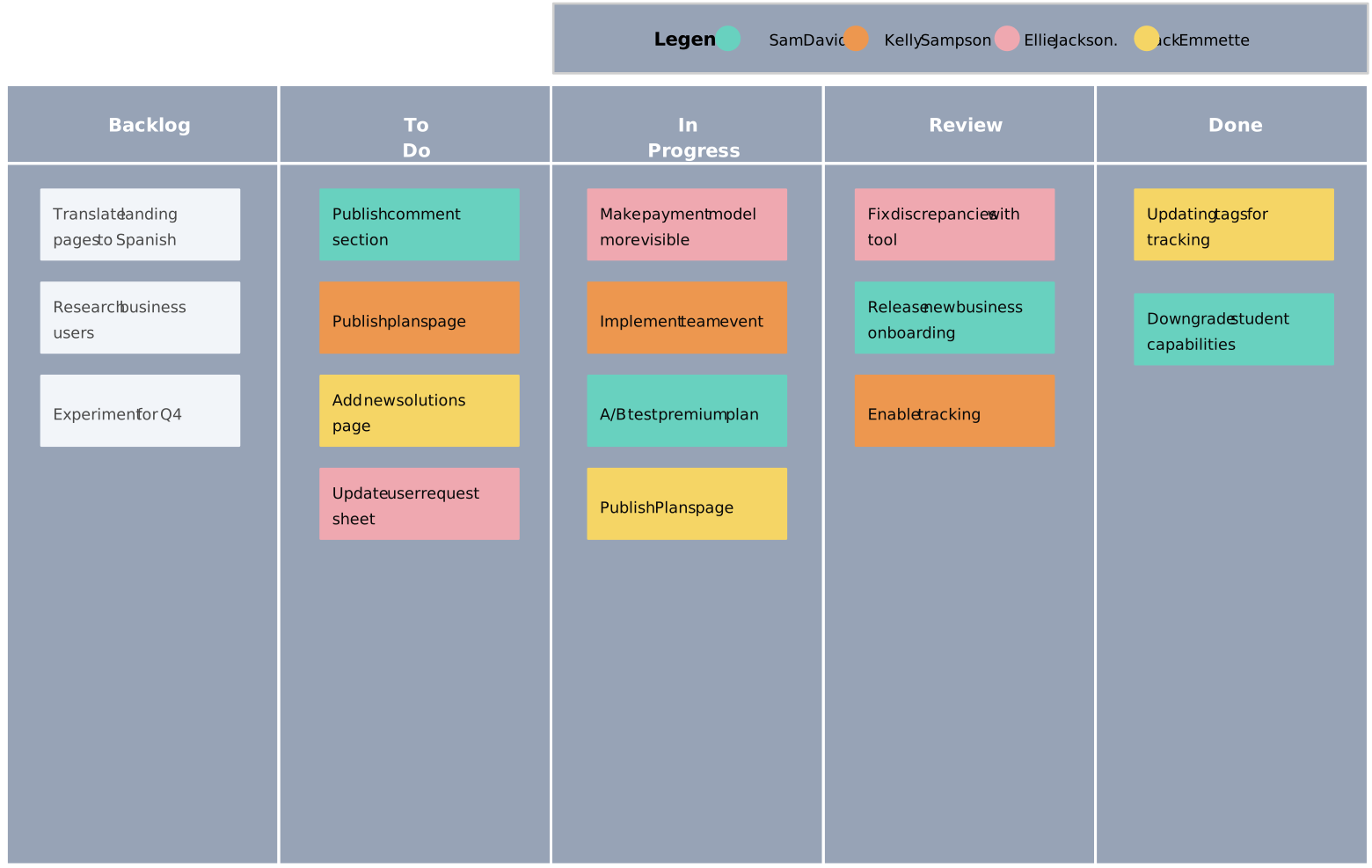

Key Components of Scrum:
- Sprint Planning: Determines the goals and tasks for the upcoming sprint.
- Daily Standups: Short, focused meetings to track progress and identify roadblocks.
- Sprint Review: Held at the end of each sprint to showcase the work done and gather feedback.
- Sprint Retrospective: Reflects on what went well, what didn’t, and how to improve in the next sprint.
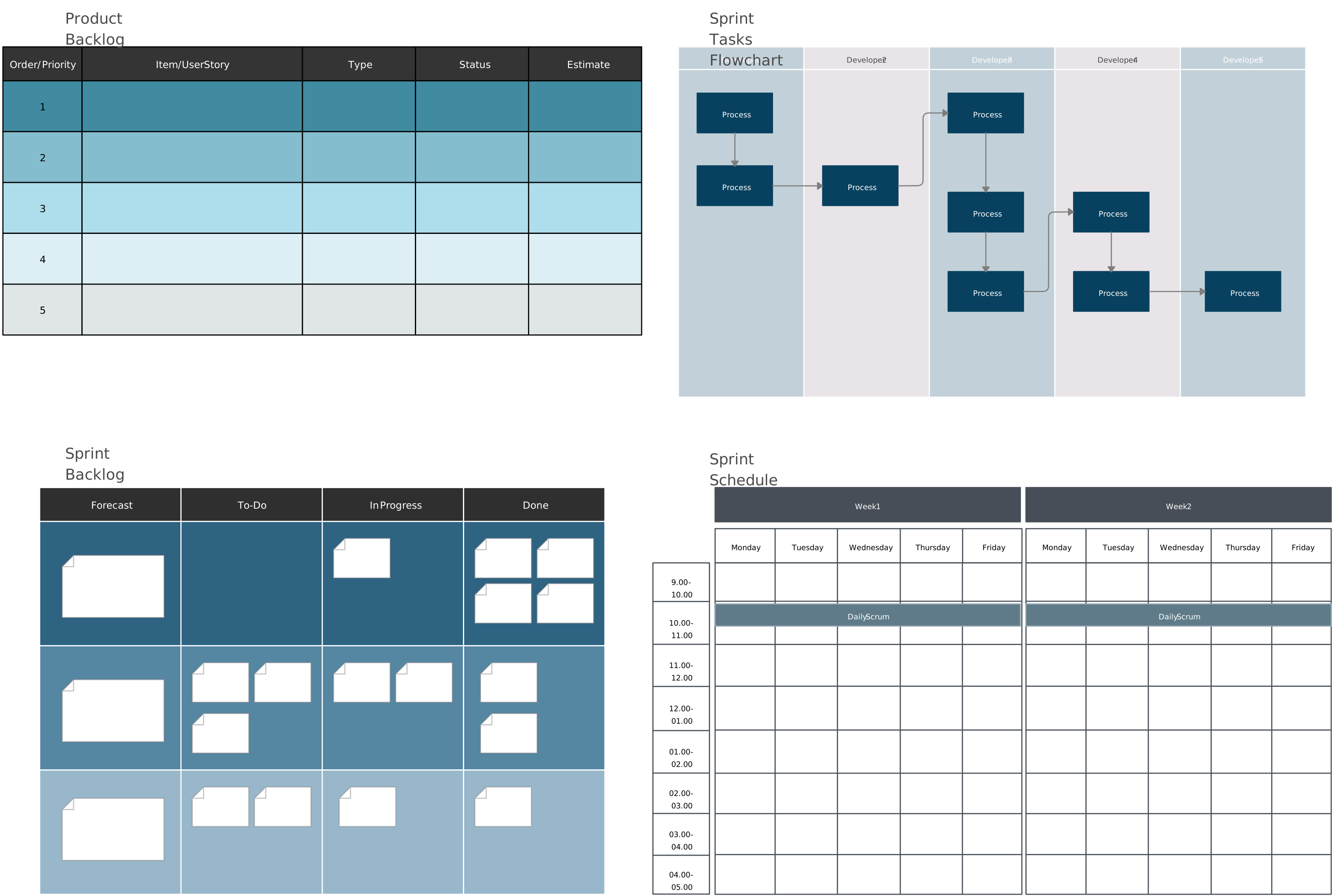
Scrum emphasizes teamwork, adaptability, and continuous improvement, making it ideal for projects with evolving requirements. Using an online Scrum board helps teams track sprint progress, collaborate in real time, and visualize tasks more effectively.
2. Kanban
Kanban focuses on visualizing workflows and improving efficiency by limiting work in progress (WIP). Teams use a Kanban board, typically divided into columns such as “To Do,” “In Progress,” and “Done,” to track tasks and ensure steady progress. Kanban software helps teams manage these workflows efficiently by providing digital boards, automation, and analytics.
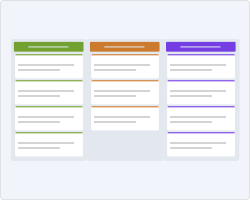
Key Principles of Kanban:
- Visualize Work: Helps teams understand their workload and identify bottlenecks within the Agile workflow, ensuring smoother task progression and improved efficiency.
- Limit WIP: Encourages teams to focus on completing tasks rather than starting new ones.
- Continuous Delivery: Unlike Scrum, Kanban doesn’t rely on time-boxed iterations, allowing work to flow seamlessly.
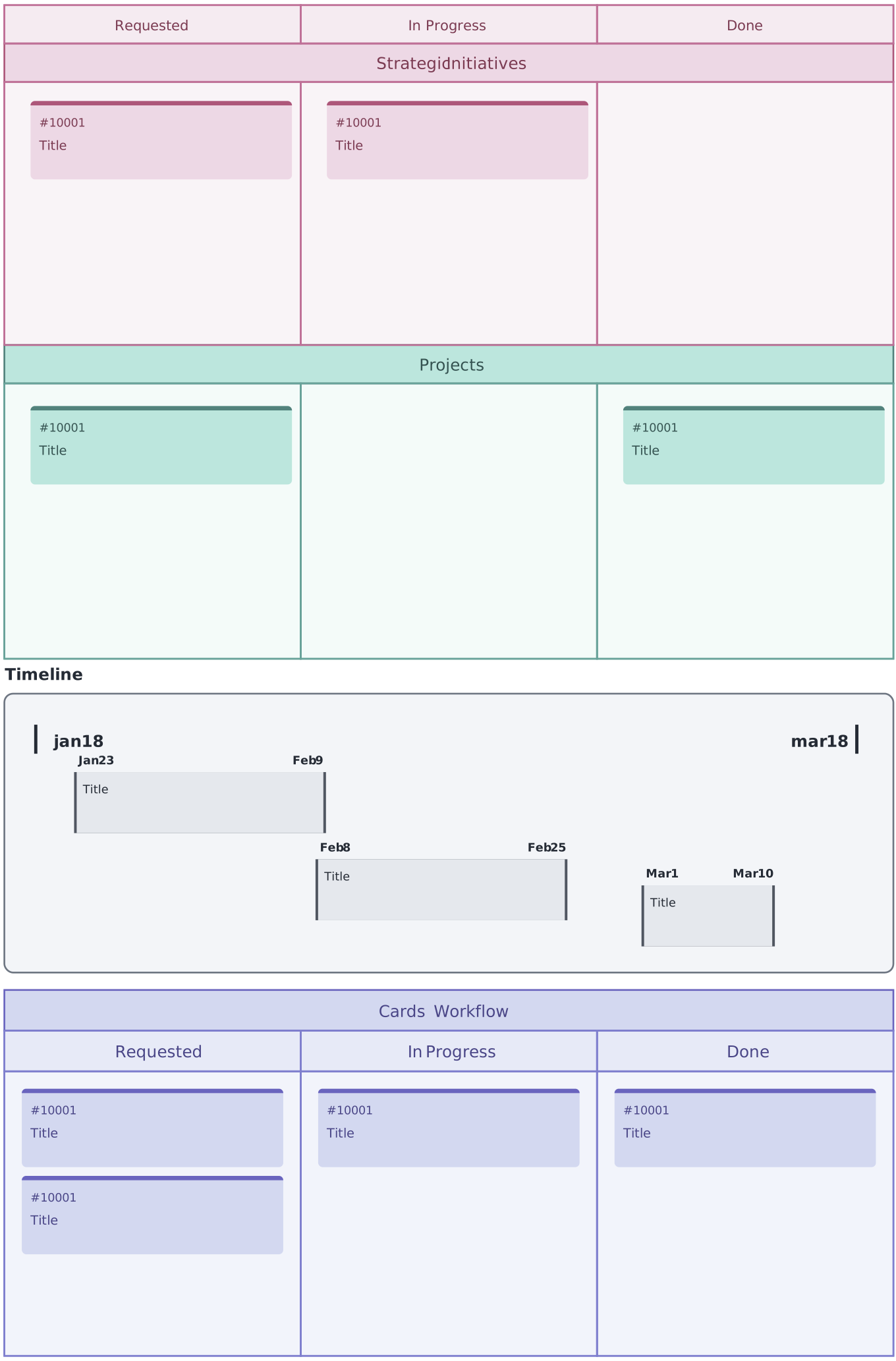
Kanban is highly flexible, making it suitable for teams that require continuous delivery and incremental improvements.
3. Extreme Programming (XP)
Extreme Programming (XP) is a framework designed for software development, emphasizing frequent releases, high customer involvement, and technical excellence. It encourages rapid feedback and continuous testing to ensure high-quality outputs.
Key Practices in XP:
- Pair Programming: Two developers work together to write and review code simultaneously.
- Continuous Integration: Code is integrated and tested frequently to catch issues early.
- Customer Collaboration: Customers are actively involved, providing input on requirements and reviewing progress.
XP is particularly effective in projects that require fast development cycles and frequent changes, ensuring both product quality and customer satisfaction.
5 Key Principles of Agile Product Management Methodologies
Agile methodologies have redefined product management by emphasizing flexibility, collaboration, and continuous improvement. Below are the core principles that make Agile an effective approach for dynamic environments:
1. Iterative Development and Feedback Loops
Agile emphasizes iterative development through short sprints, allowing teams to deliver features incrementally and gather frequent feedback to stay aligned with customer needs while reducing waste.
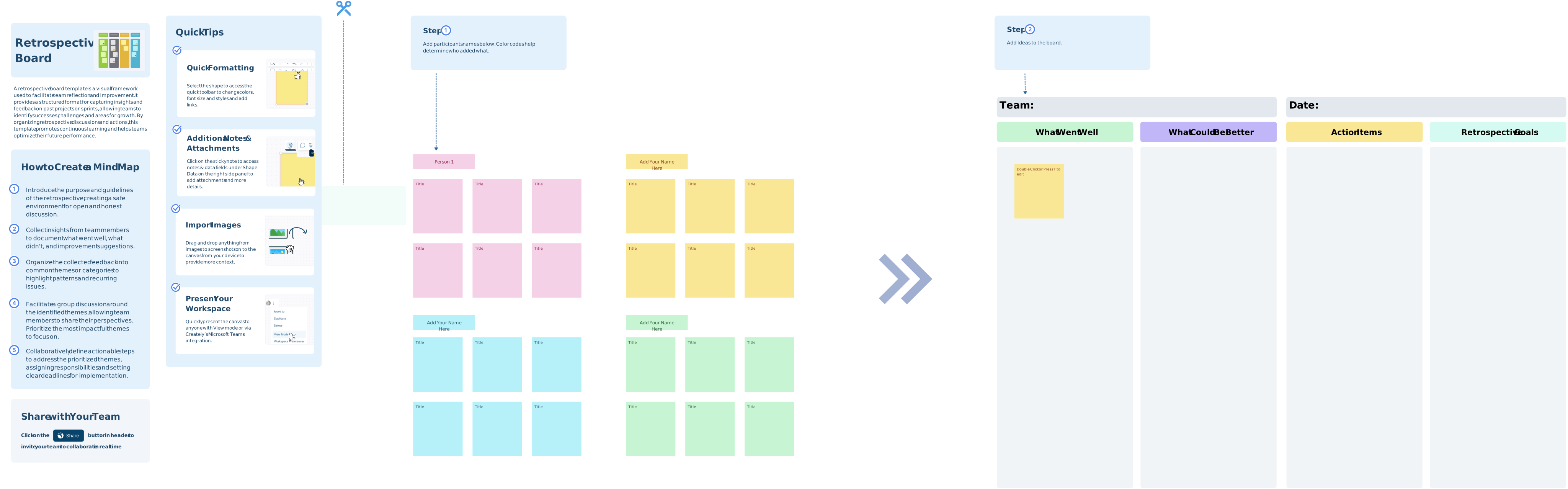
2. Collaboration Over Comprehensive Documentation
Direct communication and teamwork take precedence over extensive documentation. Agile fosters a shared understanding of goals and processes, reducing misunderstandings and improving efficiency through active collaboration among team members and stakeholders.
3. Flexibility and Adaptability
Agile methodologies welcome changes at any stage of development. This flexibility allows teams to adapt to market trends, customer feedback, or emerging challenges, ensuring the product remains relevant and valuable.
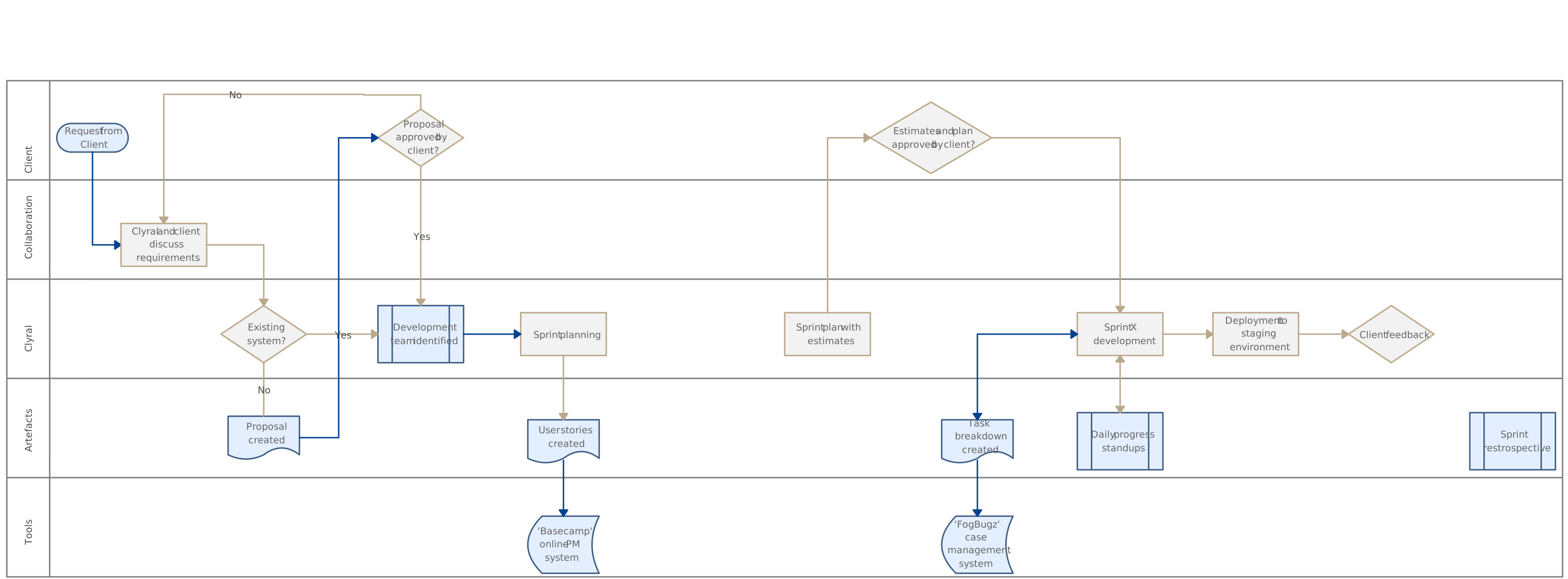
4. Focus on Continuous Value Delivery
Agile emphasizes delivering functional parts of the product incrementally. By prioritizing value-driven outcomes, teams ensure that customers benefit early while continuously refining and improving the product.
5. Empowerment of Self-Organized Teams
Agile promotes cross-functional teams that are self-organized and empowered to make decisions. This approach encourages innovation, accountability, and faster problem-solving without relying on rigid hierarchical structures.
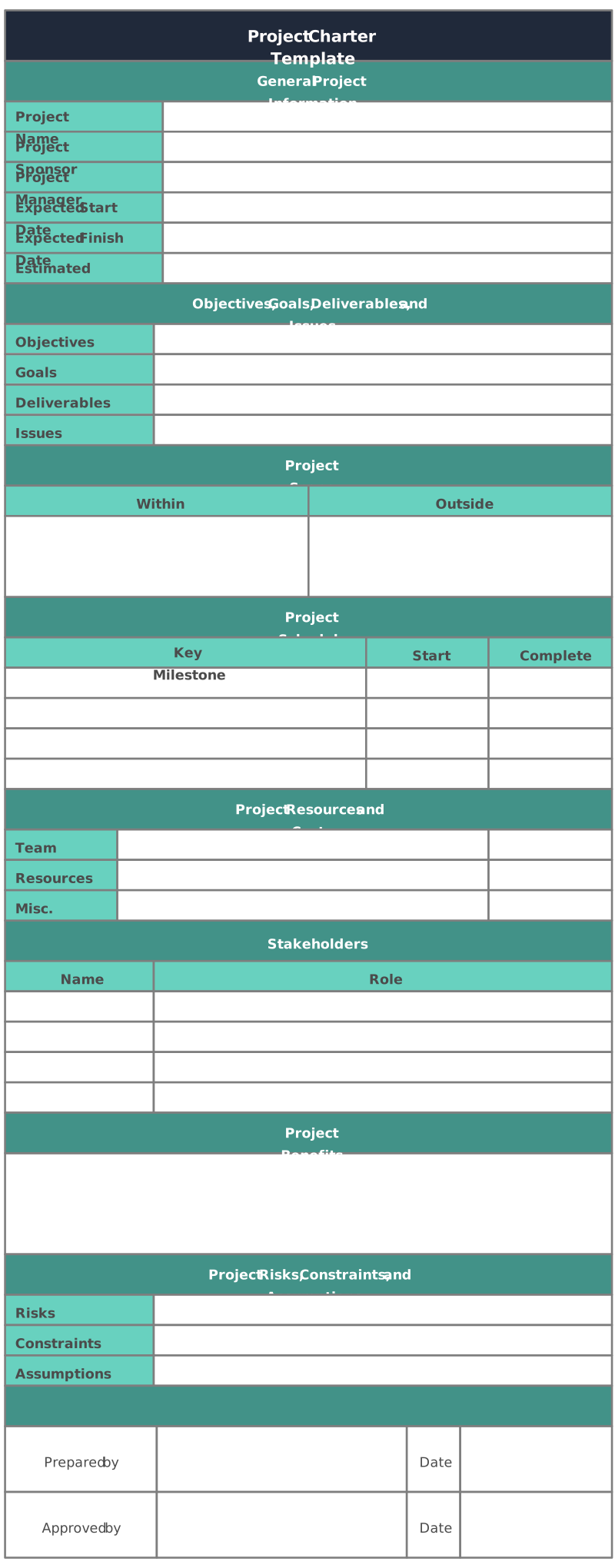
Agile Product Management Team: Key Roles & Responsibilities
An Agile product management team ensures seamless collaboration and efficient product development.
- Product Manager – Defines vision, strategy, and roadmap, aligning the product with business goals.
- Product Owner – Manages the backlog, refines requirements, and bridges business and development.
- Scrum Master – Facilitates Agile processes, removes roadblocks, and promotes continuous improvement.
- Development Team – Engineers, designers, and QA build, test, and deploy product features iteratively.
- UX/UI Designer – Conducts user research and designs intuitive experiences based on feedback.
- Business Analyst – Analyzes market trends and customer insights to inform decisions.
- Stakeholders – Provide strategic input, funding, and feedback to align the product with business objectives.
These roles work together to deliver high-quality, customer-focused products efficiently while adapting to market needs.
Pros and Cons of Agile Product Management
Agile Product Management offers a flexible, iterative approach that enhances collaboration, customer satisfaction, and rapid delivery. However, it also presents challenges such as scope creep and the need for experienced teams. The table below highlights the key advantages and drawbacks of Agile Product Management.
| Aspect | Pros | Cons |
| Flexibility | Easily adapts to changing requirements and customer feedback. | Constant changes can lead to scope creep and shifting priorities. |
| Customer Focus | Ensures continuous customer involvement for better product-market fit. | Excessive feedback may cause delays and frequent rework. |
| Faster Delivery | Iterative releases lead to quick value delivery and early ROI. | Frequent releases can increase pressure on teams. |
| Collaboration | Encourages cross-functional teamwork and transparency. | Requires high team involvement, which may be resource-intensive. |
| Risk Management | Continuous testing and iterations help mitigate risks early. | Short cycles may lead to insufficient documentation. |
| Innovation | Promotes experimentation and rapid improvements. | Can be challenging to align long-term vision with short sprints. |
| Efficiency | Eliminates waste and focuses on high-priority tasks. | Requires experienced teams for successful implementation. |
Agile Product Management is highly adaptive and customer-centric, but it demands strong discipline and the right balance between flexibility and long-term planning.
Traditional (Waterfall) vs Agile Product Management
In the rapidly changing world of product development, Agile Product Management is often contrasted with traditional methods like Waterfall. This comparison helps organizations determine which approach best suits their strategic needs. While both methodologies have their merits, understanding their core characteristics and benefits can guide more informed decision-making.
| Aspect | Agile Product Management | Traditional Product Management (Waterfall) |
| Approach | Iterative and incremental | Sequential and linear |
| Flexibility | High; accommodates changes at any stage | Low; follows a pre-defined plan |
| Feedback | Frequent and continuous | Sparse; typically after a phase is completed |
| Documentation | Minimal and adaptable | Comprehensive and rigid |
| Customer Involvement | Ongoing throughout the process | Limited; mainly at the beginning and end |
| Risk Management | Adaptable to emerging risks | Relies on initial risk assessment |
Agile Product Management stands out for its flexibility and adaptability, enabling teams to incorporate user feedback and adjust strategies to market changes quickly. Tools like Kanban board software enhance task management and project visualization.
In contrast, the Waterfall method offers a structured approach ideal for projects with stable requirements but struggles with unexpected changes. Companies adopting Agile often experience faster turnaround times, improved collaboration, and more customer-focused outcomes, giving them a competitive edge.
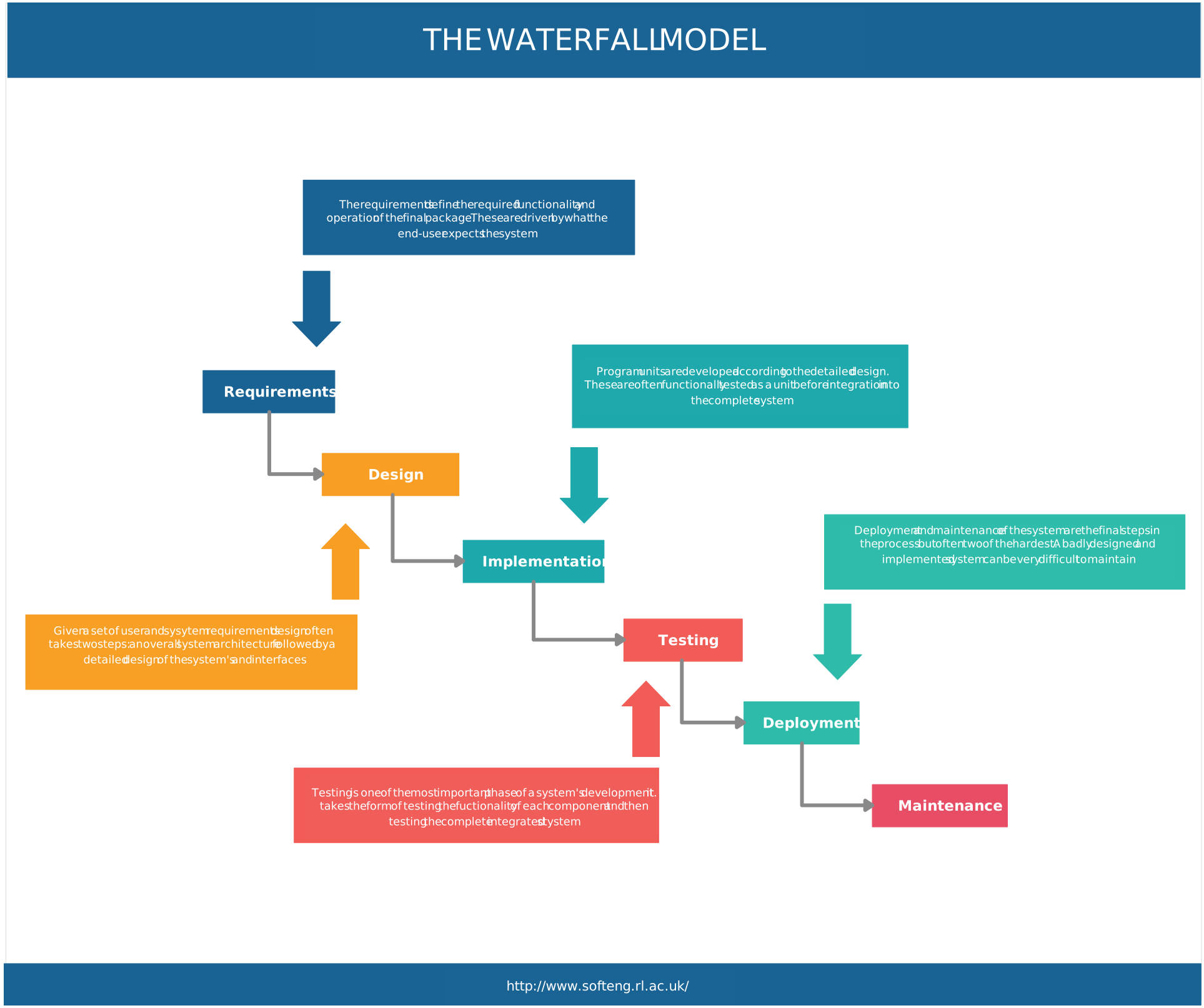
Transitioning from Waterfall to Agile
Shifting from Waterfall to Agile requires a mindset shift, process adjustments, and cultural change. Here’s how organizations can make a smooth transition:
- Assess Current Processes – Identify bottlenecks in the Waterfall approach and define Agile adoption goals.
- Build Agile Awareness – Educate teams on Agile principles, methodologies (Scrum, Kanban), and best practices.
- Start with a Pilot Project – Test Agile with a small team or project before scaling.
- Redefine Roles & Responsibilities – Shift from rigid hierarchies to cross-functional, collaborative teams.
- Adopt Agile Tools – Implement backlog management, sprint planning, and collaboration tools like Jira, Creately, or Azure DevOps.
- Embrace Iterative Development – Deliver work in smaller increments, focusing on feedback and continuous improvement.
- Encourage Cultural Change – Promote adaptability, transparency, and open communication.
- Measure Success & Adjust – Track Agile adoption metrics and refine processes as needed.
By transitioning gradually and fostering an Agile mindset, organizations can improve efficiency, flexibility, and customer responsiveness.
Implementing Agile Product Management Best Practices
Incorporating Agile Product Management requires strategic planning and a focus on fostering flexibility, collaboration, and continuous improvement. Below are the key practices to ensure a successful transition to Agile:
1. Strategies for Agile Adoption
- Education and Training: Provide teams with a thorough understanding of Agile principles, emphasizing iterative development, feedback loops, and collaboration.
- Incremental Implementation: Introduce Agile practices gradually, starting with elements like daily stand-ups or short sprints, before expanding further.
- Agile Tools: Utilize project management tools like Creately to streamline workflows, visualize progress, and enhance team collaboration.
2. Leadership’s Role in Agile
Leadership is crucial for effective Agile implementation:
- Lead by Example: Managers should embody Agile values in an Agile Team by practicing adaptability and supporting iterative processes.
- Encourage Open Communication: Create an environment where team members feel safe sharing ideas and feedback.
- Resource Support: Ensure teams have access to the necessary tools and resources to succeed in an Agile framework.
3. Stakeholder Engagement
Active stakeholder involvement is essential to Agile success. Proper stakeholder identification ensures key decision-makers are recognized and engaged from the start.
- Regular Updates: Maintain transparency by providing frequent project updates through progress reports or demo sessions. Using effective stakeholder management practices helps ensure clear communication and alignment.
- Feedback Integration: Gather and integrate stakeholder feedback during each iteration to align with customer needs and market demands. Stakeholder diagrams can help visualize relationships and streamline engagement.
- Goal Alignment: Define and align project objectives with all stakeholders to maintain focus and consistency. A well-structured stakeholder engagement plan supports collaboration and minimizes conflicts.
By integrating these strategies, Agile teams foster stronger collaboration, improve adaptability, and ensure product development aligns with business and customer expectations.

By focusing on these best practices, organizations can effectively implement Agile Product Management, driving innovation, enhancing collaboration, and delivering customer-centric products in dynamic market environments. Streamline your Agile processes and enhance team collaboration with these Agile Templates, designed to support every stage of your project management journey
Helpful Resources
An online Kanban board to organize your everyday workflows and set your team up for success. Visually organize and track progress of any kind of work collaboratively.
Effortlessly create a roadmap to clarify vision, enhance communication, and improve execution
Rather than adhering to one-size-fits-all processes, agile workflows embrace fluidity, allowing teams to focus on what really matters and adapt as needed.
This guide delves into the various stages of the product development process and helps you use the framework as a compass to guide you as you go about developing a product.
A single connected visual platform to collaborate on planning, tracking and running your Scrum projects.
Are agile teams more effective in getting work done faster than traditional teams? Are they better structured and optimized to achieve success every time?
Agile Product Management with Creately
Incorporating Creately into Agile Product Management workflows can streamline collaboration, enhance transparency, and improve project tracking—key principles of Agile methodology. Creately’s intuitive visual tools align seamlessly with Agile’s iterative and collaborative approach, making it an ideal solution for teams aiming to boost efficiency and responsiveness.
Key Benefits of Using Creately in Agile Product Management
Visual Collaboration Agile thrives on collaboration, and Creately’s visual interfaces foster real-time engagement among team members. Teams can brainstorm, document ideas, and design software, define project requirements simultaneously, regardless of location. This promotes a shared understanding and accelerates decision-making.
Seamless Integrations with Jira, GitHub, and Azure DevOps Creately integrates with Jira, GitHub, and Azure DevOps to sync tasks, issues, and workflows, ensuring real-time updates and seamless collaboration across teams. These integrations enhance visibility, streamline processes, and improve Agile project management efficiency.
Advanced Diagramming Capabilities Creately provides an extensive collection of diagram types that support Agile workflows, software development, and product design. From user story maps, sprint planning boards, flowcharts, wireframes, UML diagrams, to ER diagrams, teams can visually plan and document complex processes. The intelligent shape libraries and pre-built templates enable quick structuring of Agile frameworks, ensuring clarity and efficiency in execution.
Kanban Boards for Workflow Management Creately’s Kanban boards allow teams to visualize workflows, manage tasks, and allocate resources efficiently. Tracking progress through sprints or backlogs becomes seamless, ensuring every member stays aligned with deadlines and project goals.
Project Progress Tracking Creately’s tools make it easy to monitor milestones, sprint completions, and iterative progress. Agile’s emphasis on frequent reviews and adaptability is supported by Creately’s ability to highlight project updates and flag potential challenges in real time.
Simplified Management and Planning Agile product management requires a balance between strategic planning and tactical execution. Creately enables teams to map out strategies visually while providing tools to execute those plans effectively. This simplifies complex processes and positions teams to be proactive and focused.
Enhanced Feedback Integration Agile revolves around iterative improvements, and Creately facilitates this by enabling real-time feedback loops. Teams can quickly adapt to changes, integrate feedback, and keep the project moving forward efficiently.
By integrating Creately into Agile Product Management, teams gain access to a platform that not only enhances current workflows but also prepares them for future challenges. Its robust visual tools ensure alignment, collaboration, and agility, driving better product outcomes and fostering a culture of innovation.
Overcoming Common Challenges in Agile Product Management
Transitioning to Agile Product Management can present challenges, but with effective strategies, these obstacles can be transformed into opportunities for growth.
- Address Resistance to Change – Involve team members early, provide training, and highlight Agile benefits.
- Ensure Continuous Stakeholder Communication – Use structured updates, regular check-ins, and progress reports.
- Balance Flexibility with Control – Establish clear yet adaptable guidelines to maintain focus.
- Bridge Skill Gaps – Invest in upskilling and encourage continuous learning.
- Manage Changing Priorities – Use backlog management and planning tools to maintain efficiency.
By addressing these challenges proactively, organizations can build resilient teams, enhance collaboration, and successfully navigate the complexities of Agile Product Management.
Conclusion
Agile Product Management emphasizes flexibility, collaboration, and customer-centricity through iterative development, making it ideal for dynamic industries. Frameworks like Scrum, Kanban, and XP enable teams to adapt and continuously improve, while tools like Creately enhance workflows, collaboration, and project tracking. By integrating Agile principles and visual tools, organizations can drive innovation, meet evolving customer demands, and achieve sustainable success in competitive markets.
Resources:
Orion Journals. (n.d.) Agile Product Management as a Catalyst for Technological Innovation. Available at: https://orionjournals.com/ijsru/content/agile-product-management-catalyst-technological-innovation
GSC Online Press. (n.d.) Agile Methodologies: Adapting Product Management to Rapidly Changing Market Conditions. Available at: https://gsconlinepress.com/journals/gscarr/content/agile-methodologies-adapting-product-management-rapidly-changing-market-conditions
Author Unknown. (n.d.) Agile Product Management: User Stories: How to Capture, and Manage Requirements for Agile Product Management and Business Analysis with Scrum and the 7 Skills of Highly Effective Agile Product Managers. Google Books. Available at: https://books.google.com/books/about/Agile_Product_Management.html?id=aLPguwEACAAJ