Continuous improvement is the ongoing practice of examining how work gets done, testing changes, measuring the results, and standardizing what works. It can involve small, incremental changes as well as larger breakthrough improvements. The objective is to create better processes, products, or services through repeated, evidence-based learning.
It is also a management practice, not a one-time project. Leaders set priorities and remove barriers, while the people closest to the work identify problems, test ideas, and share what they learn. This combination helps improvement become part of day-to-day operations rather than an occasional initiative.
What is Continuous Improvement?
Continuous improvement is a systematic approach to improving the quality, efficiency, or effectiveness of processes, products, and services over time. The American Society for Quality (ASQ) notes that improvement can be incremental or occur through breakthrough changes, so the approach is not limited to small adjustments.
The concept originated in manufacturing but has since been adopted across various industries. It involves all levels of an organization, from frontline workers to top management, in identifying and implementing improvements. Key methodologies associated with continuous improvement include Lean, Six Sigma, and Kaizen.
Continuous improvement is characterized by:
Regular assessment of current processes
Identification of areas for enhancement
Implementation of changes
Measurement of results
Iteration based on feedback and outcomes
When teams make decisions from reliable evidence and review results regularly, continuous improvement can help them respond to changing conditions and improve customer outcomes. Results depend on the problem, the quality of implementation, and whether successful changes are sustained.
Management plays a crucial role in sustaining a continuous improvement culture. Their commitment is vital in endorsing the necessary resources and support for ongoing initiatives. When leaders actively participate in and support these efforts, it not only strengthens the process but also signals to employees that improvement is a key strategic priority.
Continuous improvement provides a repeatable way to understand performance, test a change, and learn from the outcome. The following six steps turn that principle into a practical improvement cycle.
How to Implement Continuous Improvement in 6 Steps
Use these six steps to introduce continuous improvement in a controlled, measurable way.
1. Assess Your Current State
Start by mapping the current process and gathering baseline data such as cycle time, error rate, cost, wait time, or customer feedback. Include the people who perform and receive the work so that undocumented handoffs and workarounds are visible. A clear baseline makes it possible to compare results after a change.
2. Identify the Root Cause of Problems
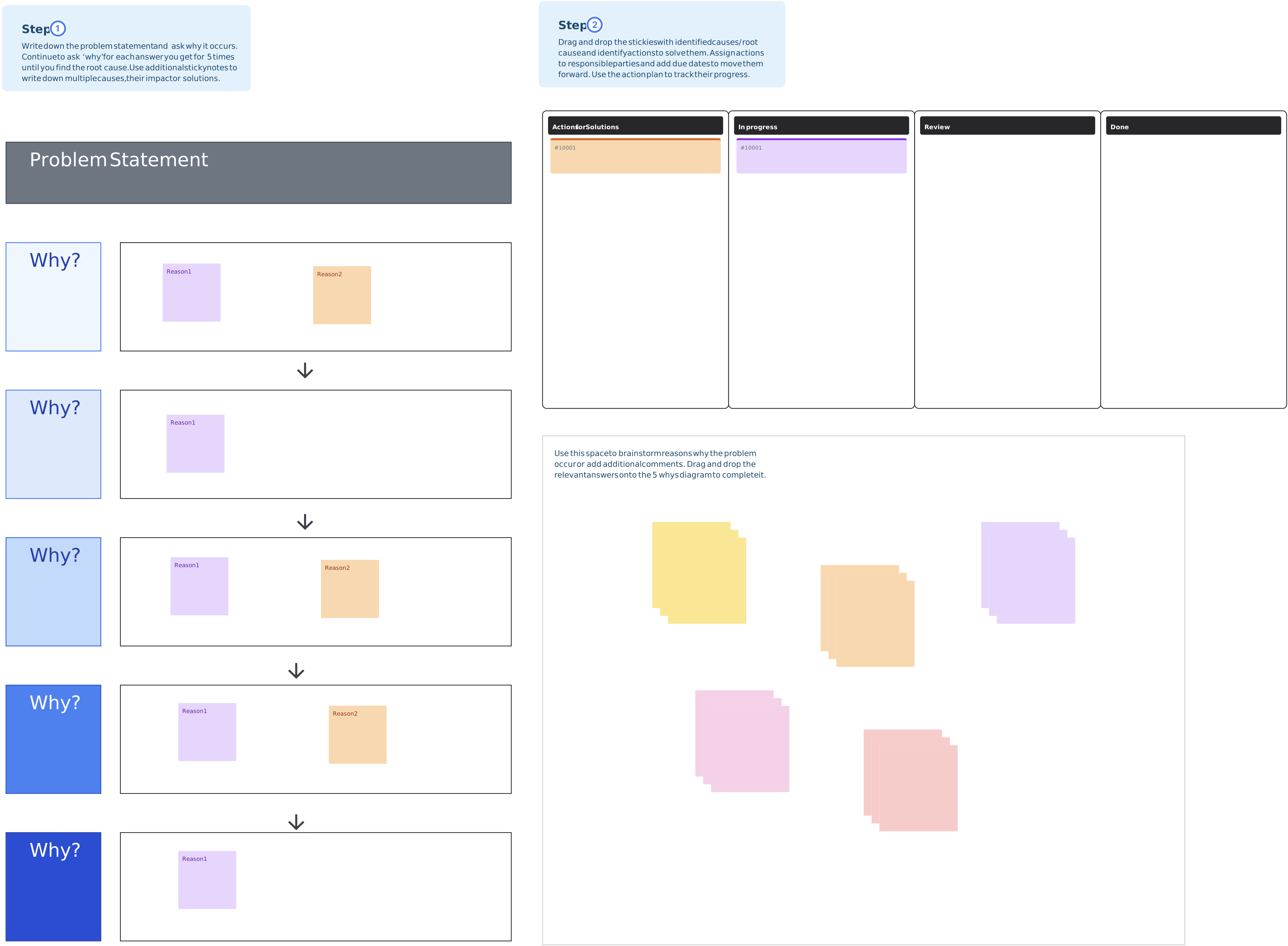
Once you’ve assessed the current state, focus on pinpointing the root causes of inefficiencies or defects. Leveraging tools like the 5 Whys technique can be highly effective in uncovering the fundamental issues impacting your processes. This analysis ensures that you focus on the core issues, not just symptoms.

3. Develop a Solution
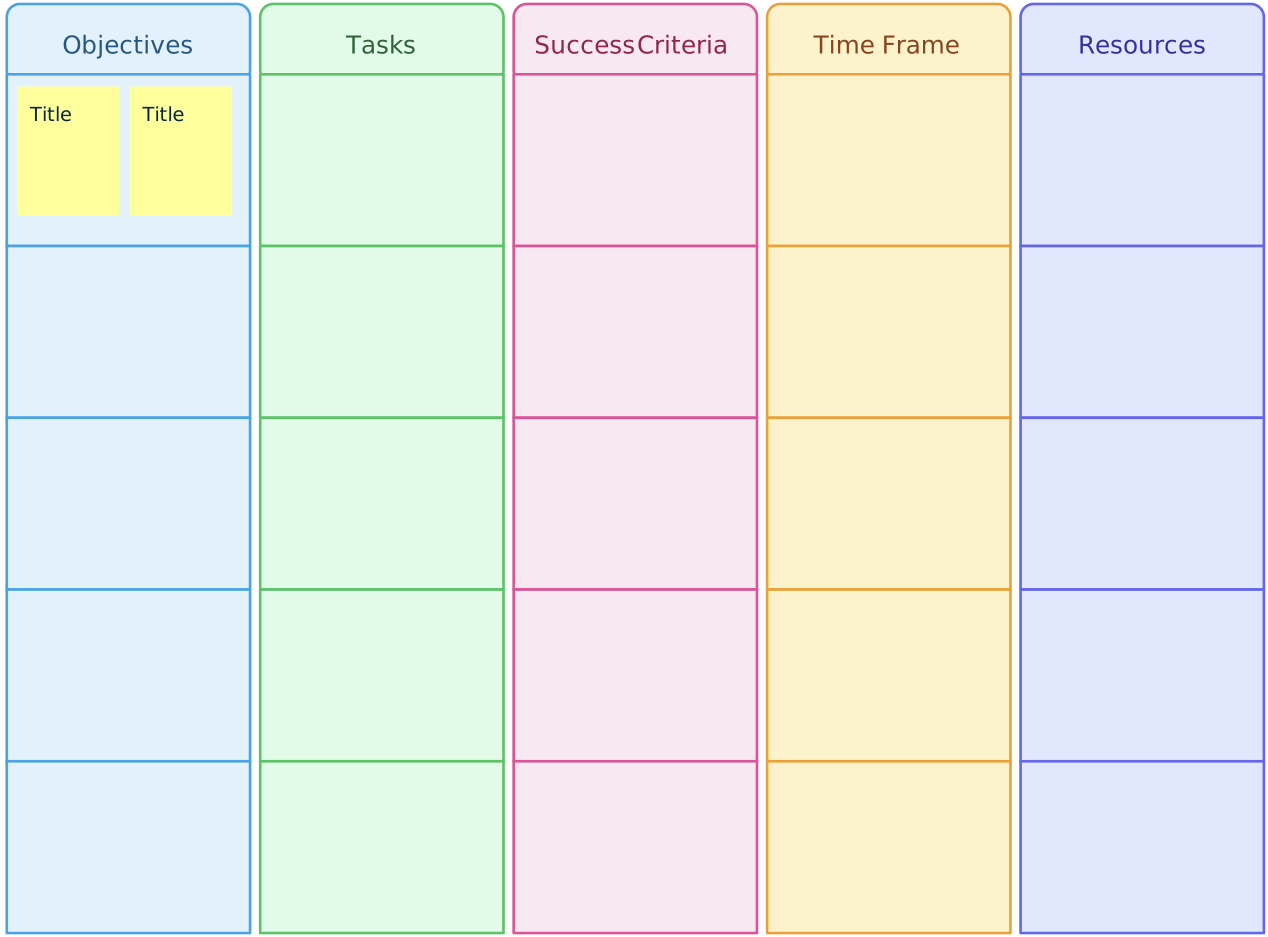
After identifying likely root causes, develop potential solutions with the people affected by the process. Compare options by expected impact, effort, risk, and alignment with organizational objectives. Define the owner, success measure, and scope of each proposed test before implementation.
4. Implement the Plan
Test the chosen solution on a manageable scale to limit risk and gather evidence. The PDCA cycle (Plan-Do-Check-Act) provides a practical structure: plan the change, run the test, check the results, and act on what the team learned before expanding or revising it.
5. Evaluate
Compare the results with the baseline and success measures defined earlier. Check for intended improvements as well as unintended effects on quality, workload, customers, or downstream teams. If the evidence is inconclusive, adjust the test and repeat it rather than assuming the change worked.
6. Create Processes for Sustained Improvement
Standardize successful changes by updating the process map, operating instructions, training materials, and relevant measures. Assign an accountable process owner and set a review trigger or schedule. When conditions change or results begin to drift, the owner can bring stakeholders back together to review feedback and start another improvement cycle.
With Creately’s process mapping software, teams can map the current and improved workflows, clarify owners and cross-functional handoffs, and keep supporting notes and links connected to the diagram. Real-time collaboration, comments, and @mentions give stakeholders a shared place to discuss changes and capture feedback. Updating the same process workspace as the workflow evolves helps the map function as living process documentation; it does not replace any formal approval system an organization may require.
The Three Key Aspects of Continuous Improvement
Continuous improvement is a strategic approach that focuses on enhancing organizational performance through three critical dimensions: process, product, and people. By systematically addressing these interconnected areas, businesses can drive innovation, efficiency, and sustainable growth.
Process Improvement
Process improvement involves meticulously examining and refining the workflow, methods, and procedures used to deliver products or services. This aspect focuses on:
Identifying inefficiencies and bottlenecks
Streamlining operational procedures
Reducing waste and unnecessary steps
Implementing more effective work methodologies
Enhancing overall operational efficiency
Product Improvement
Product improvement centers on continuously analyzing and enhancing the product or service offering. This dimension includes:
Evaluating current product features and functionality
Gathering and incorporating customer feedback
Identifying potential design innovations
Addressing performance limitations
Staying ahead of market trends and competitive offerings
People Improvement
People improvement recognizes that human capital is the most valuable asset in any organization. This aspect emphasizes:
Continuous skill development and training
Creating a culture of learning and growth
Empowering employees with new knowledge
Encouraging innovation and creative problem-solving
Developing leadership and collaborative capabilities
By holistically addressing process, product, and people improvements, organizations can create a dynamic environment of ongoing enhancement, adaptability, and competitive advantage.
Benefits of Continuous Improvement
Enhanced Quality and Customer Satisfaction
Continuous improvement keeps attention on product and service quality. Regular feedback and performance measures can reveal defects, delays, and customer pain points that teams can investigate. When the resulting changes address the underlying cause, they may improve consistency and the customer experience.
Increased Employee Engagement and Morale
Involving employees in diagnosing problems and testing solutions can strengthen ownership of the work. It also gives teams a practical channel for sharing frontline knowledge. Engagement benefits are not automatic, however; leaders need to respond to feedback, provide time and resources, and explain how improvement decisions are made.
Agility and Adaptability
Continuous improvement develops an organization’s capacity for change, making it more agile and adaptable to market shifts. By constantly evaluating and refining processes, companies build a proactive approach to problem-solving. This agility allows organizations to respond quickly to unexpected challenges and capitalize on new opportunities. The result is a more resilient business that can navigate the complexities of today’s fast-paced business environment with greater ease and success.
Competitive Advantage
Organizations can use continuous improvement to strengthen capabilities that matter to customers, such as quality, reliability, responsiveness, and cost control. These gains may support a competitive advantage when they are difficult to copy and consistently maintained. The method itself does not guarantee market leadership.
Sustainable Growth
Steady improvements can help an organization build more reliable processes before it scales them. Small tests also make changes easier to evaluate and adjust than an organization-wide rollout. Over time, successful changes can accumulate into meaningful operational gains, although sustainable growth depends on broader strategic and market conditions as well.
Enhanced Safety and Risk Management
Regular process reviews can help teams identify safety hazards, control gaps, and emerging risks before they contribute to an incident. Employees need a clear way to report concerns, while accountable owners need to evaluate and act on them. Any effect on incident rates or insurance costs depends on the controls implemented and the organization’s circumstances.
Helpful Resources
PDCA cycle examples to inspire your continuous improvement efforts and transform your organization's processes.
Visual tools and templates to successfully determine the root causes of issues via thorough analysis.
Unlock the power of continuous improvement by mastering the Kaizen principles and transforming your organization’s efficiency and culture.
Discover the power of the Kaizen method to achieve continuous improvement.
Difference Between Continuous Improvement and Continuous Delivery
Continuous improvement is a broad management approach for repeatedly improving processes, products, or services. Continuous delivery is a software-development practice that keeps code changes in a releasable state through automated build, test, and deployment processes. A software team may use continuous improvement to refine its continuous-delivery system, but the terms describe different concepts.
Here is a comparative overview:
| Feature | Continuous Improvement | Continuous Delivery |
| Objective | Improve performance by testing and learning from changes | Keep software changes ready for reliable release |
| Application | Broad application across various industries | Narrow application focused on software development |
| Common methods | Uses approaches such as PDCA, Lean, Kaizen, or Six Sigma | Uses automated integration, testing, and deployment practices |
While building an agile team allows for improved engagement in both continuous improvement and continuous delivery processes, the frameworks and tools employed may vary, dictated by the distinct requirements of each goal. Understanding the unique features of these methodologies is essential for organizations aiming to leverage their benefits efficiently. For more detailed insights, refer to context diagrams that prominently illustrate the application of these methodologies.
The Main Components of Continuous Improvement
The PDCA (Plan-Do-Check-Act) cycle is a four-step model for testing change and learning from the results. ASQ’s PDCA guidance emphasizes that the cycle should be repeated: teams plan a change, test it, study the evidence, and either standardize the learning or revise the plan.

Plan: In this stage, organizations seek out opportunities for improvement, establishing clear objectives and determining the required actions. This phase often involves thorough research and hypothesis formulation concerning potential interventions.
Do: Here, plans are put into action on a small scale to test their effectiveness. Real-world application of these plans provides immediate insights and feedback necessary for refining approaches and techniques.
Check: Analyzing the data derived from the ‘Do’ phase ensures that outcomes match expectations. This involves rigorous evaluation metrics to assess whether desired changes contribute positively to the strategic goals.
Act: Based on analysis, if the modification leads to desired outcomes, it is implemented on a broader scale. If not, the cycle begins anew, with revisions based on learned experiences.
Tools for Effective Continuous Improvement
Different continuous improvement methods suit different types of problems. The following approaches can help teams reduce waste, manage flow, control variation, or respond to feedback:
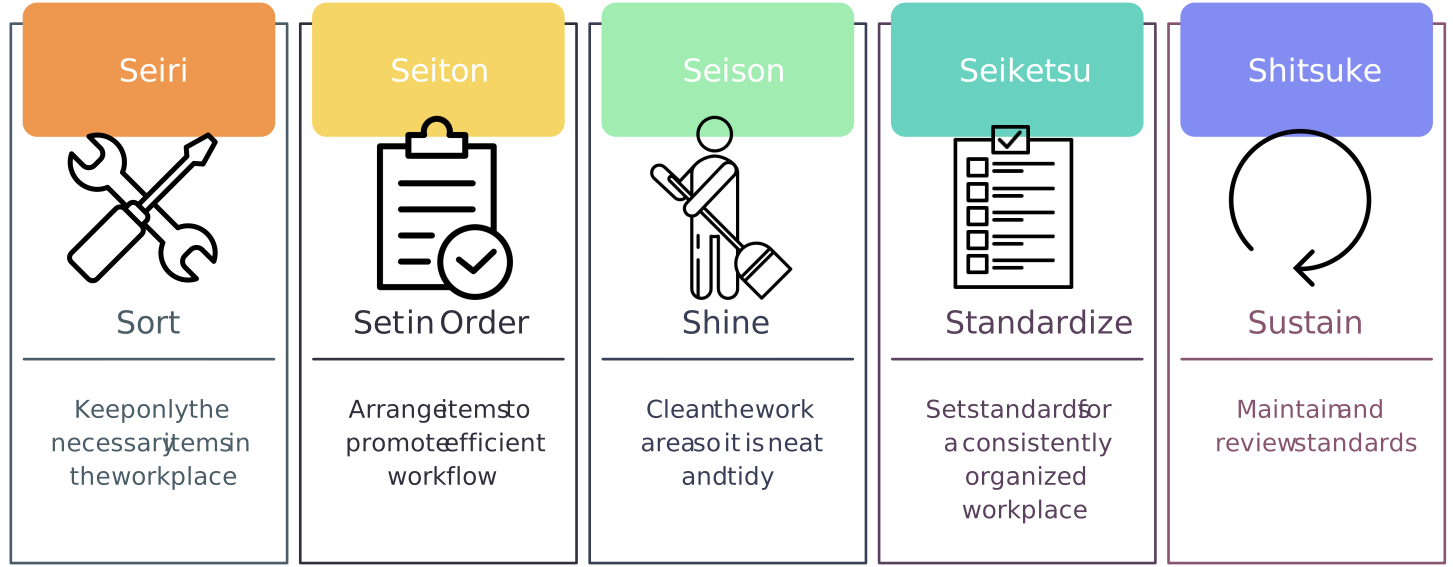
- Lean: Born from the manufacturing genius of Toyota, Lean is a methodology focused on waste elimination and efficiency enhancement. It emphasizes value creation for the customer with minimal waste. Lean tools such as 5S (Sort, Set in order, Shine, Standardize, Sustain) and Value Stream Mapping aid in identifying waste and streamlining production processes.
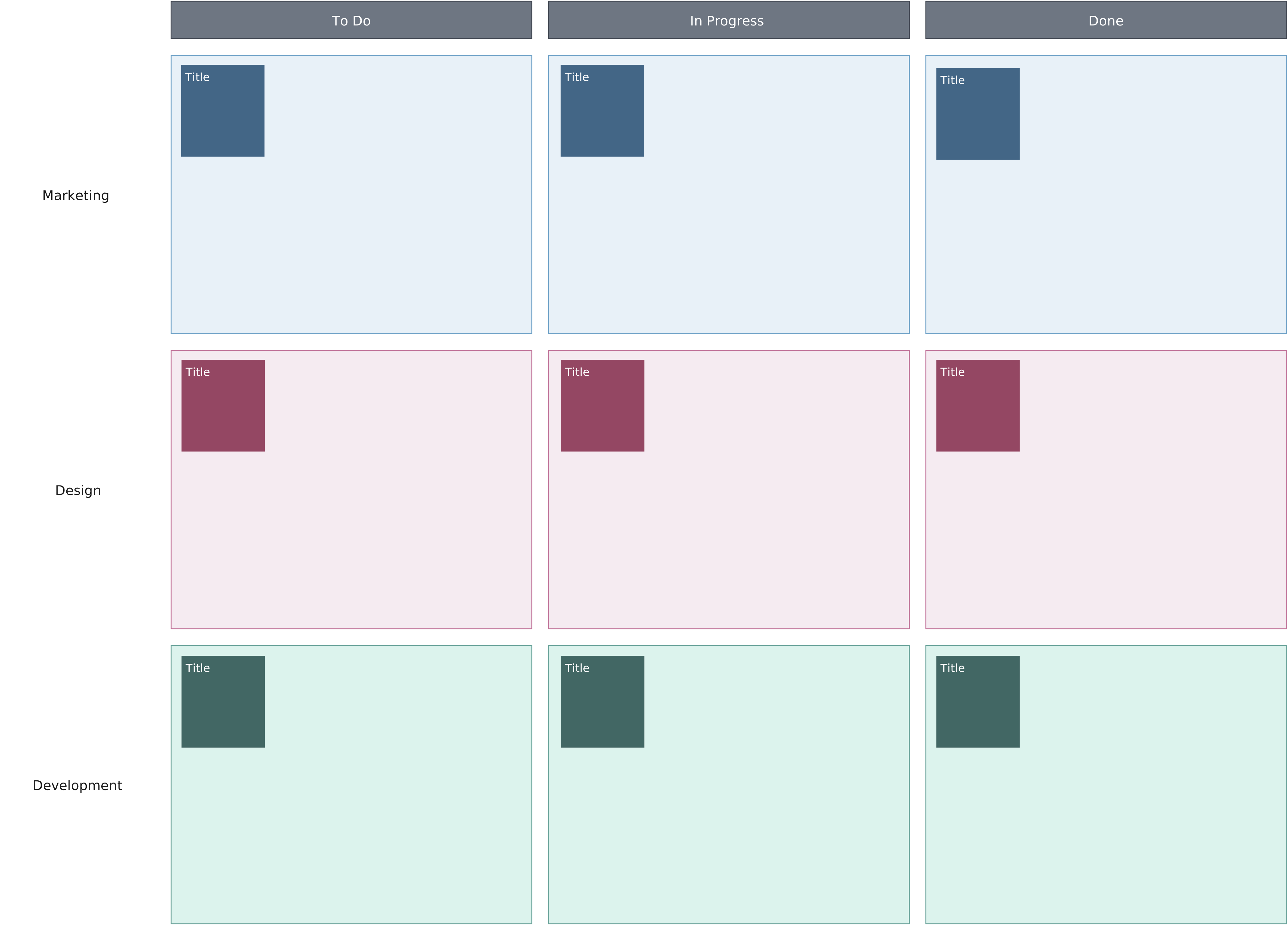
- Kanban: Originating from Lean, the Kanban method improves work efficiency through visual management. It utilizes boards with columns representing different stages of a workflow, allowing for easy visualization of tasks. This helps teams to better manage flow, understand load capacity, and identify bottlenecks in processes.
Six Sigma: Six Sigma is a data-driven approach to reducing defects and process variation. Its DMAIC cycle—Define, Measure, Analyze, Improve, and Control—provides a structured path for investigating and improving an existing process.
Total Quality Management (TQM): TQM integrates quality management principles into the fabric of an organization, emphasizing customer satisfaction, employee involvement, and continuous improvement. This all-encompassing approach involves every employee and department, striving for a culture of quality at every level.
Agile: Often used in software development, Agile frameworks such as Scrum and Extreme Programming (XP) facilitate a responsive, iterative approach to project management. By breaking projects into small increments and adapting to client feedback, Agile supports incremental improvements and swift adaptability.
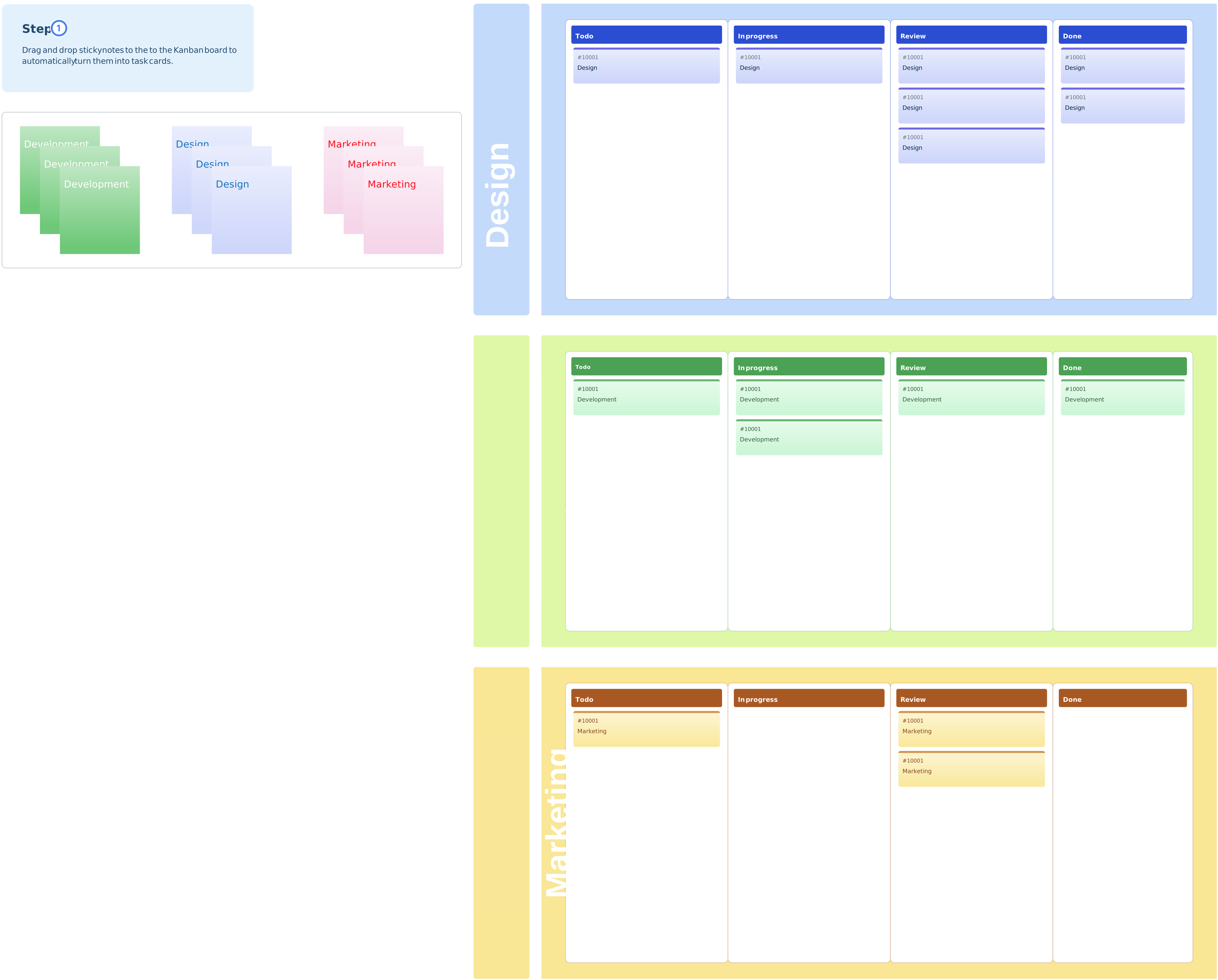
Each method offers a different set of practices and tools. Select an approach based on the problem, available evidence, team capability, and organizational goals rather than applying one method to every situation.
Choosing a method is only the beginning. Teams also need a clear problem statement, baseline evidence, an owner, and an agreed review cadence. Visualizing the workflow helps participants see dependencies and handoffs, while keeping supporting context connected makes it easier to understand why a change was made during the next review cycle.
Continuous improvement is most effective when it becomes a shared operating habit. Frontline employees contribute practical knowledge, leaders provide direction and resources, and process owners maintain the documented workflow after a successful change.
As customer expectations, technologies, and operating conditions change, teams can return to the same cycle: observe the process, identify a problem, test an improvement, evaluate the evidence, and update the standard when the result is useful.
The work is ongoing by definition. Start with one measurable problem, test a change at an appropriate scale, and use what the team learns to guide the next iteration.
Sources
Continuous Improvement Model — ASQ