Frustrated with slow workflows, rising costs, or processes that just don’t seem to work? Business Process Reengineering (BPR) offers a powerful way to rethink and redesign your operations for greater efficiency, speed, and results. In this guide, we’ll explore what BPR is, the key steps to implement it, and practical templates you can use to transform your processes and give your organization a competitive edge.
This guide breaks down business process reengineering definition, its key steps, and practical templates you can use to start your own BPR project quickly and effectively.
BPR Definition
Business process reengineering is the practice of completely rethinking and redesigning core business processes to achieve major improvements in cost, speed, quality, service, and performance. Unlike small process improvements, business process reengineering looks at how work should be done from the ground up, often changing workflows, roles, systems, decision points, and technology together.
In simple terms, BPR means asking whether a process should exist in its current form at all, rather than only asking how to make the existing process faster. It is most useful when a process is outdated, too slow, too costly, highly manual, or no longer aligned with customer expectations.
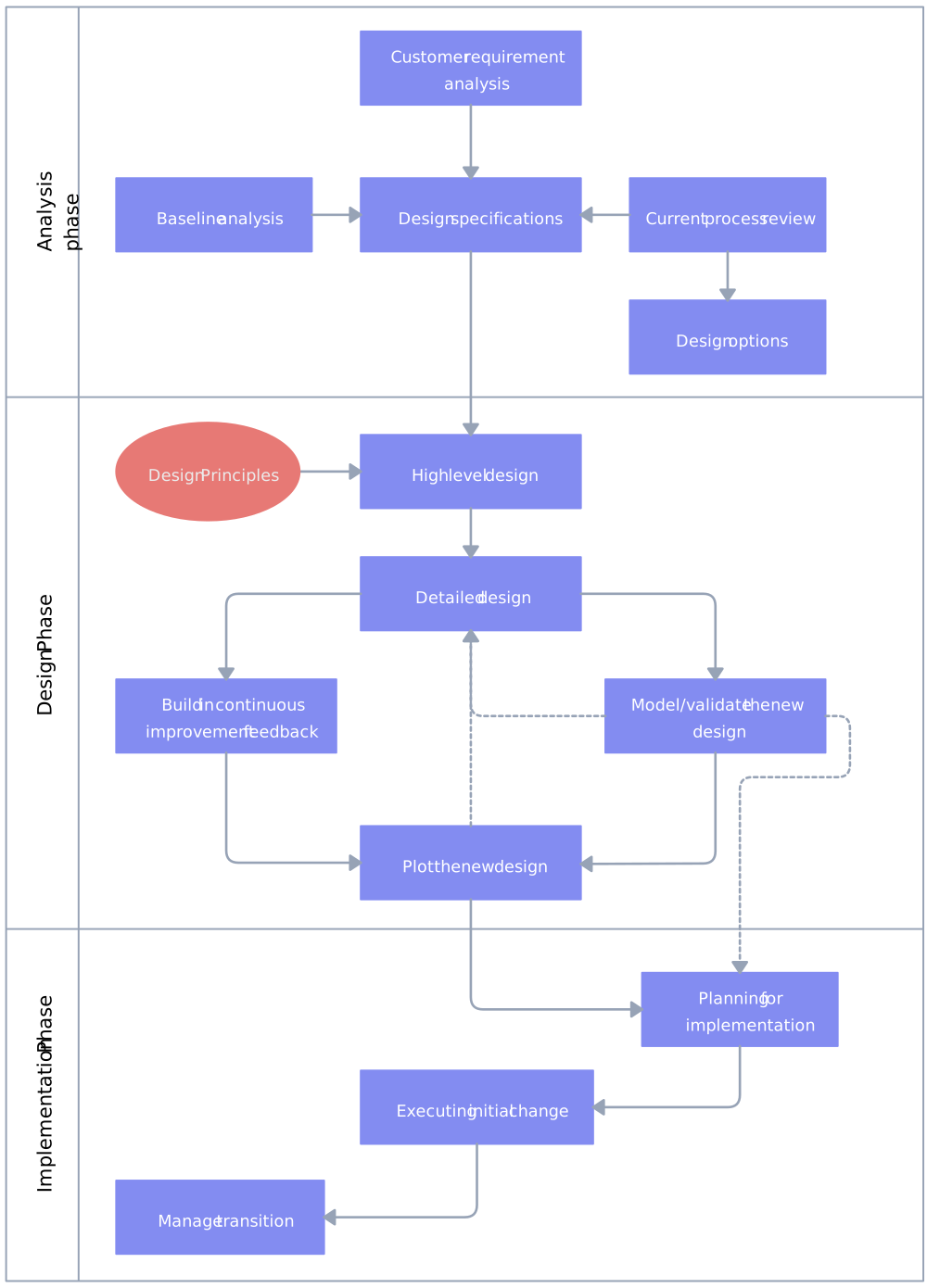
Also known as business process redesign or business transformation, BPR typically follows three main phases: analysis, design, and implementation.

Is Business Process Reengineering Still Relevant Today?
Business process reengineering remains useful because many teams are still working with outdated, manual, or disconnected workflows. As organizations adopt automation, AI tools, and new operating models, BPR helps them redesign the process first instead of simply adding technology on top of existing problems.
It is especially valuable when teams need to:
- Rethink how work moves across departments
- Remove unnecessary handoffs and approval delays
- Improve customer-facing processes
- Reduce cost, waste, or rework
- Align workflows with new business goals or technology
For smaller changes, continuous improvement methods may be enough. But when the process itself no longer works, business process reengineering provides a more structured way to redesign it.
Benefits of Business Process Reengineering
Business process reengineering plays a major role in organizational performance improvement in terms of cost, quality, delivery, employee productivity, etc. BPR advantages include:
- Improved efficiency: Eliminates non-value-added activities and streamlines workflows for higher productivity.
- Cost reduction: Optimizes processes and leverages technology to cut labor, material, and operational expenses.
- Enhanced customer satisfaction: Delivers faster, higher-quality products and services, improving customer loyalty.
- Increased agility: Creates flexible processes that adapt quickly to market changes and customer demands.
- Quality improvement: Reduces defects and rework, ensuring reliable and consistent output.
- Fostered innovation: Encourages critical thinking and challenges traditional workflows to generate new ideas.
- Employee engagement: Involves staff in process improvements, boosting satisfaction and creativity.
- Strategic alignment: Ensures processes support organizational goals effectively.
- Competitive advantage: Optimized processes, cost savings, and innovation position organizations ahead of competitors.
Principles of Business Process Reengineering
The 7 rules of business process reengineering were originally proposed by Michael Hammer and James Champy in Reengineering the Corporation. These principles help organizations rethink how work is structured, completed, and improved during a BPR initiative.
| Principle | What It Means |
| Organize around outcomes, not tasks | Focus on the result the process should deliver instead of separating work into isolated tasks. |
| Eliminate non-value-added steps | Remove activities that do not contribute to the final outcome to reduce waste, delays, and bottlenecks. |
| Combine steps | Bring related activities together to simplify workflows, reduce handoffs, and speed up completion. |
| Empower employees | Give employees the authority, information, and tools they need to make decisions and take ownership of the process. |
| Capture information at the source | Collect data once, at the point where it is created, to improve accuracy and avoid repeated data entry. |
| Link parallel activities | Coordinate related tasks that happen at the same time so teams can avoid delays and duplicated effort. |
| Decentralize decision-making | Move decisions closer to where the work happens so teams can respond faster and with better context. |
BPR Implementation | 5 Steps in Business Process Reengineering
Reengineering a process focuses on redesigning a process as a whole which includes fundamentally rethinking how the organizational work should be done in order to achieve dramatic improvement. That’s what differentiates business process reengineering from process improvement which only focuses on functional or incremental improvement.
Reengineering might not be appropriate in all situations, especially if your processes only require optimization and if your organization is not looking to undergo dramatic change. In such a case, you can opt for a process improvement technique.
Step 1: Set the Vision and Business Goals
This is where the senior management needs to identify the business situation; customer expectations, competition, opportunities, etc.
This will make it easier to understand the need for change and create a clear vision of where the company needs to be in the future. Then clarify the objectives in both qualitative and quantitative terms.
Step 2: Establish a Competent Team
A successful business process reengineering initiative starts with a cross-functional team that brings expertise from all levels of the organization. Top management should provide strategic direction, while operational managers and engineers contribute in-depth knowledge of processes.
Clearly define goals and strategies, and use surveys or benchmarking to understand customer needs and competitive trends. Communicate the business case and project objectives to employees to gather feedback and prepare them for the upcoming changes.
Step 3: Understand the Current Process
In this step, you need to select the process(es) that you will be redesigning. Such processes that are broken, cross-functional, value-adding, have bottlenecks or have high-impact on the organization can be prioritized.
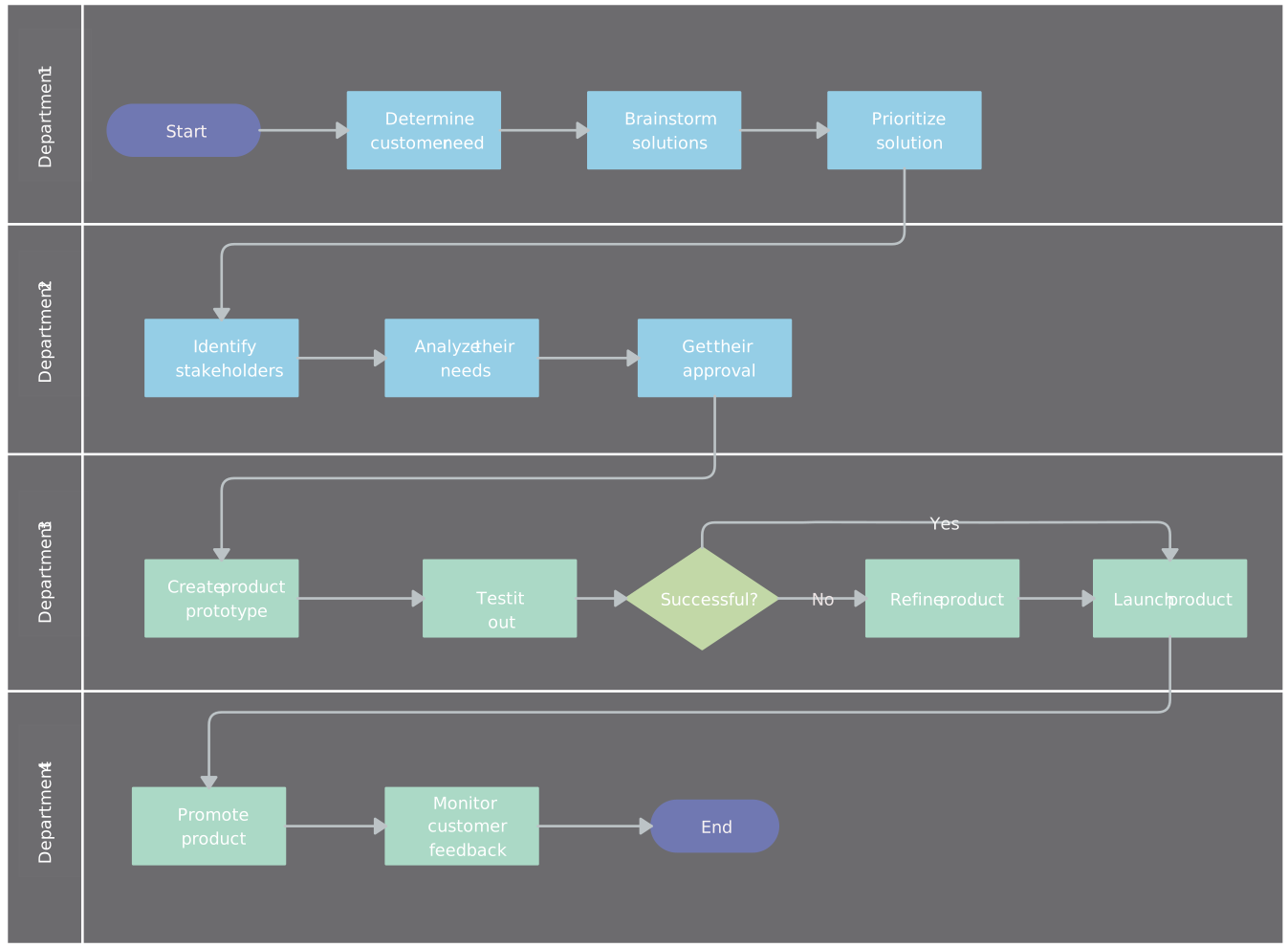
Once you select them, map them out using flowcharts or process maps to analyze them thoroughly to identify the gaps, inefficiencies, blockers, etc.
Then define the right KPIs for the processes in order to monitor that the process has gained the desired effect once you implement them.
Step 4: Redesign the Process
Keeping your vision in mind, redesign a new process that effectively overcomes the inefficiencies of the previous process. Here you will create a future-state map that highlights the solutions you have identified for the issues of the current state process.

Step 5: Implement the Reengineered Process
Once the process has been redesigned, you can run a small test to see how it works by monitoring with the KPIs you defined earlier. This will allow you to make necessary adjustments to the process before implementing it company-wide. If the new process works better than the current one, you can implement it on a larger scale.
Bonus step: Streamline Business Process Reengineering With Creately
Creately’s process mapping software helps teams keep the evidence and decisions behind a BPR initiative connected as they move from the current state to the future state. Teams can map how work operates today, document pain points and handoffs, define accountable owners, and retain supporting notes, links, files, and structured process details on relevant shapes.
You can use Creately to:
- Map the current workflow with flowcharts, BPMN diagrams, swimlanes, or process maps, making steps, decisions, owners, and cross-functional handoffs visible.
- Capture pain points and supporting context with notes, files, links, contextual comments, and structured fields such as owner, status, duration, systems, and tags on relevant process shapes.
- Place current-state and future-state maps side by side on the same canvas, or connect separate high-level and detailed diagrams with links. These views provide related context but do not automatically synchronize every change.
- Collaborate with process owners, analysts, managers, and frontline teams through real-time editing and contextual comments. Stakeholders can provide feedback on the redesign, while an accountable owner incorporates agreed changes.
- Keep redesign decisions, implementation notes, and reference links connected to the process documentation while managing execution tasks and timelines in the appropriate action plan.
- Maintain the approved future-state map as living documentation. The accountable owner should update affected diagrams when responsibilities, systems, controls, or procedures change.
Business Process Reengineering Methodologies
There are several business process reengineering methodologies out there, and we have listed some of them below, along with the steps. They highlight more ways of reengineering business processes in addition to what we have discussed above.
- Hammer/ Champy methodology
- The Davenport methodology
- Manganelli/ Klein methodology
- Kodak methodology
Hammer/Champy Methodology
The methodology introduced by Hammer and Champy popularized business process reengineering. It involves six steps.
- Initiate the process: The CEO communicates the company’s current situation and future vision to employees.
- Identify processes: Map how processes interact internally and externally.
- Select processes: Choose processes with high value potential and reengineering feasibility.
- Analyze performance: Compare current process performance against desired outcomes.
- Redesign processes: Apply creativity and innovative thinking to reimagine workflows.
- Implement changes: Put the redesigned processes into action for improved efficiency and results.
The Davenport Methodology
Davenport puts information technology at the heart of business reengineering. The Davenport model covers six steps.
- Develop vision and objectives: Define the business vision and process goals.
- Select processes: Identify up to 15 key processes to reengineer.
- Analyze performance: Understand current process performance and set benchmarks.
- Leverage IT: Explore how technology can enhance redesigned processes.
- Prototype design: Create and test a process prototype to identify improvements.
- Implement changes: Roll out the tested prototype organization-wide for improved efficiency.
Manganelli/ Klein Methodology
Manganelli and Klein state only to focus on those business processes that are crucial to the strategic goals of the company and customer requirements.
- Define goals: Engage all stakeholders to clarify objectives and prepare for BPR.
- Select key processes: Identify the most critical processes for redesign.
- Analyze performance: Evaluate current performance and set targets for improvement.
- Design with IT and environment in mind: Develop technology solutions and design supportive work environments.
- Implement changes: Roll out redesigned processes and work environments organization-wide.
Kodak Methodology
Developed by the international Kodak organization, the Kodak methodology is applied across all Kodak facilities worldwide.
- Plan the project: Define project rules, procedures, and administration.
- Assemble the team: Assign project managers and design a comprehensive process model.
- Redesign processes: Develop redesigned processes and plan a pilot implementation.
- Implement changes: Roll out the new processes and adjust organizational infrastructure as needed.
- Manage obstacles: Continuously identify and address challenges throughout the project.
Business Process Reengineering Examples
Business process reengineering can be applied to many workflows, from customer service to operations. Here are a few practical examples.
Customer Support Process
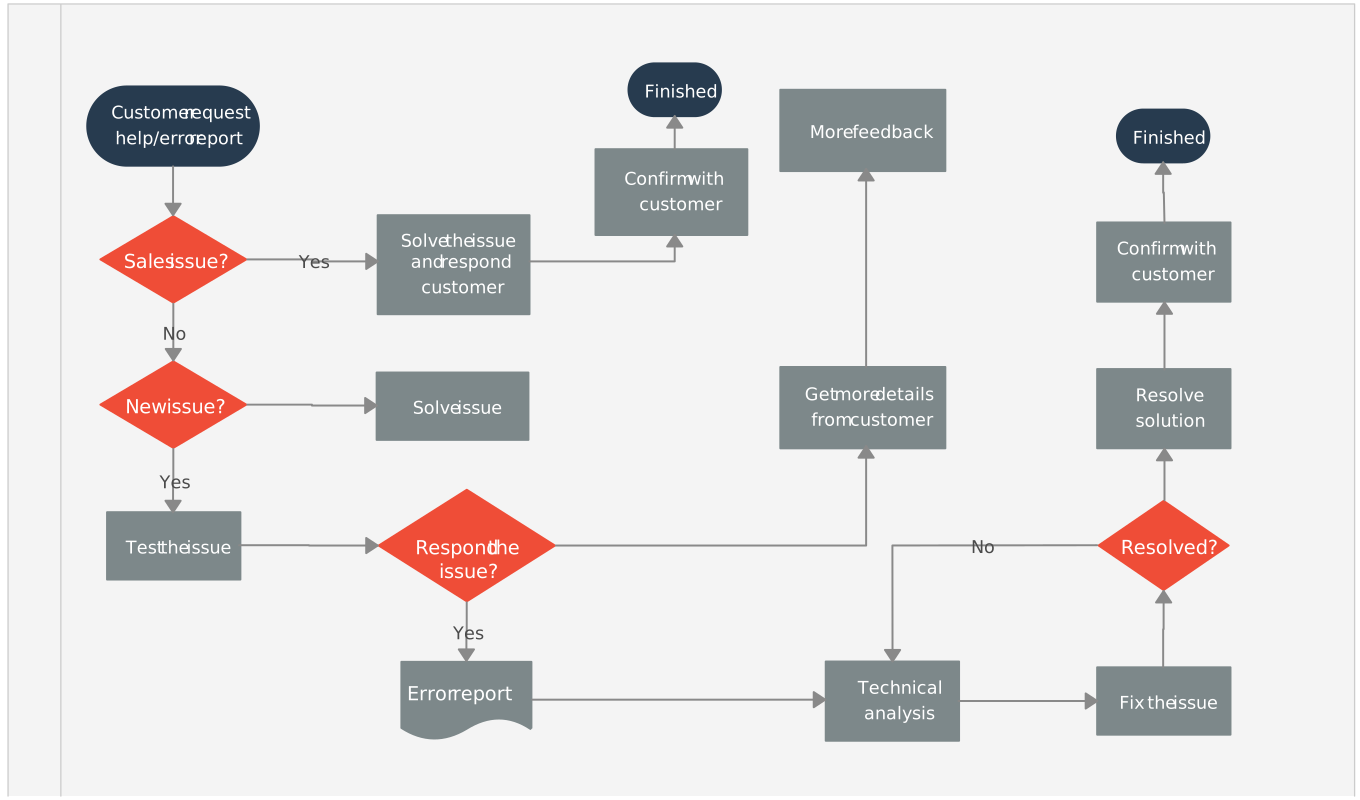
A company may redesign customer support by reducing handoffs, routing tickets by issue type, adding self-service resources, and giving agents better customer context to resolve issues faster.
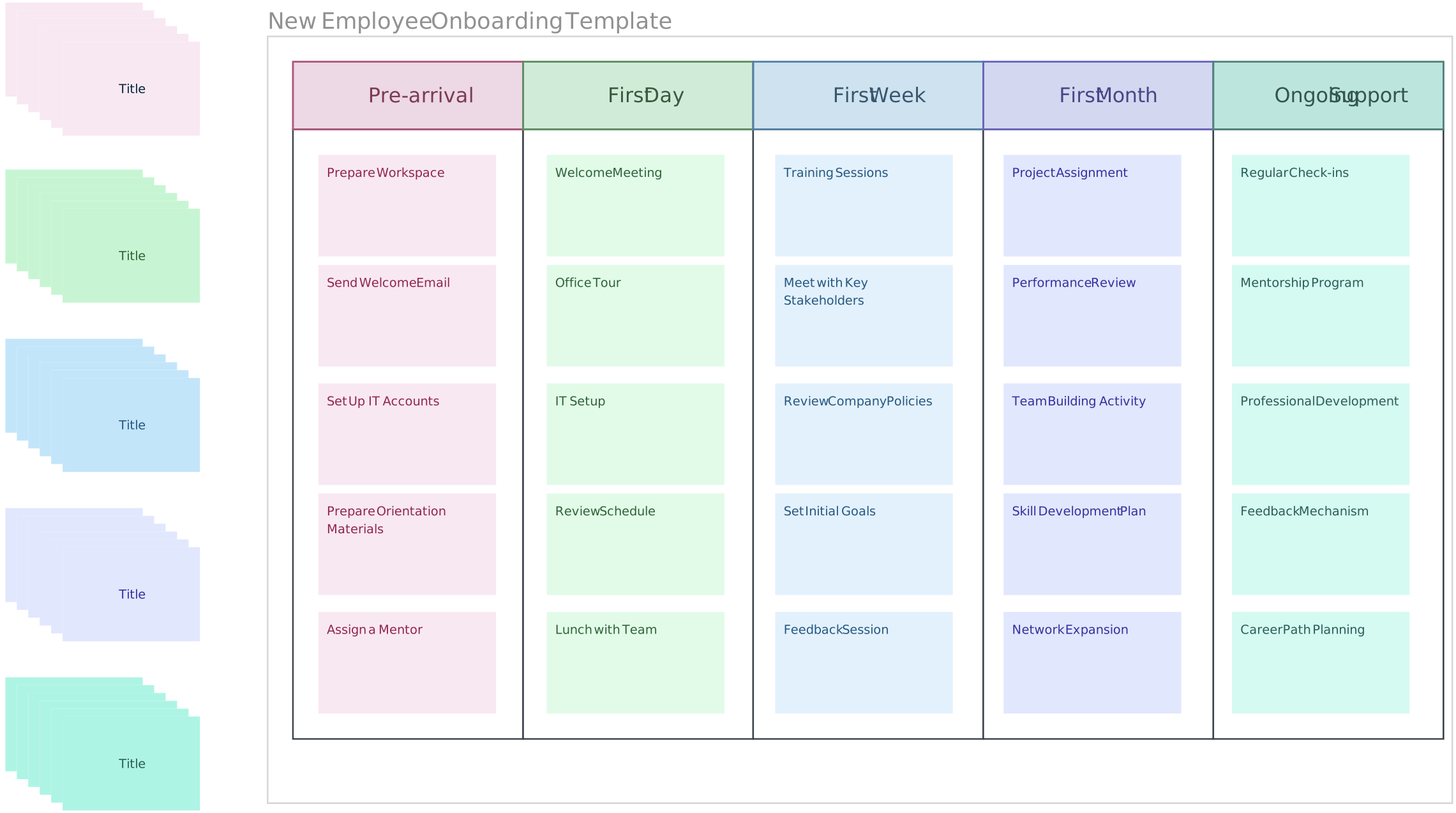
Employee Onboarding Process
An HR team may reengineer onboarding by replacing manual emails and scattered forms with a centralized workflow for tasks, documents, approvals, and role-based responsibilities.
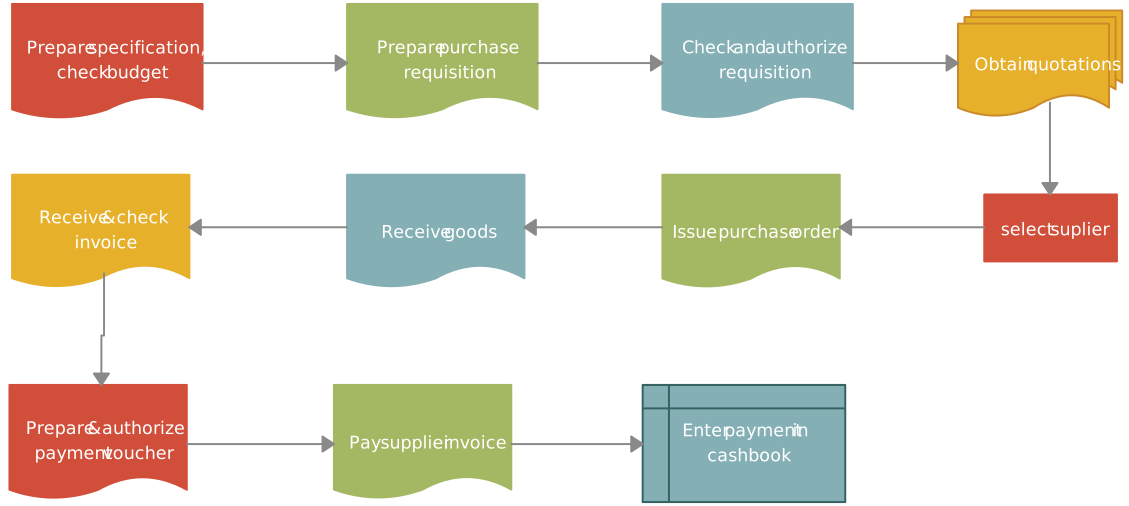
Procurement Approval Process
A procurement team may simplify approvals by removing unnecessary sign-offs, setting approval thresholds, automating purchase requests, and giving managers visibility into pending decisions.
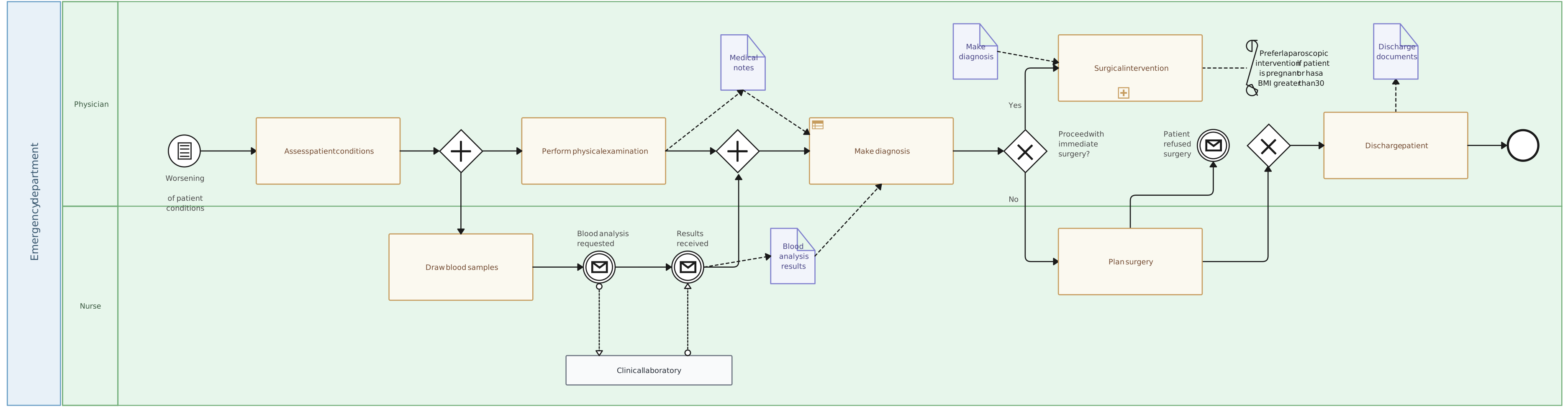
Healthcare Patient Intake Process
A healthcare organization may redesign intake by collecting patient information before visits, reducing duplicate data entry, and improving coordination between front-desk, clinical, and billing teams.
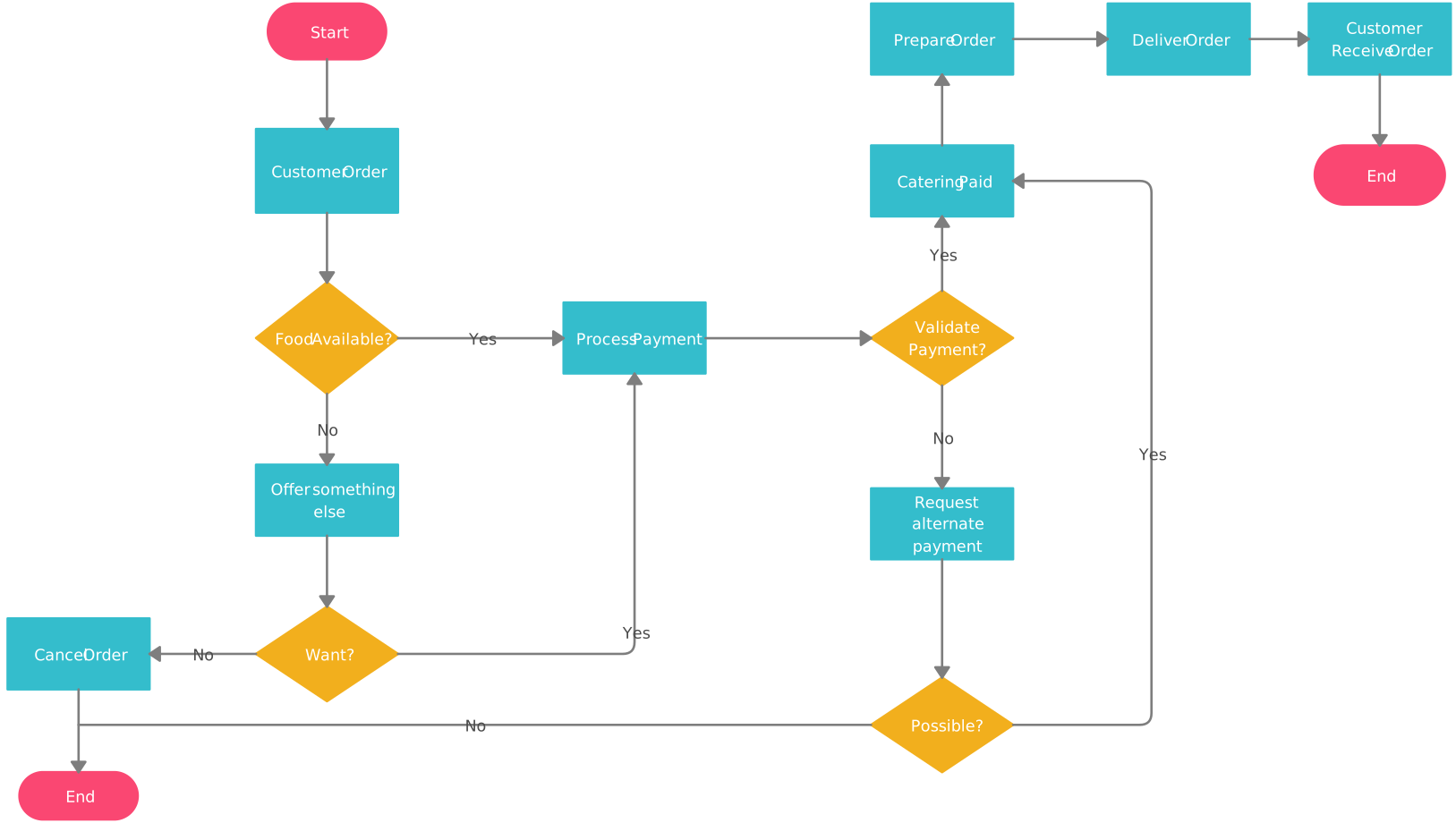
Order Fulfillment Process
An ecommerce or retail team may reengineer fulfillment by improving how inventory, picking, packing, shipping, and customer updates work together to reduce delays and errors.
Business Process Reengineering Case Studies
The following business process reengineering case studies show how organizations use BPR to rethink workflows, apply technology, improve collaboration, and achieve measurable operational gains.
General Electric (GE) Aircraft Engines
Challenge: GE Aircraft Engines needed to reduce engine development time, improve quality, and lower costs.
Business process reengineering approach: GE redesigned its engine development process around cross-functional collaboration, concurrent engineering, CAD tools, simulation, modular components, and improved supplier coordination.
Outcome: The reengineered process reduced development time, improved quality, reduced defects, and helped the company deliver engines faster and more efficiently.
Amazon
Challenge: Amazon needed to improve order fulfillment speed, accuracy, and customer satisfaction as ecommerce demand grew.
Business process reengineering approach: Amazon redesigned fulfillment around warehouse automation, smarter inventory management, optimized warehouse layouts, demand forecasting, and customer-focused ordering processes.
Outcome: The reengineered process improved fulfillment speed, reduced order errors, strengthened inventory control, and helped create a more reliable customer experience.
Common Mistakes in Business Process Reengineering Implementation
Business process reengineering can deliver major improvements, but only when it is treated as a full process redesign, not just a technology or cost-cutting project. Common mistakes to avoid include:
- Automating a broken process: Map and redesign the workflow before adding automation, or the same problems may simply happen faster.
- Focusing only on cost reduction: BPR should also improve speed, quality, customer experience, employee productivity, and long-term adaptability.
- Ignoring employee input: Frontline teams often understand the real process best, so involve them early to avoid missed details and resistance.
- Redesigning without clear metrics: Set baseline KPIs such as cycle time, error rate, cost per transaction, approval time, or customer satisfaction.
- Changing too much too quickly: Pilot the redesigned process first, gather feedback, and refine it before a wider rollout.
- Treating BPR as a one-time project: Continue monitoring results and improving the process as business needs change.