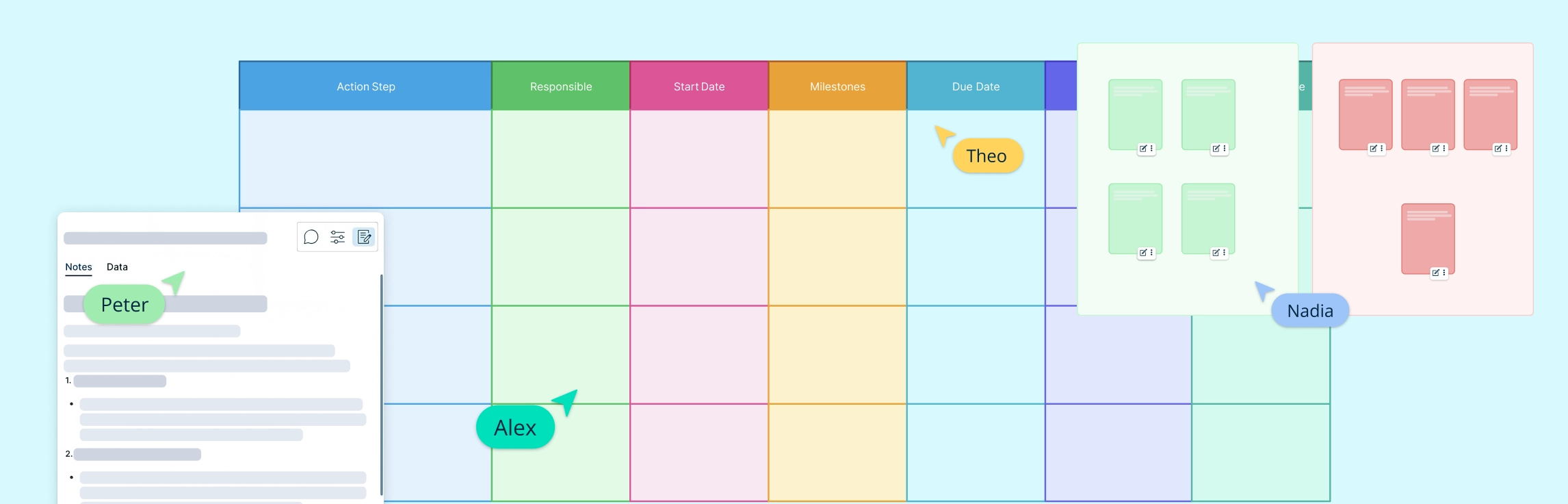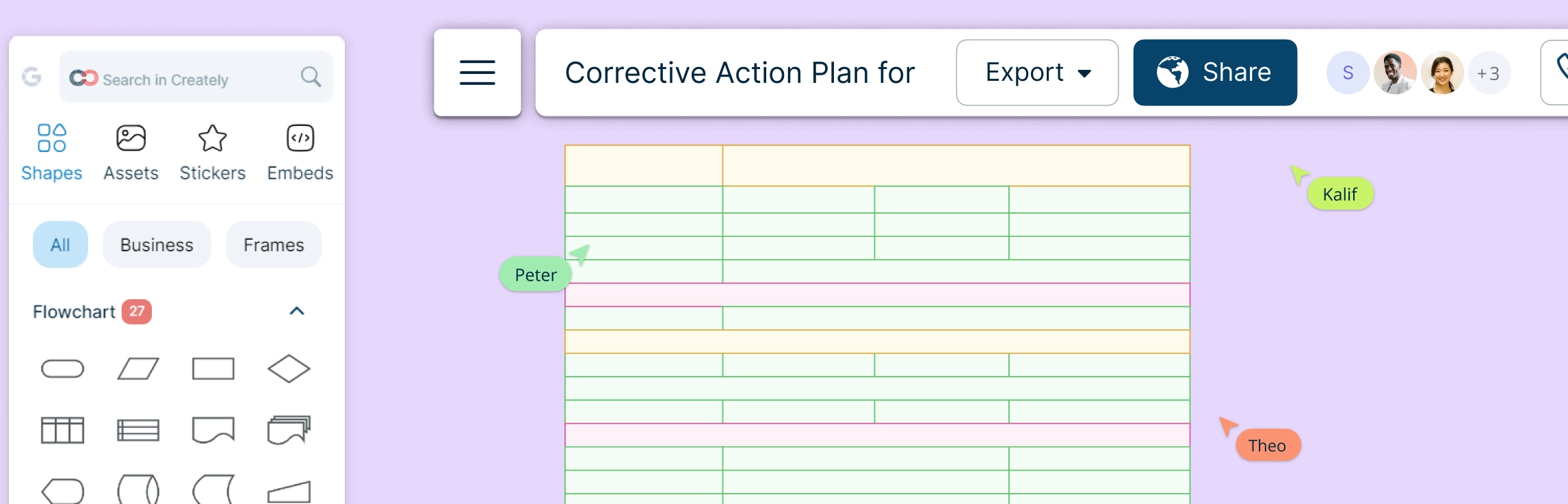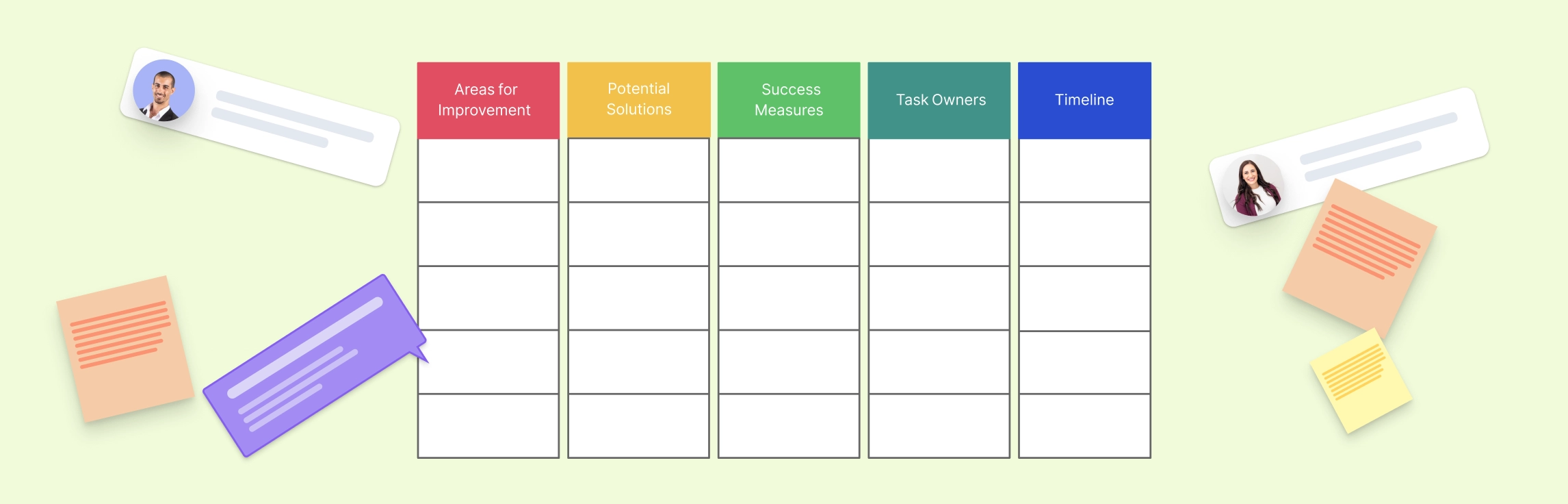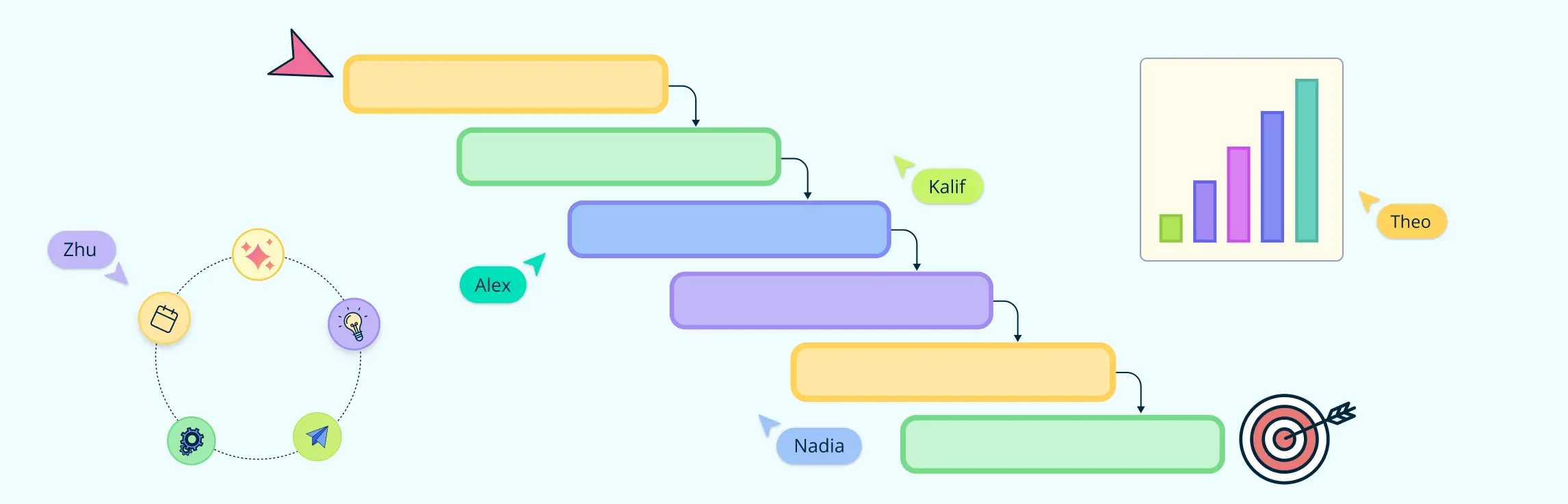
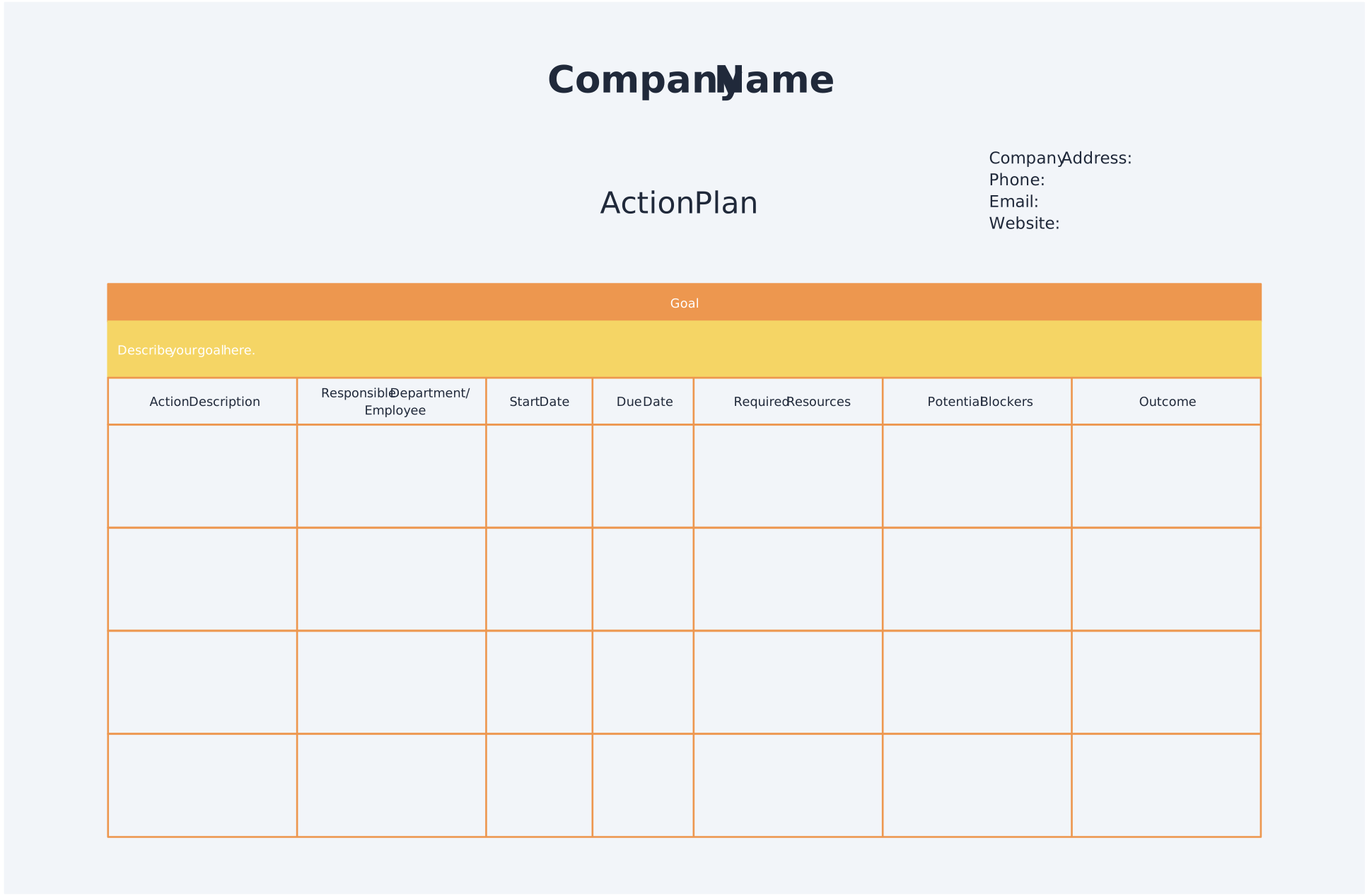
An action plan is a roadmap that outlines the tasks, responsibilities, deadlines, and resources needed to achieve a specific goal. In simple terms, an action plan turns an objective into clear, actionable steps.
In this guide, you’ll learn what an action plan is, when to use one, and the key components of an effective action plan. You’ll also explore real-world action plan examples, different types of action plans, and customizable templates for business projects, team goals, and personal planning.
Action Plan Definition
An action plan turns a goal into execution—essentially a to-do list with a purpose. For example, if your goal is to launch a small business, your action plan might include researching your market, writing a business plan, and setting up a website, each with an owner and a due date.
At its core, action plans create clarity and follow-through by putting structure around what to do, when to do it, and how to measure progress. If you want a walkthrough for action planning with additional tips, see our guide on how to create an action plan.
Purpose of an Action Plan: Why It Matters for Success
Let’s explore the key reasons why having an action plan is essential, and how it can guide you through every stage of your journey.
Provides clear direction
Big goals can feel overwhelming, but an action plan breaks them down into smaller, manageable steps. This gives you a clear path forward, helping you understand exactly what needs to be done and in what order.
Keeps you focused
With an action plan, you always know what your next step is. This helps you avoid distractions and stay committed to the tasks that move you closer to your goal. Instead of getting lost in the details or sidetracked by less important tasks, you have a plan to follow.
Prevents overwhelm
When faced with a complex goal, it’s easy to feel stuck or unsure where to begin. An action plan simplifies things by breaking large tasks into smaller, more achievable steps. This makes progress feel doable and reduces stress along the way.
Improves organization
A well-structured action plan helps you keep everything in order—tasks, deadlines, resources, and responsibilities. Whether you’re working alone or with a team, staying organized ensures that nothing is forgotten or overlooked.
Enhances accountability
Clearly defining who is responsible for each task makes sure that everyone involved knows their role. When responsibilities are assigned in advance, there’s no confusion about who should do what, leading to better teamwork and follow-through.
Boosts motivation
Seeing your progress as you complete tasks can be incredibly motivating. Each step you check off brings you closer to your goal, reinforcing a sense of achievement and keeping you inspired to keep going.
Ensures consistent progress
An action plan helps you stay on track by allowing you to prioritize tasks, monitor progress, and adjust when necessary. With a plan in place, you can see what’s working, identify obstacles, and keep moving forward efficiently.
The 6 Components of an Action Plan
A solid action plan is built on a few key components that keep you organized and moving toward your goals. These components clarify what needs to happen next, who owns each task, and when it’s due. Here’s what every action plan should include:
1. Goals and objectives
Your goal is the big picture—what you want to achieve. Objectives break that goal into smaller, actionable pieces. Think of them as the milestones that guide you toward your destination.
2. Tasks and steps
These are the specific actions you need to take to meet your objectives. Tasks should be clear, manageable, and listed in a logical order. Breaking them down into smaller steps makes the whole process feel less overwhelming.
3. Timelines and deadlines
Setting a timeline gives your plan structure. Deadlines keep you on track and help you measure progress. Be realistic but firm about when things need to get done.
4. Resources and tools
What do you need to make this happen? This could be anything from budget and equipment to software and training. Identifying these upfront ensures you’re prepared to move forward smoothly.
5. Roles and responsibilities
If your plan involves a team, everyone needs to know their role. Assign specific tasks to specific people so there’s no confusion about who’s handling what.
6. Metrics for success
How will you know if your action plan is working? Define measurable outcomes, like hitting a sales target or completing a project by a certain date. Tracking these helps you adjust your plan if needed.
Ready to put these into practice? Our guide on how to write an action plan breaks them down into the full set of fields — priority, dependencies, status, risk, and more — you’ll need for an execution-ready plan.
Action Plan Examples
Action plan examples make the definition practical. Below are two quick models (one personal and one business) you can copy and adapt.
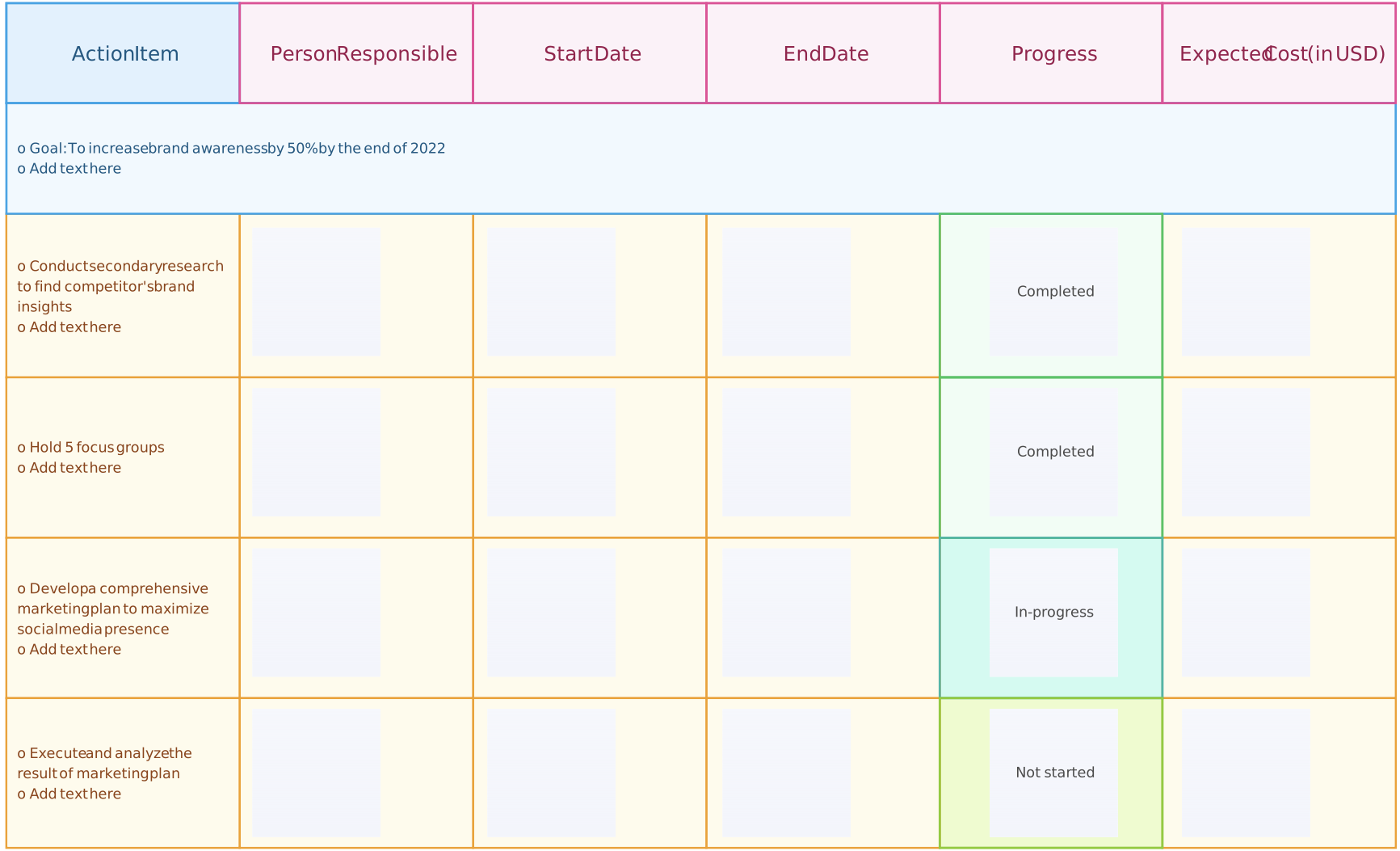
Strategic Business Action Plan Example
A strategic business action plan outlines the key objectives, resources, and steps required to achieve long-term business goals. It serves as a roadmap for decision-making, helping businesses navigate challenges and opportunities effectively. By aligning strategies with market trends and company capabilities, organizations can ensure sustainable growth and success.

Personal Lifestyle Action Plan Example
Let’s say you want to get fit and lead a healthier lifestyle. That’s a great goal, but without a plan, it can feel vague and hard to tackle. Here’s how an action plan could break it down:
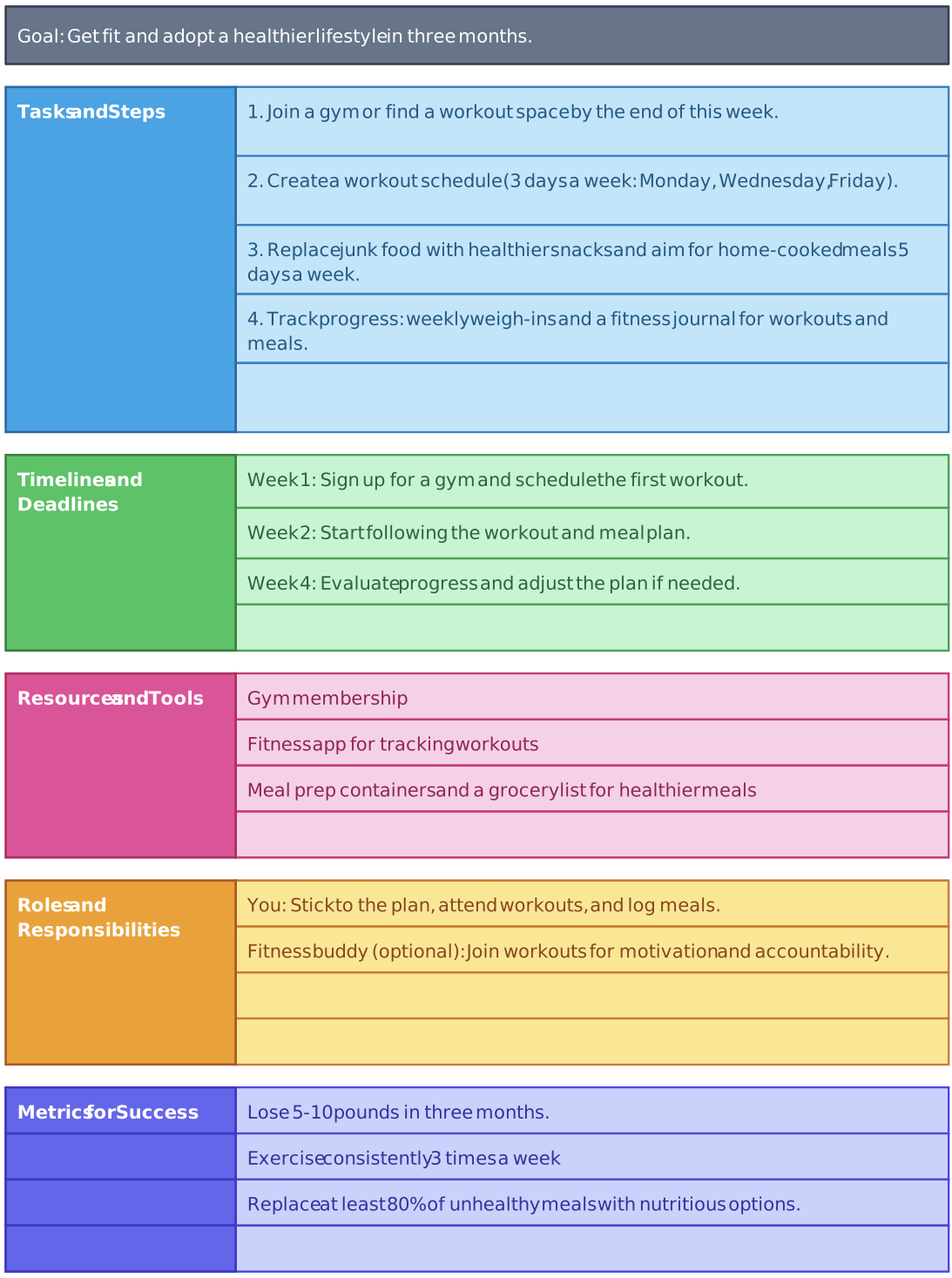
By breaking a big goal into smaller, actionable steps, this action plan gives you a clear path to success. It’s about progress, not perfection—so take it one step at a time!
10 Types of Action Plans
Action plans can vary based on their purpose, scope, and the specific outcomes they aim to achieve. Here are different types of action plans, explained in simple terms:
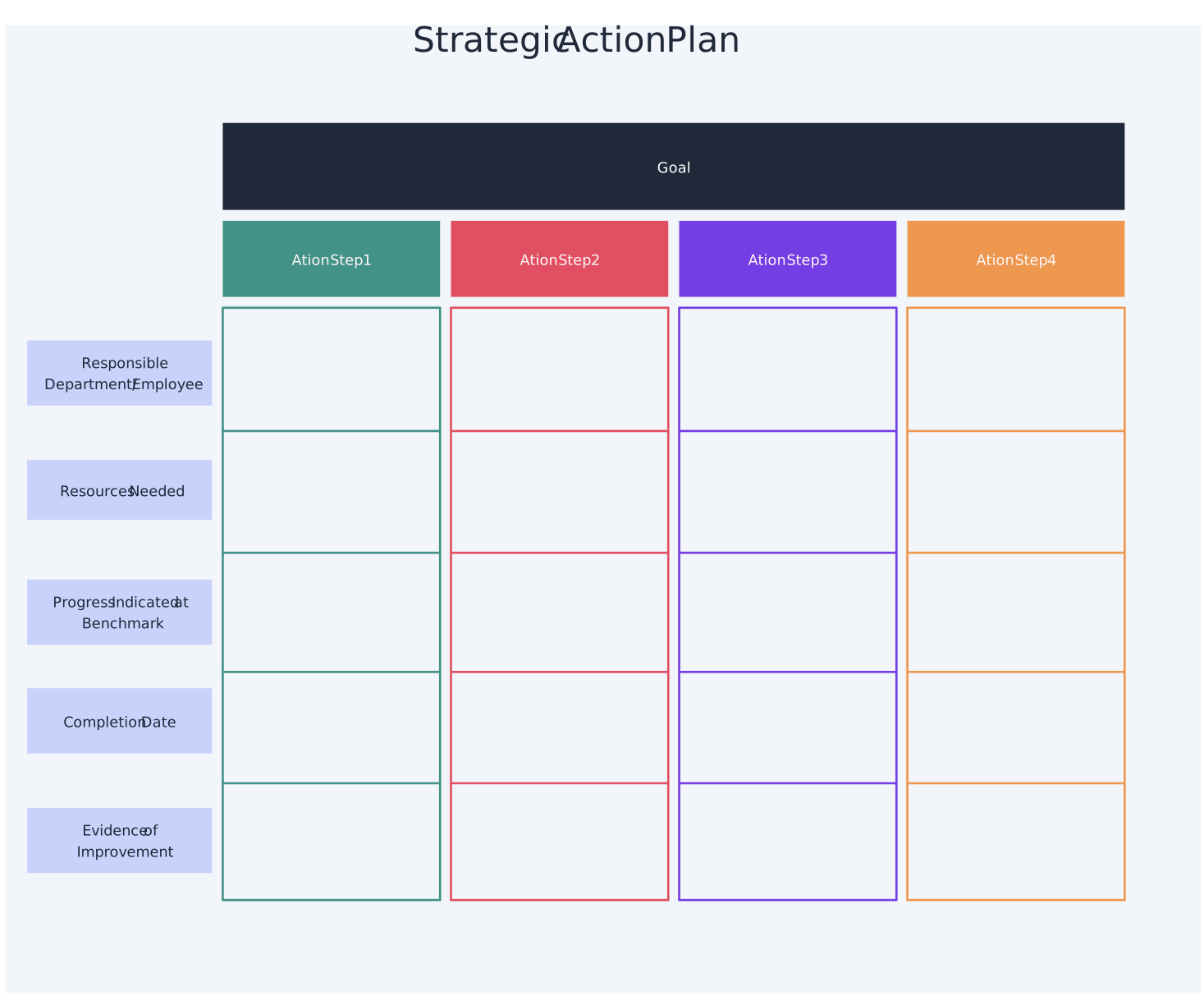
Type 1. Strategic action plan
A strategic action plan outlines the long-term goals of an organization and the steps needed to achieve them. It usually focuses on overall direction rather than day-to-day operations.
Key features:
- Focus: Big-picture goals, such as expanding into new markets or improving customer satisfaction.
- Timeframe: Typically covers a longer period, like one to five years.
- Components: Goals, objectives, major initiatives, and performance indicators.
Type 2. Project-based action plan
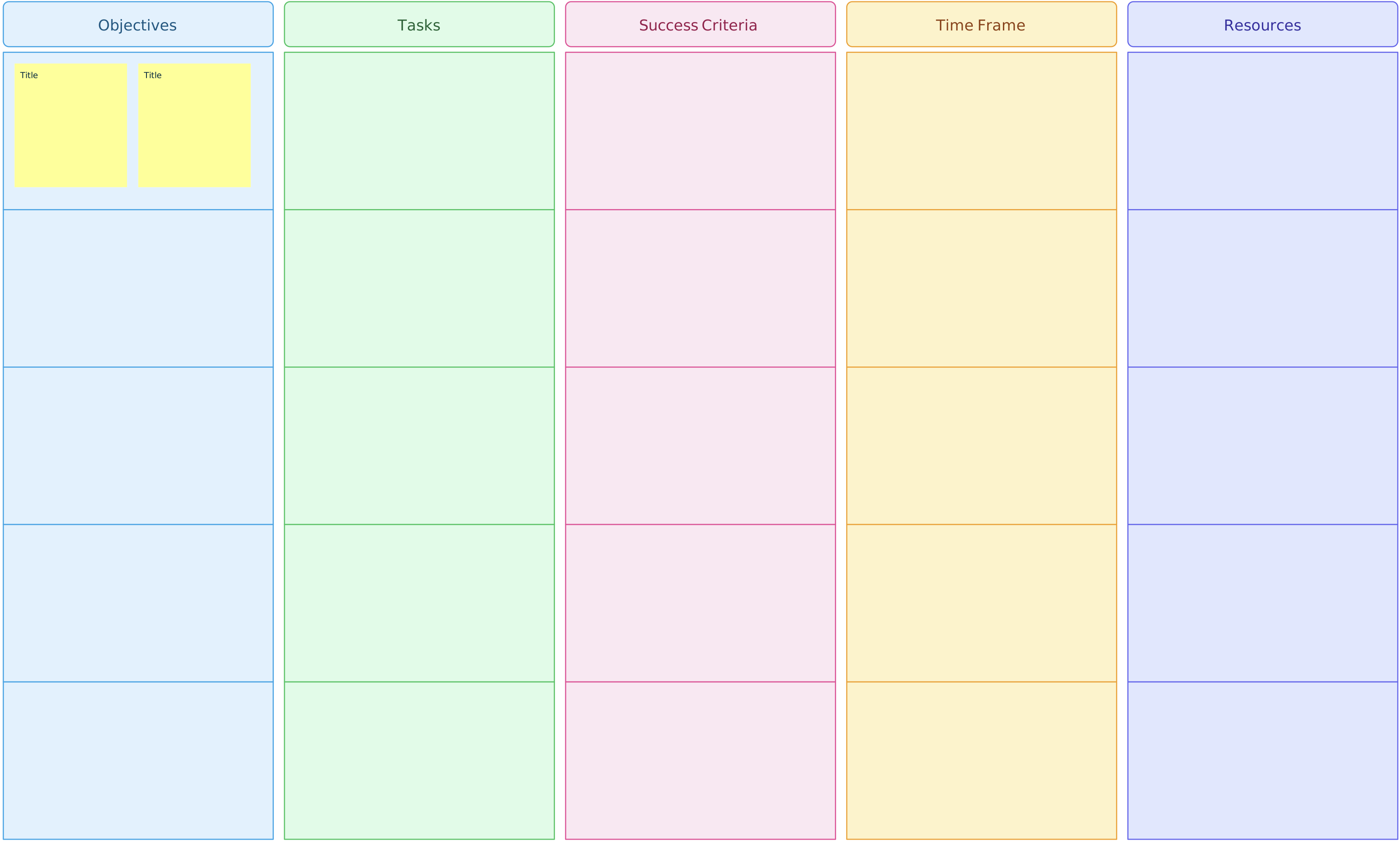
A project action plan is created for specific projects, detailing the steps needed to complete them successfully. This type of plan is often temporary and specific to a single initiative.
Key features:
- Focus: Specific projects with defined objectives, such as launching a new website or organizing an event.
- Timeframe: Varies depending on the project, from weeks to several months.
- Components: Project goals, tasks, timelines, team members, and evaluation measures.
Type 3. Personal development action plan
A personal action plan is designed for individual goals, helping a person outline steps to achieve personal or professional objectives. This can include career development, health, or education goals.
Key features:
- Focus: Individual aspirations, such as advancing in a career or improving fitness levels.
- Timeframe: Can be short-term (weeks) or long-term (years), depending on the goal.
- Components: Specific actions, deadlines, resources needed, and methods for tracking progress.
Type 4. Contingency action plan
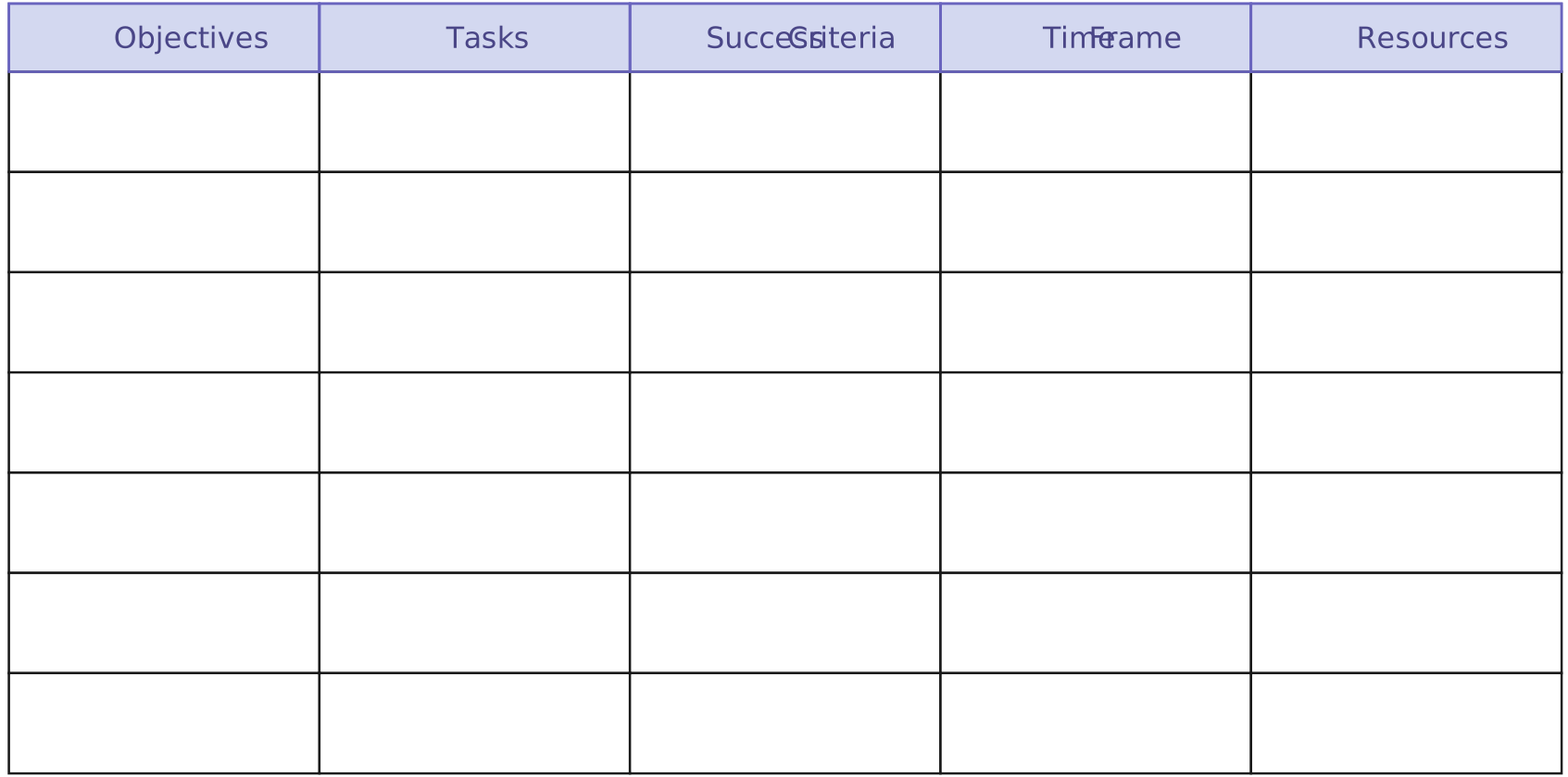
A contingency action plan outlines steps to take in case of unexpected events or emergencies. It helps organizations prepare for risks and uncertainties.
Key features:
- Focus: Risk management and response strategies for potential problems.
- Timeframe: Ongoing, as it needs to be updated regularly based on new risks.
- Components: Identified risks, response actions, responsibilities, and communication plans.
Type 5. Operational action plan
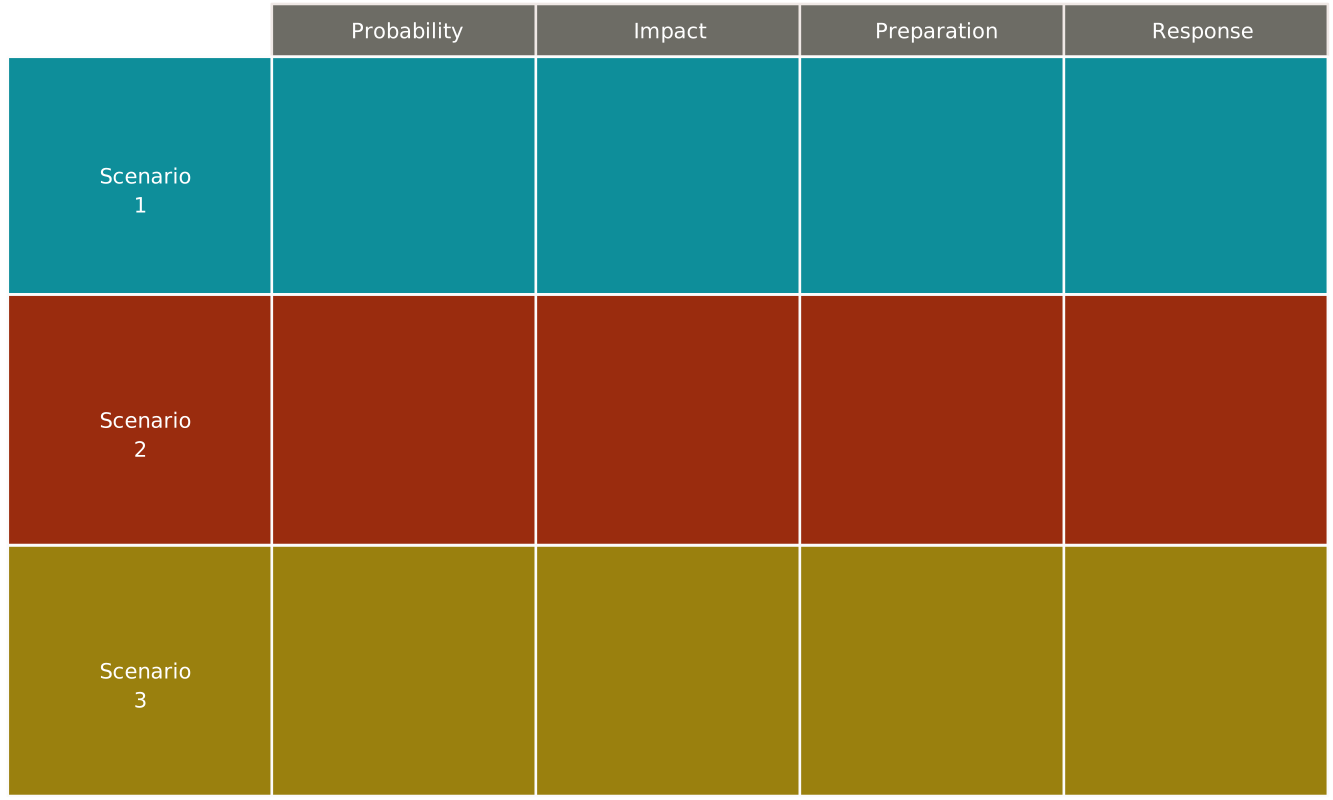
An operational action plan is more focused on the day-to-day activities of an organization. It outlines specific tasks and processes required to achieve short-term goals.
Key features:
- Focus: Daily operations and immediate goals, such as meeting quarterly sales targets or improving customer service response times.
- Timeframe: Usually covers a shorter period, like a few months to a year.
- Components: Specific tasks, assigned responsibilities, deadlines, and required resources.
Type 6. Marketing action plan
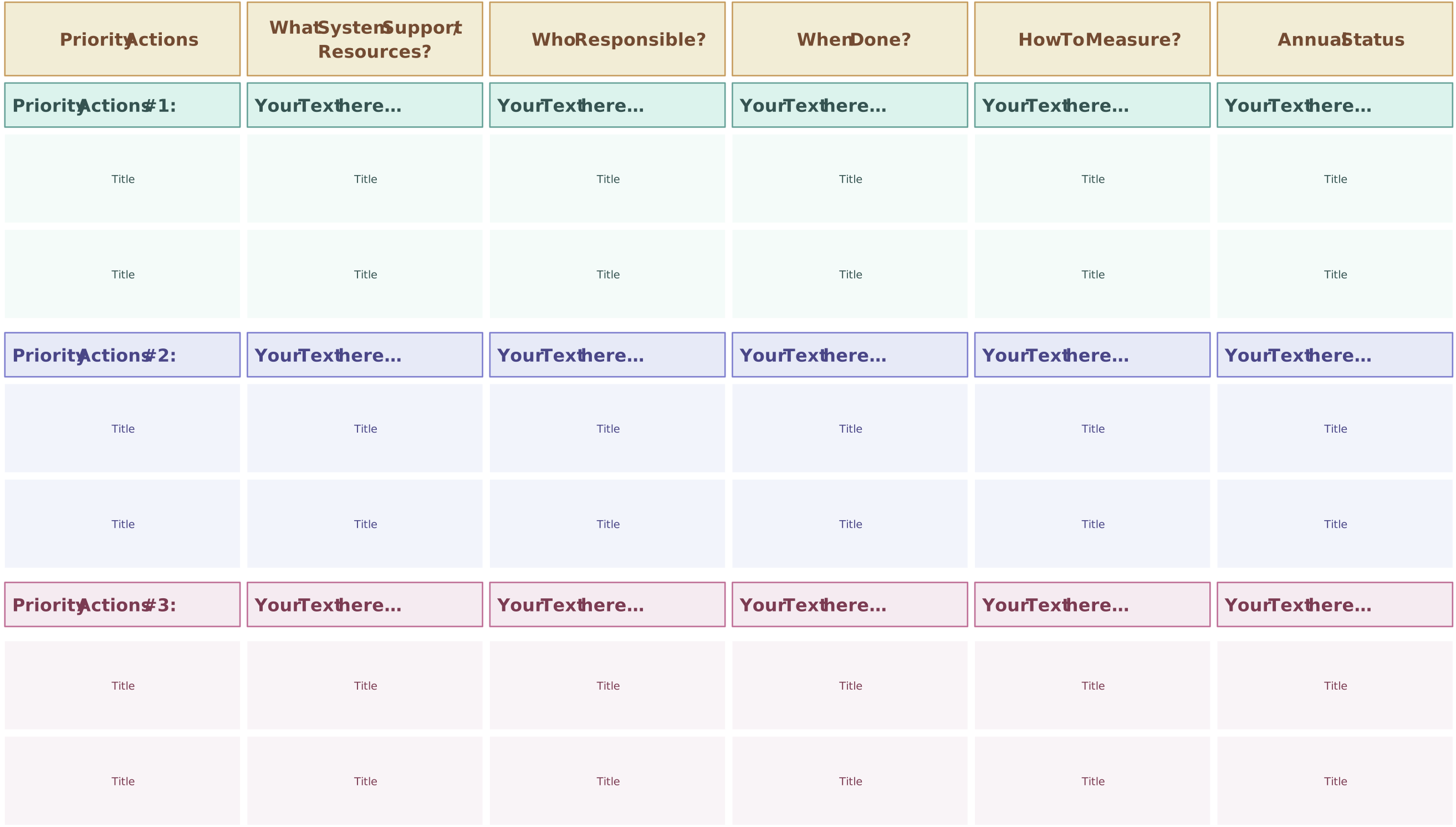
A marketing action plan outlines the steps needed to achieve specific marketing objectives. It provides a clear roadmap for the marketing team to follow and ensures that all efforts are aligned with the broader business goals.
Key features:
- Focus: Marketing strategies, campaigns, and tactics to reach target audiences and achieve business objectives.
- Timeframe: Often linked to specific campaign timelines, product launches, or quarterly/yearly goals.
- Components: Marketing goals, target audience, strategies, tasks, assigned responsibilities, deadlines, and key performance indicators (KPIs).
Type 7. Business action plan
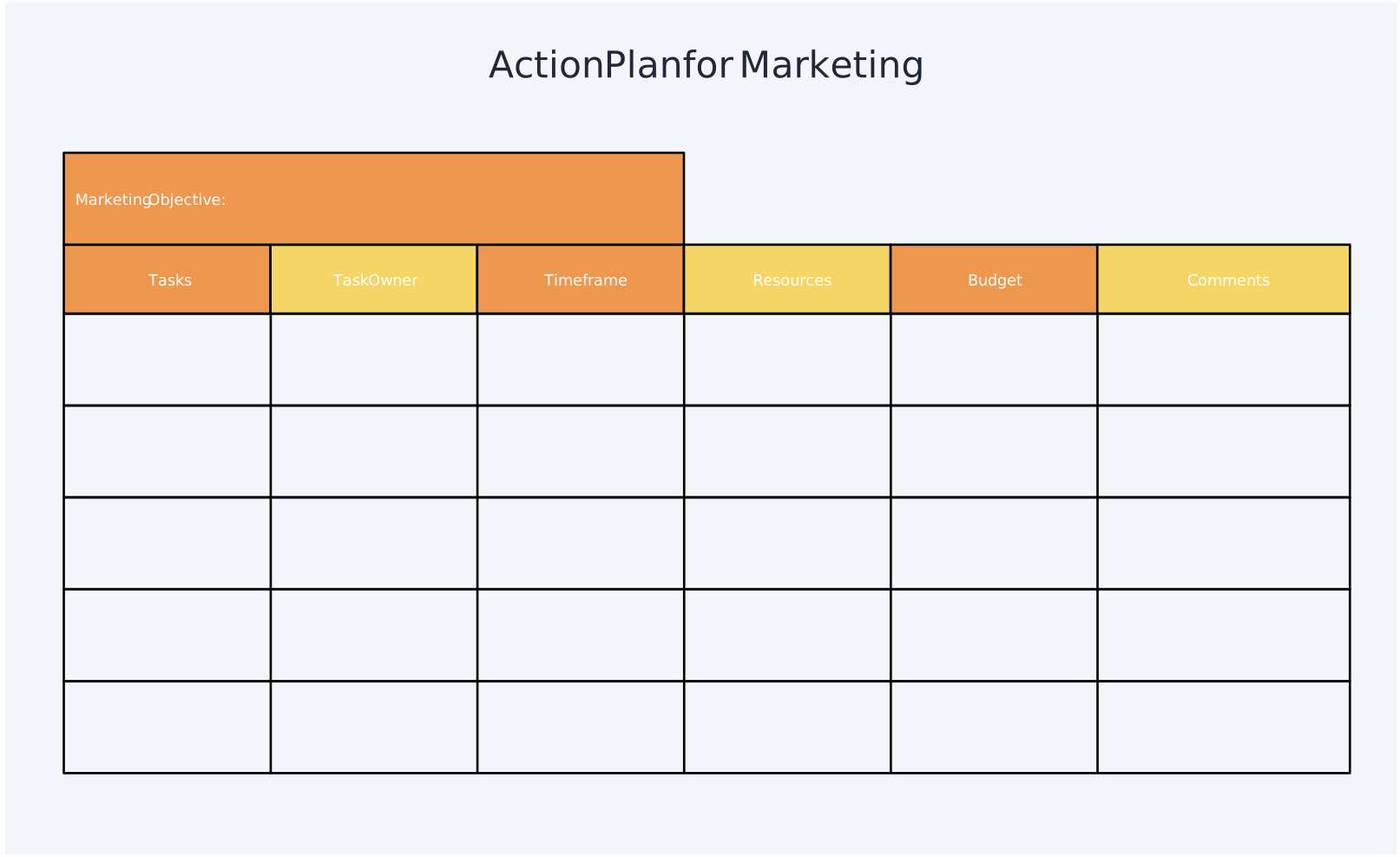
A business action plan outlines the specific steps and strategies that a company will take to achieve its goals and objectives. It serves as a roadmap for business initiatives, ensuring that resources are effectively allocated and actions are coordinated across the organization.
Key features:
- Focus: Business goals and strategic initiatives.
- Timeframe: Typically covers a specific period, such as quarterly or annually, with milestones for progress tracking.
- Components: Business objectives, key performance indicators (KPIs), assigned responsibilities, action steps, timelines, and resource allocation.
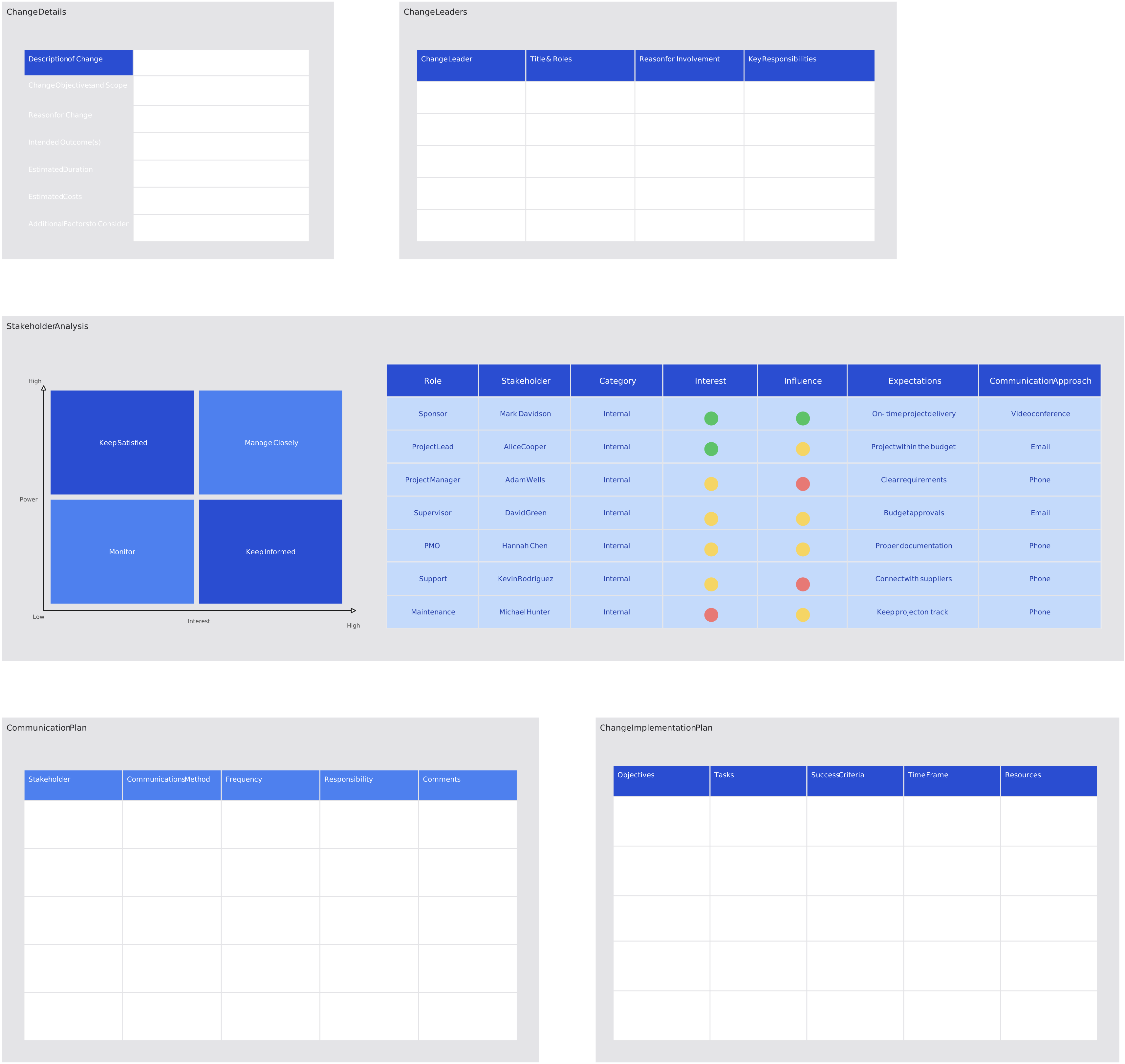
Type 8. Change action plan
A change action plan is created when an organization undergoes significant changes, such as restructuring, implementing new technologies, or altering policies.
Key features:
- Focus: Managing the transition effectively and minimizing disruptions.
- Timeframe: Varies based on the scale of the change, often several months.
- Components: Objectives for change, steps to implement, stakeholder communication, and training needs.
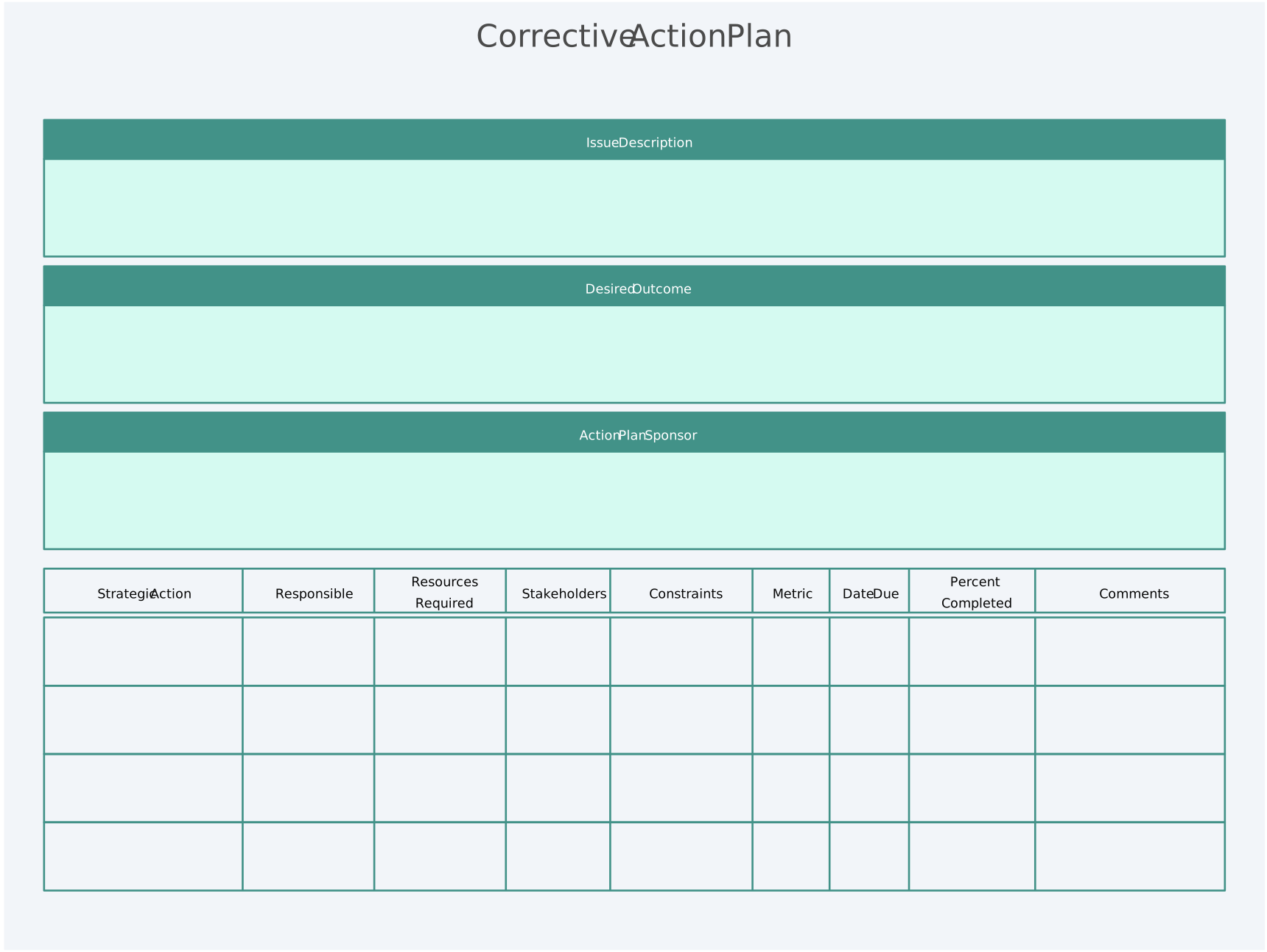
Type 9. Corrective action plan
A corrective action plan is developed to address specific problems or deficiencies within an organization. It outlines steps to correct issues and prevent them from happening again.
Key features:
- Focus: Identifying and resolving problems, such as quality issues or compliance failures.
- Timeframe: Varies depending on the severity of the issue, including both immediate and long-term actions.
- Components: Problem description, root cause analysis, corrective actions, assigned responsibilities, timelines, and monitoring measures.
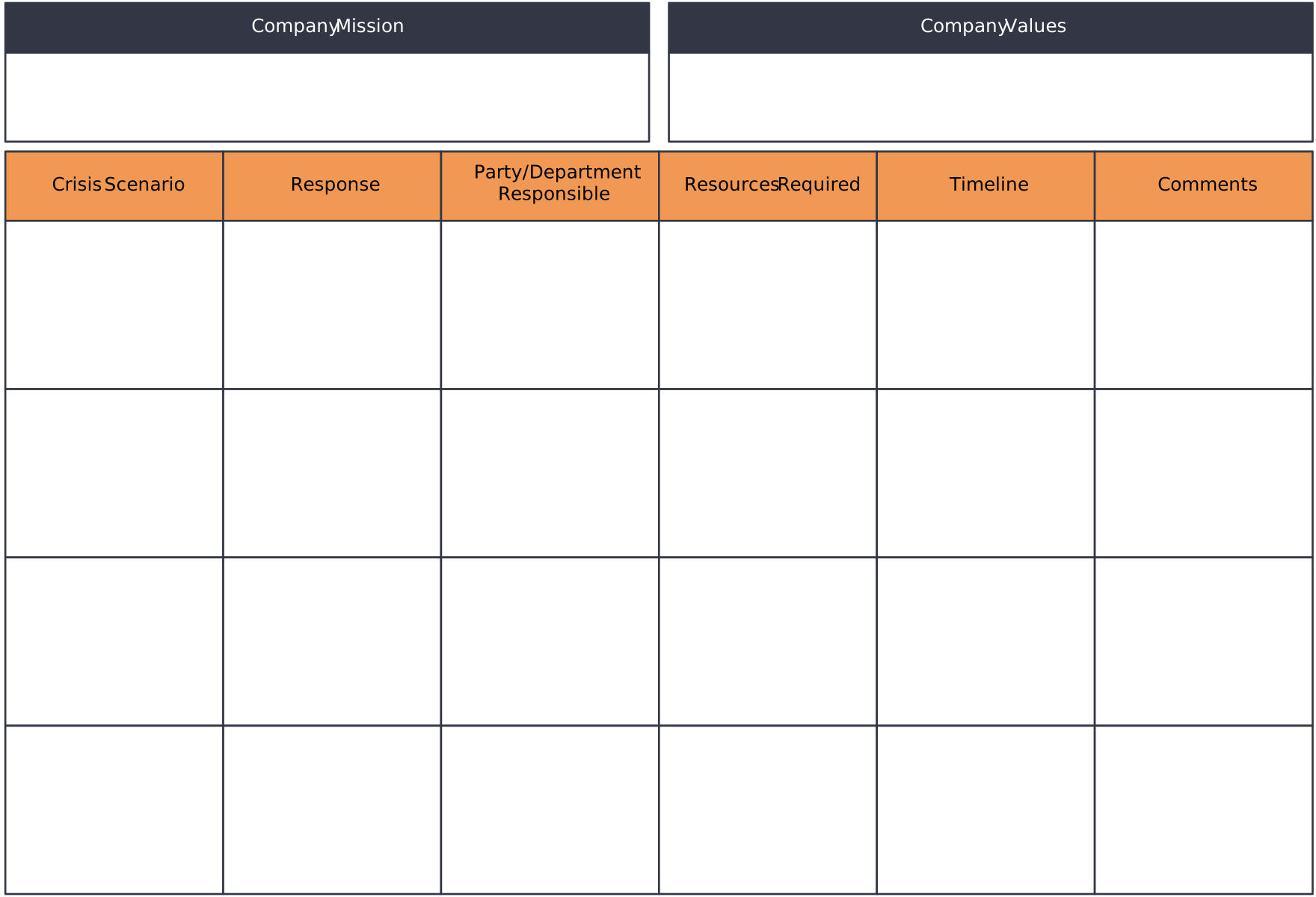
Type 10. Emergency action plan
An emergency action plan outlines the procedures to follow during various emergency situations to ensure the safety of individuals and minimize damage. It provides a clear response strategy for emergencies such as fires, natural disasters, or medical incidents.
Key features:
- Focus: Immediate response to emergencies, ensuring safety and effective communication.
- Timeframe: Designed for use during emergencies, with regular updates and drills to maintain readiness.
- Components: Emergency procedures, designated roles, communication plans, evacuation routes, and contact information for emergency services.
Action Plan vs. Plan B vs. Project Plan vs. To-Do List
While all these tools help with planning and organization, they serve different purposes. An action plan focuses on achieving specific goals, a plan B is a backup for when things go wrong, a project plan manages an entire project, and a to-do list keeps track of daily tasks.
| Description | Key Features | |
|---|---|---|
| Action plan | A strategic document outlining steps to achieve specific goals. | - Goals: Clearly defined objectives - Tasks: Specific actions needed - Responsibilities: Designation of who does what - Timelines: Deadlines for tasks - Resources: Needed resources - Evaluation measures: Criteria to measure progress |
| Plan B | A backup strategy to implement if the initial plan fails or encounters obstacles. | - Flexibility: Provides alternative options - Risk management: Prepares for challenges - Contingency actions: Defined actions for unexpected situations |
| Project plan | A comprehensive document that guides a project from initiation to completion. | - Objectives: Clear project goals - Scope: Description of what’s included - Timeline: Schedule of milestones - Tasks: Breakdown of activities - Resources: Required resources - Risk management: Strategies for potential risks - Stakeholders: Identification of involved individuals or groups |
| To-do list | A simple tool to organize tasks for daily or short-term activities. | - Simplicity: Straightforward task list - Flexibility: Easy to add/remove tasks - Prioritization: Order tasks by importance or urgency |
When to Create an Action Plan
You should write an action plan whenever you have a clear goal but need a structured way to achieve it. Whether you’re starting a new project, tackling a personal challenge, or working toward a long-term objective, an action plan helps turn your vision into reality.
Here are some key times when creating an action plan is especially helpful:
1. Before starting a big project
Large projects often involve multiple tasks, deadlines, and people. Without a plan, it’s easy to lose track of what needs to be done. An action plan helps you map out every step, assign responsibilities, and ensure everything is completed on time.
2. When setting new goals
Whether it’s a personal goal like improving your fitness or a business goal like increasing sales, having a step-by-step plan makes success more achievable. An action plan acts as your roadmap, showing you exactly what actions to take to reach your goal.
3. When you’re feeling overwhelmed
Sometimes, goals can seem too big or complicated. If you’re unsure where to start, an action plan can break the goal down into smaller, manageable tasks. This makes progress feel easier and helps you move forward with confidence.
4. When working with a team
Collaboration is much smoother when everyone understands their role. An action plan clearly outlines who is responsible for what, ensuring that tasks are divided effectively. This keeps the team aligned, avoids confusion, and improves overall efficiency.
Who Uses an Action Plan
Action plans can be developed by various individuals or groups within an organization, depending on the context and the type of plan being created. Here are some key stakeholders who typically make action plans:
1. Management
Management teams, including executives and department heads, often create strategic and operational action plans to align organizational goals with operational activities.
2. Project managers
Project managers are responsible for developing project action plans to guide specific initiatives, ensuring that all tasks are coordinated and completed on time.
3. Team leaders
Team leaders or supervisors create team action plans to define goals and responsibilities for their team members, fostering collaboration and accountability.
4. Individuals
Individuals can create personal action plans for their professional or personal development, outlining specific steps they want to take to achieve their goals.
5. Quality assurance teams
Quality assurance teams may develop corrective action plans in response to identified issues, focusing on resolving deficiencies and preventing future occurrences.
6. Safety officers
Safety officers are typically responsible for creating emergency action plans to ensure preparedness for potential emergencies, outlining procedures for protecting personnel and property.
7. Cross-functional teams
Cross-functional teams may collaborate to develop action plans for organizational changes or major projects, leveraging diverse perspectives and expertise.
7 Benefits of an Action Plan
Creating an action plan brings many advantages, making it easier to reach your goals. Here’s how each benefit can help:
1. Clear direction
An action plan provides a roadmap for your goals, showing you exactly what needs to be done and when. This helps you stay focused and avoid distractions, making progress more straightforward.
2. Better organization
It breaks down big tasks into smaller, manageable steps, making sure you’re always organized and on track. You can prioritize tasks, set deadlines, and avoid missing important details.
3. Reduced stress
Breaking goals into smaller tasks makes them feel more achievable. You can focus on one thing at a time, reducing anxiety and the overwhelm that often comes with large projects.
4. Increased accountability
By outlining tasks and deadlines, an action plan holds you accountable for your progress. It ensures you follow through on your commitments, whether you’re working alone or with others.
5. Motivation boost
Checking off completed tasks gives you a sense of achievement, boosting motivation and helping you stay focused on the next step.
6. Improved time management
An action plan helps you allocate time wisely, set realistic deadlines, and prevent last-minute stress by managing your schedule efficiently.
7. Better teamwork
When working with others, an action plan ensures clear responsibilities for everyone, preventing confusion and improving coordination toward the shared goal.
With a clear action plan in place, it’s easier to stay aligned, make decisions faster, and keep momentum when priorities shift. Use this guide as a quick reference whenever you need to move from intention to action.
References
Schaefer, J. (2018). (PDF) ‘THE ACTION PLAN’ - A PLANNING-FOCUSED EXERCISE. [online] ResearchGate. Available at: https://www.researchgate.net/publication/341163932_THE_ACTION_PLAN_-_A_PLANNING-FOCUSED_EXERCISE.
FAQs on Action Plans
How to prioritize tasks in an action plan effectively?
What is an action plan in a project?
What is an action plan in business?
What is an action plan in education?