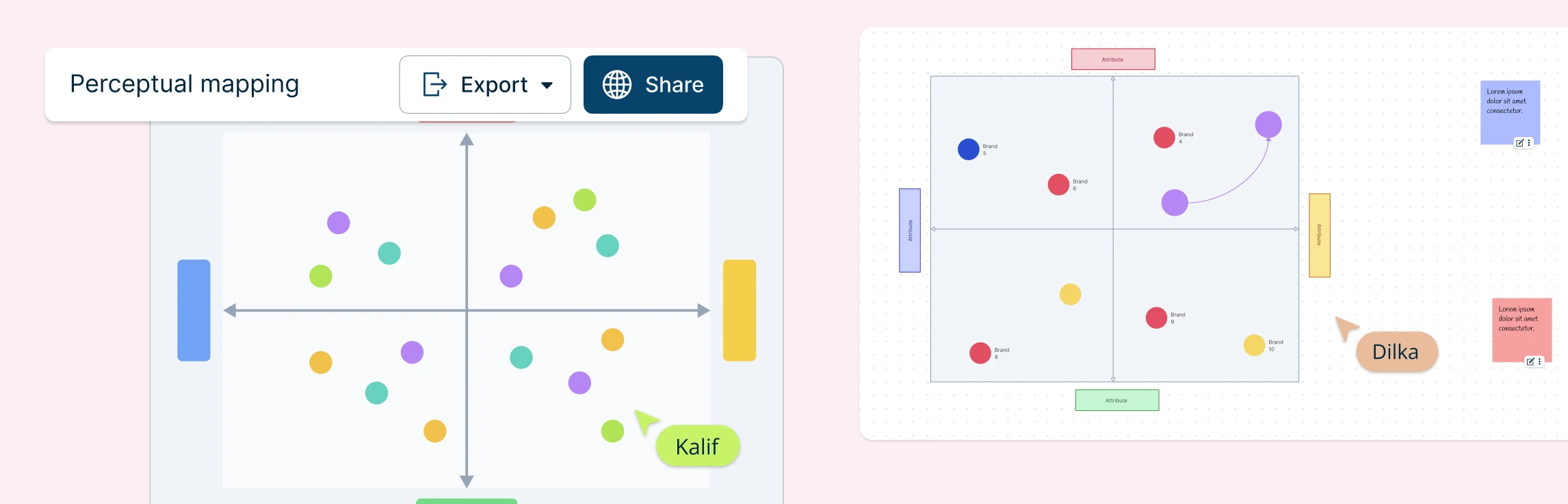
Strategy maps help organizations turn broad strategic plans into a visual structure teams can understand and use. This guide covers how strategy maps work, what they include, and how to create one in seven practical steps.
What Is a Strategy Map
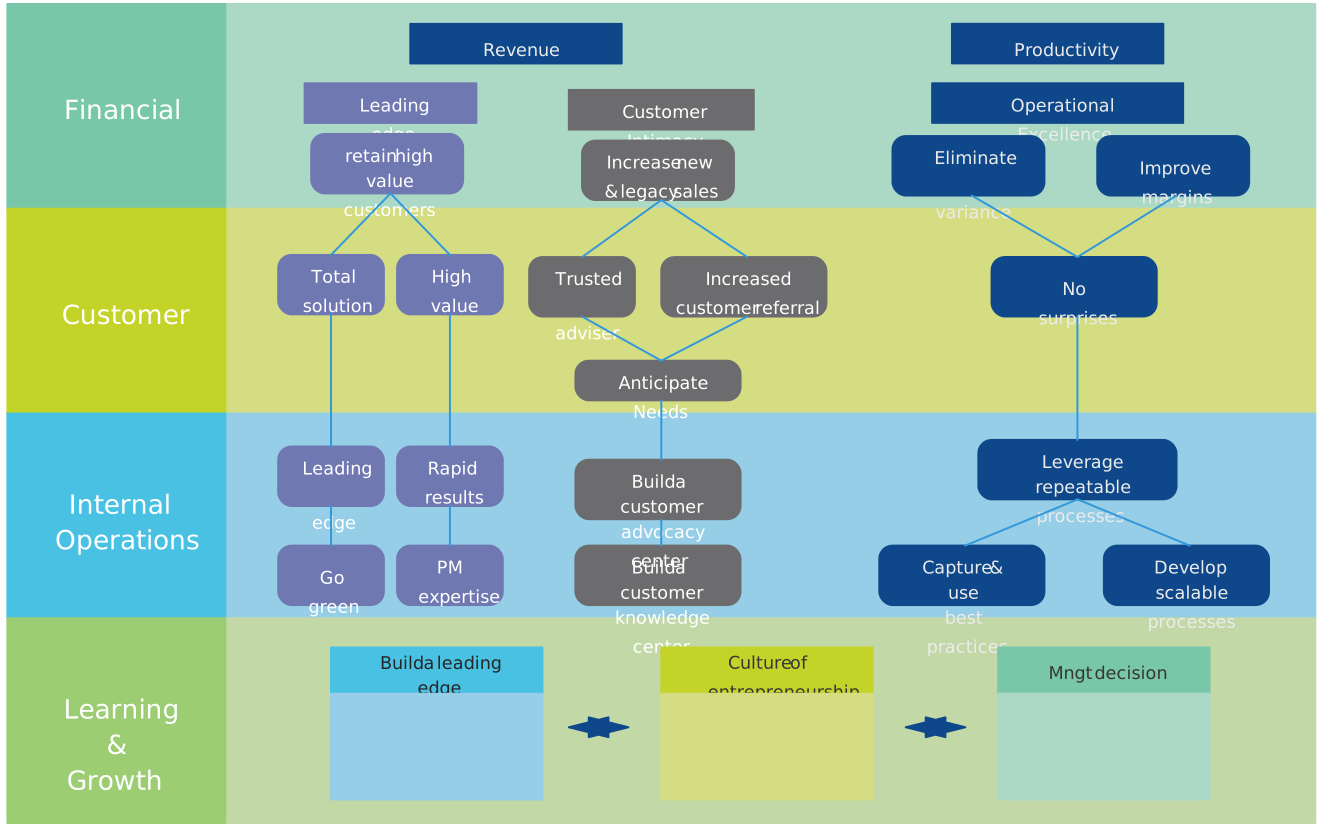
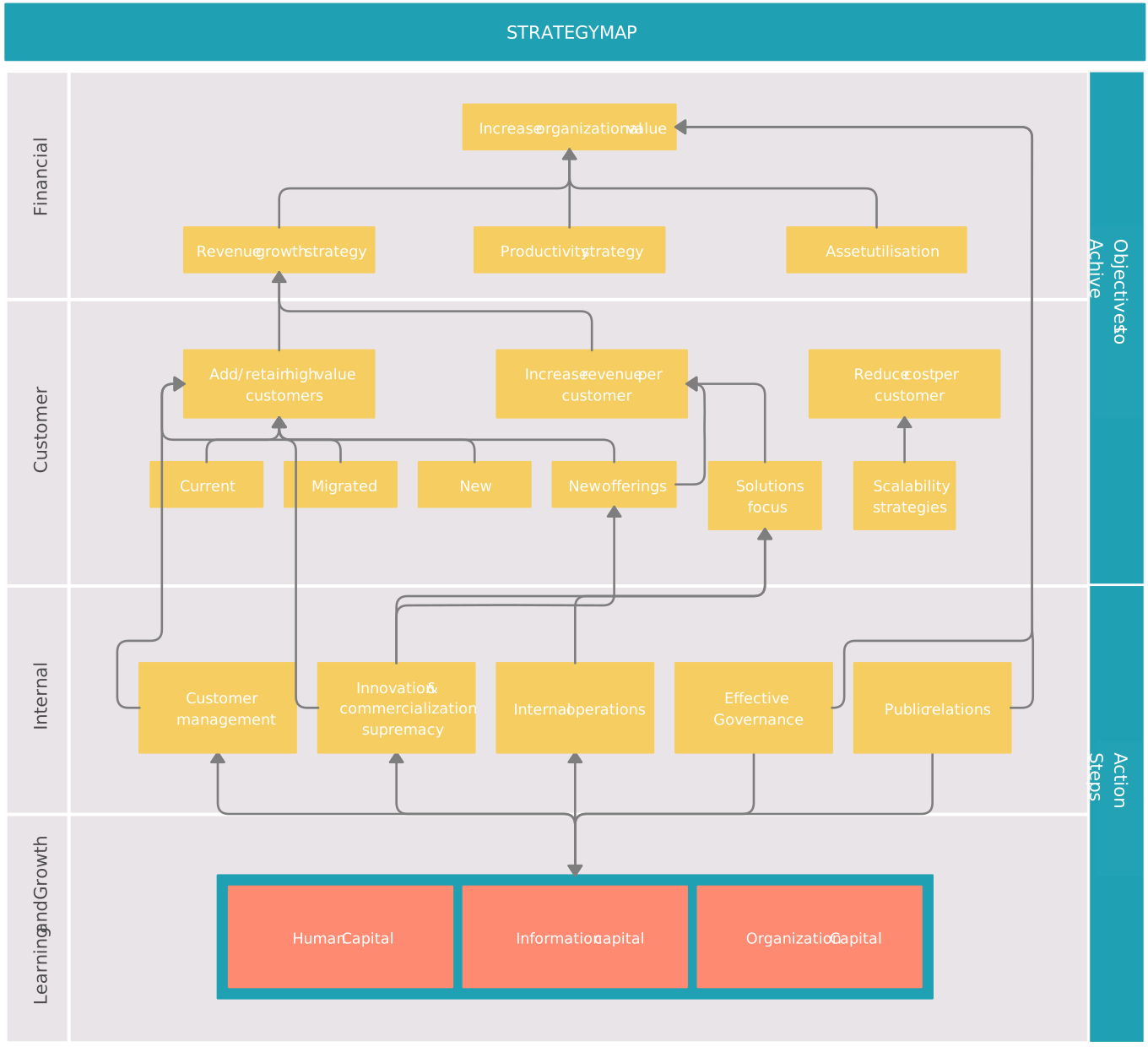
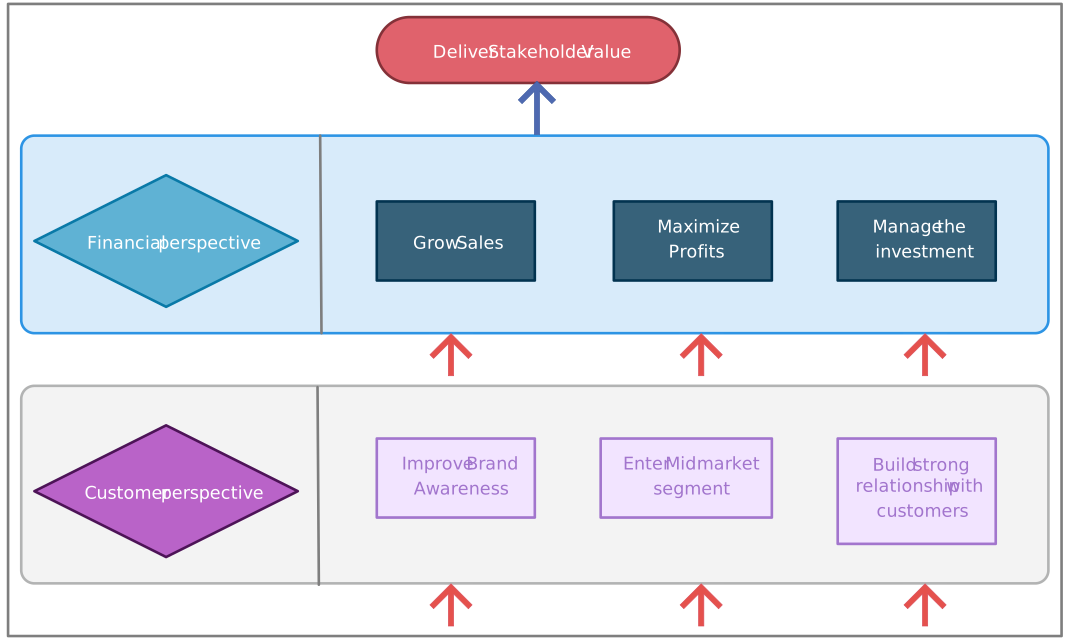
A strategy map is a one-page visual framework that shows how an organization creates value by connecting objectives across learning and growth, internal processes, customer, and financial or stakeholder perspectives.
Popularized by Robert Kaplan and David Norton as part of the Balanced Scorecard framework, it helps teams turn a broad strategy into a focused set of connected objectives they can understand and act on.
How to Read a Strategy Map
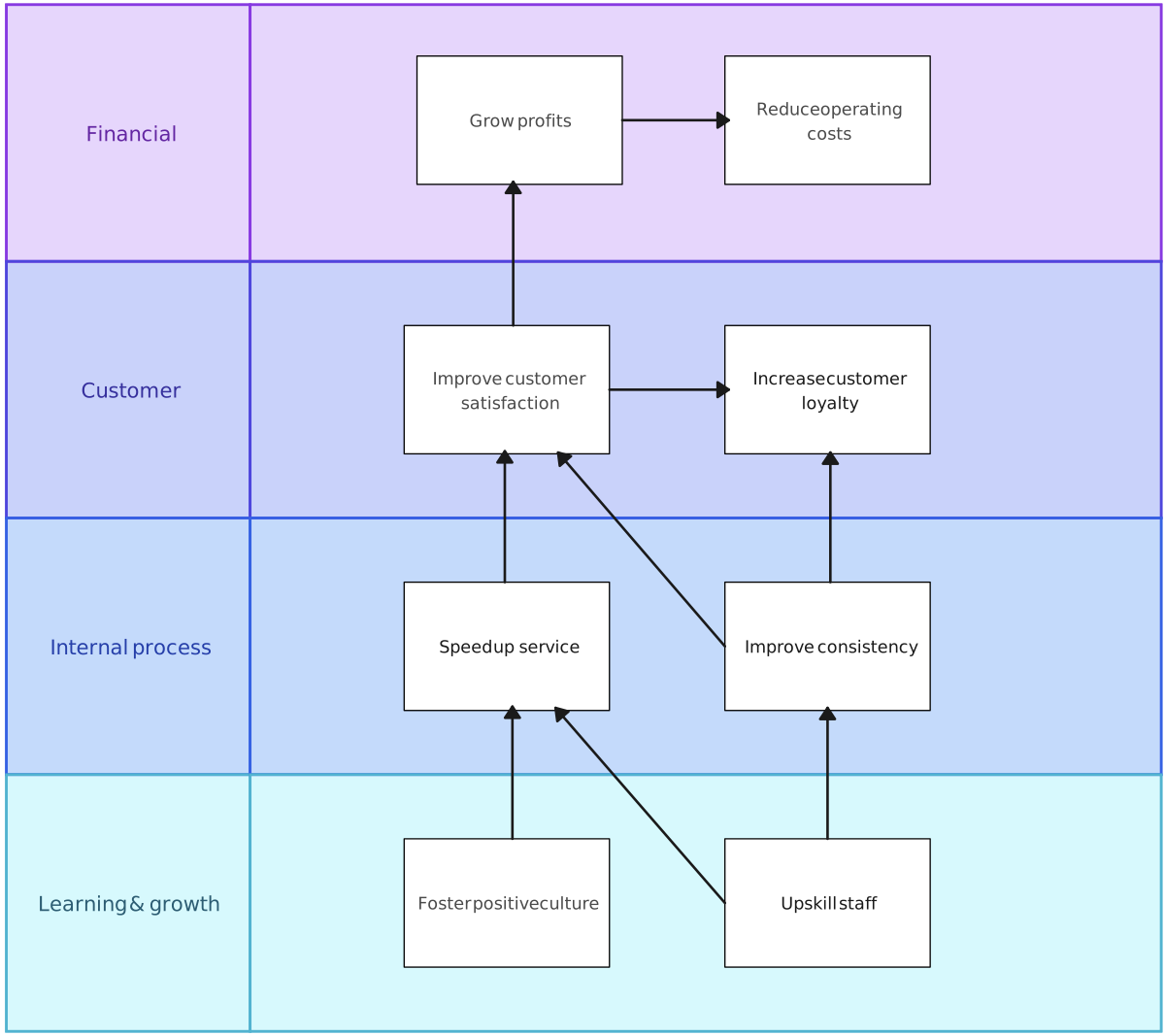
A strategy map is usually read from the bottom up. It shows how people and capabilities support better processes, which create customer value and contribute to financial or stakeholder results.
| Perspective | What It Focuses On | Example |
|---|---|---|
| Learning and growth | People, skills, technology, and culture | Improve employee knowledge |
| Internal processes | How work is carried out | Reduce response times |
| Customer | The value delivered to customers | Improve customer satisfaction |
| Financial or stakeholder | The results the organization wants to achieve | Achieve sustainable growth |
The arrows between objectives show how progress in one area is expected to support the next.
For example:
Better employee knowledge → faster customer support → higher customer satisfaction → stronger customer retention
Key Components of a Strategy Map
| Component | What It Shows | Example |
|---|---|---|
| Strategic objectives | The outcomes the organization wants to achieve | Improve customer retention |
| Strategic perspectives | The areas used to organize objectives | Financial, customer, internal processes, and learning and growth |
| Cause-and-effect links | How progress in one objective supports another | Better employee skills → faster processes → happier customers |
| Strategic themes | Groups of objectives linked to a shared priority | Innovation or operational excellence |
| Vision or strategic goal | The overall result the strategy is designed to achieve | Become the most trusted provider in the market |
| Measures and initiatives | How objectives will be measured and achieved | Customer retention rate and a loyalty program |
KPIs, targets, initiatives, and owners can be linked to the strategy map, but they are often managed in more detail through a Balanced Scorecard.
How to Create a Strategy Map in 7 Steps
Creating a strategy map is not only about producing a visual. Much of its value comes from the discussions used to agree on priorities, examine assumptions, and understand how different objectives support one another.
1. Clarify Your Mission and Vision
Begin with the organization’s mission and vision.
The mission explains why the organization exists and whom it serves. The vision describes what the organization wants to achieve in the future.
Together, they provide the direction for the strategy map and help ensure that every objective supports the organization’s wider purpose.
Ask:
- Why does the organization exist?
- What does it want to achieve?
- What value does it want to create, and for whom?
Keep the mission and vision concise. They should guide the map rather than take up large sections of it.
2. Understand Your Operating Environment
Before defining strategic objectives, review the environment in which the organization operates.
Consider:
- Customer and stakeholder needs
- Competitors, market changes, and industry trends
- Suppliers and partners
- Regulation and compliance requirements
- Risks, opportunities, strengths, and limitations
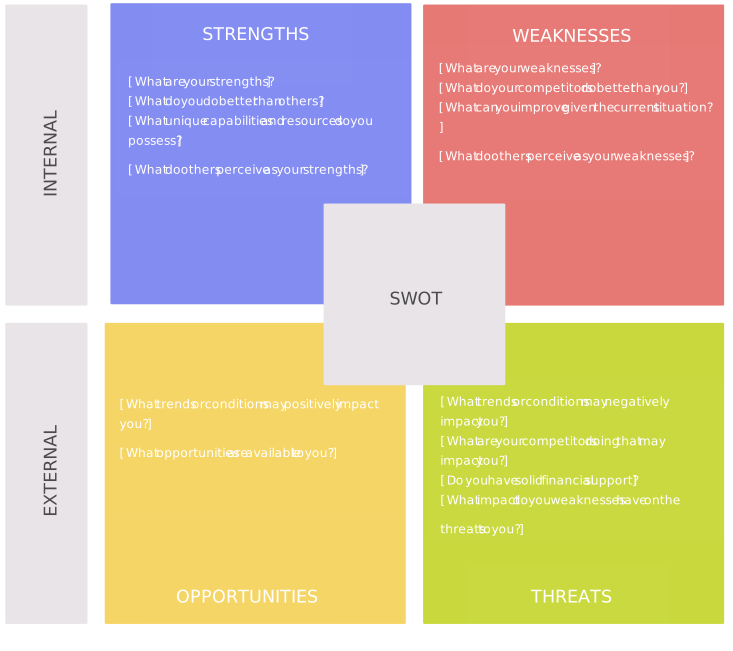
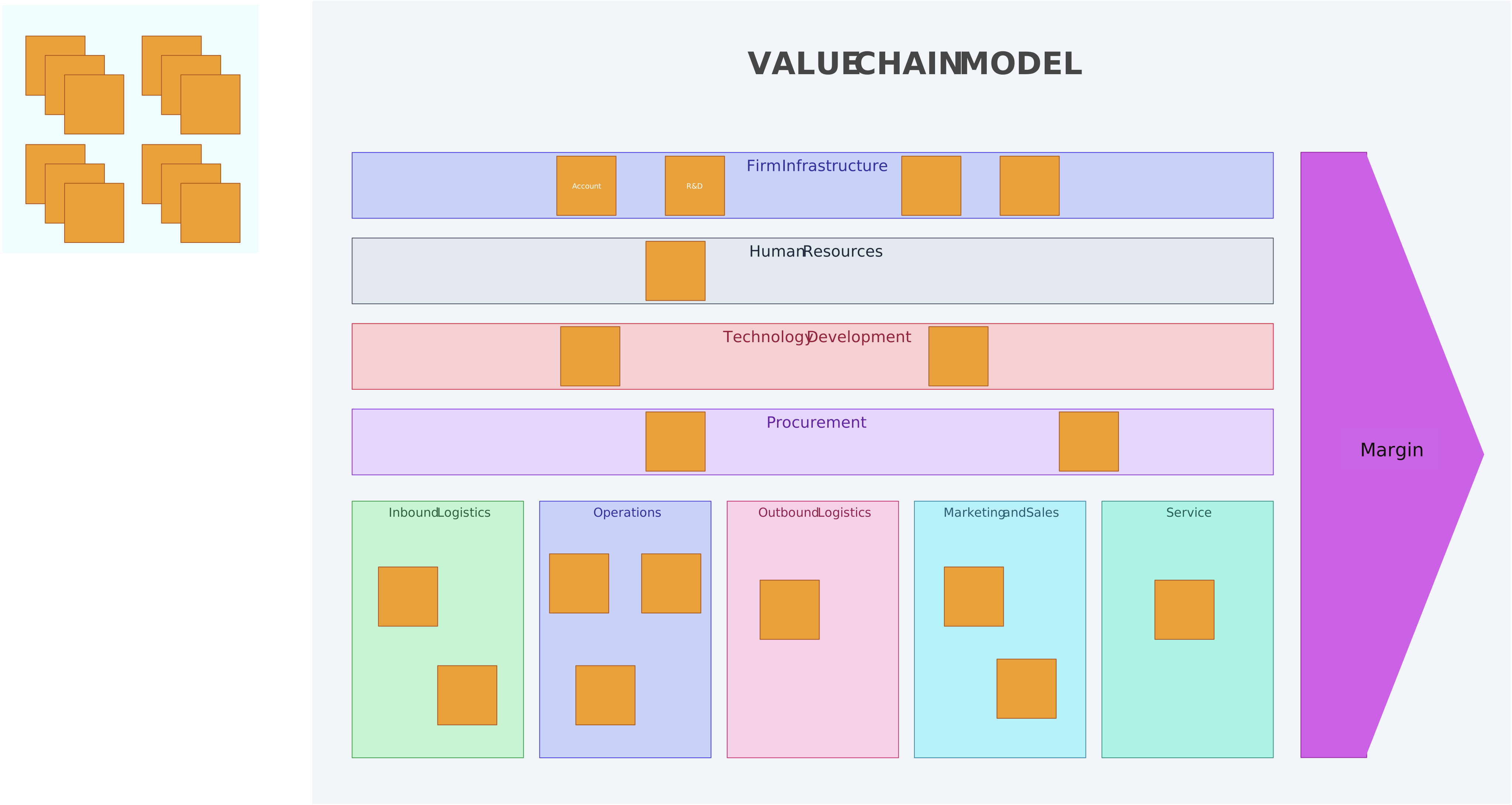
Tools such as stakeholder maps, SWOT analyses, PESTLE analyses, and value chain maps can help organize this information.

A stakeholder map can identify the people and groups that influence the strategy, while a value chain analysis can show how the organization creates and delivers value to customers.
This step helps ensure that the strategy is based on real conditions rather than internal assumptions alone.
3. Define Your Strategy
Use what you have learned about the organization and its environment to define how it will achieve its mission and vision.
A strategy describes the choices the organization will make to create value and achieve a stronger position.
For example, an organization may choose to compete by:
- Delivering a better customer experience
- Improving operational efficiency
- Offering innovative products or services
- Entering new markets or strengthening customer relationships
The strategy should be specific enough to guide decisions. Broad ambitions such as “be the best” or “grow the business” are not enough on their own.
4. Translate the Strategy Into Objectives
Turn the strategy into a focused set of objectives across the four perspectives.
| Perspective | What to Define | Example Objectives |
|---|---|---|
| Financial or stakeholder | The final results the strategy should deliver | Increase recurring revenue, improve margins, or reduce costs |
| Customer | The value and outcomes created for customers | Improve retention, satisfaction, trust, or service |
| Internal processes | The processes that must improve | Reduce errors, shorten response times, or improve innovation |
| Learning and growth | The people, skills, technology, culture, and information needed | Improve employee capabilities, leadership, data access, or technology adoption |
Financial objectives often balance long-term revenue growth with short-term productivity. In nonprofits, government bodies, schools, and healthcare organizations, mission or stakeholder outcomes may sit above financial objectives.
Write objectives as results rather than activities. For example:
- Objective: Improve customer retention
- Initiative: Launch a customer loyalty program
The objective belongs on the strategy map. The initiative describes one way to achieve it.
5. Connect Objectives Through Cause and Effect
Once the objectives have been added, connect them with arrows to show how progress in one area is expected to support another.
A typical sequence may look like this:
Improve employee capabilities → streamline internal processes → improve customer satisfaction → increase customer retention and revenue
For every connection, ask:
If we achieve this objective, will it realistically contribute to the next result?
Only add relationships that can be clearly explained. Too many arrows can make the map confusing and hide the most important connections.
These links represent assumptions about how the strategy will work. KPIs and regular reviews are still needed to test whether those assumptions are producing the expected results.
6. Group Objectives Into Strategic Themes
Strategic themes organize related objectives around the organization’s main priorities.
Common themes include:
- Customer experience
- Operational excellence
- Innovation
- Sustainable growth
- Workforce development
Themes may run vertically across the map, connecting objectives from different perspectives.
For example, a customer experience theme could include:
- Improve employee service skills
- Reduce response times
- Increase customer satisfaction
- Grow customer retention
Use themes only when they make the strategy easier to understand. Too many themes can make the map more complicated.
7. Cascade and Review the Strategy Map
An organization-wide strategy map can be used as the foundation for more focused maps across departments, teams, products, services, or regions.
For example, a company-level map may focus on profitable growth, while HR maps the capabilities needed to support it, operations focuses on speed and quality, and customer service focuses on response times and satisfaction.
Each lower-level map should show how that area contributes to the organization’s wider strategy.
Review the strategy map with the people responsible for carrying it out.
Check whether:
- Every objective supports the strategy.
- Objectives describe outcomes rather than tasks.
- Cause-and-effect relationships are logical.
- The map reflects current conditions.
- Teams understand their contribution.
- The number of objectives is manageable.
Review the map during strategic planning and when major changes affect the organization’s direction, market, customers, leadership, or operating environment.
Strategy Map Example
Imagine an online retailer that wants to increase revenue from repeat customers. Its strategy map might look like this:
| Perspective | Strategic Objective | Possible KPI |
|---|---|---|
| Financial | Increase revenue from returning customers | Repeat-customer revenue |
| Customer | Improve customer trust and retention | Customer retention rate |
| Internal processes | Reduce fulfilment errors and delivery delays | On-time delivery rate |
| Learning and growth | Improve staff training and inventory visibility | Training completion rate and system adoption |
The objectives connect in a clear sequence:
Better training and inventory visibility → fewer fulfilment errors → more reliable deliveries → greater customer trust → more repeat purchases
This shows how improvements in people and processes can contribute to customer and financial results.
Benefits of a Strategy Map
A strategy map helps organizations:
- Simplify strategy: Show the most important objectives and connections in one visual.
- Align teams: Help departments work toward shared priorities.
- Connect work to results: Show how people, processes, and systems contribute to wider goals.
- Guide decisions: Evaluate whether projects and investments support the strategy.
- Support performance management: Provide a foundation for linking objectives to KPIs, targets, initiatives, and owners.
- Identify gaps: Reveal missing capabilities, unclear relationships, and unsupported objectives.
Common Strategy Map Mistakes to Avoid
- Adding too many objectives: Include only the outcomes needed to explain how the strategy will work.
- Confusing objectives with initiatives: An objective is a result, such as improving retention. An initiative is an action, such as launching a loyalty program.
- Using vague labels: Write “Improve customer satisfaction” instead of simply “Customers.”
- Adding too many connections: Use arrows only when the relationship between objectives can be clearly explained.
- Applying the four perspectives too rigidly: Adapt them to suit the organization. Nonprofits, for example, may place mission outcomes above financial results.
- Excluding key teams: Involve the people responsible for putting the strategy into action.
- Failing to review the map: Update it when the strategy, market, or organizational priorities change.