A Training Needs Analysis (TNA) identifies gaps between the knowledge, skills, or behaviors a role requires and what people can currently demonstrate. It also tests whether training is the right response, since unclear processes, inadequate tools, workload, or other system conditions may be the actual cause of a performance gap.
This guide explains how to conduct a TNA, prioritize needs, choose appropriate methods, and evaluate results. The included templates help HR, learning and development teams, managers, and subject-matter experts organize evidence and agree on next steps.
What is a Training Needs Analysis (TNA)?
A Training Needs Analysis is a systematic process for defining expected performance, collecting evidence about current performance, and analyzing skill gaps. It examines the organization, the work, and the learners to determine which gaps training can address and which require a different intervention. This prevents teams from treating every workplace performance problem as a training problem.
The primary purpose is to make training decisions from evidence rather than assumptions. A TNA helps organizations:
- Identify skill gaps: A training needs analysis highlights areas where employees may lack the necessary skills or knowledge, enabling the organization to address these gaps before they affect performance.
- Align training with goals: By understanding the specific needs of the workforce, organizations can create training programs that directly support their business objectives, ensuring that training is relevant and effective.
- Choose an appropriate response: Determine whether targeted training can address the gap or whether the organization needs changes to tools, processes, role expectations, staffing, or management support.
The analysis should produce prioritized needs, recommended responses, responsible owners, and measures for reviewing whether the selected intervention worked.
Training Needs Analysis Templates
Training needs analysis templates make it easier to organize and visualize your findings, helping you identify skill gaps, prioritize training areas, and align development goals with business objectives. These ready-to-use templates save time and simplify the analysis process, making your training needs analysis more efficient and effective.
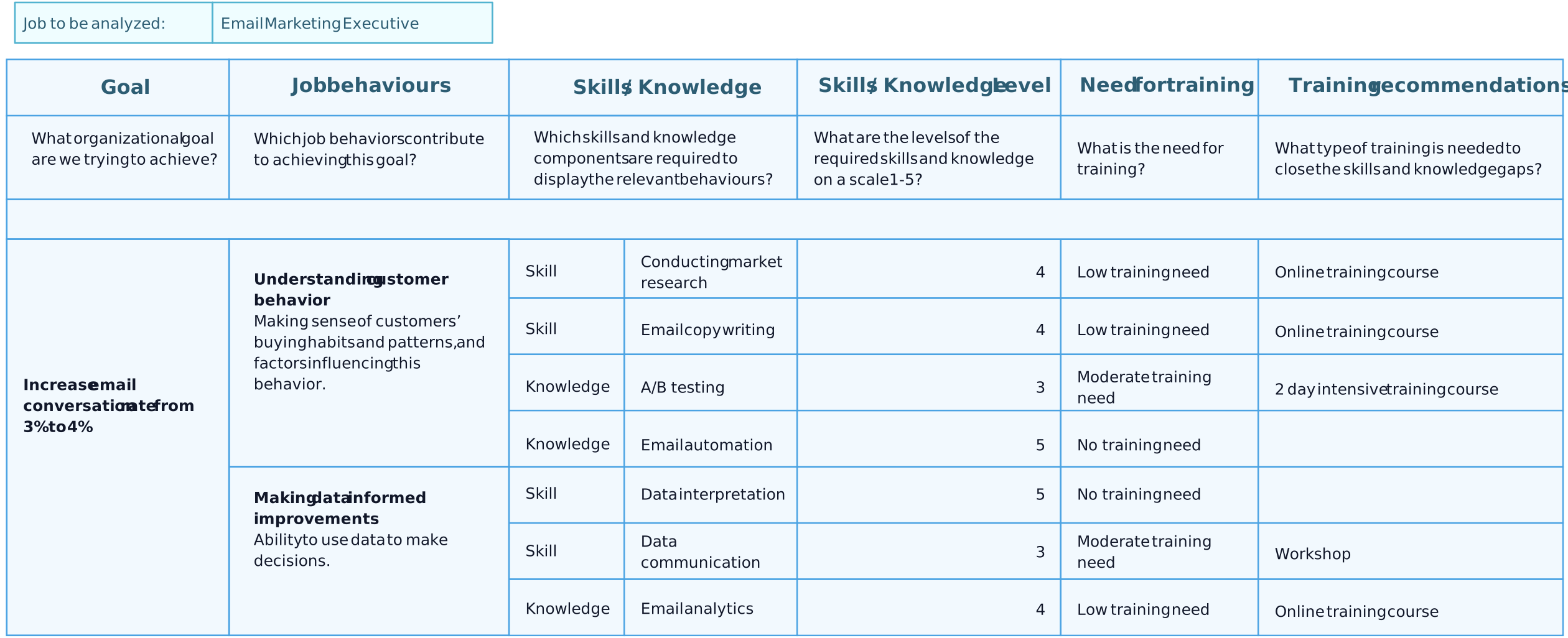
1. Marketing Executive Training Needs Analysis

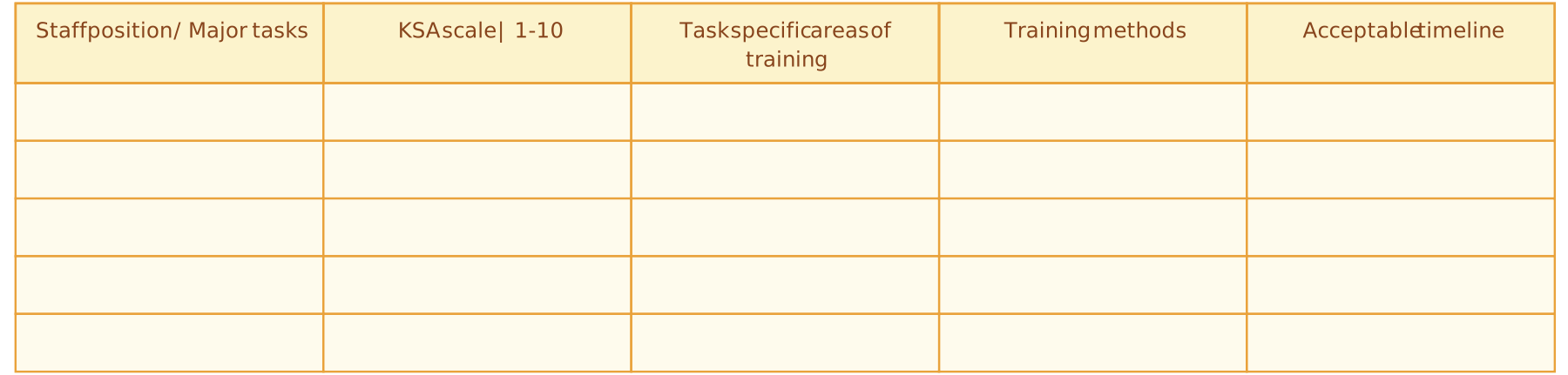
2. Employee TNA Template
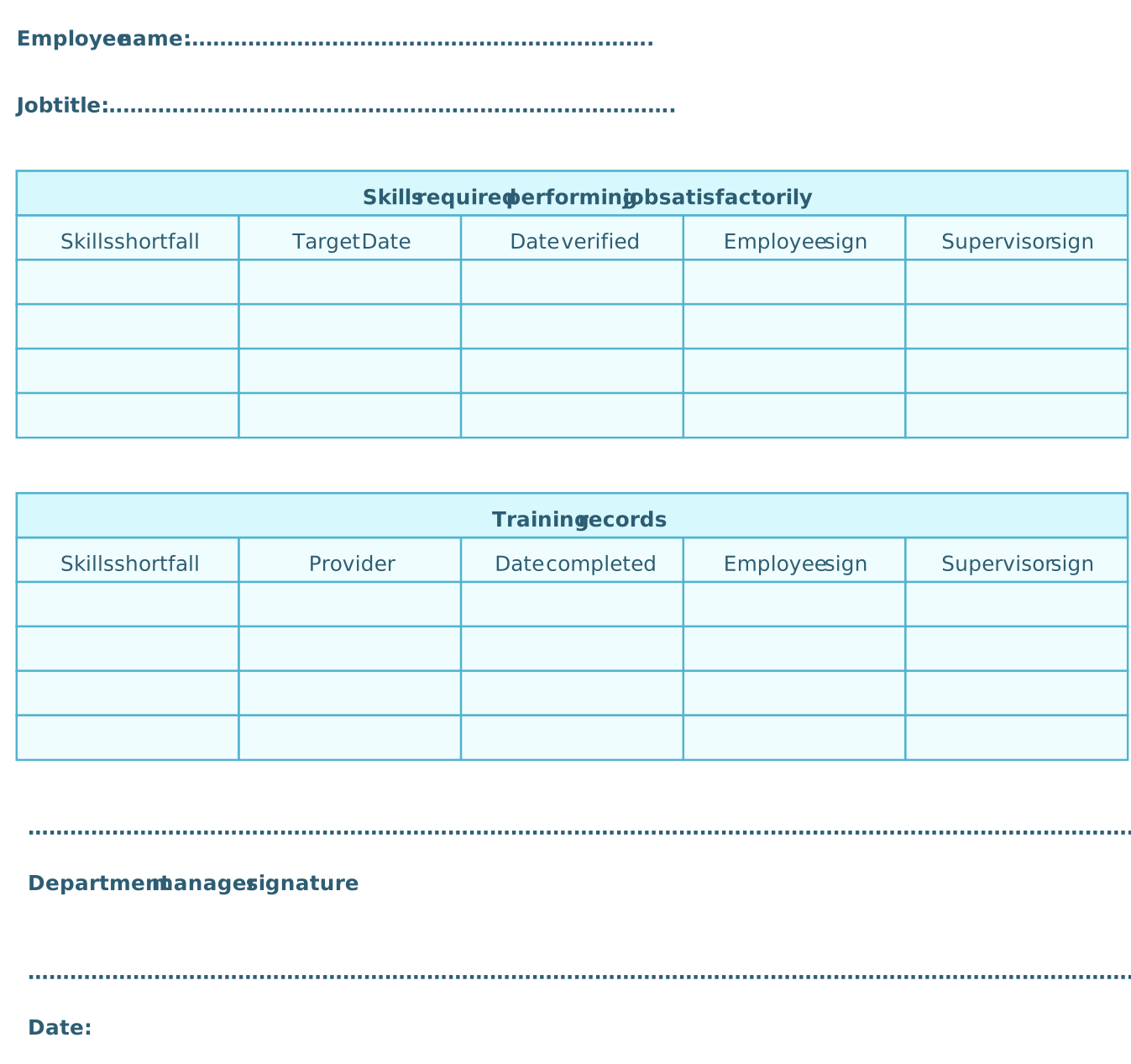
3. Training Needs Analysis Example
4. TNA Example
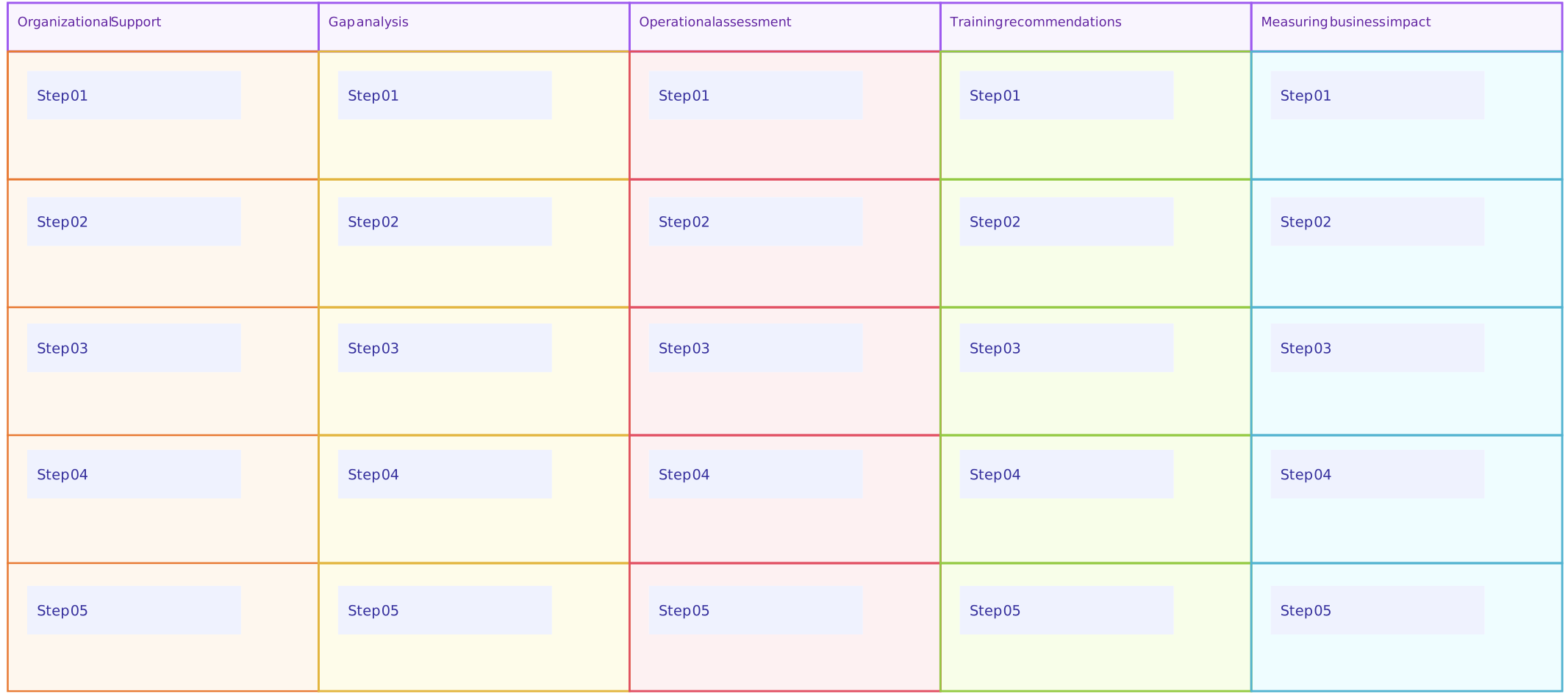
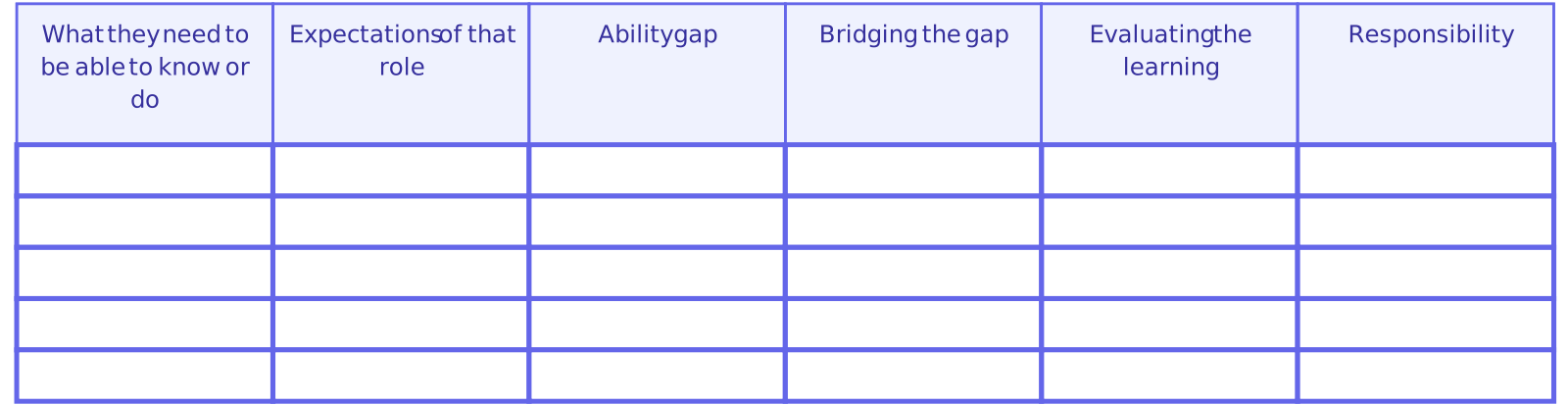
5. Blank Training Needs Analysis Template
Training Needs Analysis vs Training Needs Assessment
Training needs analysis and training needs assessment are often used interchangeably, so define the terms before starting a project. When an organization distinguishes them, a needs assessment identifies a performance gap and determines whether training is an appropriate response. A training needs analysis then gathers the information needed to design that training for a specific audience and context.
Training Needs Analysis examines the learners, required competencies, existing resources, constraints, and delivery context after training has been identified as part of the solution.
Training Needs Assessment takes the broader diagnostic view. It compares expected and current performance, investigates both individual and system-level causes, and considers training and non-training responses. This distinction follows the CDC’s current needs-assessment guidance; other frameworks may use the labels differently.
Key differences
- Scope:
- A needs assessment examines the performance gap, its causes, and the available response options.
- A training needs analysis focuses on the learners, competencies, content, resources, and conditions needed to design training.
- Purpose:
- A needs assessment asks whether training is needed.
- A training needs analysis asks what the training must address and how it should be designed.
- Data Collection:
- Both may use performance data, job analysis, observation, surveys, interviews, and stakeholder input.
- The difference lies in the questions the evidence answers, not in one fixed collection method.
Types of Training Needs Analysis
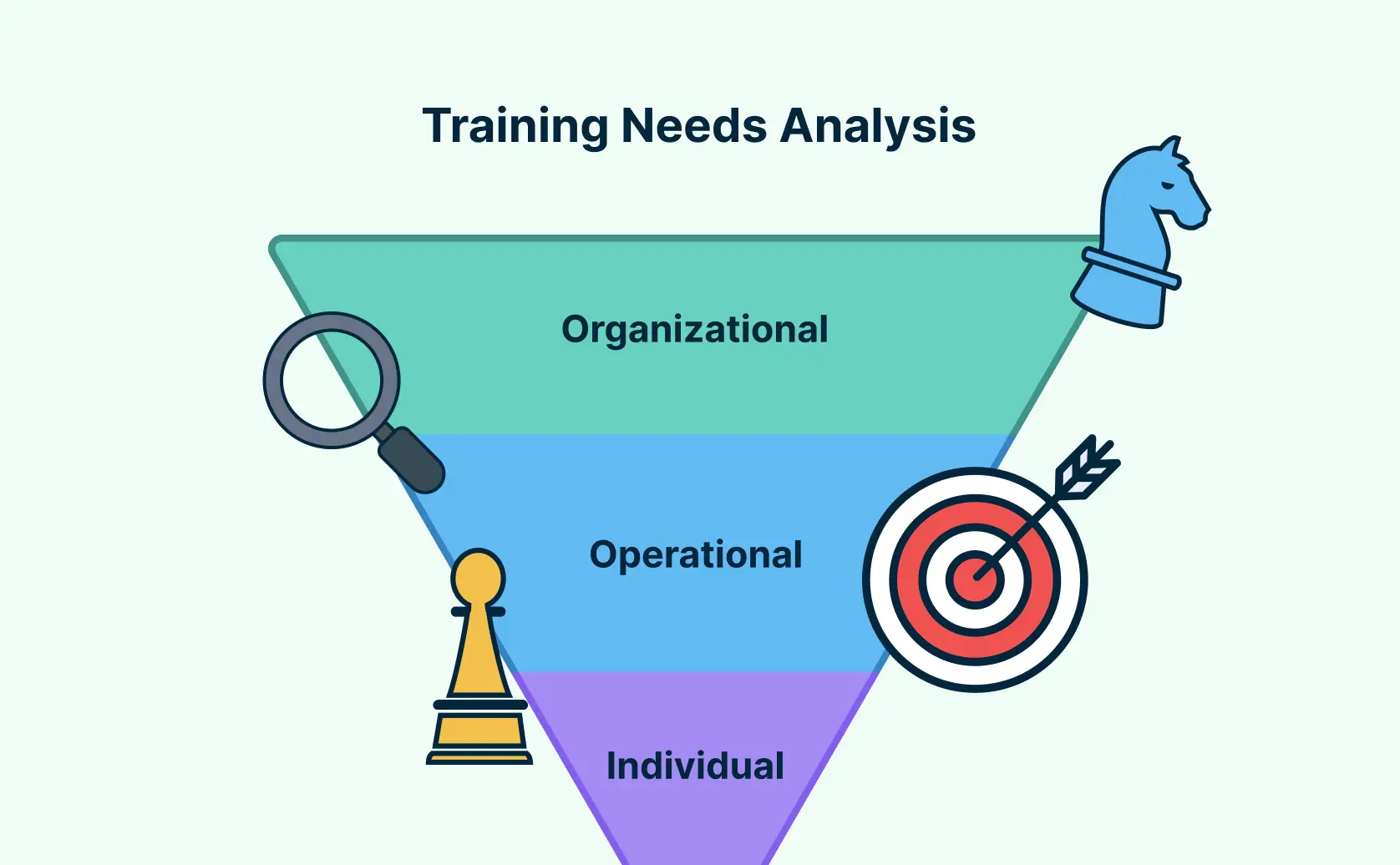
Understanding the different types of Training Needs Analysis is essential for organizations seeking to develop effective training programs. Each type offers valuable insights into various aspects of employee skills and performance. By conducting comprehensive TNAs, organizations can identify and prioritize training needs, ensuring that their workforce is equipped with the right skills to meet current and future challenges.
Organizational analysis
This type of analysis focuses on the overall needs of the organization. It examines the company’s goals, culture, and external environment to determine what skills and knowledge are necessary for success.
Purpose: The goal is to align training initiatives with the organization’s strategic objectives, ensuring that employees are equipped to help the business achieve its goals.
Process:
- Assess Organizational Goals: Review the organization’s mission, vision, and strategic objectives.
- Analyze Current Skills: Evaluate the existing skills of the workforce in relation to the desired outcomes.
- Identify Environmental Factors: Consider industry trends, market demands, and changes in technology that may impact training needs.
Outcome: A clear understanding of how training can support organizational success and where gaps exist in employee skills.
Task analysis
Task analysis involves breaking down specific jobs or roles to identify the skills, knowledge, and behaviors required to perform them effectively.
Purpose: This analysis focuses on understanding the tasks that employees need to complete and the competencies needed to complete those tasks successfully.
Process:
- Identify Job Responsibilities: List the key tasks and responsibilities associated with a specific role.
- Determine Required Skills: Identify the skills and knowledge necessary to perform each task effectively.
- Evaluate Performance Standards: Establish the standards for successful job performance.
Outcome: A detailed overview of the specific skills and knowledge required for different roles, helping to create targeted training programs.
Individual analysis
Individual analysis looks at the skills and knowledge of specific employees or groups to identify their unique training needs.
Purpose: The goal is to assess how individual performance aligns with job requirements and identify areas for improvement.
Process:
- Collect Performance Data: Review performance appraisals, feedback, and assessments for individual employees.
- Gather Self-Assessments: Encourage employees to assess their skills and identify areas where they feel they need additional training.
- Conduct Interviews or Surveys: Engage with employees and managers to gain insights into perceived training needs.
Outcome: A personalized understanding of each employee’s strengths and weaknesses, allowing for tailored training solutions.
Competency-based analysis
This type of analysis focuses on identifying the competencies—skills, knowledge, and behaviors—that are essential for successful performance in specific roles.
Purpose: Competency-based analysis helps organizations define the core competencies needed across various positions and create training programs to develop those competencies.
Process:
- Define Core Competencies: Identify the key competencies required for different roles within the organization.
- Assess Current Competencies: Evaluate the existing competencies of employees against the defined standards.
- Develop Training Plans: Create targeted training programs that address gaps in competencies.
Outcome: A clear framework of competencies that guides training and development initiatives, ensuring employees develop the skills necessary for their roles.
Performance analysis
Performance analysis focuses on evaluating employee performance to identify gaps in skills and knowledge that hinder job effectiveness.
Purpose: The aim is to understand why performance issues exist and how training can help improve employee effectiveness.
Process:
- Identify Performance Issues: Determine areas where employees are underperforming or struggling.
- Analyze Root Causes: Investigate whether skill gaps, lack of knowledge, or other factors are contributing to performance issues.
- Recommend Training Solutions: Propose training programs that address the identified performance gaps.
Outcome: A targeted approach to improving performance by identifying specific training needs that can enhance employee capabilities.
Benefits of Conducting a Training Needs Analysis
Conducting a Training Needs Analysis offers numerous advantages for organizations looking to enhance employee performance and align training initiatives with business objectives. Here are some key benefits of implementing a training needs analysis:
Identifies skill gaps
A training needs analysis compares current evidence with defined role or organizational requirements. This helps teams focus on demonstrated gaps rather than assumptions and identify where more evidence is needed.
Aligns training with organizational goals
A training needs analysis connects proposed learning outcomes to the goals or performance requirements they support. Teams can then prioritize training that addresses a defined need and set measures for evaluating its contribution.
Improves employee performance
When a verified knowledge or skill gap contributes to a performance problem, targeted training can help employees build the required capability. Measure learning and behavior change separately from business outcomes so improvements are not attributed to training without evidence.
Increases employee engagement and retention
Training identified through employee and manager input can make development more relevant to actual work and career needs. Engagement and retention have many causes, so review these measures alongside management, workload, progression, compensation, and other employee-experience factors.
Facilitates better resource allocation
A TNA gives decision-makers evidence for comparing needs by business relevance, risk, urgency, audience, and cost. It cannot guarantee a return, but it can reduce investment in training that does not address the underlying problem.
Supports career development
Conducting a training needs analysis can help identify potential career development paths for employees. By understanding the skills and competencies required for advancement within the organization, employees can be provided with targeted training that prepares them for future roles. This fosters a culture of continuous learning and development, which can enhance employee satisfaction and motivation.
Improves team collaboration
A TNA often involves engaging with various stakeholders, including managers and team members. This collaborative approach fosters communication and encourages input from different perspectives. As a result, it can lead to a better understanding of team dynamics and the collective skills needed to achieve team objectives. Improved collaboration can enhance teamwork and create a more cohesive work environment.
Adapts to changing business needs
Review training needs when roles, processes, technology, regulations, or strategic priorities change. Maintaining the evidence, decisions, owners, and review dates as living documentation makes it easier to see which findings remain current and which require reassessment.
How to Conduct a Training Needs Analysis in 8 Steps
Use these eight steps to define the performance need, collect evidence, decide whether training is appropriate, plan the intervention, and evaluate the result. Assign an owner to the analysis and record key handoffs between leaders, managers, subject-matter experts, employees, and learning teams.
Step 1: Identify organizational goals
Start by clarifying your organization’s objectives. This step is crucial because training should support broader business goals. You’ll need to consult with leadership to determine short-term and long-term goals.
- Consult key stakeholders: Start by meeting with senior management, department heads, and team leaders to understand the organization’s strategic goals. These goals could be short-term, such as launching a new product, or long-term, like expanding market share or improving employee retention.
- Assess current challenges: Look at current business challenges or performance issues that could be solved or improved with training. For example, if customer satisfaction is low, the goal may be to improve customer service skills across the team.
- Focus on growth: Determine how training will support future growth or organizational changes. For instance, if the company is adopting new technology, the training goal might be to upskill employees in that area.
Document the goal, expected performance, decision owner, and constraints before collecting data. This creates a consistent basis for evaluating whether a proposed training response supports the organization’s priorities.
Step 2: Determine the type of training needed
The second step in conducting a Training Needs Analysis is to determine the type of training needed. Once you’ve identified your organization’s goals, it’s essential to figure out what kind of training will best meet those objectives. This helps in designing a targeted training program.
Types of training needs,
- Skills-based training: This type of training is aimed at developing specific skills required for a job role. It could involve soft skills (e.g., communication, leadership) or technical skills (e.g., coding, using new software).
- Example: If your sales team needs to improve negotiation techniques, a skills-based workshop would be appropriate.
- Knowledge-based training: This type focuses on imparting essential information that employees need to know. It could include compliance training, company policies, or product knowledge.
- Example: If your organization is launching a new product, employees may need knowledge-based training on product features and benefits.
- Practical training: Practical or hands-on training is necessary when employees need to apply what they’ve learned in real-world scenarios. This could include simulations, role-playing, or on-the-job training.
- Example: Customer service representatives might undergo practical training where they handle mock customer interactions to practice resolving complaints.
How to determine the type of training:
- Analyze the skill gap: Review the gaps between current employee skills and the skills needed to achieve organizational goals.
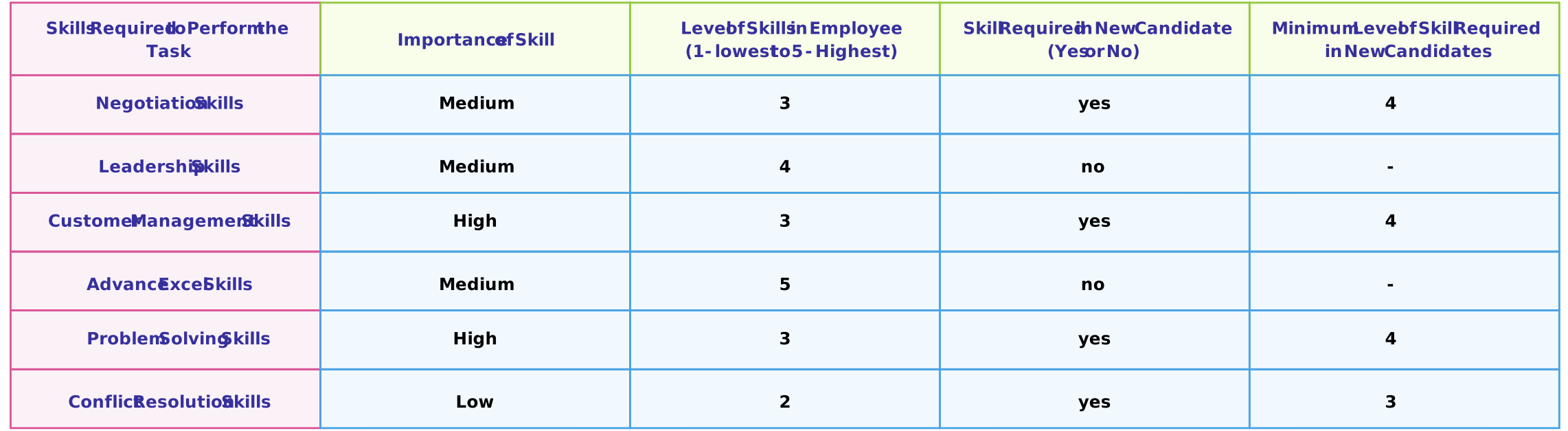
- Employee input: Gather feedback from employees to understand where they feel the need for more training—this can guide whether they need more skills, knowledge, or practical experience.
- Job requirements: Look at the tasks employees must perform and assess what kind of training will enable them to do their jobs more effectively.
Step 3: Gather data and insights
Collect information from multiple sources to understand where performance gaps exist and what may be causing them. Record the source, date, audience, and limitations of the evidence so reviewers can interpret findings in context.
How to gather data:
- Employee surveys and questionnaires: Send out surveys to gather feedback from employees on the challenges they face in their roles, the skills they lack, and their training preferences. This method gives you direct insights from those who will benefit from the training.
- Example: Use a questionnaire to ask employees about areas where they feel underprepared or uncertain.
- Manager feedback: Ask managers where they observe gaps and what evidence supports that view. Combine their perspective with employee input and performance evidence rather than treating it as inherently objective.
- Example: A manager may identify that a team struggles with time management or meeting deadlines, signaling a need for training in those areas.
- Performance reviews and metrics: Analyze past performance reviews, key performance indicators (KPIs), or other productivity metrics. This data can help identify trends and gaps in employee performance.
- Example: If sales targets are consistently missed, it could indicate a need for sales training or coaching on negotiation techniques.
- Interviews and focus groups: Conduct interviews or focus groups with employees and managers to explore their needs in greater depth. These methods allow for richer discussions and can reveal hidden issues that surveys might miss.
- Example: A focus group of customer service agents could reveal that while they understand company policies, they struggle to handle difficult customers.
- Job observation: Spend time observing employees as they work. This can help you identify areas where they face challenges or inefficiencies that they might not articulate in a survey or interview.
- Example: Observing a factory worker might reveal that they need more training in operating a specific machine.
Step 4: Analyze current skills vs. required skills
This involves assessing the skills employees currently have and comparing them with the skills needed to meet the organization’s objectives. The goal is to identify specific skill gaps that can be addressed through training.
- Create a skills inventory: Start by compiling a list of the skills that employees currently possess. This can be done through self-assessments, performance reviews, or competency tests.
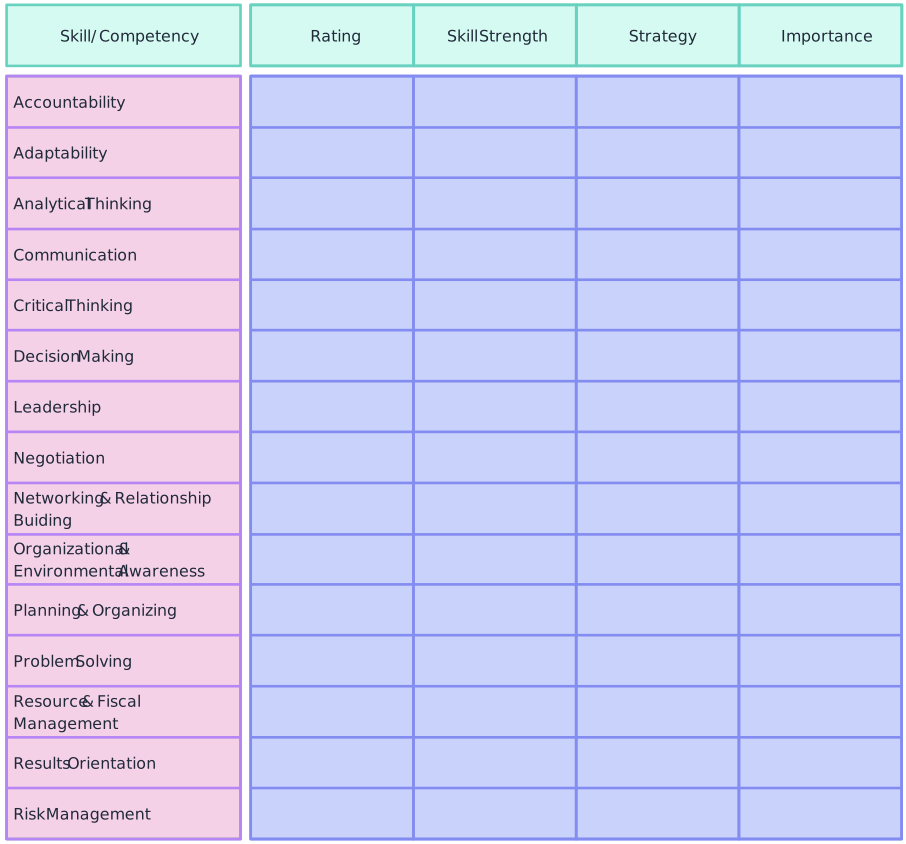
- Define required skills: Next, list the skills that are essential for each role. These required skills should align with both current job descriptions and future organizational goals.
- Compare current vs. required skills: Use a skills matrix or competency model to visualize where gaps exist. This matrix allows you to map out which employees have the necessary skills and who needs further development.
- Prioritize critical skill gaps: Not all skill gaps are equally urgent. Focus on the skills that directly impact the organization’s strategic goals and operational efficiency.
Comparing current and required skills shows where evidence suggests a development need. Validate the results with the people who perform and oversee the work before prioritizing training.
Step 5: Prioritize training needs
Once you’ve identified the skill gaps through data collection and analysis, it’s essential to rank them based on their impact on the organization. This helps in efficiently allocating resources to areas that will bring the most significant improvements.
- Align with business goals: Prioritize training that directly supports your organization’s strategic objectives. Skills or knowledge that contribute to immediate goals (like improving productivity or launching a new product) should take precedence.
- Assess the impact on performance: Determine which skills gaps have the largest effect on job performance. Training that addresses critical performance issues or bottlenecks should be ranked higher.
- Evaluate urgency and scalability: Consider how quickly the skills are needed and how many employees will benefit. Immediate needs, like complying with new regulations, or training that can benefit multiple departments, should be prioritized.
- Consider available resources: Factor in the budget, time, and trainers available. Some training programs may require more resources than others, so ensure that high-priority areas are realistic given your current resources.
- Incorporate employee and manager feedback: Compare employee input, manager observations, and performance evidence. A frequently mentioned gap deserves investigation, but frequency alone does not establish its cause or priority.
Step 6: Develop a training plan
Once you have prioritized the training needs, it’s time to create a structured plan detailing how the training will be delivered, what content it will cover, and how success will be measured.
- Set clear objectives: Define specific, measurable goals for the training. The objectives should address the skill gaps identified earlier and align with the organization’s broader goals.
- Example: If the training aims to improve communication, a clear objective might be, “After the training, employees will demonstrate effective customer communication techniques, reducing average customer complaint response times by 20%.”
- Choose the right training methods: Decide how the training will be delivered. Consider a mix of approaches based on the needs of the learners and the nature of the content, such as workshops, e-learning, simulations, or on-the-job training.
- Example: For technical skills, a combination of instructor-led training and hands-on practice may work best. For soft skills, workshops or role-playing sessions could be more effective.
- Select trainers or facilitators: Identify whether the training will be conducted internally by managers or subject-matter experts, or if external trainers will be brought in. Make sure trainers have the expertise and experience to deliver the content effectively.
- Example: If you’re conducting IT training, an external consultant with advanced software knowledge may be required.
- Set a timeline: Plan the schedule for the training, ensuring it fits within the organization’s calendar and that employees have enough time to attend without disrupting their workflow.
- Example: Break the training into sessions spread over a few weeks to minimize disruption, especially for employees in key roles.
- Outline the resources needed: Ensure that you have the required materials, tools, and equipment in place for the training. This could include training software, printed materials, or access to online platforms.
- Example: For an online training course, ensure all participants have access to the necessary e-learning platform and materials.
- Plan for assessment and follow-up: Include a plan for measuring the effectiveness of the training. Define how you will assess whether employees have gained the skills or knowledge needed. This could involve post-training assessments, performance reviews, or observation.
- Example: After customer service training, conduct a role-playing exercise to assess whether employees can handle different types of customer complaints.
Step 7: Implement the training
This step puts the training plan into action by delivering the training to employees in the format and timeline you’ve decided on.
- Prepare participants: Before starting, communicate with employees about the purpose, expectations, and benefits of the training. This helps ensure they understand its importance and are engaged from the beginning.
- Conduct the training sessions: Deliver the training according to the plan. Ensure that the trainers follow the schedule, and the materials and resources are in place. Depending on the training type, this may involve workshops, e-learning modules, or on-the-job training.
- Monitor engagement and participation: As training is implemented, track employee participation and engagement. Ensure that employees are attending sessions, interacting with the content, and actively learning.
- Provide support: Offer guidance and resources to employees throughout the training process. This can include access to additional materials, Q&A sessions with trainers, or follow-up discussions to help solidify the learning.
- Encourage feedback: During and after the training, collect feedback from participants and trainers. This allows you to make adjustments if needed and understand how well the training is being received.
Step 8: Evaluate and measure results
This step tests whether the training addressed the identified learning need and whether participants applied the learning in their work. It should not assume success before the evidence is reviewed.
- Assess knowledge retention: After the training, conduct assessments to measure how well participants retained the information or developed the skills. This could be done through quizzes, practical tests, or evaluations by managers.
- Track performance improvement: Compare pre- and post-training performance metrics to gauge the effectiveness of the training. This can be done through KPIs, employee performance reviews, or productivity reports.
- Gather feedback from participants: Collect feedback from the employees who participated in the training to understand their experience, whether they found it valuable, and if they feel better equipped for their roles.
- Evaluate business impact: Determine if the training has contributed to achieving broader organizational goals, such as increased productivity, reduced error rates, or improved customer satisfaction. Link the training outcomes to the goals set in step one.
- Identify areas for improvement: Record what should change, who owns the update, and when the training and underlying analysis will be reviewed again.
Training Needs Analysis Examples
Here are some Training Needs Analysis (TNA) examples that demonstrate how this process can be applied in different contexts:
Example 1: Retail company adopting new point-of-sale software
A large retail chain plans to introduce a new point-of-sale (POS) system across all its stores. To ensure smooth implementation, the company conducts a TNA to identify skill gaps among cashiers, supervisors, and store managers.
- Outcome: The analysis reveals that cashiers lack knowledge of the new system’s features and need hands-on training. Supervisors require training on managing transactions, while store managers need advanced training on generating reports and analyzing sales data. Based on these insights, the company develops a tiered training program.
Example 2: Sales team performance improvement
A company notices its sales team has been consistently missing targets for the past three quarters. They conduct a training needs analysis to understand whether the problem lies in skills, tools, or knowledge.
- Possible analysis result: Interviews and performance data indicate a gap in specific negotiation behaviors. Before creating workshops, the company checks whether lead quality, pricing, tools, or sales-process issues also contribute, then defines measures for evaluating the selected response.
Example 3: Compliance training for a financial services firm
A financial services company is faced with new regulatory requirements. To ensure all employees remain compliant, they conduct a training needs analysis to understand who needs specific training.
- Possible analysis result: The analysis identifies different learning requirements for front-line employees and managers. Compliance specialists validate the content, required audience, completion evidence, and review schedule before the training is implemented.
Example 4: Leadership development in a growing tech company
A fast-growing tech company wants to prepare high-performing employees for leadership roles. A TNA is conducted to identify the skills and competencies these potential leaders need.
- Outcome: The TNA shows that while many employees are technically skilled, they lack people management and decision-making abilities. The company develops a leadership development program that includes training on team management, conflict resolution, and strategic decision-making.
Example 5: Healthcare organization improving patient care
A hospital system wants to improve patient satisfaction scores. They conduct a training needs analysis to identify where employees may need additional training to enhance patient care.
- Possible analysis result: Feedback and observation identify communication needs for clinical and administrative teams. The hospital also reviews staffing, scheduling, tools, and process constraints, then evaluates training against defined behavior measures and patient feedback without assuming training caused every change.
When to Use a Training Needs Analysis
A Training Needs Analysis should be used when an organization recognizes the need to improve employee performance or align skills with business goals. It is particularly useful in several scenarios:
- Introducing new systems or technologies: When a company adopts new software, tools, or procedures, employees may need training to effectively use these systems.
- Performance gaps: If employees are not meeting expectations or if specific departments are underperforming, a TNA can help identify whether skill or knowledge gaps are contributing to the problem.
- Organizational changes: During periods of expansion, restructuring, or shifts in company strategy, a TNA can ensure that employees have the skills needed to succeed in their evolving roles.
- Regulatory or compliance requirements: When new industry standards or regulations are introduced, a TNA helps ensure that employees receive the necessary training to remain compliant.
- Employee development: If an organization wants to invest in career growth or leadership development, a TNA can identify training that will help employees progress within the company.
Training Needs Analysis Methods
There are several methods used in a Training Needs Analysis (TNA), each helping organizations to identify skill gaps and training requirements from different angles. Here are the most commonly used methods:
1. Surveys and questionnaires
This is a straightforward and cost-effective method where employees and managers answer a set of questions about their skills, job challenges, and training needs. It helps collect broad insights from a large group of people.
- When to use: Ideal for gathering data from a large workforce or getting an overview of common training needs.
- Example: Distributing a company-wide survey asking employees about their proficiency in new technologies or recent challenges faced on the job.
2. Interviews
Conducting one-on-one or group interviews with employees and managers provides deeper insights into specific skill gaps, training experiences, and performance challenges. Interviews offer a personalized understanding of needs.
- When to use: Best for obtaining detailed information or clarifying issues identified through surveys or other data sources.
- Example: Interviewing team leads to discuss the root causes of performance gaps within their teams.
3. Focus groups
Focus groups bring together a group of employees or managers to discuss training needs. This method allows for more interaction and idea sharing, leading to richer discussions and insights.
- When to use: Useful when you want to explore topics in-depth or gather collective feedback from a team or department.
- Example: Conducting a focus group with customer service representatives to discuss their training needs for handling complex customer inquiries.
4. Observation
Direct observation involves watching employees perform their job tasks to assess their skills and identify areas where training is needed. This method is practical for understanding real-time job challenges.
- When to use: Ideal for jobs where performance is observable and measurable, such as technical or hands-on roles.
- Example: Observing production line workers to identify gaps in operational processes or safety compliance.
5. Performance reviews
Data from regular performance reviews and appraisals can highlight areas where employees need improvement. These reviews often provide specific feedback on skills and competencies that require development.
- When to use: Helpful when you already have performance data and want to link it directly to training needs.
- Example: Using annual performance review results to pinpoint recurring skill deficiencies among employees.
6. Competency mapping
Competency mapping compares the skills and competencies employees currently possess against those required for their roles. It helps identify specific gaps and allows for targeted training solutions.
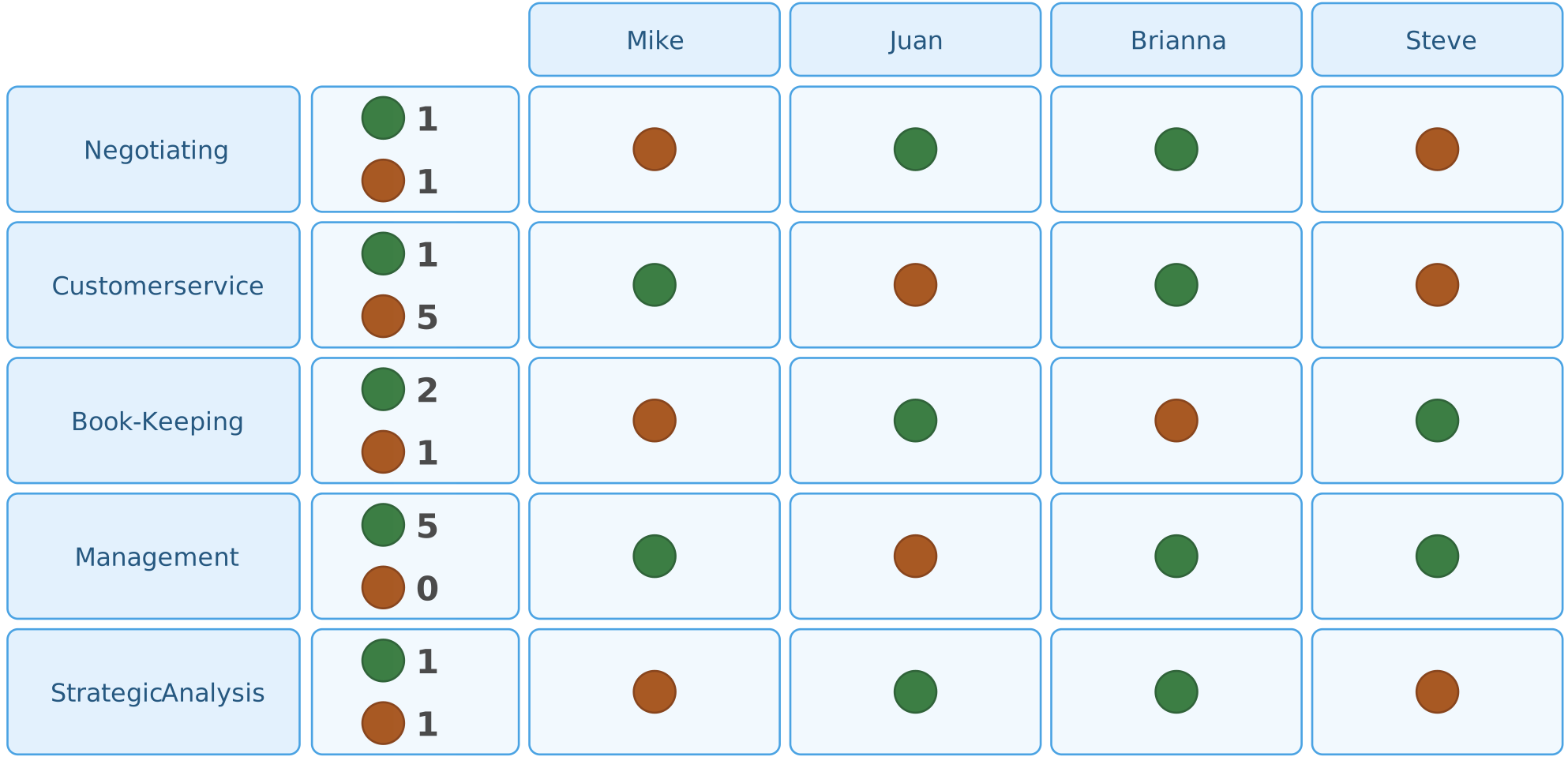
- When to use: When you need to measure employees against well-defined competency standards.
- Example: Mapping the skills of project managers against the competencies needed for effective project delivery, such as risk management or stakeholder communication.
7. Workforce assessments
A more structured approach, workforce assessments can involve testing or evaluating employees’ knowledge, skills, and abilities through simulations, exams, or hands-on demonstrations.
- When to use: Effective for technical or complex roles where formal testing can highlight skill gaps.
- Example: Using a software proficiency test to identify gaps in employees’ understanding of a new CRM tool.
8. Feedback from managers and supervisors
Managers and supervisors are often in the best position to observe day-to-day performance and offer insights into where employees may need training. Their feedback can provide a clear perspective on team-wide or individual needs.
- When to use: Suitable when you need to validate employee performance data or gather targeted insights from those overseeing the work.
- Example: Collecting input from supervisors on the areas their teams struggle with, such as technical skills or process knowledge.
Training Needs Analysis Questions
Asking the right questions in a training needs analysis ensures that you gather the necessary insights to develop a training program that is practical, relevant, and aligned with both individual and organizational goals. This also helps in targeting training where it’s most needed, optimizing resources, and increasing overall productivity. Here are some Training Needs Analysis (TNA) questions that can help you gather valuable information from employees, managers, and stakeholders:
For employees
- What are the biggest challenges you face in your current role?
- This question helps identify where employees struggle and what types of training could alleviate these challenges.
- What skills or knowledge do you feel you need to improve?
- It encourages self-reflection and allows employees to highlight personal areas for growth.
- Have you received any training in the past year? If so, how helpful was it?
- This evaluates the effectiveness of past training and provides insights into whether it addressed employees’ needs.
- What tools or systems do you need more training on?
- This question identifies specific software or tools employees use regularly but may not fully understand.
- What training or development opportunities would help you achieve your career goals?
- This connects personal development with organizational needs, ensuring training aligns with both employee aspirations and company objectives.
For managers and supervisors
- What skills are lacking within your team?
- Managers have a broader perspective on where their teams need improvement, making this a key question for strategic insights.
- Are there any performance gaps that could be addressed through training?
- This helps pinpoint performance issues that may be linked to skill or knowledge deficiencies.
- How would you prioritize the training needs of your team?
- Prioritizing needs ensures that critical areas are addressed first, optimizing training resources.
- Have you noticed any new challenges or requirements in your team’s work that weren’t there before?
- This question explores emerging issues, such as changes in market demands, technology, or company direction, that may require new skills.
- What role-specific training would help your team members succeed in their positions?
- Tailored training recommendations from managers ensure that the training is directly relevant to specific roles.
For organizational leaders
- What are the company’s strategic goals, and what skills are needed to achieve them?
- Aligning training with broader organizational goals ensures that training efforts support business growth.
- What new initiatives or projects are coming up that might require additional skills?
- This question helps plan for future training needs by anticipating skills required for upcoming initiatives.
- Are there any regulatory or compliance issues that need to be addressed through training?
- Training that addresses compliance issues can reduce risk and ensure that employees are up to date on regulations.
Training Needs Analysis Best Practices
These practices help teams produce a more focused, evidence-based Training Needs Analysis:
- Align training with organizational goals: Always ensure that the training you plan to implement supports the broader business objectives. Start by understanding what the organization needs to achieve and how training can help employees contribute to those goals.
- Engage key stakeholders: Involve managers, employees, and leadership in the TNA process to get a complete understanding of the skills needed at all levels. This ensures that the training is relevant and receives support from the top down.
- Use a combination of data collection methods: Surveys, interviews, performance reviews, and observations should be used together to gather comprehensive data. Relying on just one method can lead to incomplete or biased insights.
- Prioritize training needs: Once the data is collected, prioritize the training areas based on their urgency and potential impact. Not every gap identified will need immediate attention.
- Plan for continuous evaluation: After implementing training, evaluate its effectiveness and adjust as necessary. Regular feedback and performance tracking help ensure the training remains relevant and effective.
Challenges of Training Needs Analysis
Despite its importance, conducting a TNA can present several challenges:
- Lack of stakeholder involvement: A training needs analysis may fail if key stakeholders, like managers and employees, are not involved. Their insights are crucial to understanding the real skill gaps and needs within the organization.
- Inaccurate or incomplete data: Relying solely on surveys or self-reported data can result in incomplete or biased insights. Employees may overestimate their skills, or fail to acknowledge areas where they need improvement.
- Time and resource constraints: Conducting a thorough TNA can be time-consuming and may require significant resources. This often leads to organizations cutting corners, which can result in ineffective training programs.
- Resistance to training: Sometimes, employees may not see the need for training or resist change. This challenge can hinder both the analysis process and the effectiveness of the training.
- Rapid changes in business needs: Organizations operate in fast-paced environments, and by the time a TNA is complete, business needs may have changed. This can make the analysis outdated before it’s even implemented.
Simplify Your Training Needs Analysis with Creately
Creately’s training needs analysis templates give HR, learning teams, managers, and subject-matter experts a shared visual structure for comparing required and current capabilities. Teams can connect evidence, owners, priorities, review context, and supporting resources to the analysis so it remains useful after the initial workshop.
1. Visual templates for clear mapping
Start with an editable Training Needs Analysis template to map organizational goals, roles, required capabilities, current evidence, and prioritized gaps. Adapt the structure to the team or department instead of forcing every analysis into the same format.
2. Collaboration made easy
Managers, employees, learning teams, and subject-matter experts can edit the same TNA visual in real time. Comments and @mentions keep questions and feedback connected to the relevant competency or finding. An accountable analysis owner can review that input and record the agreed update without implying that the workspace replaces a formal approval system.
3. Centralized data collection
Attach notes, links, images, files, and supporting details to relevant items in the TNA visual. Structured fields can record details such as owners, priorities, statuses, or references, helping reviewers understand the evidence and context behind a finding. Creately keeps this context connected to the visual; specialist HR, learning-management, and assessment systems still manage their respective execution and employee-record functions.
4. Track progress and update easily
Update skill requirements, priorities, evidence, and recommendations as work changes. Record ownership and review timing so the TNA functions as living documentation rather than a static report. Stakeholders can revisit comments and connected context when reviewing whether a previous finding is still valid.
5. Present and share with ease
Use presentation mode to walk stakeholders through the findings, or share the workspace with appropriate view, comment, or edit access. The analysis can also be exported for use in approved reports and training-planning materials.
Conclusion
A Training Needs Analysis connects an identified performance need to evidence about learners, work requirements, and operating context. The analysis should establish whether training is appropriate, prioritize what it must address, name the people responsible for the next steps, and define how results will be reviewed.
Keep the analysis current as roles, processes, technology, and organizational goals change. A shared visual workspace can help stakeholders review findings and maintain supporting context, but the quality of the decision still depends on reliable evidence, inclusive input, and accountable follow-through.
References
Gould, D., Kelly, D., White, I. and Chidgey, J. (2004). Training needs analysis: A literature review and reappraisal. International Journal of Nursing Studies, 41(5), pp.471–486.
Centers for Disease Control and Prevention. (2025). Assess Training Needs: Conducting Needs Analysis.
ResearchGate. (n.d.). The effectiveness of training needs analysis and its relation to employee efficiency.
FAQs
What is the main goal of a Training Needs Analysis?
How often should a Training Needs Analysis be conducted?
Who is responsible for conducting a TNA?
How long does it take to complete a TNA?
How can we measure the effectiveness of training after a TNA?
Can TNA be used for all types of roles?