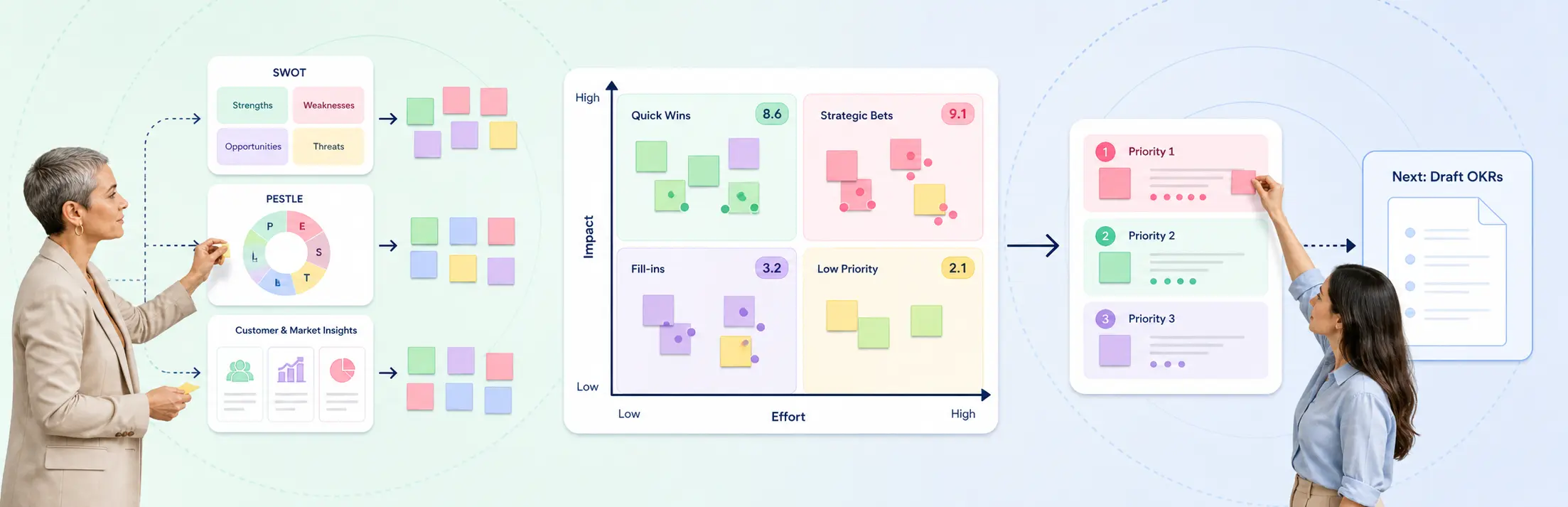
If your team has already completed a SWOT, VRIO, or value-chain analysis, the next mistake is often turning too many findings into goals. That usually creates bloated OKRs, confused ownership, and reporting noise. The better move is to decide which findings deserve focused execution and which should stay as evidence, operational work, risks, or backlog. This guide shows how to make that prioritization before you write a single OKR.
Clear and effective goal-setting is the backbone of organizational success. Businesses thrive when they can balance ambitious targets with measurable progress, yet navigating the tools and frameworks available to achieve this can be overwhelming. Leaders often face the challenge of uniting innovation with operational excellence, ensuring teams remain aligned while tracking performance. By understanding how to strategically define objectives and measure outcomes, organizations can build a system that drives focus, accountability, and results
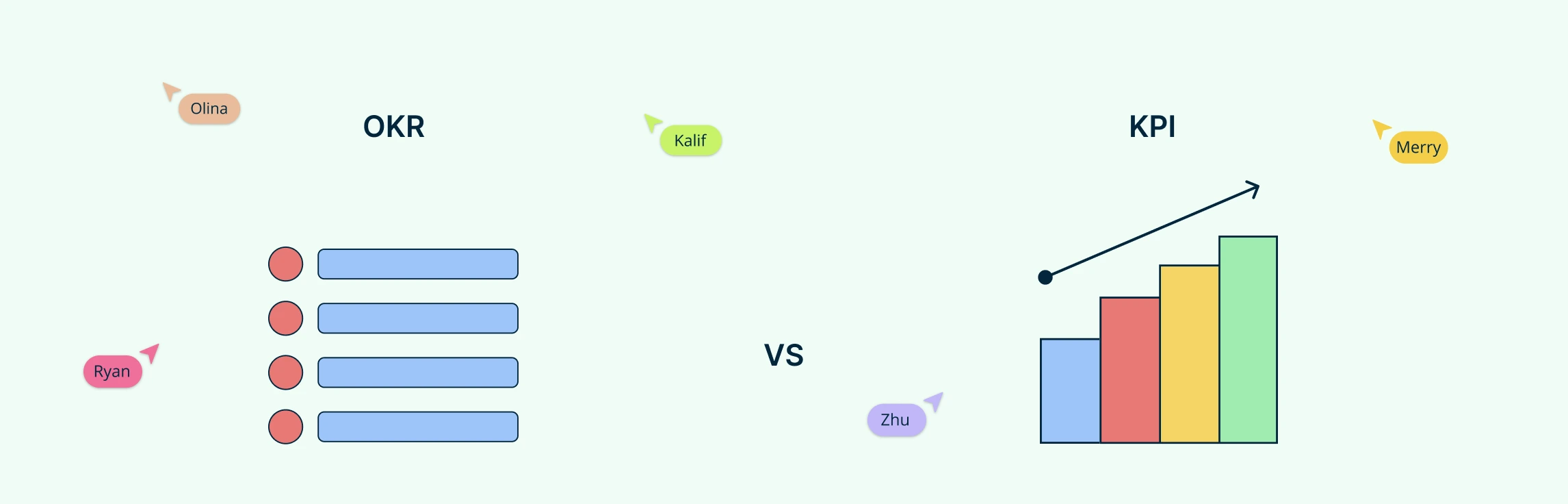
What are OKRs? Objective and Key Results (OKRs) are a transformative goal-setting methodology that has become integral to strategic planning in modern businesses, especially in the SaaS sector. At its core, OKRs consist of an Objective, which defines a clear direction or goal, and Key Results, which are measurable outcomes that track the achievement of that goal. This framework not only provides alignment around measurable goals but also ensures that every team member is working towards the same strategic objectives.