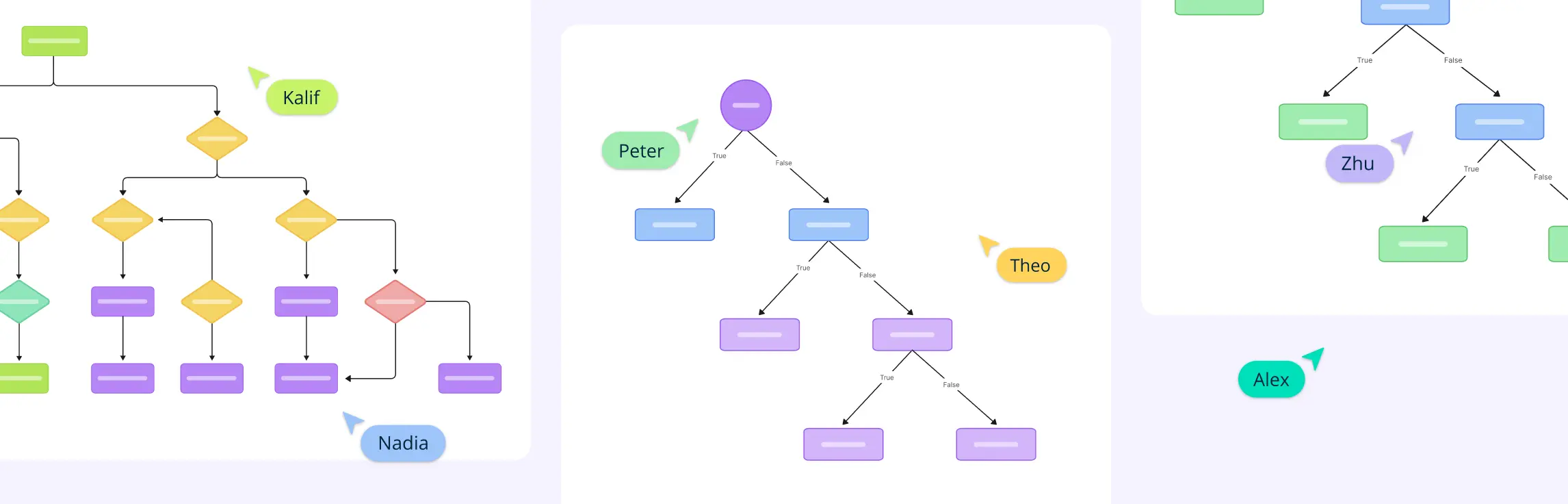
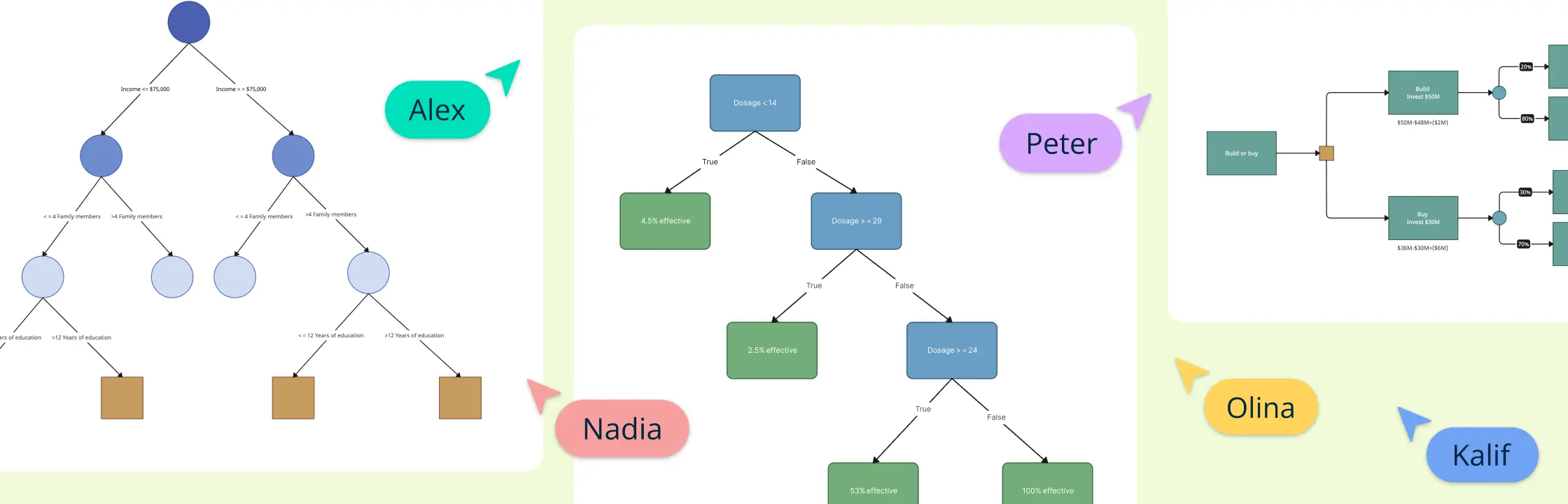
Decision trees are a visual and structured representation of data-driven decisions, resembling a flowchart that begins at a root node and branches into possible outcomes. These tools are widely used in machine learning for tasks like classification and regression, enabling analysts to understand complex input-output relationships by segmenting data into manageable parts.
A decision tree maps a question into choices, uncertain events, and possible outcomes. For example, a team deciding whether to launch a service now or test it first can draw both paths, then show what happens if the test succeeds or fails. This guide explains how to read and create that kind of tree, with examples and a brief look at decision trees used in machine learning.