11 Sociogram Examples for Mapping Social Relationships

Written By Amanda AthuraliyaUpdated on: 27 April 20267 min read
Sharesocial-toggle
social-share-facebook
social-share-linkedin
social-share-twitter
Link Copied!
11 Sociogram Examples for Mapping Social Relationships

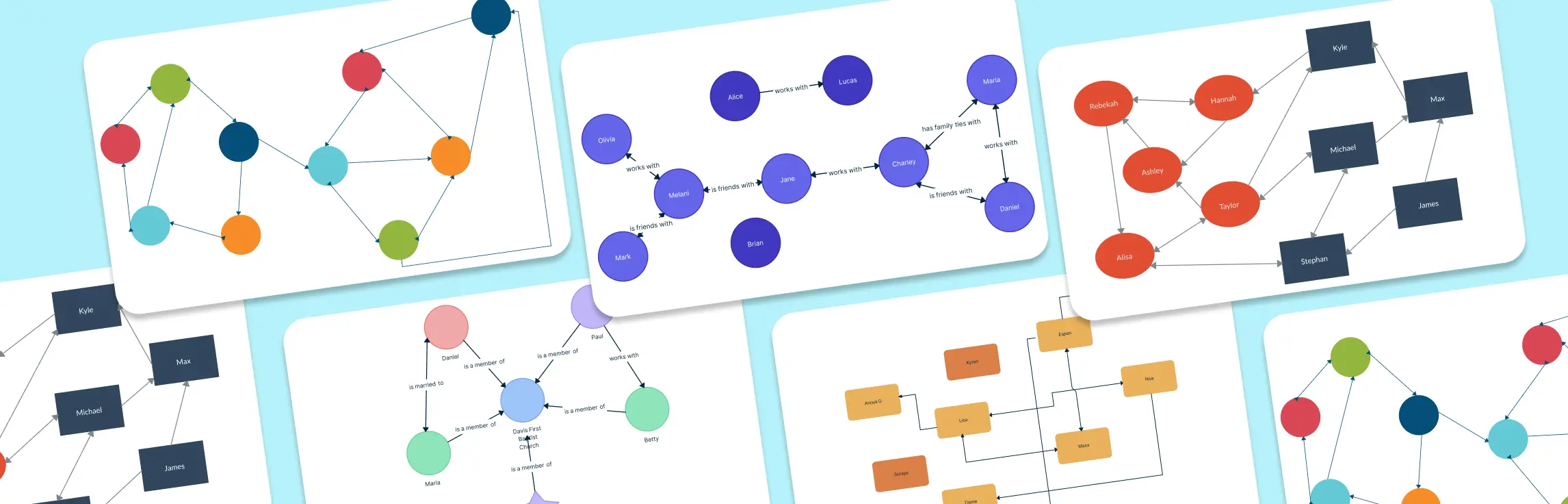
A sociogram is a simple diagram that shows how people are connected within a group. It helps us understand relationships, such as who gets along, who might be left out, and how ideas or influence spread. In this guide, we’ll look at different sociogram examples and ready-to-use sociogram templates you can customize to better understand group behavior.

What is a Sociogram?

A sociogram is a visual map of relationships within a group (who connects with whom, who is isolated, and which subgroups form). Built from simple prompts (e.g., “Who would you choose to work with?”), a sociogram helps teachers, managers, and researchers spot clusters, central people, isolates, and bridges.

How to Read a Sociogram in 60 Seconds

Use this quick checklist to interpret any sociogram example on this page. Start by identifying the people, then follow the connections to spot clusters, leaders, isolates, and bridges.

  • Nodes = people in the group.
  • Lines/arrows = choices or interactions (direction matters if arrows are used).
  • Clusters suggest subgroups or cliques.
  • Central nodes often indicate leaders/connectors.
  • Isolates (few/no connections) can signal exclusion or low engagement.
  • Bridges link clusters and can indicate cross-group influence.

Sociogram Examples by Use Case

Whether you’re a teacher, researcher, team leader, or therapist, sociogram examples can offer valuable insights into how people relate to each other. Here are a variety of sociogram examples, each tailored to different settings and use cases, to help you effectively analyze social structures and enhance your understanding of group interactions. You can use Creately’s sociogram maker to quickly edit any of these sociogram templates.

1. Basic Sociogram Template

Use case: Any group.

This sociogram example gives you a simple starting point to map relationships (friendship, collaboration, or communication) and quickly spot clusters and isolates.
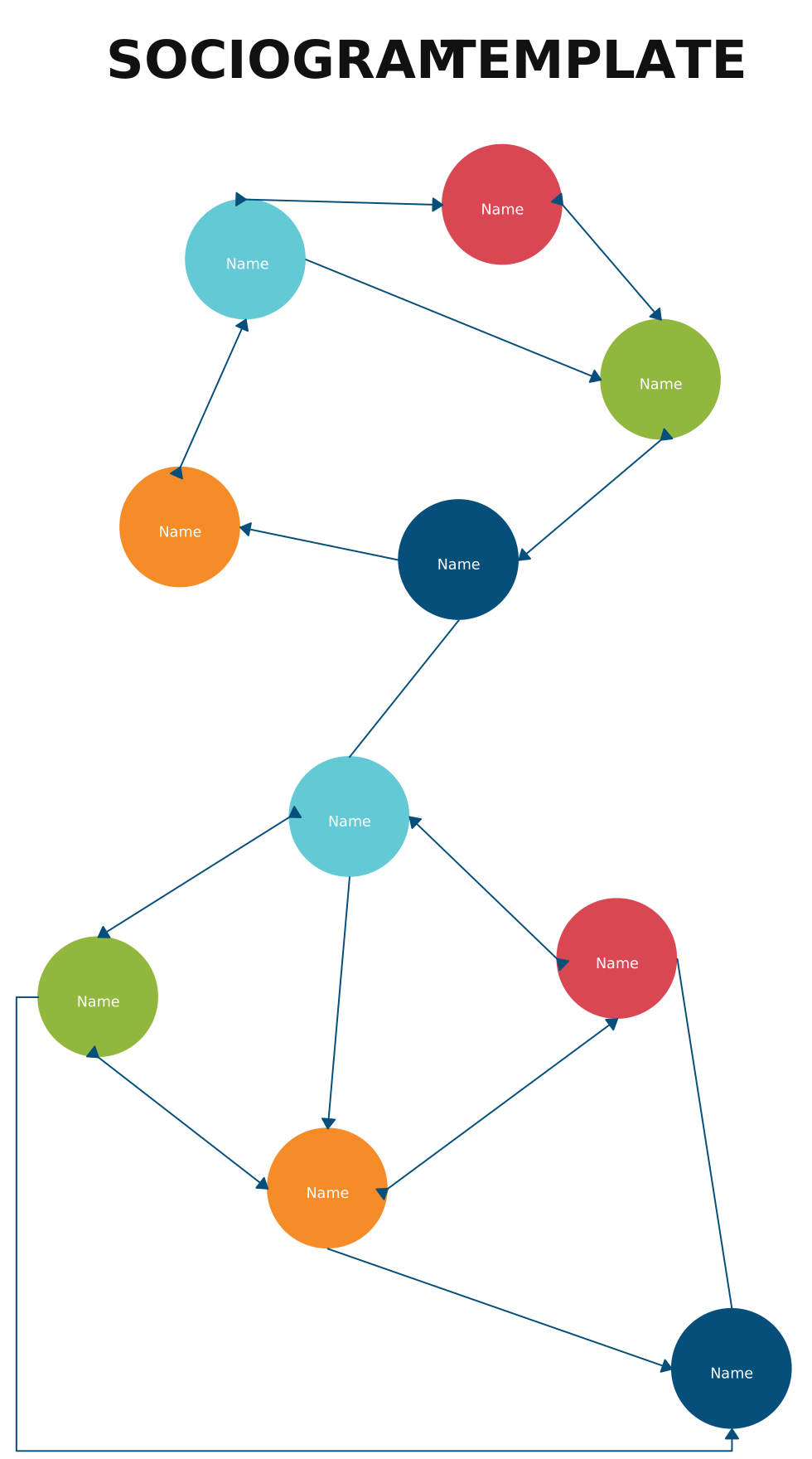
Sociogram Template for Sociogram Examples
Edit this Template
  • Ready to use
  • Fully customizable template
  • Get Started in seconds
exit full-screen Close
Sociogram Template

2. Small Group Sociogram Example

Use case: Classroom, workplace, or workshops.

This sociogram example makes it easy to see who connects with whom in a small group so you can identify subgroups, influence, and outliers.
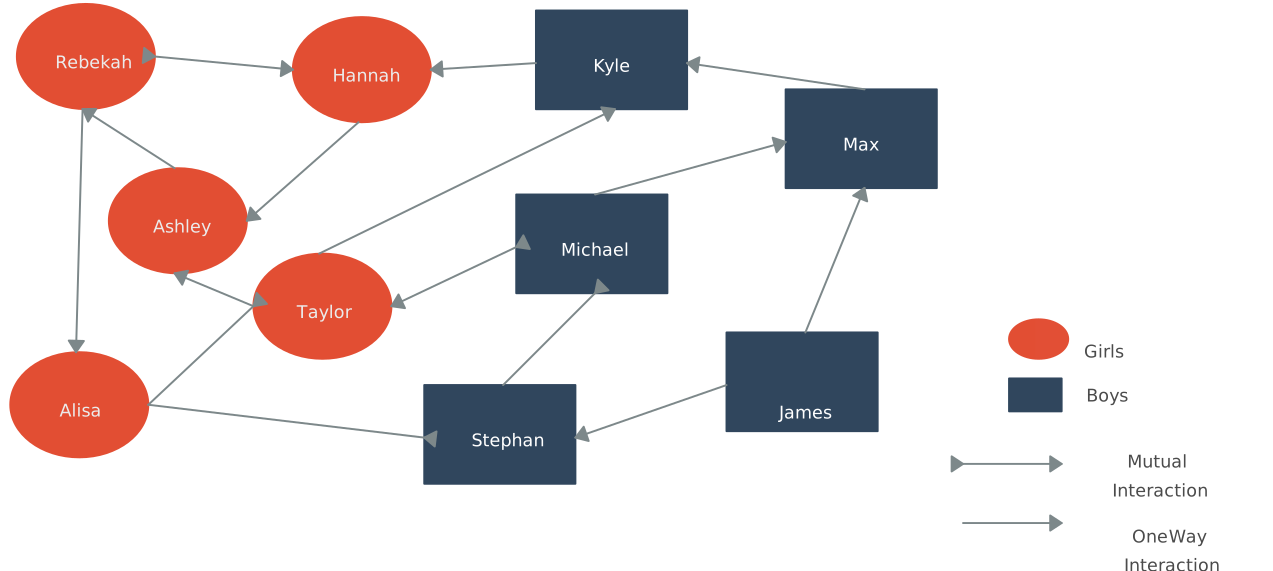
Group Sociogram Example for Sociogram Examples
Edit this Template
  • Ready to use
  • Fully customizable template
  • Get Started in seconds
exit full-screen Close
Group Sociogram Example

3. Workplace Sociogram Example

Use case: Workplace teams.

This sociogram maps communication and collaboration so you can spot informal leaders, bottlenecks, and teams working in silos.
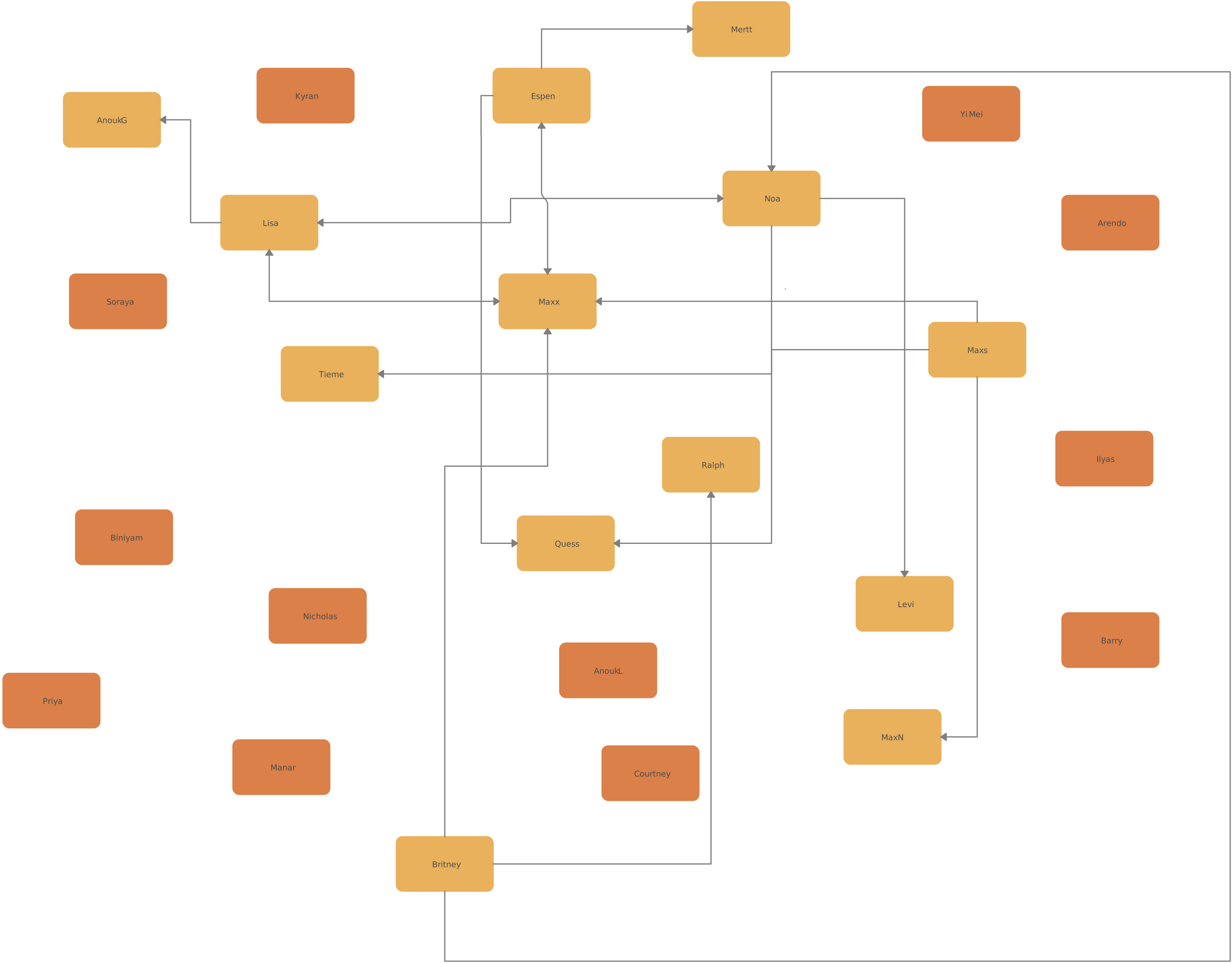
Workplace Sociogram Example for Sociogram Examples
Edit this Template
  • Ready to use
  • Fully customizable template
  • Get Started in seconds
exit full-screen Close
Workplace Sociogram Example

4. Classroom Sociogram Example

Use case: Classroom.

This sociogram example helps teachers visualize student interactions to identify cliques, isolated students, and opportunities to improve engagement.
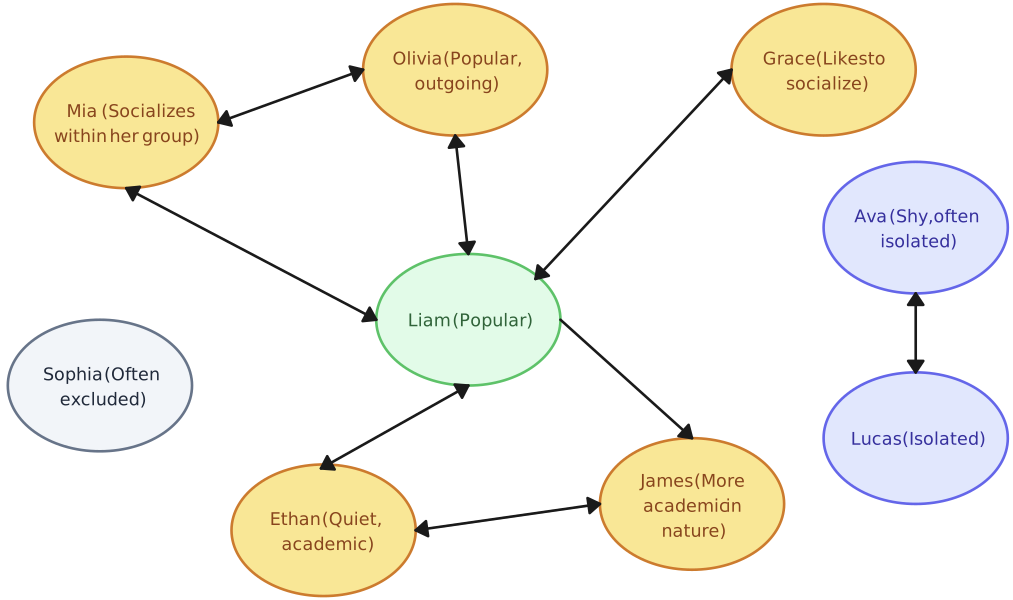
Classroom Sociogram Template for Sociogram Examples
Edit this Template
  • Ready to use
  • Fully customizable template
  • Get Started in seconds
exit full-screen Close
Classroom Sociogram Template

5. Sociogram Example for Interpersonal Relationships

Use case: Counseling, group programs, or research.

This sociogram highlights supportive ties and tension points so you can understand relationship patterns within a group.
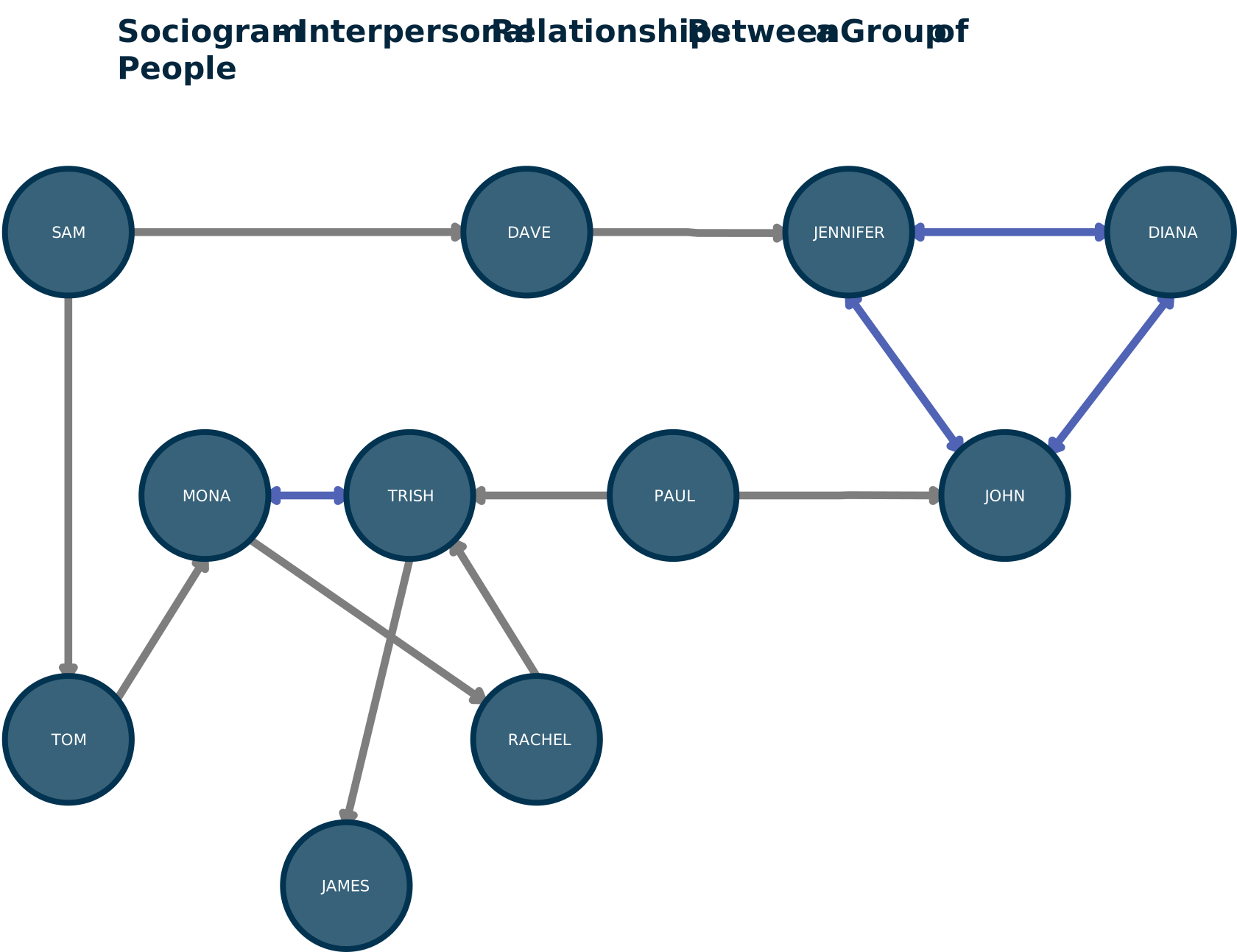
Sociogram - Interpersonal Relationships for Sociogram Examples
Edit this Template
  • Ready to use
  • Fully customizable template
  • Get Started in seconds
exit full-screen Close
Sociogram - Interpersonal Relationships

6. Egocentric Sociogram Example

Use case: Research or coaching.

This sociogram centers on one person to show their direct connections, key relationships, and gaps in their personal network.
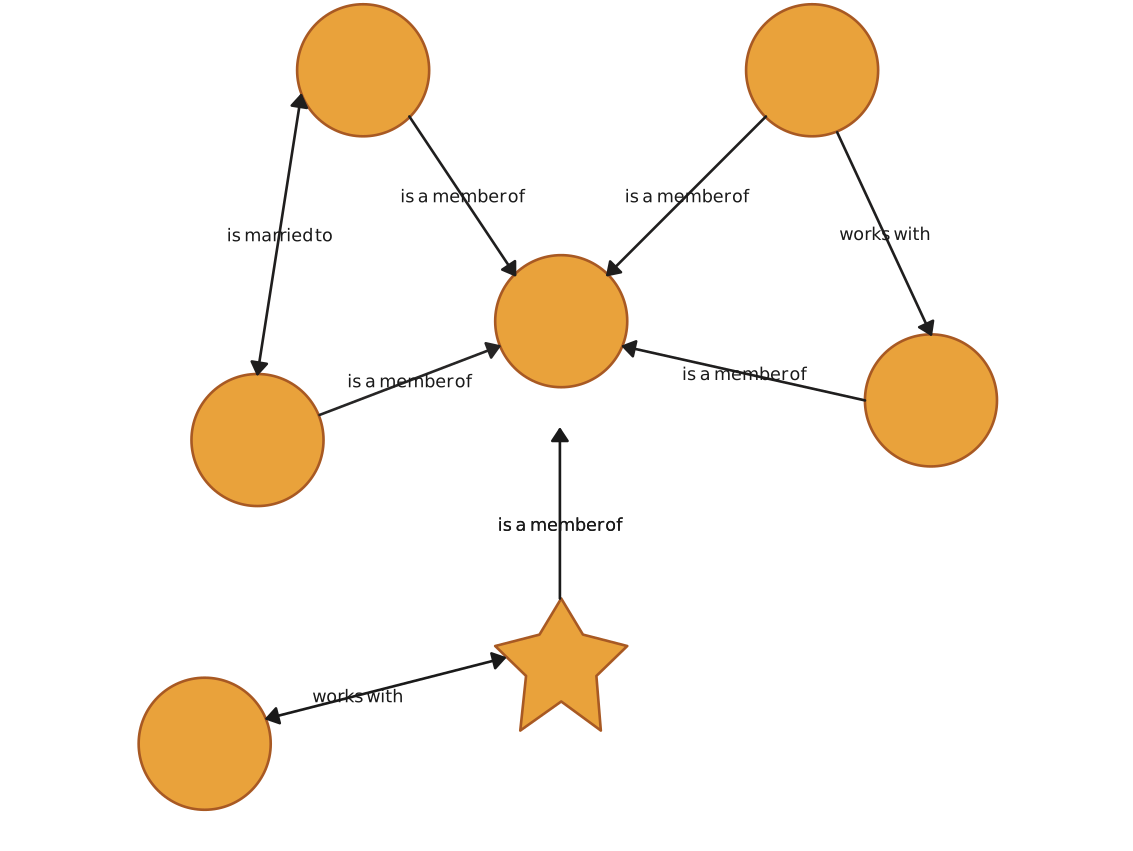
Egocentric Sociogram Example for Sociogram Examples
Edit this Template
  • Ready to use
  • Fully customizable template
  • Get Started in seconds
exit full-screen Close
Egocentric Sociogram Example

7. Network Sociogram Example for Larger Groups

Use case: Research and analysis.

This sociogram example is best for larger or more complex groups where you want to see how multiple clusters connect across the whole network.
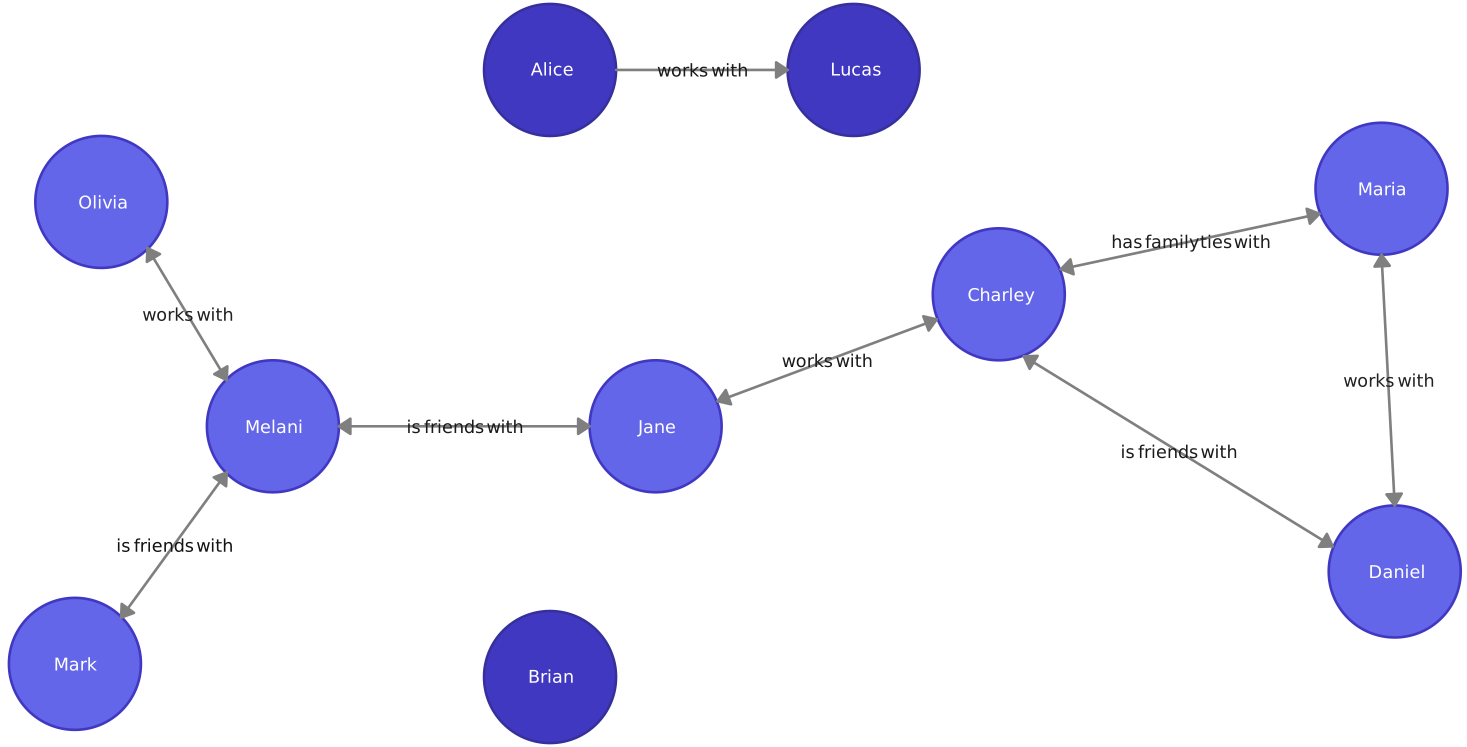
Network Sociogram for Sociogram Examples
Edit this Template
  • Ready to use
  • Fully customizable template
  • Get Started in seconds
exit full-screen Close
Network Sociogram

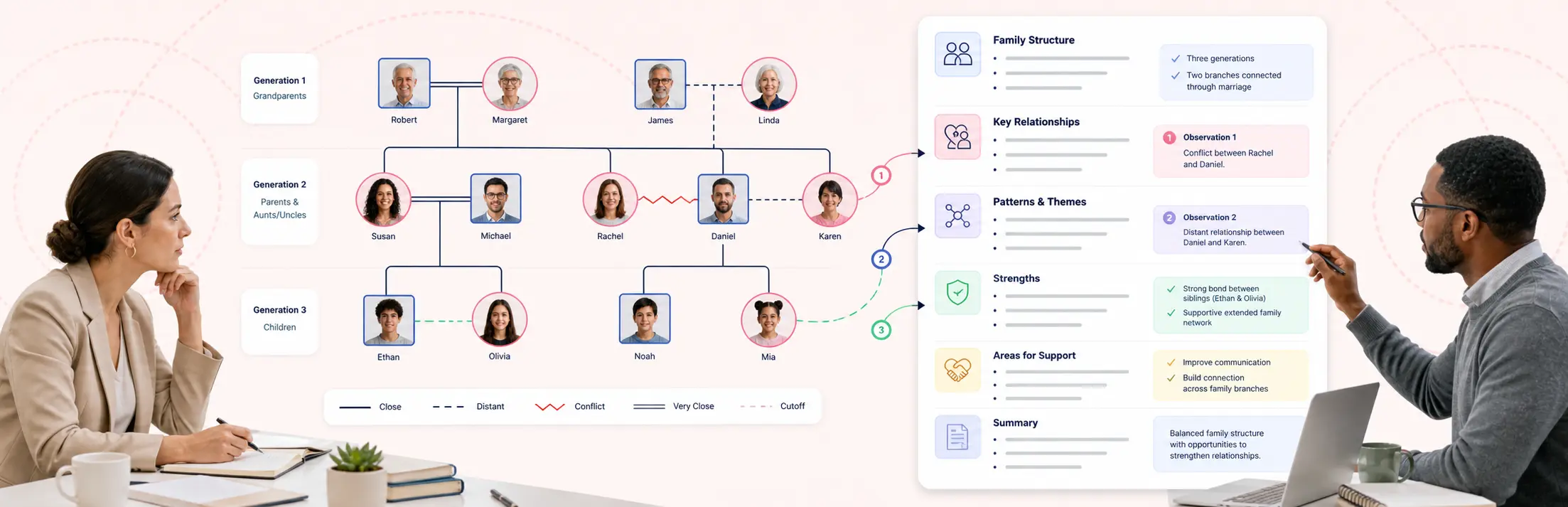
8. Family Dynamics Sociogram Example

Use case: Therapy or counseling.

This sociogram helps map family and group relationship roles and recurring patterns so you can pinpoint areas to support or intervene.
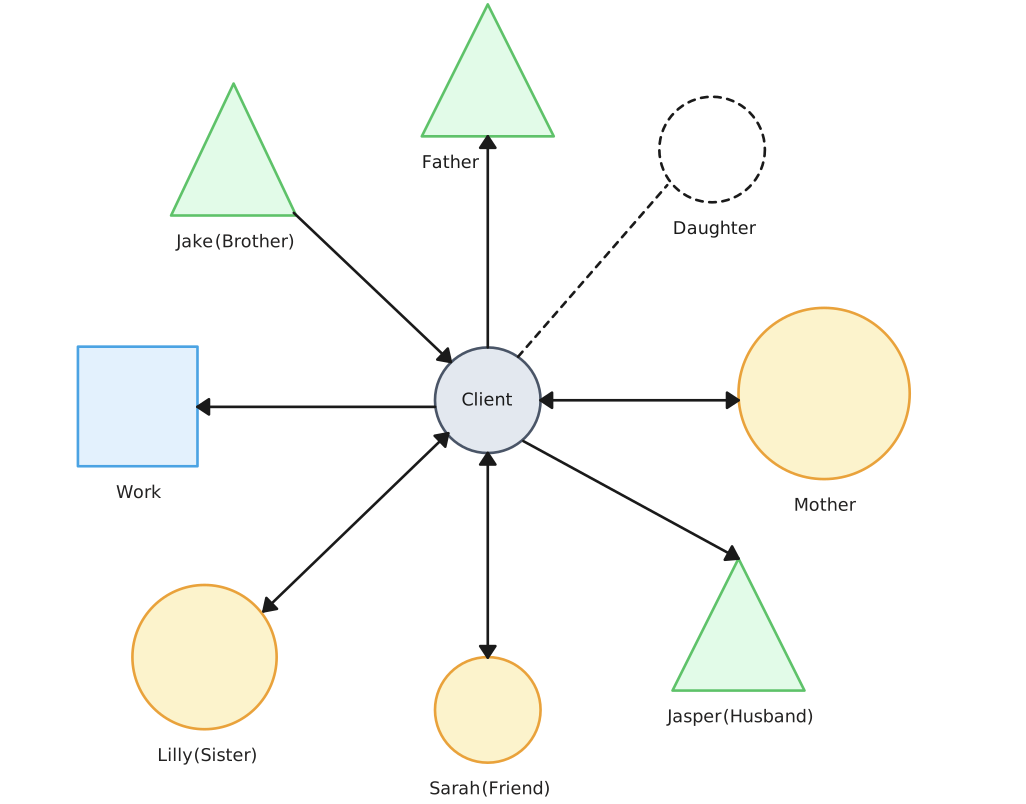
Counseling Sociogram Example for Sociogram Examples
Edit this Template
  • Ready to use
  • Fully customizable template
  • Get Started in seconds
exit full-screen Close
Counseling Sociogram Example

9. Friendship Mapping Sociogram Example

Use case: Classroom or youth groups.

This sociogram focuses on friendship choices to reveal peer groups, social divides, and students who may be left out.
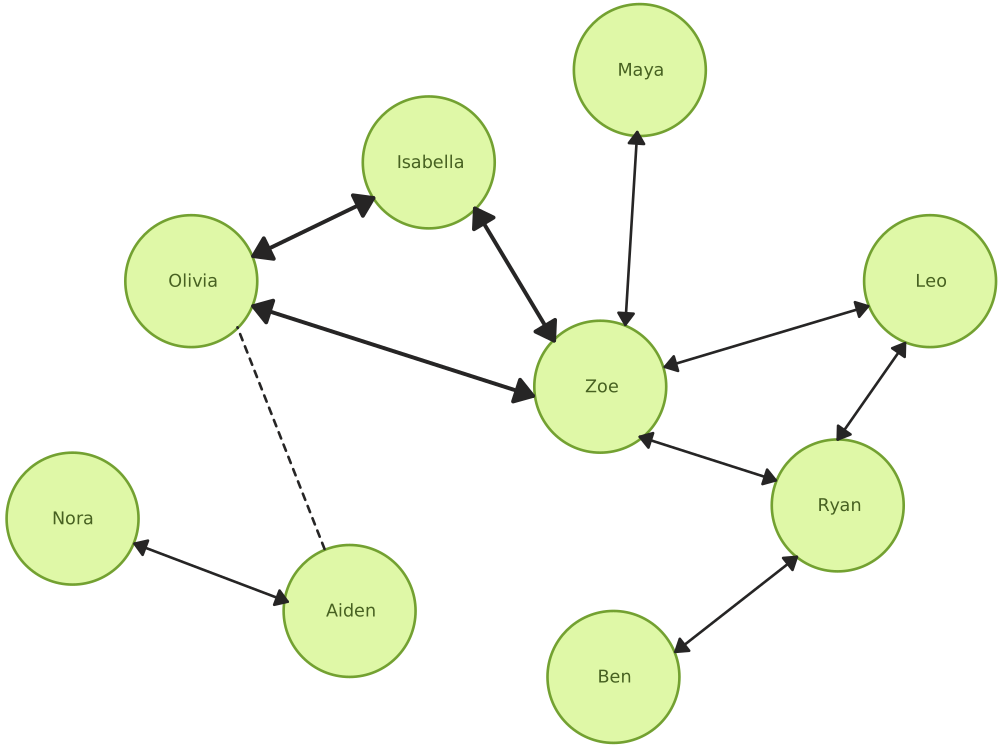
Friendship Sociogram Example for Sociogram Examples
Edit this Template
  • Ready to use
  • Fully customizable template
  • Get Started in seconds
exit full-screen Close
Friendship Sociogram Example

10. Leadership and Influence Sociogram Example

Use case: Workplace or community groups.

This sociogram example shows influence pathways so you can identify formal/informal leaders and how information or decisions spread.
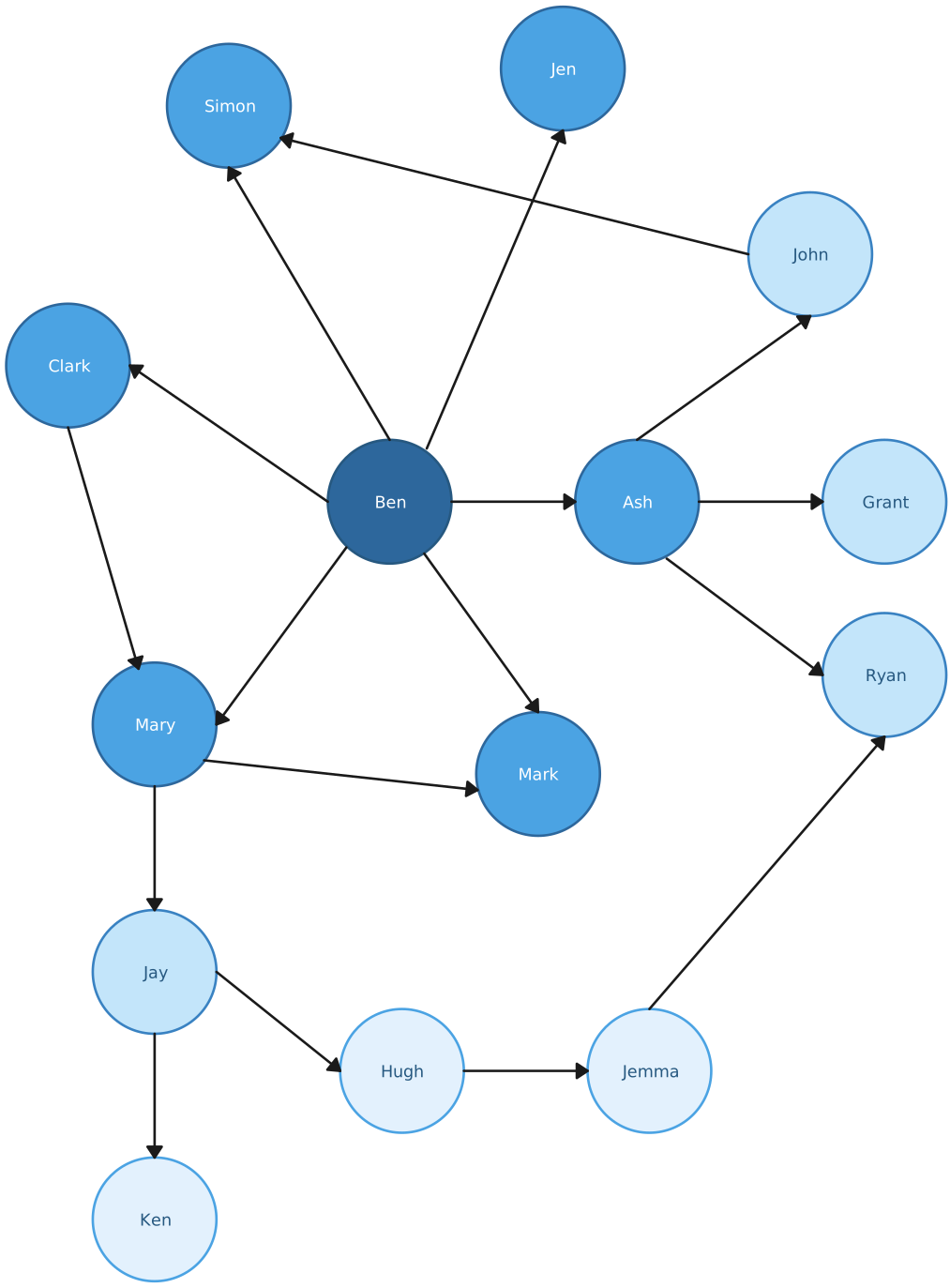
Leadership and Influence Sociogram for Sociogram Examples
Edit this Template
  • Ready to use
  • Fully customizable template
  • Get Started in seconds
exit full-screen Close
Leadership and Influence Sociogram

11. Conflict and Tension Sociogram Example

Use case: Workplace, classrooms, or group facilitation.

This sociogram surfaces negative ties and friction points so you can target conflict resolution and improve collaboration.
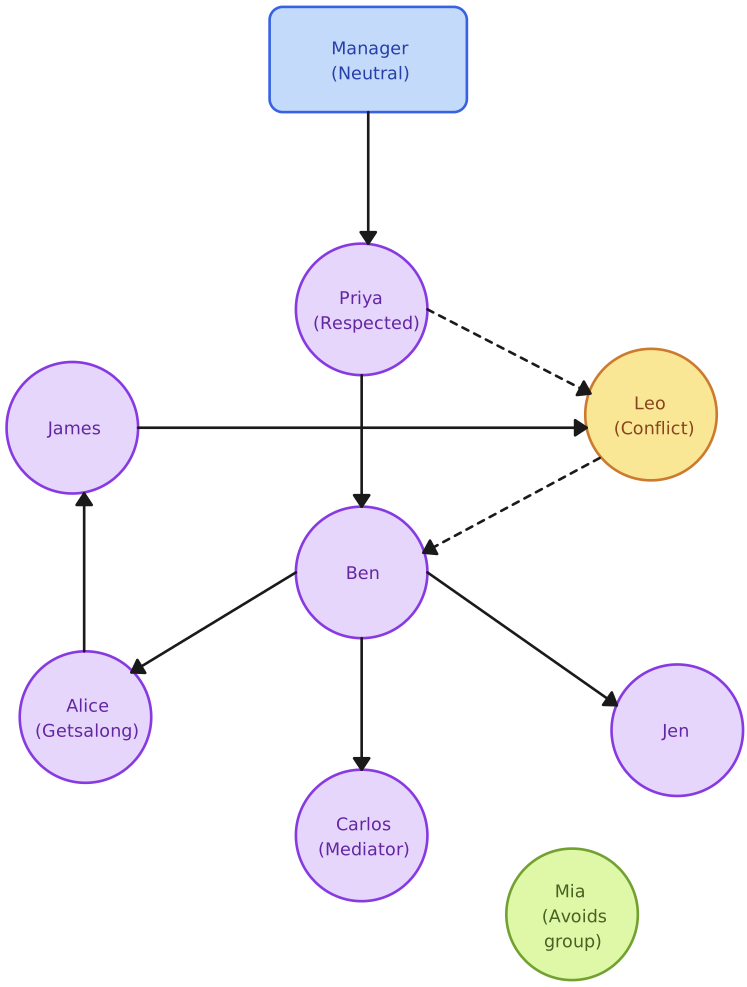
Conflict Sociogram Example for Sociogram Examples
Edit this Template
  • Ready to use
  • Fully customizable template
  • Get Started in seconds
exit full-screen Close
Conflict Sociogram Example

Conclusion: Sociogram Examples

Sociogram examples are a helpful tool for understanding the relationships between people in any group. By using the sociogram examples in this guide, you can learn to spot patterns, identify key people, and figure out how to improve communication or resolve conflicts. Whether you’re working with students, teams, or clients, sociograms can give you clear insights into the social dynamics around you. Start using Creately’s ready-made sociogram templates to make better decisions and strengthen connections within your group.

References

Drahota, A. and Dewey, A. (2008). The Sociogram. Nursing Research, 57(4), pp.293–297. doi:https://doi.org/10.1097/01.nnr.0000313489.49165.97.

Whitehead, H. and Dufault, S. (1999). Techniques for Analyzing Vertebrate Social Structure Using Identified Individuals: Review and Recommendations. Advances in the Study of Behavior, pp.33–74. doi:https://doi.org/10.1016/s0065-3454(08)60215-6.

Leung, B. and Silberling, J. (2006). Using Sociograms to Identify Social Status in the Classroom. [online] ResearchGate. Available at: https://www.researchgate.net/publication/285413639.

‌FAQs About Sociogram Examples

Why should I use a sociogram?

A sociogram helps you understand the structure of social relationships in a group. It can reveal cliques, isolated individuals, and key influencers, and show how information or support flows. Educators, team leaders, therapists, and researchers use sociograms to improve engagement, collaboration, and targeted interventions.

Can sociogram examples be used in therapy or counseling?

Yes. Sociogram examples are often used in therapy or counseling to map relationship dynamics in families, couples, or group sessions. A sociogram can highlight strong ties, conflicts, and isolation patterns, helping therapists and clients discuss roles and interactions. This supports clearer intervention planning and progress tracking over time.

Are sociograms examples useful for team building or conflict resolution?

Absolutely. Sociogram examples can reveal communication patterns, informal leaders, subgroups, and points of conflict within a team. By showing where collaboration is strong or where people are disconnected, sociograms help target team-building activities, reduce silos, and resolve conflict more effectively while improving information flow.

What is the difference between an egocentric sociogram and a group sociogram?

An egocentric sociogram focuses on one person (the “ego”) and maps their direct connections, which is useful for coaching or personal network analysis. A group sociogram maps relationships among all members, giving a full view of clusters, central connectors, and isolates across the entire group.

Can a sociogram be used in a workplace setting?

Yes. In workplace settings, a sociogram helps analyze communication and collaboration patterns across teams. It can identify informal leaders, overloaded connectors, weak links between departments, and areas where people work in silos. Managers use sociograms to improve onboarding, team design, and coordination.

How do I interpret a sociogram?

To interpret a sociogram, start with the question behind it (friendship, collaboration, trust) and then read the structure. Look for clusters or cliques, central connectors, isolates with few ties, and bridges linking subgroups. If arrows are used, direction shows who chooses whom and highlights imbalances.

What’s the difference between a sociogram and a genogram?

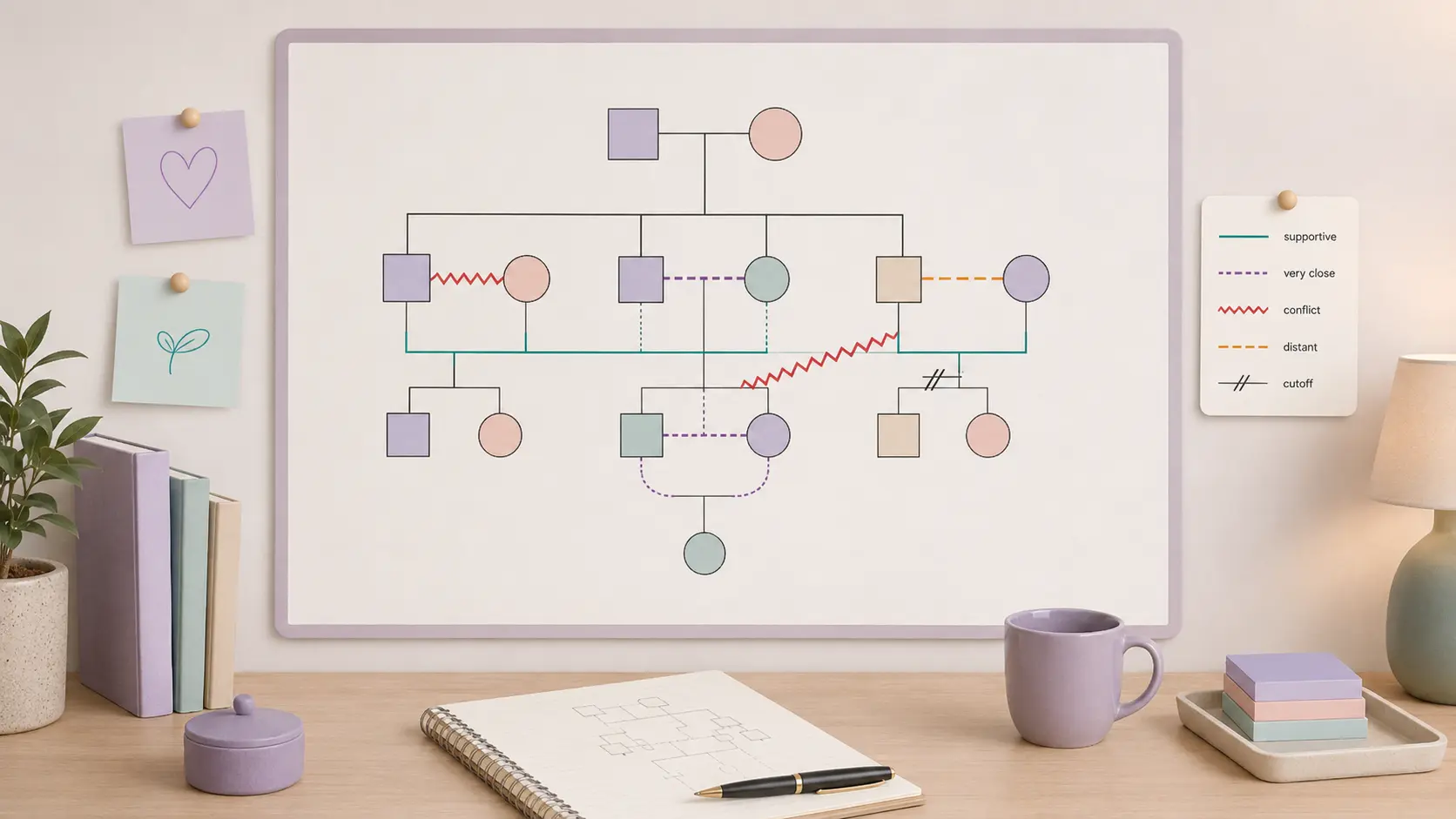
A sociogram maps social relationships and interaction patterns within a group, such as friendships, collaboration, influence, or conflict. A genogram is a family-tree style diagram that tracks family structure across generations and can include medical and emotional history. Sociogram examples focus on social dynamics; genograms focus on family systems.

Are there editable sociogram templates available?

Yes. Creately offers editable sociogram templates you can customize for a classroom, workplace, research study, or therapy group. Ready-to-use sociogram examples let you add people, draw connections, and label interactions quickly, saving time while keeping your diagram consistent and easier to interpret.

Amanda Athuraliya
Amanda Athuraliya Content Editor at Creately
Amanda Athuraliya is a Content Strategist and Editor at Creately, a visual collaboration and diagramming platform used by teams worldwide. With over 10 years of experience in SaaS content strategy, she creates and refines research-driven content focused on business analysis, HR strategy, process improvement, and visual productivity. Her work helps teams simplify complexity and make clearer, faster decisions.
linkedin icon
View all posts by Amanda Athuraliya →
Leave a Comment