Bad decisions usually aren’t caused by a lack of effort, they happen when the problem is unclear, the criteria aren’t agreed, and the rationale gets lost in back-and-forth. The rational decision-making model fixes that with a structured, evidence-based way to compare options. This guide covers what the model is, its key principles, step-by-step instructions for the rational decision making process, rational vs. intuitive decision-making, decision making process examples, and practical techniques.
What is the Rational Decision Making Model?
The rational decision-making model is a structured and systematic approach to making decisions. It involves analyzing a problem, evaluating possible solutions, and selecting the best option based on logical reasoning and evidence. The model breaks down the decision-making process into clear steps to ensure that decisions are made thoughtfully and objectively, minimizing biases and maximizing the chances of success.
In essence, the model helps you make informed choices by focusing on facts, data, and a logical process rather than relying on intuition or emotions. It’s often used in business and personal contexts where important decisions need to be made carefully and with consideration of all relevant factors.
Key Principles of the Rational Decision Making Model
The key principles of the rational decision-making model guide you in making well-informed, logical choices. These principles help you approach decisions thoughtfully, increasing the likelihood of achieving successful outcomes.
- Logical thinking - Make decisions based on facts and clear reasoning, not just feelings or guesses.
- Fair evaluation- Consider all options equally and judge them based on specific criteria without letting personal bias influence your choice.
- Step-by-step process - Follow a clear set of steps to ensure you cover all aspects of the decision thoroughly.
- Evidence-based choices - Base your decisions on solid information and data to reduce uncertainty and make better choices.
- Consistency - Use the same approach for every decision to ensure your choices are reliable and align with your goals.
How to Use the Rational Decision Model for Decision Making
Follow these detailed steps of the rational decision making process to make well-informed, logical choices that lead to better outcomes.
Step 1: Identify the Problem
The first step is to clearly identify the problem or decision you need to make. Take your time to understand what’s really at stake and why this decision is important. If the problem is not well-defined, you might end up focusing on the wrong issue or making a decision that doesn’t address the real challenge. A well-defined problem provides a strong foundation for the rest of the decision-making process.
Step 2: Define Decision Criteria
Next, you need to determine what factors will influence your decision. These are the criteria that matter most in solving the problem, such as cost, time, quality, or impact. By identifying these criteria upfront, you ensure that your decision-making process focuses on the most important aspects. This step helps clarify what’s truly important and sets the stage for evaluating your options.
Step 3: Weigh the Criteria
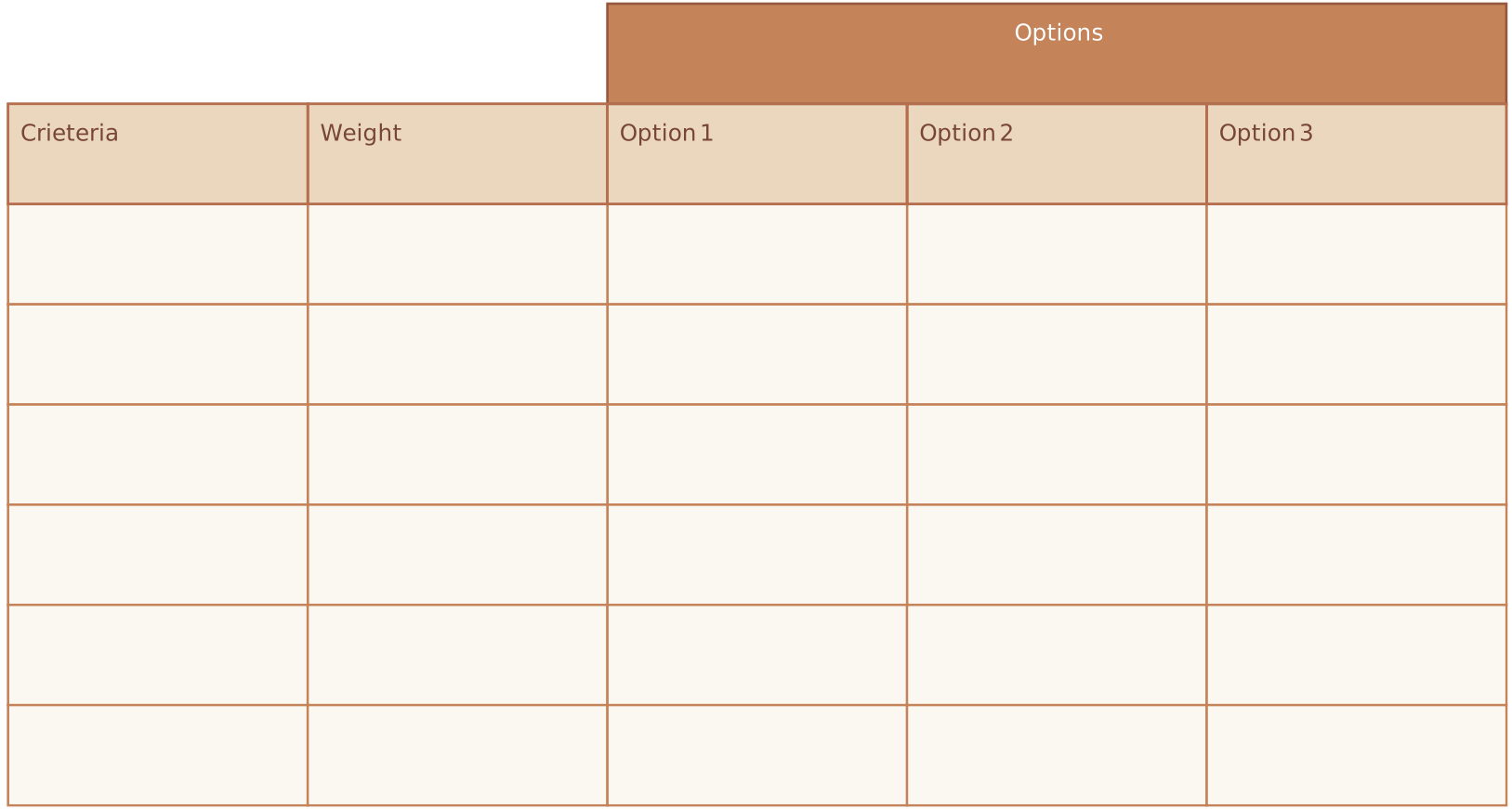
Once you’ve identified your criteria, the next step is to assign a weight or rank to each one. Not all criteria are equally important, so you need to decide which factors should have the most influence on your decision. For example, if cost is more critical than time, you would give it a higher weight. Weighing the criteria helps prioritize your decision-making and ensures that the most important factors guide your choice.

Step 4: Generate Alternatives
Now it’s time to brainstorm different options or solutions. Think creatively and consider a range of alternatives that could solve the problem. The goal is to come up with as many viable options as possible. Having a variety of alternatives increases the chances of finding the best solution. Don’t limit yourself to just one idea—explore all possible avenues.
Step 5: Evaluate Alternatives
With your options in hand, it’s time to compare each one against your criteria. Analyze the pros and cons of each alternative and see how well they meet the factors you’ve identified. This step is about making a careful, objective evaluation of your options. By systematically assessing each alternative, you can identify the best fit based on your priorities and needs.
Step 6: Choose the Best Option
After evaluating the alternatives, it’s time to make your decision. Choose the option that best meets your criteria and solves the problem. Ensure that your choice aligns with your overall goals and priorities. This is the moment where you commit to a course of action, confident that you’ve made a thoughtful and informed decision based on a thorough analysis.
Step 7: Implement the Decision
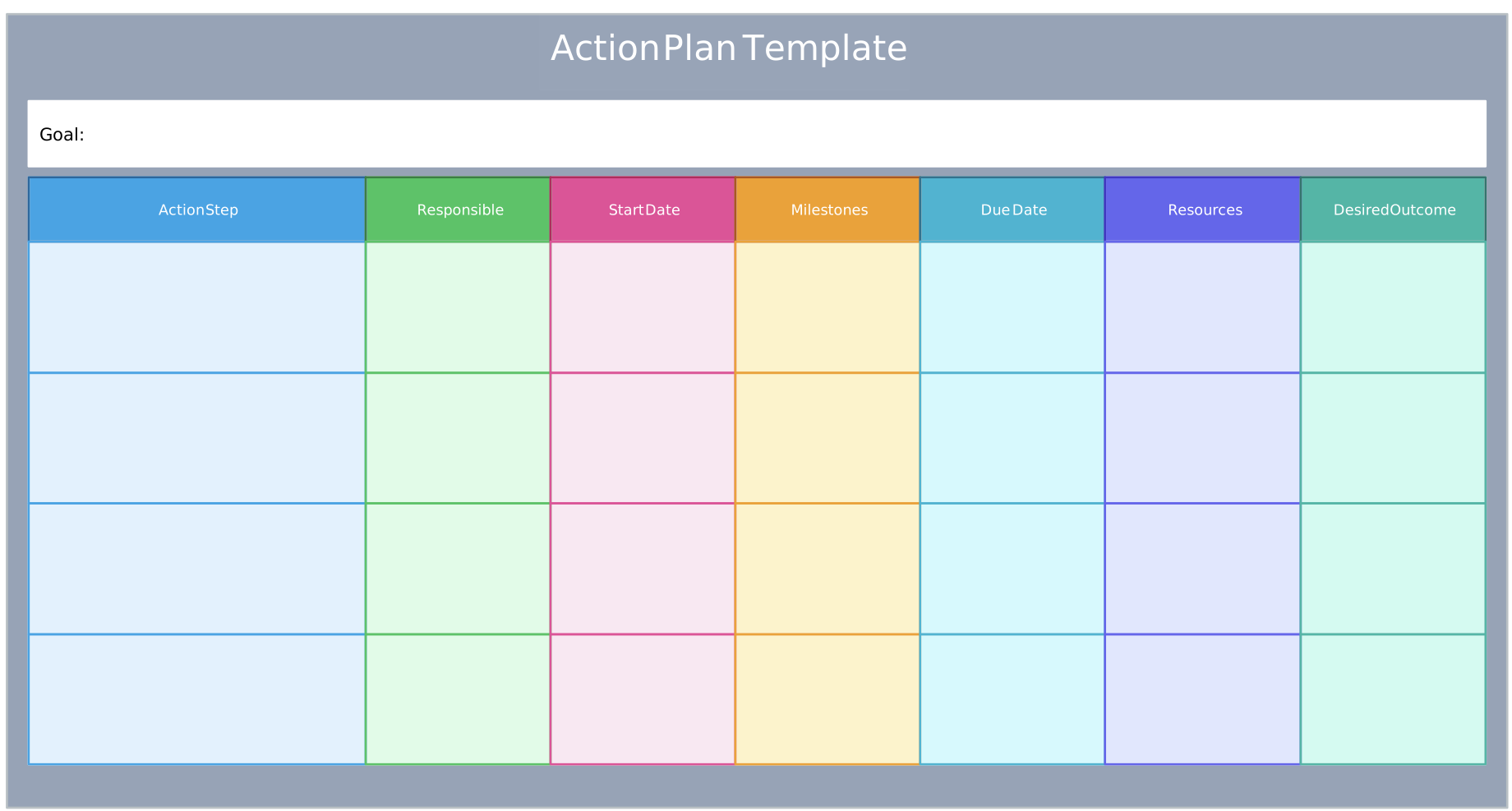
Once the decision is made, you need to put it into action. Create a plan that outlines the steps needed to carry out the decision, assign tasks, and gather the necessary resources. Implementation is crucial because even the best decision can fail without a solid plan. This step ensures that your decision leads to real, tangible results.
Step 8: Review the Decision
Finally, you should monitor how your decision is working out. Keep track of progress and regularly assess whether the solution is achieving the desired results. If things aren’t going as planned, be ready to make adjustments. Monitoring allows you to catch problems early, while evaluating the outcome helps you learn from the experience and improve future decisions.
Rational Decision Making Examples In Business
Here are two rational decision making model examples that show how teams apply the steps in real business decisions, using clear criteria, tradeoffs, and a final rationale.
Decision Making Model Example 1: Vendor selection (CRM Tool)
A sales team needs a CRM upgrade. The goal is to reduce manual work and improve pipeline visibility without increasing admin overhead.
Criteria (with weights)
- Ease of adoption (30%)
- Integrations with existing tools (25%)
- Total cost (20%)
- Reporting/forecasting (15%)
- Support & onboarding (10%)
Alternatives
- Option A: Salesforce
- Option B: HubSpot CRM
- Option C: Zoho CRM
Evaluation logic
The team scores each option 1–5 per criterion, multiplies by the weights, and totals the scores. HubSpot scores highest due to adoption + fast onboarding, while Salesforce wins on advanced reporting but loses on cost and admin complexity.
Final decision
Choose HubSpot CRM, with a 60-day rollout plan and a review checkpoint after the first full quarter.
Decision Making Model Example 2: Hiring decision (two final candidates)
A team must hire one customer success manager quickly, but wants the best long-term fit.
Criteria (with weights)
- Role-specific skills (30%)
- Communication & stakeholder management (25%)
- Cultural/values fit (15%)
- Ramp-up time (15%)
- Compensation fit (15%)
Alternatives
- Candidate A: Strong domain experience, higher salary, longer notice period
- Candidate B: Strong communication, faster start, slightly less domain experience
Evaluation logic
Candidate A scores higher on domain skills but lower on ramp-up and compensation. Candidate B scores higher on communication and faster time-to-productivity, which is critical this quarter.
Final decision
Hire Candidate B, with a 30-day domain training plan and weekly check-ins to reduce risk.
Rational Decision vs Intuitive Decision Making
Intuitive decision-making is a fast, experience-driven way of choosing what to do based on pattern recognition and “gut feel” built from past situations, often without consciously working through each step or evaluating every option. With that in mind, here’s a quick side-by-side comparison of intuitive vs. rational decision-making:
| Aspect | Rational decision-making | Intuitive decision-making |
| Approach | Structured, step-by-step process | Quick, instinct/gut-feel driven |
| Basis | Careful analysis, facts, logical reasoning, evidence | Past experience and subconscious insights |
| Speed | Slower; can be time-consuming | Faster; suited to rapid decisions |
| Best for | Complex decisions requiring thorough evaluation | Fast-paced situations where decisions must be made swiftly |
| Strengths | Considers options systematically; aims to reduce bias | Leverages experience; enables quick action |
| Risks / downsides | Takes more time and effort | Can introduce bias or miss important details |
| Primary emphasis | Logic and evidence | Speed and experience |
Techniques for Rational Decision Making
These techniques can be used individually or in combination to support the rational model of decision making, ensuring that your choices are well-informed and aligned with your goals.
1. Cost-benefit analysis
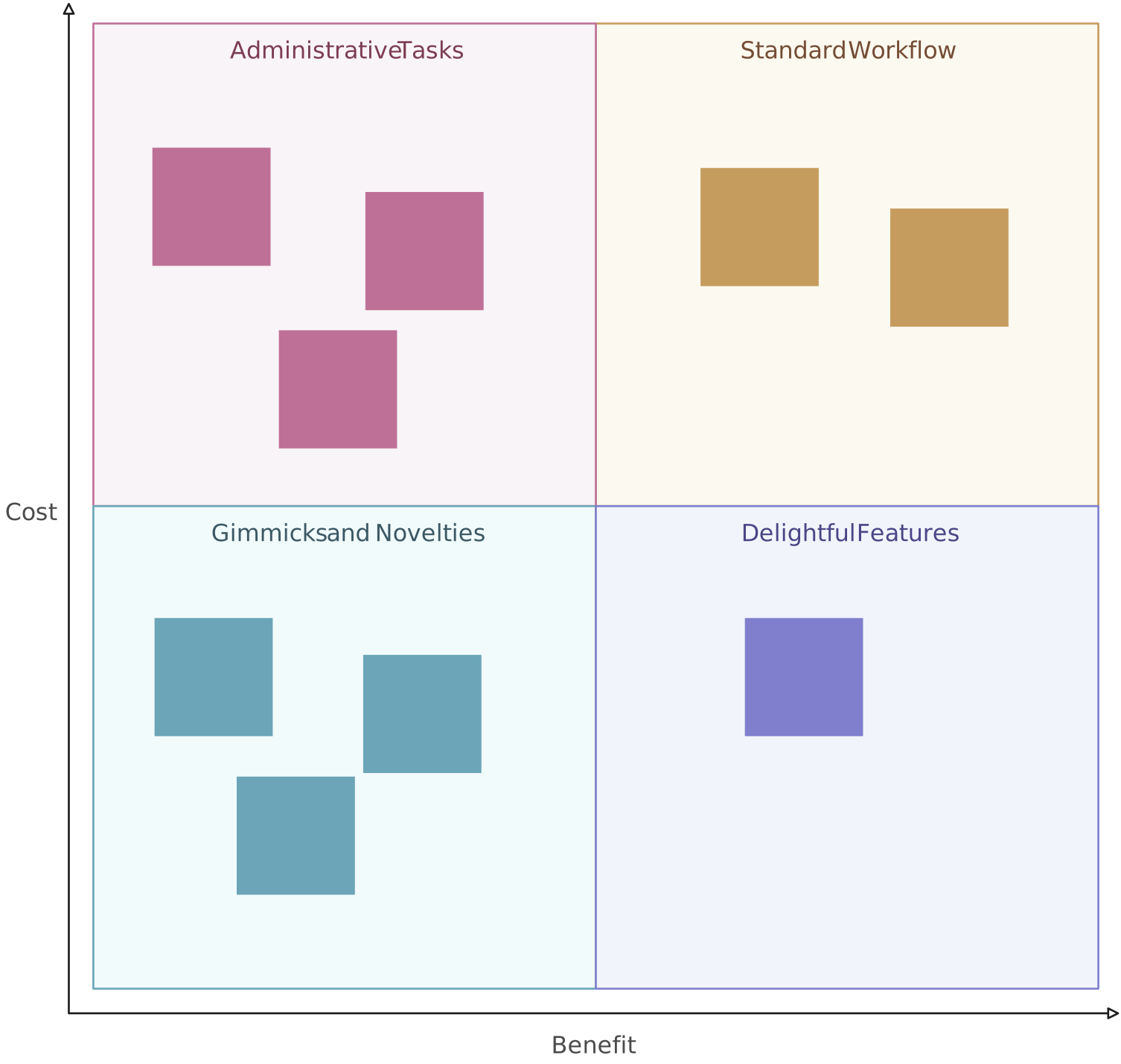
This technique involves comparing the costs and benefits of each option. By evaluating the potential gains and losses, you can make decisions that maximize benefits while minimizing costs.
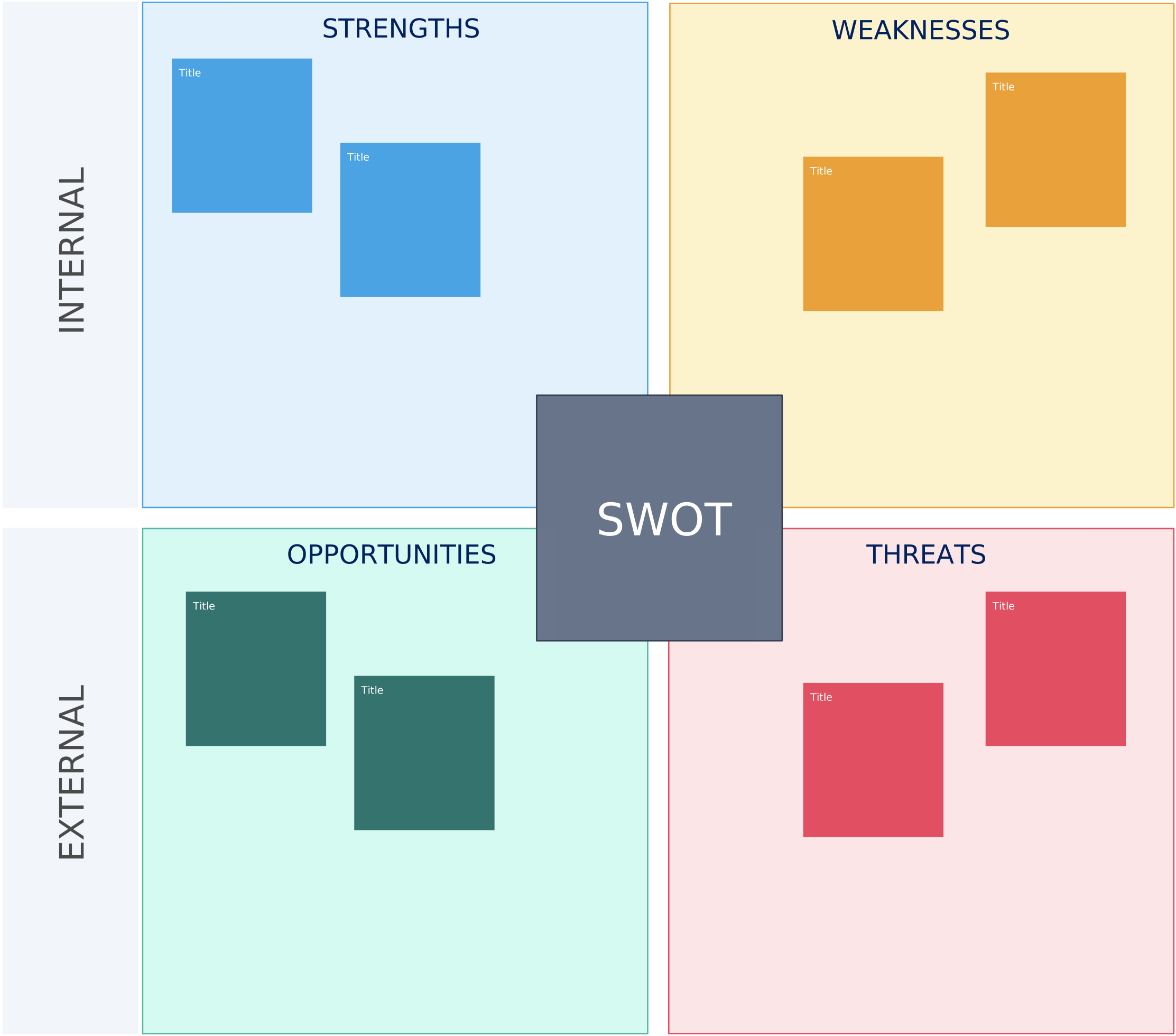
2. SWOT analysis
SWOT (Strengths, Weaknesses, Opportunities, Threats) analysis helps you assess both internal and external factors that can impact your decision. This technique gives you a balanced view of the pros and cons.
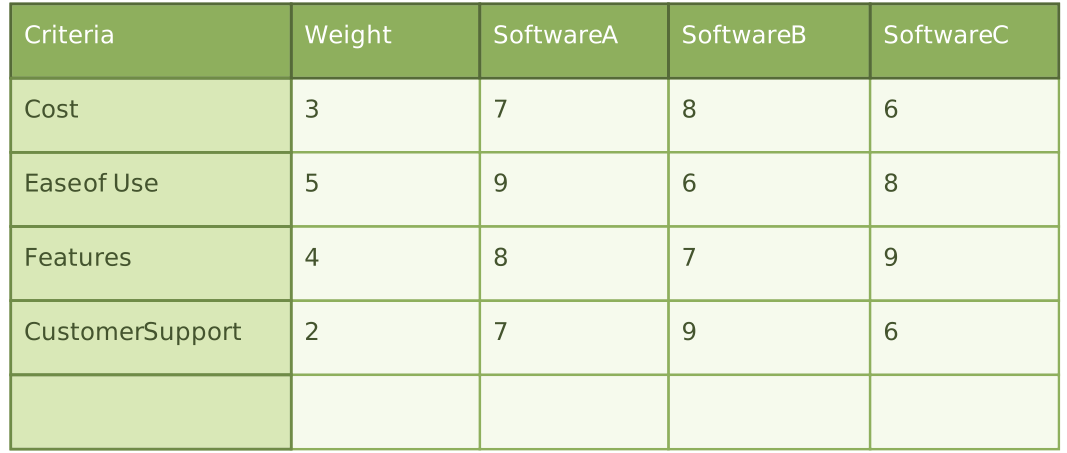
3. Decision matrix
A decision matrix, or weighted scoring model, allows you to evaluate options against a set of criteria. You assign weights to each criterion and score each option, helping you choose the best one based on the overall score.
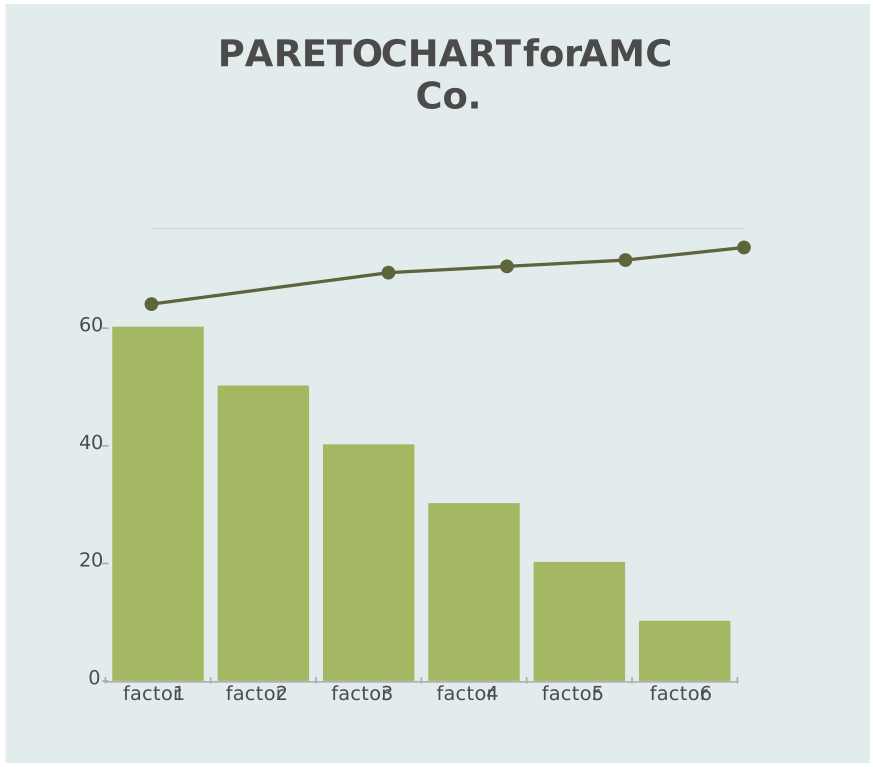
4. Pareto analysis
Also known as the 80/20 rule, Pareto analysis helps you focus on the options that will have the greatest impact. By identifying the key factors that contribute most to the outcome, you can prioritize the most effective solutions.
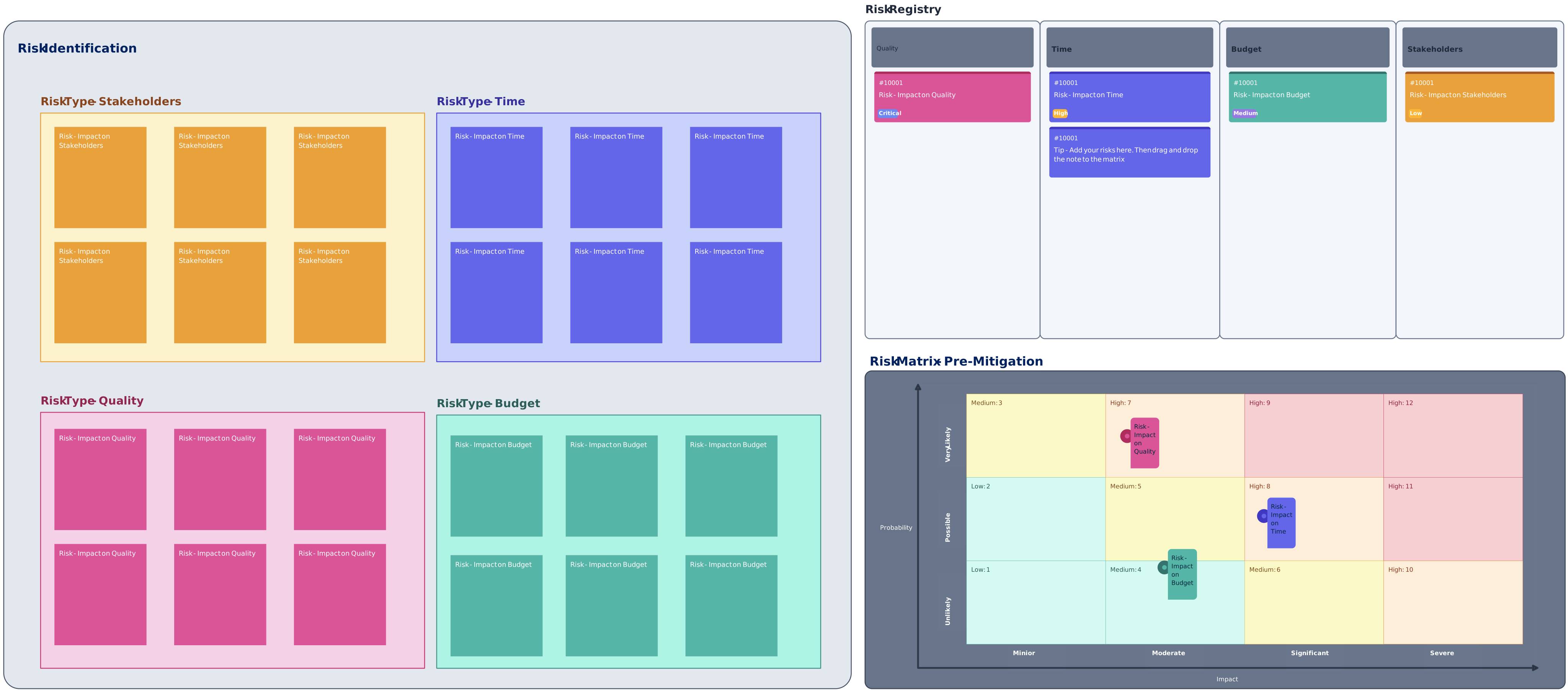
5. Risk analysis
Risk analysis involves assessing the potential risks associated with each option. By understanding and planning for risks, you can make more informed decisions and avoid unexpected setbacks.
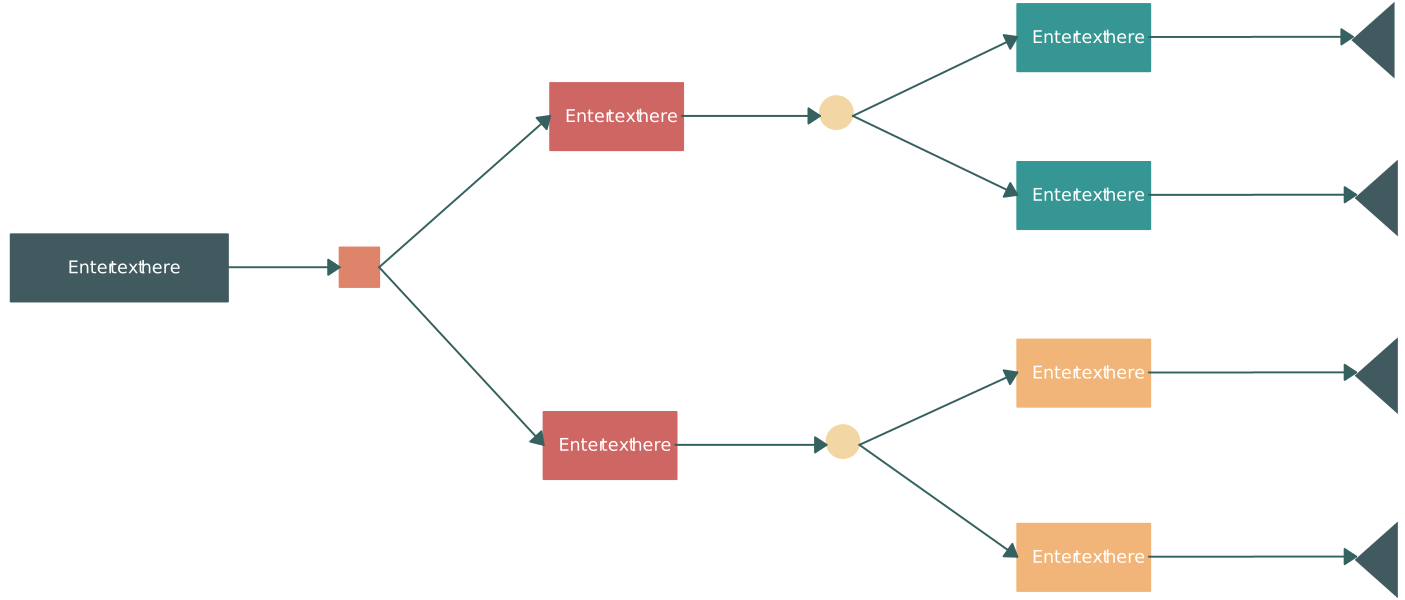
6. Decision tree
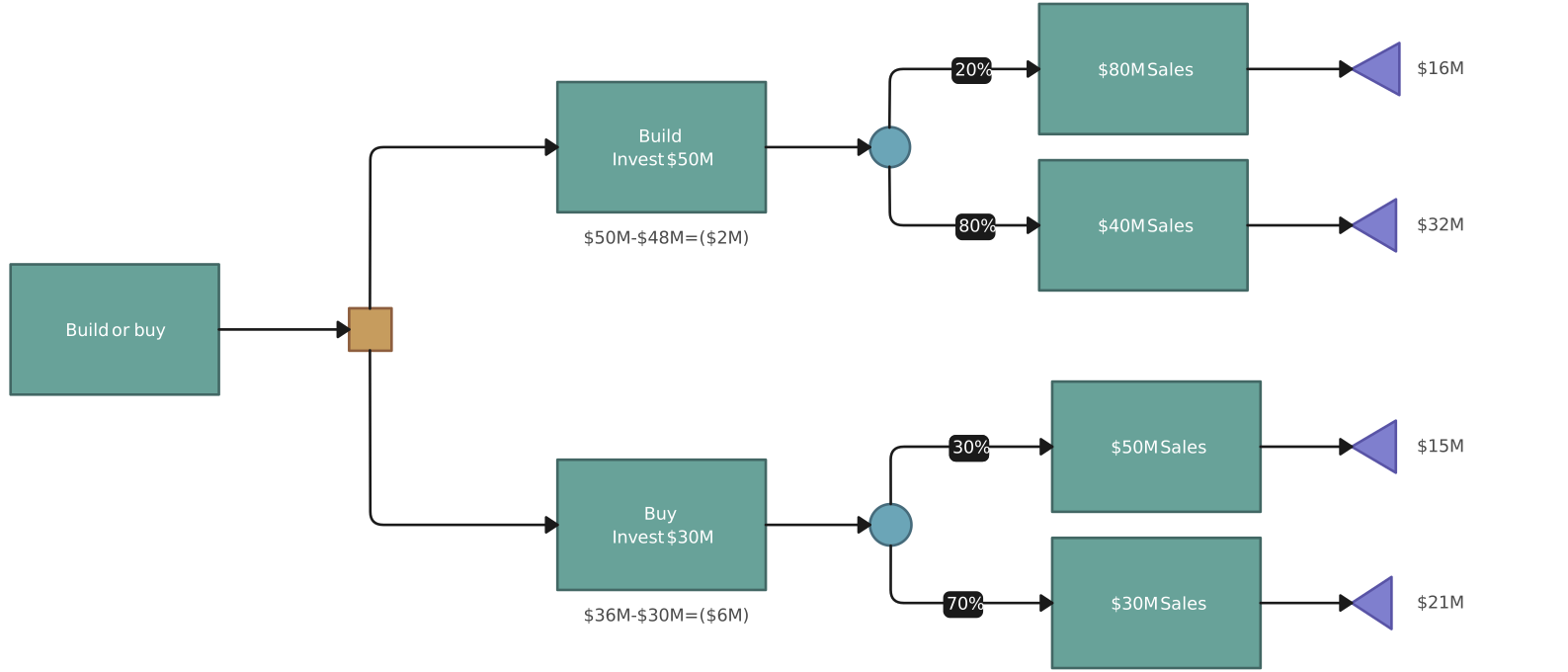
A decision tree is a visual tool that maps out possible choices and their potential outcomes. It helps you explore different scenarios and make decisions that consider all possible consequences.
7. Break-even analysis
This technique helps you determine the point at which a decision will start generating positive results. By calculating the break-even point, you can decide whether an option is worth pursuing.
Advantages and Limitations of the Rational Decision Making Model
By understanding these advantages and limitations, you can decide when to use the rational model of decision making and when a more flexible approach might be better.
| Advantages | Disadvantages / Limitations |
| Clear and logical decisions — Based on facts and logical reasoning, reducing mistakes or poor choices. | Time-consuming — The detailed process can take too long for urgent decisions. |
| Thorough analysis — Helps explore options and evaluate them carefully for well-thought-out decisions. | Requires complete information — Gaps happen when key data isn’t available. |
| Minimizes biases — Relies on objective data/evidence, reducing emotional or personal bias. | Complexity — Can feel unnecessary or cumbersome for simple/routine decisions. |
| Consistency — Using the same approach leads to more consistent outcomes over time. | May overlook creativity — Structure can limit innovative or unconventional ideas. |
| Confidence in decisions — A logical, evidence-based process increases confidence in the choice. | Not always flexible — Rigid steps can be hard to adapt when circumstances change. |
Why Choose Creately for Rational Decision-Making
Creately helps you run the rational decision making steps on a shared visual workspace so the problem, criteria, tradeoffs, and rationale stay clear from start to finish.
Mind Mapping for Problem Definition
Use a mind map to capture context visually—what’s in scope, who’s involved, and what constraints or assumptions matter. This reduces misalignment early and gives everyone a shared “map” of the decision context they can refer back to.
Ready-made templates to speed up alignment
Use ready-made templates (like decision matrices, option comparison grids, and action plans) to start with a proven structure instead of a blank canvas. Templates make it easier to keep decisions consistent across teams and repeat what worked the next time you face a similar choice.
Brainstorming with Teams for Generating Alternatives
Use sticky notes, idea boards, and shared canvases to collect input quickly and keep it organized. Clustering and labeling ideas in the same workspace makes it easier to review contributions, avoid duplicates, and keep the conversation structured.
Collaborative Real-Time Editing
Use real-time collaboration to keep the workspace current while people contribute from different roles and time zones. Everyone sees updates immediately, which prevents version drift and reduces the “which document is final?” problem.
Commenting and Feedback Tools
Use comments to attach feedback and evidence directly to the relevant visual element (instead of losing context in email or chat). This creates a lightweight audit trail of questions, decisions, and resolutions that’s easy to review later.
Task Management and Assignment Tools
Use built-in tasks to turn the decision into a clear handoff: owners, deadlines, and next actions tracked in the same place as the rationale. That keeps execution aligned with what was agreed, and reduces back-and-forth after the meeting.
Easy Sharing for Async Reviews
Share the workspace link for async review so stakeholders can comment in context without scheduling another meeting. This helps teams move forward faster while keeping the discussion attached to the exact part of the visual decision record.
Presentation Mode for Stakeholder Communication
Use presentation mode to walk stakeholders through the key context and final rationale without making them parse the full workspace. It’s a clean way to communicate the “why” behind the decision and get faster alignment.
Conclusion
The rational decision-making model is a powerful tool that helps you make clear and logical choices. By following its structured steps, you can approach decisions with confidence, knowing that you’ve carefully considered all relevant factors. Whether in business or personal life, this model can guide you to better outcomes by turning complex decisions into manageable steps. Remember, the key to success is applying the model thoughtfully and adapting it to your unique situation.
FAQs about the Rational Decision Making Model
How many decision criteria should you use?
How do you weigh decision criteria fairly as a team?
What should you do when you don’t have enough data?
What if two options score almost the same?
References
GOLL, IRENE, and RAKESH B. SAMBHARYA. “RATIONAL MODEL of DECISION MAKING, STRATEGY, and FIRM PERFORMANCE.” Scandinavian Journal of Management, vol. 14, no. 4, Dec. 1998, pp. 479–492, https://doi.org/10.1016/s0956-5221(97)00048-1.
Uzonwanne, Francis C. “Rational Model of Decision-Making.” Springer EBooks, 1 Jan. 2022, pp. 11230–11235, https://doi.org/10.1007/978-3-030-66252-3_2474.