
Every great product needs a great team behind it. But who exactly makes up a product management team, and how should it be structured for success?
In this guide, we’ll break down the key product management roles—from entry-level to executive positions—and explore different product team structures that companies use to build and manage successful products.
Whether you’re a new product manager looking to understand career growth, a startup founder trying to structure your team, or a business leader refining your product strategy, this guide will help you navigate the world of product team structures and product management roles with clarity and confidence.
What Is a Product Team
A product team (or product management team) is a group of professionals responsible for planning, building, launching, and improving a product. Their goal is to create products that solve real customer problems while driving business growth.
A product team doesn’t just decide what features to build—they take a big-picture approach, ensuring that every product decision aligns with both customer needs and company goals. They ask questions like:
- What problems are our customers facing?
- How can we create a solution that truly helps them?
- Is this the right time for our business to invest in this feature?
- Can our engineering team build this effectively?
At its core, a product team acts as the bridge between customers, business objectives, and technology. They work across departments to ensure that the right products are built the right way. This means balancing:
- User needs – Ensuring the product is valuable, usable, and enjoyable.
- Business strategy – Aligning product decisions with company goals, revenue targets, and market positioning.
- Technical feasibility – Working closely with engineers to understand what’s possible within time, budget, and resource constraints.
A well-structured product management team doesn’t just launch products—it creates experiences that customers love, keeps businesses competitive, and adapts to changing market demands.
What Are the Product Team Roles
A product team consists of various roles, each contributing to the product’s success. These product management roles can be categorized into three main functions: strategy, execution, and support. Below is a breakdown of key product team roles and their responsibilities.
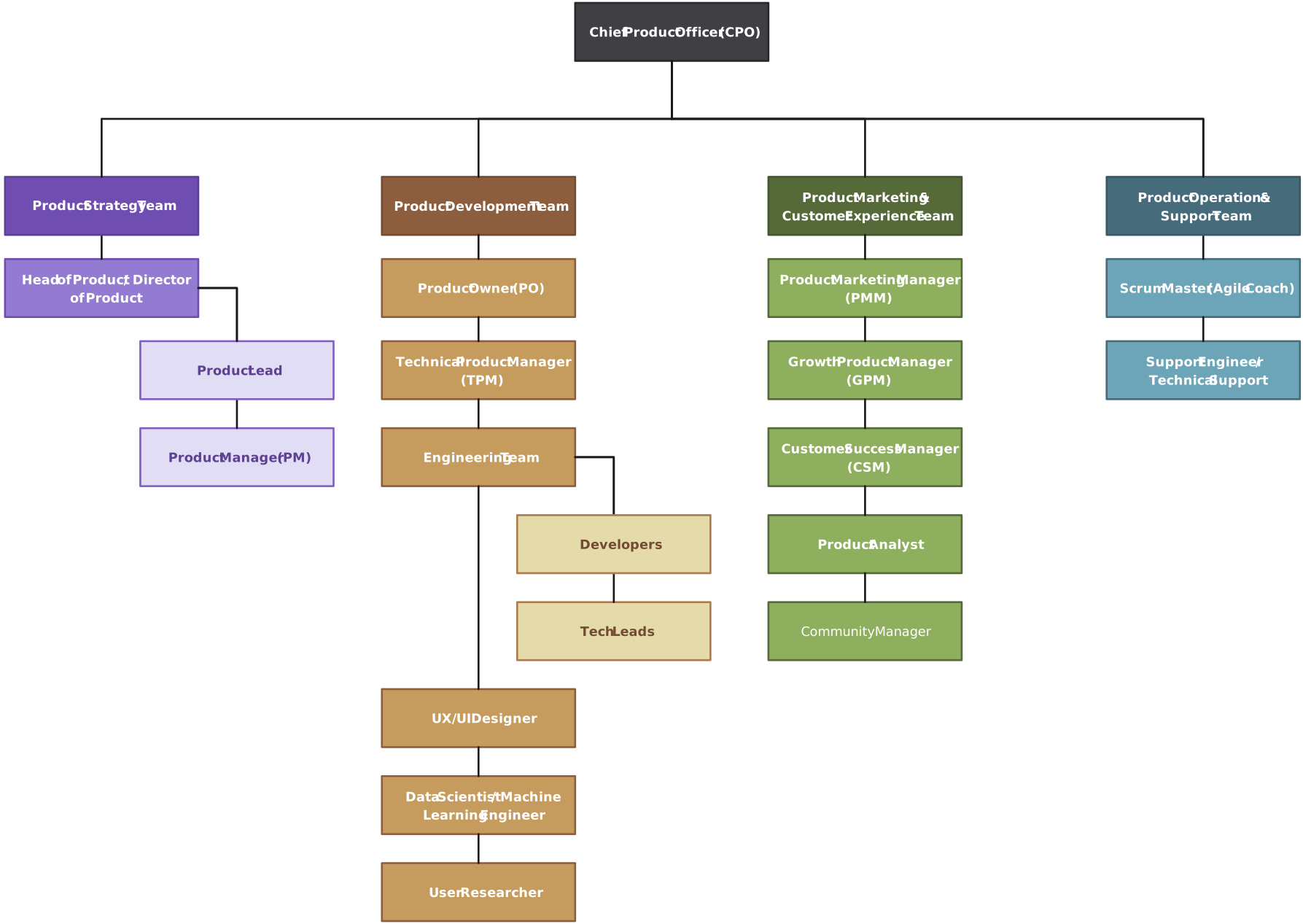

| Team | Role | Key Responsibilities |
| 1. Product Strategy Team | Chief Product Officer (CPO) / VP of Product |
|
| Product Manager (PM) |
| |
| Product Lead |
| |
| Head of Product / Director of Product |
| |
| 2. Product Development Team | Product Owner (PO) |
|
| Engineering Team (Developers & Tech Leads) |
| |
| Technical Product Manager (TPM) |
| |
| UX/UI Designer |
| |
| Data Scientist / Machine Learning Engineer |
| |
| 3. Product Marketing & Customer Experience Team | Product Marketing Manager (PMM) |
|
| Customer Success Manager (CSM) |
| |
| Growth Product Manager (GPM) |
| |
| Product Analyst |
| |
| Community Manager |
| |
| 4. Product Operations & Support Team | Product Operations Manager |
|
| Scrum Master (Agile Coach) |
| |
| Support Engineer / Technical Support |
|
Different Product Team Structures
A product team’s structure plays a big role in how well a company can develop, improve, and launch products. There’s no single “best” structure—each company chooses the one that fits its needs, team size, and goals. Some organizations need tight collaboration across different teams, while others benefit from clear, separate roles. Below, we break down the most common product team structures, their benefits, and their challenges.
1. Functional product team structure
In a functional product team structure, teams are organized based on their specific expertise—such as engineering, design, marketing, and customer support. Each function operates as its own department, with a manager overseeing the team. The product manager (PM) works across these departments to bring everything together.
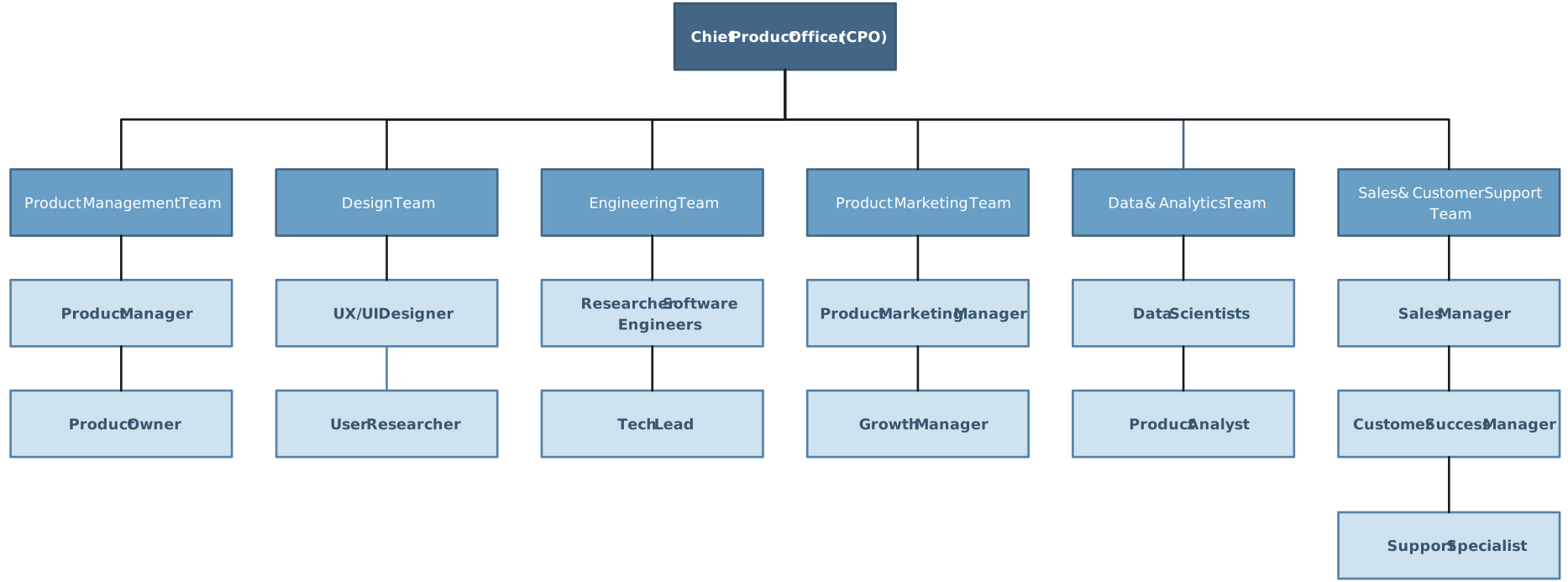
How it works:
- The product manager defines the product vision and coordinates with each team.
- The engineering team is responsible for building the product.
- The design team creates the product’s look and feel.
- The marketing team ensures the product reaches the right audience.
- Each team reports to its own functional leader (Head of Engineering, Head of Design, etc.), and collaboration happens across teams as needed.
Pros:
- Encourages deep expertise in each function.
- Provides a clear reporting structure.
- Works well for companies with multiple product lines.
Cons:
- Can create silos, where teams focus too much on their function and not enough on overall product success.
- Requires strong coordination to align teams and avoid delays.
2. Cross-functional product team structure
A cross-functional team structure brings together people from different departments (engineering, design, marketing, etc.) into one team focused on a specific product or feature. Instead of reporting separately to their department heads, they work as a single unit under a product manager.
How it works:
- A product manager leads a small team with designers, engineers, marketers, and customer support specialists.
- The team works closely together, making decisions quickly without waiting for approval from separate department heads.
- They focus on a specific goal—like launching a new product feature or improving user experience.
Pros:
- Encourages teamwork and faster decision-making.
- Helps everyone stay focused on the customer and product goals.
- Reduces silos and improves collaboration.
Cons:
- Requires strong leadership to keep all functions aligned.
- Can create confusion if team members are unsure of their responsibilities.
3. Matrix product team structure
A matrix product management team structure is a mix of both functional and cross-functional models. Here, team members report to two leaders: their functional manager (such as Head of Engineering) and the product manager.
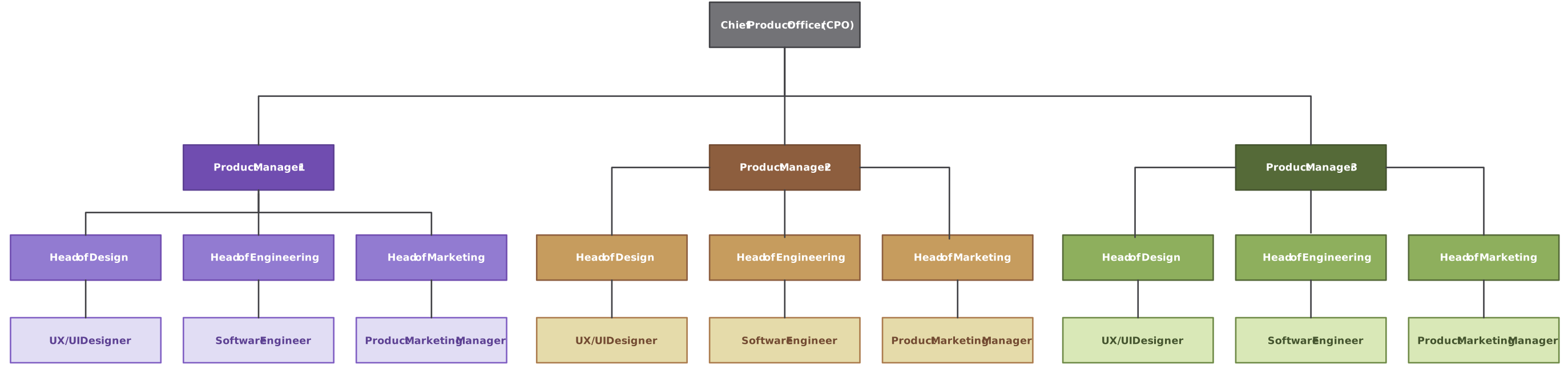
How it works:
- The product manager oversees product strategy and coordinates teams.
- Each team member reports to their functional leader for technical skills and growth.
- Teams collaborate across departments but also maintain expertise in their functions.
Pros:
- Maintains functional expertise while promoting collaboration.
- Offers flexibility in resource allocation.
- Works well for large organizations with multiple product lines.
Cons:
- Can be confusing when reporting to two managers.
- Requires strong communication to avoid conflicts between functional and product leaders.
4. Agile product team structure (squads model)
This structure is based on Agile methodologies, where teams (often called “squads”) work in short cycles (sprints) to build and improve product features. Each squad is a small, cross-functional team that operates independently.
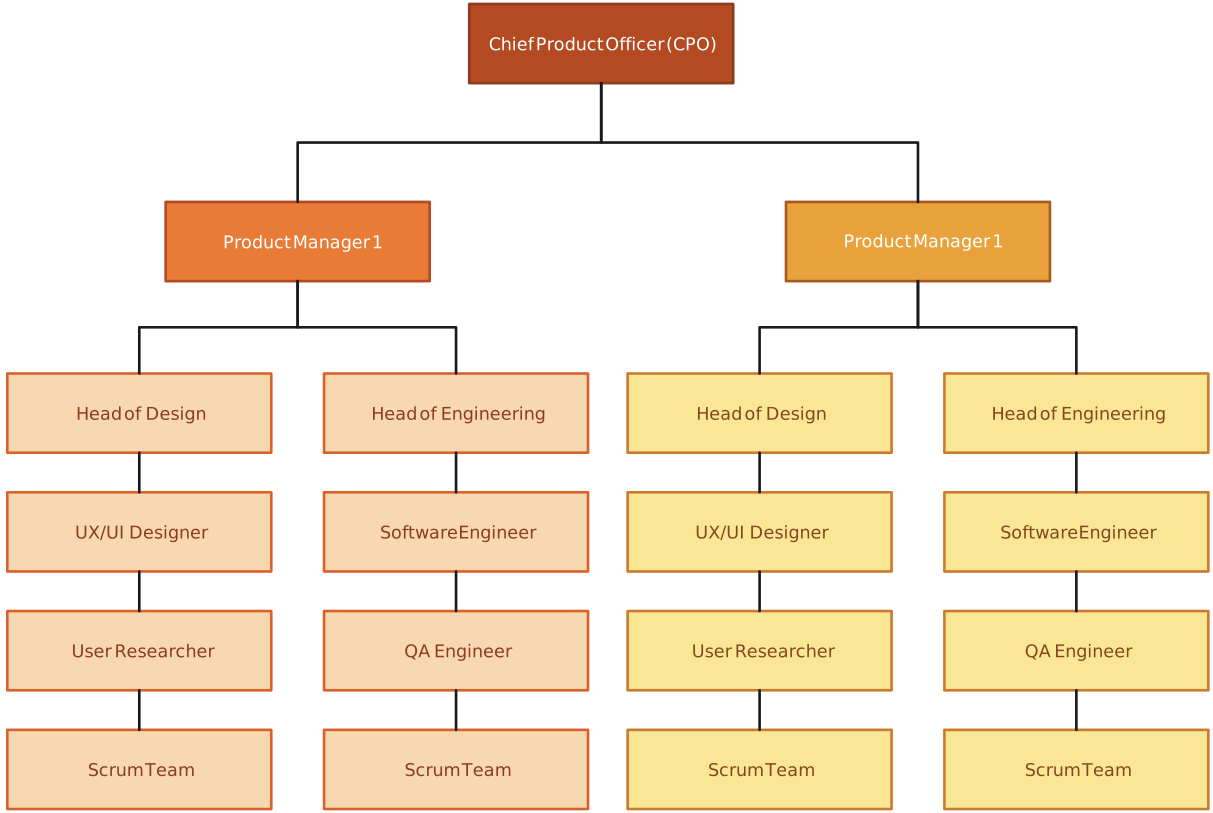
How it works:
- A product owner prioritizes features and ensures alignment with company goals.
- Each squad includes designers, engineers, and other specialists who work together to deliver specific product features.
- Squads are autonomous, meaning they make decisions quickly without waiting for approvals.
Pros:
- Highly flexible and adaptable to changes.
- Encourages innovation and speed.
- Teams feel ownership over their work, leading to better engagement.
Cons:
- Can be hard to align multiple squads with the overall company vision.
- Requires strong leadership and communication to keep all squads working in sync.
5. Pod-based product team structure
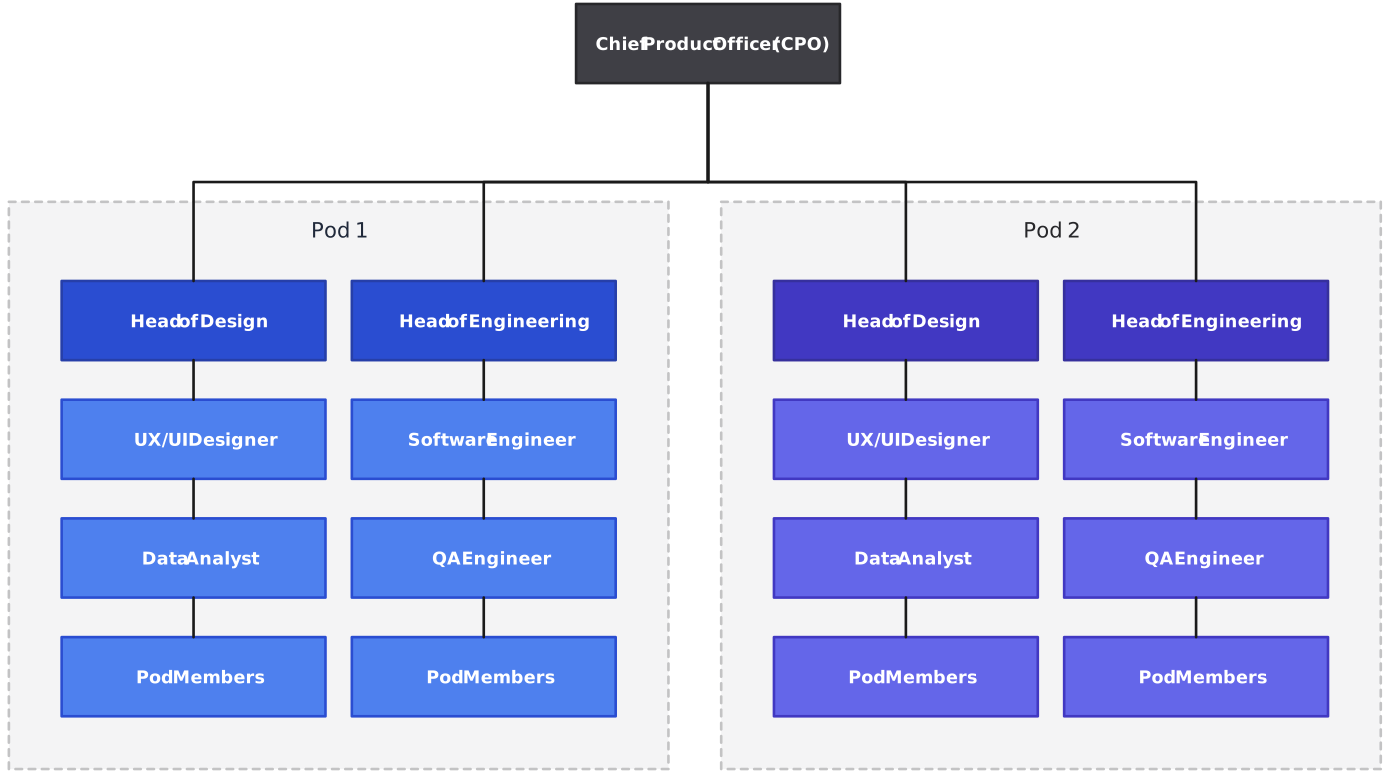
A pod-based product team structure structure is similar to the Agile squads model but often includes additional business functions, like sales and customer support. Pods work as independent mini-teams, each responsible for a specific feature or user experience.
How it works:
- A product manager leads each pod, setting goals and priorities.
- Pods include engineers, designers, marketers, and customer support specialists who work together to improve a specific aspect of the product.
- Each pod works independently but aligns with other pods to ensure a consistent experience.
Pros:
- Allows teams to move fast and innovate.
- Encourages ownership and accountability.
- Works well for companies with multiple products or features.
Cons:
- Can lead to inconsistency if pods don’t align on overall strategy.
- Requires strong coordination to avoid duplicate work.
6. Centralized vs. decentralized product team structures
Centralized product team
A centralized product team structure has one main group that makes decisions for all products. This ensures consistency and alignment with the company’s overall vision. It works well for businesses with a small number of products or those needing strict control. However, this structure can slow down decision-making and limit flexibility.
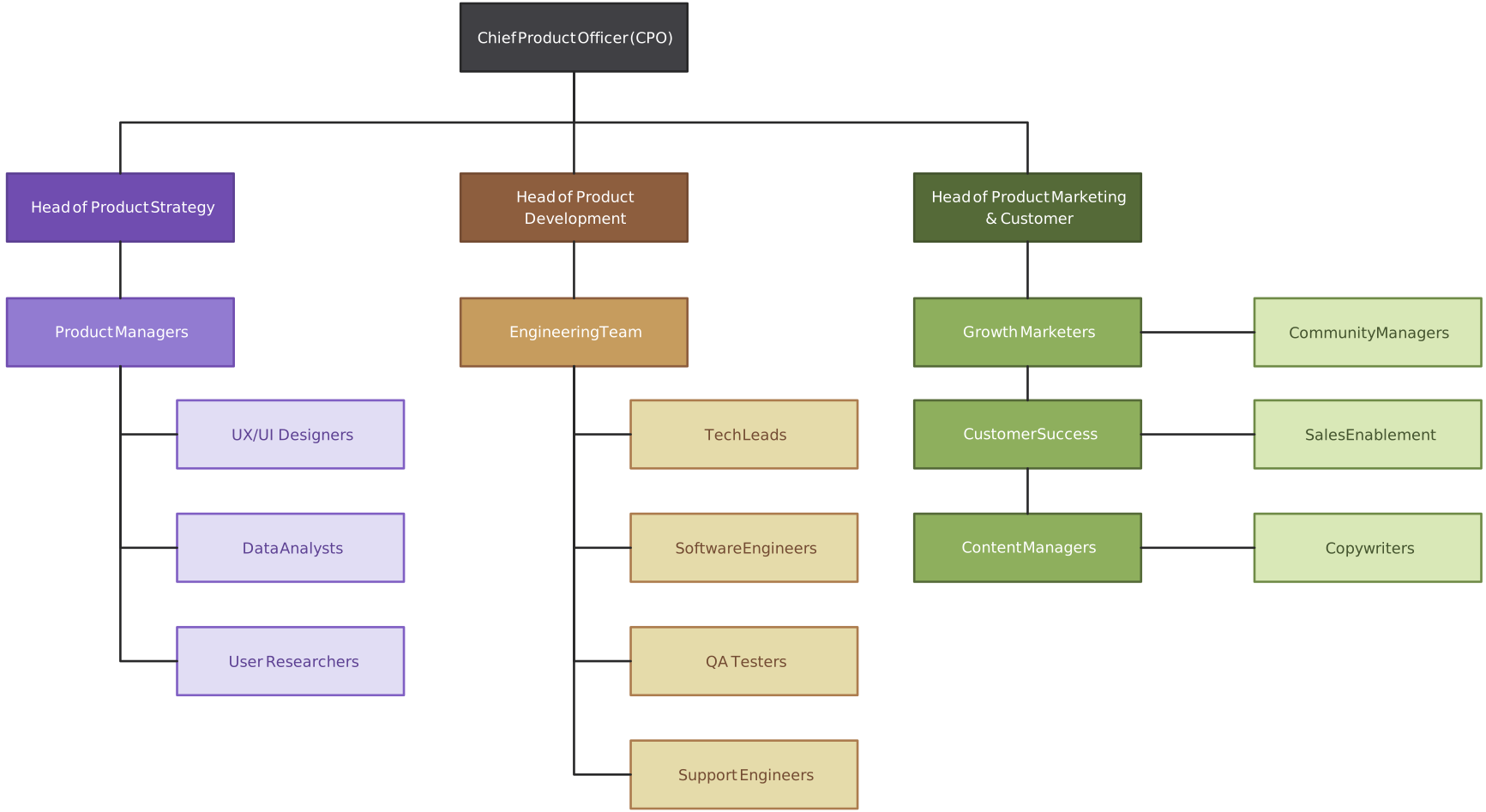
Pros and cons of a centralized product team
| Pros | Cons |
| Strong alignment – Every product follows the company’s main goals and strategy. | Slower decision-making – Every change must go through a central team, which can delay progress. |
| Consistency – Ensures all products have a uniform look, feel, and functionality. | Less flexibility – Teams have less freedom to make changes based on market needs. |
| Efficient resource use – Teams share resources, reducing duplicate efforts. | May not fit complex product lines – A single team may struggle to manage many different products effectively. |
Decentralized product team
A decentralized product team structure allows each product or product line to have its own independent team. These teams make their own decisions and can move quickly. This structure is great for large companies with multiple products but can lead to inconsistencies if teams don’t coordinate well.
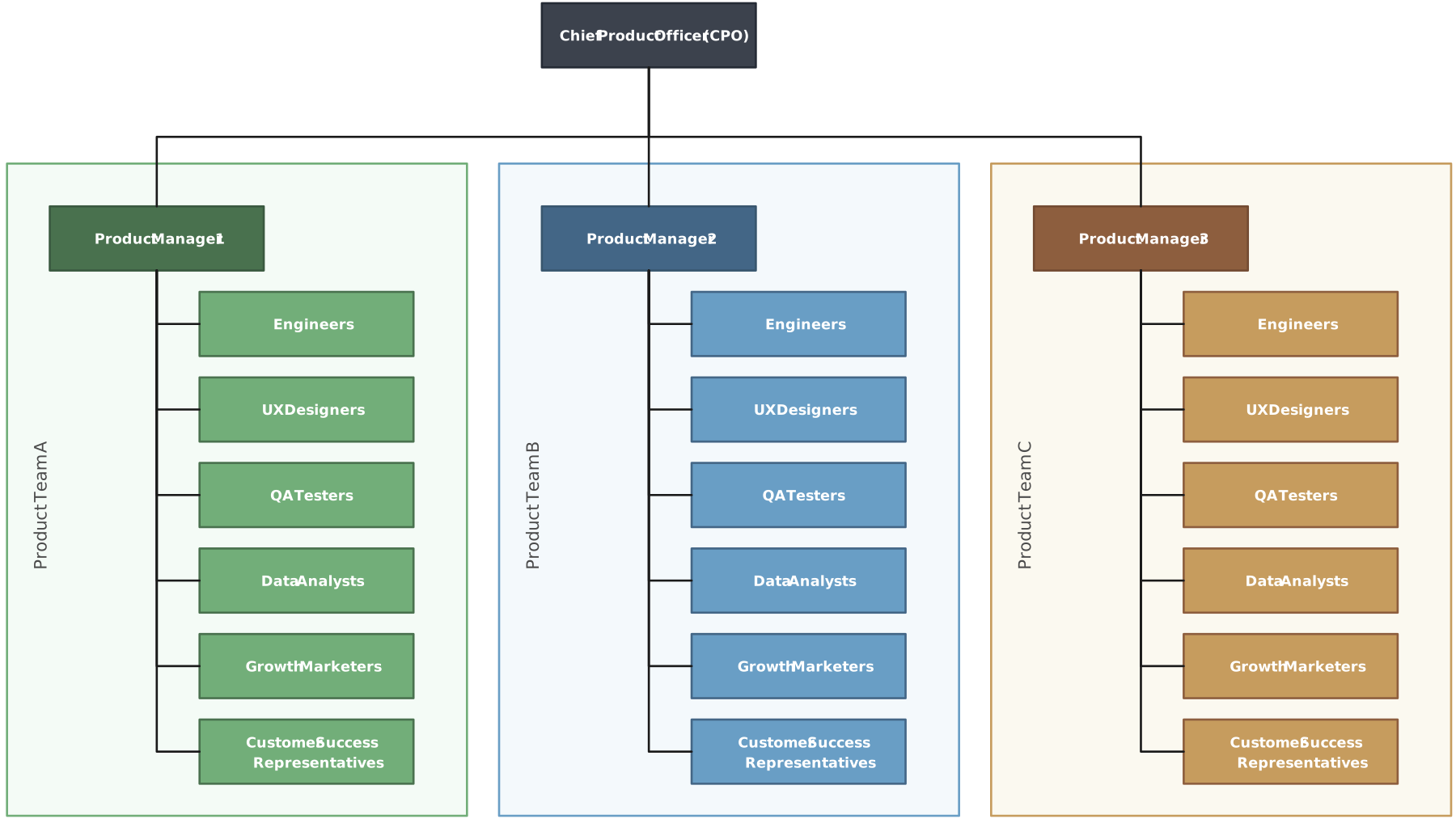
Pros and cons of a decentralized product team
| Pros | Cons |
| Faster decision-making – Teams control their products and don’t have to wait for approvals. | Risk of inconsistency – Different teams may create products that don’t align with the company’s overall vision. |
| More flexibility – Teams can quickly adjust based on customer feedback and market changes. | Can lead to duplicate work – Without coordination, teams may work on similar projects unknowingly. |
| Encourages innovation – Teams can experiment with new ideas without needing approval from a central authority. | Requires strong communication – Teams need clear communication channels to stay aligned with company goals. |
How to Structure Your Product Management Team
Structuring your product management team effectively is crucial for delivering outstanding products and achieving business success. Here are key steps to help you build a well-organized and efficient product management team:
Step 1. Define clear roles and responsibilities
Establish specific roles within your product team to ensure everyone understands their duties and how they contribute to the product’s success. Common roles include:
- Product manager (PM): Oversees product strategy, development, and market introduction.
- Product owner (PO): Manages the product backlog and ensures the development team delivers value to customers.
- UX/UI designer: Focuses on user experience and interface design to create intuitive and engaging products.
- Engineers/developers: Build and maintain the product, ensuring functionality and performance.
- Product marketing manager: Develops go-to-market strategies and communicates product benefits to the target audience.
Step 2. Choose the right team structure
Choosing the right structure for your product team is essential and should consider factors like team size, product complexity, company goals, and available resources. Aligning your team’s structure with these elements ensures effective collaboration and successful product outcomes.
Key factors to consider:
- Team size and distribution: Smaller teams might benefit from a simple structure, while larger, dispersed teams may need more defined roles and processes.
- Product complexity: Complex products often require specialized roles and cross-functional collaboration to manage various components effectively.
- Company’s strategic goals: Your team’s structure should support your company’s objectives, whether it’s rapid growth, innovation, or maintaining product quality.
- Resources available: Consider your budget, tools, and personnel when designing your team to ensure it’s sustainable and efficient.
Step 3. Foster open communication and collaboration
Encourage regular communication among team members to build trust and ensure alignment on goals. Implementing regular meetings, collaborative tools, and an open-door policy can facilitate this. A solid team structure with clear-cut responsibilities and ownership ensures every member is on the same page and working towards a collective goal.
Step 4. Align team objectives with business goals
Ensure that the product team’s objectives are in sync with the company’s overall mission and strategy. This alignment helps prioritize projects that drive the most value and keeps the team focused on impactful outcomes.
5. Empower team members
Provide team members with the autonomy to make decisions within their areas of expertise. Empowerment fosters ownership, accountability, and can lead to increased innovation and job satisfaction.
6. Implement scalable processes
Develop processes that can grow with your team and product offerings. Standardized workflows for product development, feedback collection, and iteration ensure consistency and efficiency as the team expands.
7. Invest in continuous learning
Encourage team members to pursue professional development opportunities. Staying updated with industry trends, tools, and methodologies ensures the team remains competitive and innovative.
Helpful Resources
Learn the essentials of agile product management, a flexible approach that prioritizes adaptability, customer feedback, and continuous improvement.
Discover the 7-step product management process to effectively develop, launch, and refine products that meet customer needs and drive business growth.
Understand the key differences between product management and project management. Learn their unique roles, responsibilities, and how they work together to drive business success.
Discover the key responsibilities of a director of product, their role in product strategy, team leadership, and business growth.
Explore top product management frameworks that help teams streamline development, prioritize tasks, and create successful products.
Understand the differences between a product manager and a product owner, their unique roles, responsibilities, and how they collaborate to drive product success.
Conclusion: Product Team Structure and Product Management Roles
Building the right product team structure is essential for creating successful products. The way a team is organized affects how decisions are made, how quickly teams can respond to changes, and how well different roles work together.
There is no one-size-fits-all approach to structuring a product team. The best product management team structure depends on factors like company size, product complexity, and strategic goals. Some organizations benefit from a centralized structure that ensures consistency, while others thrive with a decentralized or cross-functional setup that encourages speed and innovation.
Understanding product management roles is just as important as choosing the right structure. Every role—from product managers to engineers, designers, and marketers—plays a key part in shaping the product and delivering value to customers. Clear responsibilities and strong collaboration make teams more effective.
As your company grows, your product team structure may need to evolve. Regularly reviewing team dynamics and adjusting product management roles can help maintain efficiency and alignment with business goals. By choosing the right structure and defining clear product management roles, companies can create products that meet customer needs and drive business success.
References
None Siddhey Mahadik, None Dasaiah Pakanati, Cherukuri, N.H., Jain, N.S. and Jain, N.S. (2024). Cross-Functional Team Management in Product Development. [online] 1(2), pp.270–294. doi:https://doi.org/10.36676/mdmp.v1.i2.24.
Steinhardt, G. (2017). Product Management Team. doi:https://doi.org/10.1007/978-3-319-49998-7_4.
FAQs on Product Management Roles and Product Team Structures
What is a product team structure?
What roles exist within a product management team?
What is the role of a product manager in a product team?
How does a product owner differ from a product manager?
Should every product have its own product manager?