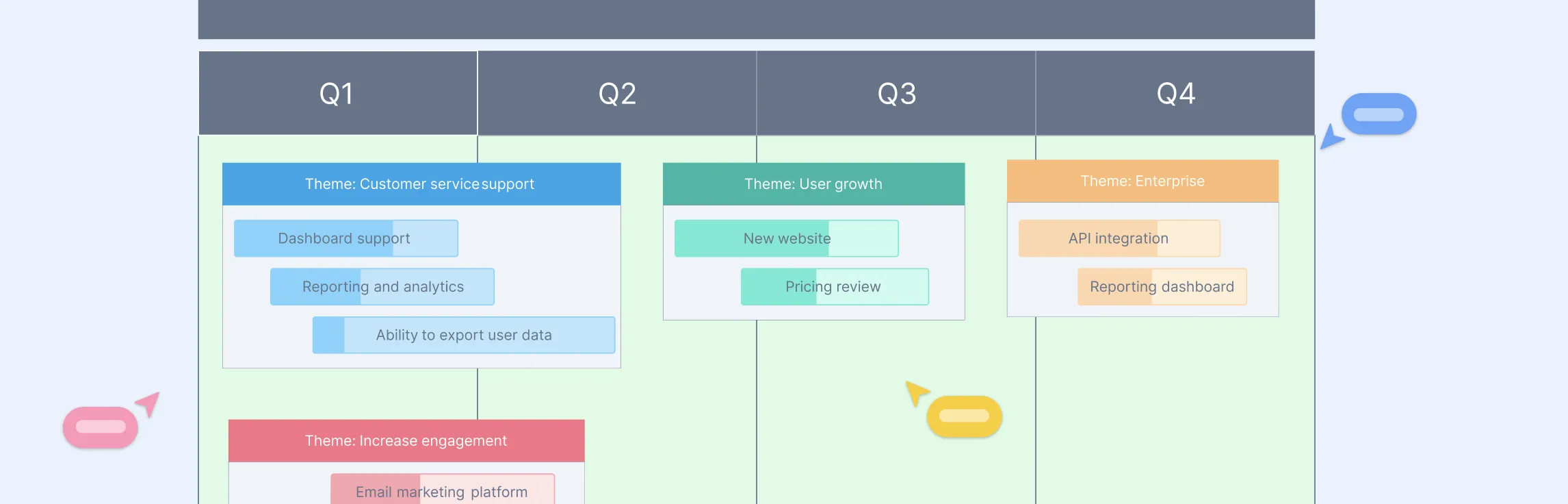
Not all product roadmaps are created equal, and picking the right type can make or break how your team plans, aligns, and delivers. From strategy-driven overviews to outcome-focused plans, the right roadmap helps you communicate clearly, prioritize effectively, and keep everyone moving in the same direction. In this guide, we’ll break down the top types of product roadmaps and show when and how to use each one.
What Is a Product Roadmap
A product roadmap is a strategic plan that outlines a product’s vision, goals, and the initiatives needed to achieve them. It shows what the team will work on, why it matters, and when key outcomes or features are expected. Roadmaps help align stakeholders, prioritize work, communicate strategy, and track progress across the product lifecycle.
Common Types of Product Roadmaps
Not all roadmaps are built the same. The right type aligns with your goals, your team’s workflow, and your audience. Some trade flexibility for detail, others predictability for adaptability—choosing the right balance keeps everyone on track and moving forward.
Roadmaps organized by information
These types of product roadmaps focus on what matters most at a strategic or product level—the vision, goals, features, and customer outcomes. They’re great for conversations about direction, prioritization, and value rather than delivery timelines.
Best for: leadership discussions, investors, cross-functional alignment, telling the “why” behind the product decisions.
1. Vision roadmap
What it is
A high-level roadmap that shows where the product is going long term. It focuses on big milestones, themes, and direction—not granular features.


When to use it
- Early-stage product planning
- Investor or leadership conversations
- Aligning company vision around a multi-year horizon
- When you need to inspire or unify teams
How to use it
- Start with a product’s long-term mission or north star
- Identify strategic milestones (e.g., new markets, platform evolution, core capabilities)
- Arrange these milestones in broad time horizons like “Now / Next / Future” or year ranges
| Pros | Cons |
| Creates clarity around long-term direction | Very high-level — can feel vague or abstract |
| Helps leaders and teams understand why the product exists | Doesn’t help with short-term execution |
| Great for storytelling, funding, and strategic alignment | Easy to misinterpret as a set of promises |
2. Strategy roadmap
What it is
The product strategy roadmap ties product work to business objectives. It shows the strategic priorities—initiatives, themes, and outcomes—not individual tasks.
When to use it
- When the product direction must map to company goals
- Portfolio planning across markets or segments
- Communicating strategy to executives or stakeholders
How to use it
- Define key goals (e.g., revenue growth, retention, expansion)
- Cluster product initiatives into themes supporting those goals
- Prioritize themes by business impact and resource availability
| Pros | Cons |
| Keeps teams focused on value, not output | Not ideal for engineering planning |
| Bridges product and business strategy | Can oversimplify trade-offs |
| Clear narrative for leadership and investors | Needs frequent updates as market or company priorities change |
3. Outcome-based roadmap
What it is
A roadmap organized around the results you want to achieve rather than the features you plan to ship. It shifts planning from “what we build” to “why we build it.”

When to use it
- Teams practicing experiments, rapid iteration, or product discovery
- When customer or usage outcomes matter more than release dates
- When prioritization should be value-driven
How to use it
- Start with a measurable outcome (e.g., activation, trial conversion, retention)
- Brainstorm solutions to move that metric
- Prioritize experiments or initiatives that best support that outcome
- Reassess based on data, not deadlines
| Pros | Cons |
| Focuses teams on solving real customer problems | Harder to manage when leadership demands fixed deliverables |
| Encourages flexibility and learning | Requires strong analytics and feedback systems |
| Reduces feature-factory behavior | May frustrate teams used to detailed instructions |
4. Goal-oriented roadmap
What it is
A roadmap organized around specific goals, usually tied to OKRs, KPIs, or north-star metrics. Goals act as anchors, and initiatives support those goals.
When to use it
- When your organization uses OKRs/KPIs top-down
- When clarity around measurable progress matters
- Quarterly planning or annual planning cycles
How to use it
- Define product or business goals (e.g., “increase daily active users by 15%”)
- Map product initiatives or features that support those goals
- Break work into phases or “bets” that ladder up to the metric
| Pros | Cons |
| Clear connection between work and results | Overly rigid if goals are bad or misaligned |
| Easy to communicate across cross-functional teams | Teams might chase KPIs at the expense of innovation |
| Helps prevent random feature requests or pet projects | Requires thoughtful goal setting—bad goals = bad roadmap |
5. Evidence-based roadmap
What it is
A roadmap driven by data, customer feedback, and observed behavior rather than assumptions. Popular in SaaS where input from users is constant.

When to use it
- When customer requests shape product evolution
- Teams with heavy usage analytics and feedback systems
- When you want to prove demand before investing
How to use it
- Collect structured customer signals (surveys, tickets, usage data)
- Rank initiatives by impact, frequency, and customer value
- Validate ideas through prototypes, experiments, or quick releases
| Pros | Cons |
| Decisions grounded in real customer needs | Can bias toward loudest voices or short-term gains |
| Naturally supports prioritization | Hard to innovate beyond current user base |
| Reduces wasted development | Requires tools and discipline to collect and interpret data |
6. Market-driven roadmap
What it is
A roadmap shaped by market conditions, competitor moves, regulatory changes, or emerging trends. It helps products stay relevant externally, not just internally.

When to use it
- Competitive markets (e.g., SaaS, AI, consumer apps)
- When a product is scaling or defending market position
- When customers expect parity features or industry standards
How to use it
- Track competitor releases, pricing, product positioning
- Monitor market trends and regulatory environments
- Map opportunities (new segments, geographies, differentiators)
- Balance “catch-up” features with innovation
| Pros | Cons |
| Keeps the product relevant and competitive | Can create a copycat mentality |
| Helps identify new opportunities faster | Risks overshadowing customer needs |
| Supports positioning and market leadership | Teams may chase trends rather than strategy |
Roadmaps organized by workflow
These roadmaps are built around how work flows through the development process, especially in product and engineering teams. They don’t just show what you’re building—they reflect the operational model.
Best for: internal teams, continuous delivery, agile environments, tracking progress and bottlenecks.
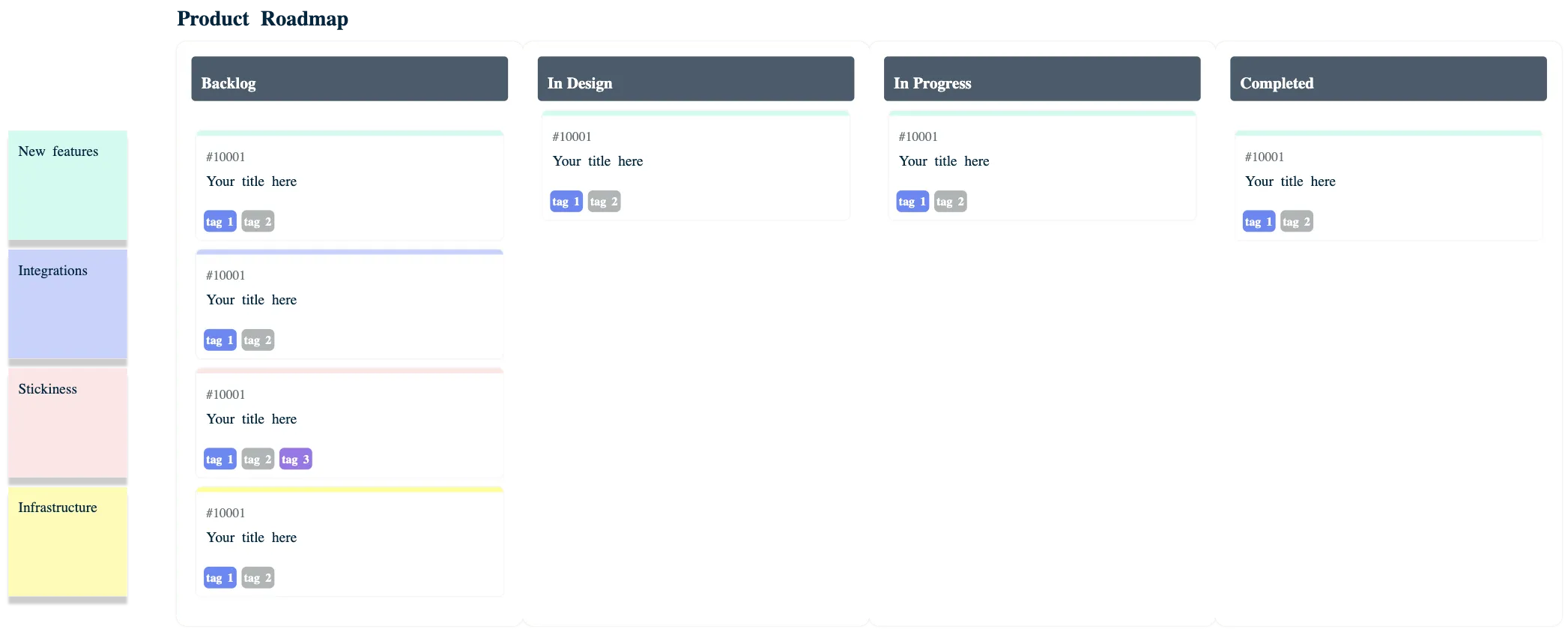
7. Kanban / progress-based roadmap
What it is
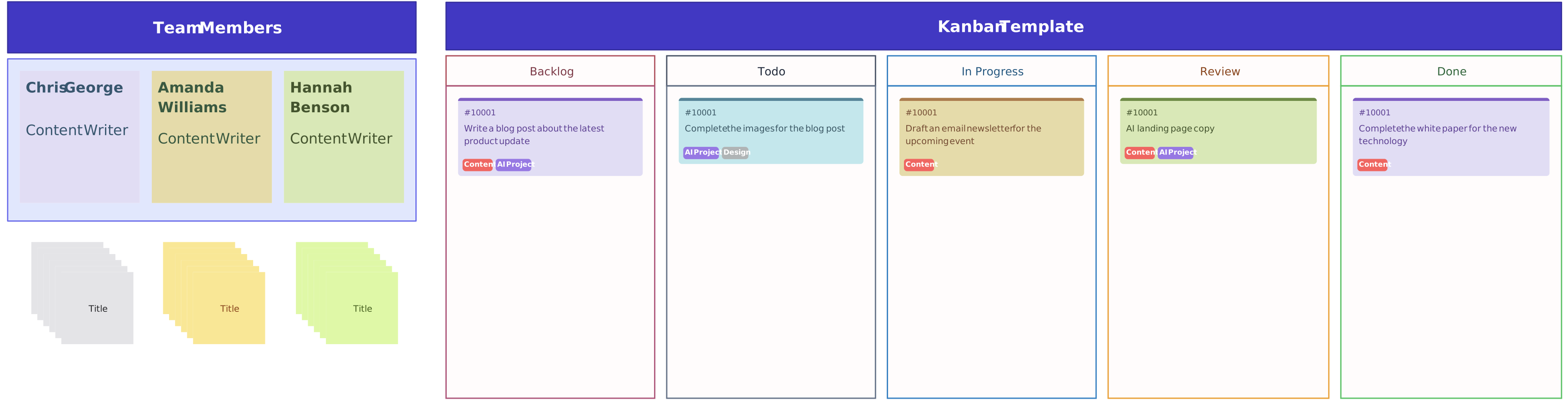
A roadmap visualizing work as it moves through stages of completion. Instead of dates or timelines, it shows status, typically in columns like “Planned,” “In Progress,” and “Done.” It’s simple, transparent, and ideal for agile teams that work continuously.
When to use it
- Fast-moving teams with ongoing releases
- Teams that don’t commit to strict deadlines
- Product discovery, experimentation, and continuous delivery environments
- When stakeholders care about status rather than dates
How to use it
- Create columns that reflect your real workflow: e.g., Backlog → Planned → In Progress → QA → Released
- Move initiatives across the columns as statuses change
- Add tags or swimlanes for priority, ownership, or product areas
- Review weekly to keep it fresh and reflective of reality
| Pros | Cons |
| Easy to understand at a glance | Can appear “shallow” to stakeholders expecting dates |
| Great fit for agile & continuous delivery | Hard to communicate long-term planning |
| Encourages transparency & flow | Not suitable for exec/external presentations |
| Low maintenance | Can become cluttered if not managed |
8. Agile / iteration roadmap
What it is
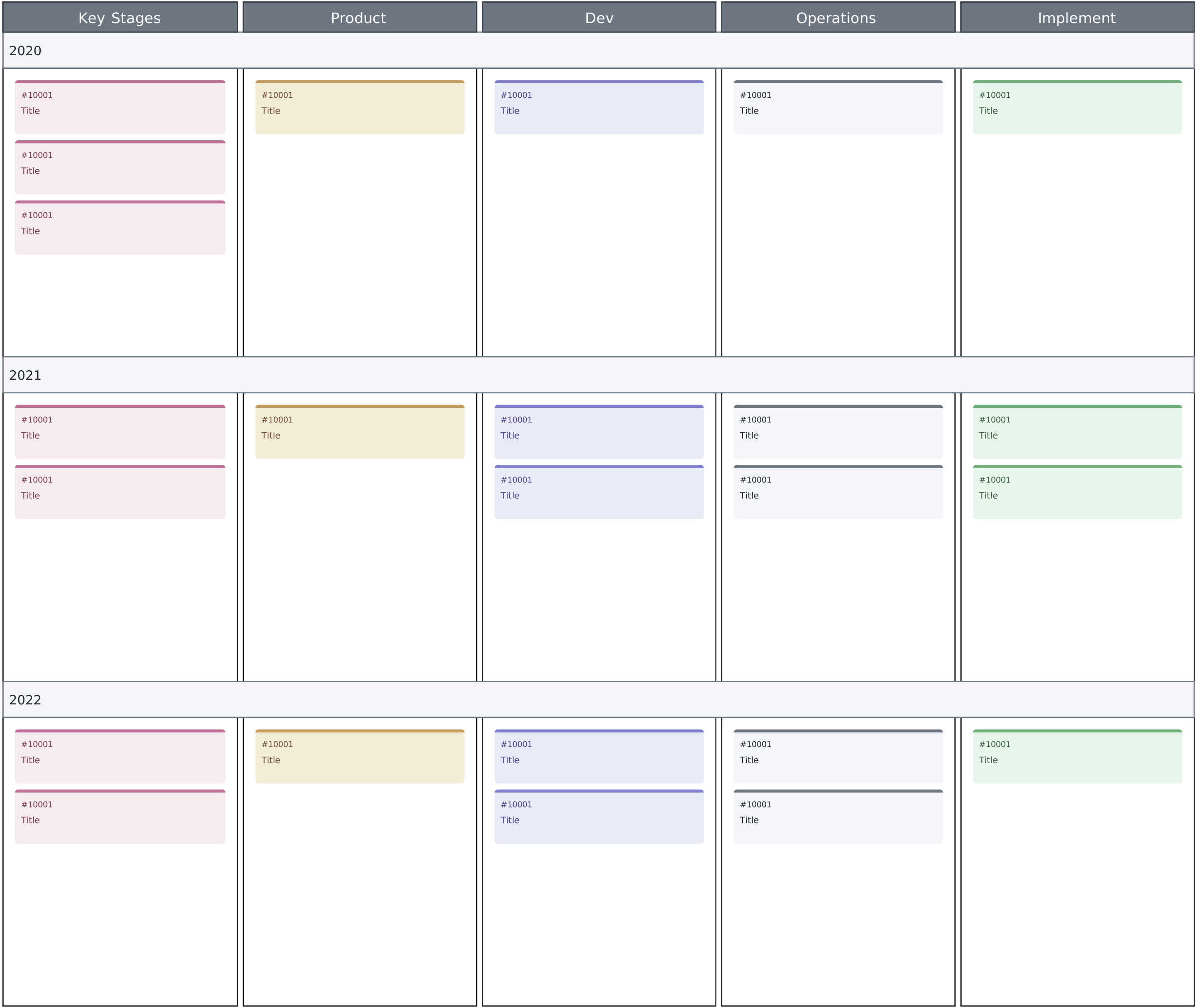
A roadmap organized around sprints, epics, or agile cycles, showing what the product team plans to deliver in iterations rather than specific deadlines. It highlights work rhythms, development themes, and velocity assumptions.
When to use it
- Scrum teams working in 2–4 week sprints
- When you need a planning bridge from backlog → execution
- Teams working epics across quarters
- When delivery predictability matters internally (not externally)
How to use it
- Break large initiatives into epics or stories
- Assign them to cycles or sprints according to capacity
- Update backlog continuously as you learn
- Present at sprint planning or internal reviews—not as a public roadmap
| Pros | Cons |
| Great for internal execution & sprint planning | Not very strategic or long-term |
| Clear view of what will be delivered soon | Too detailed for leadership or customers |
| Supports agile culture and iteration | Frequent reprioritization can confuse stakeholders |
| Helps estimate velocity & resource needs | Easily becomes a task board instead of a roadmap |
9. Development or engineering roadmap
What it is
A roadmap that focuses on technical work—system improvements, refactoring, performance, reliability, and developer efficiency. It highlights engineering priorities rather than customer-visible features.

When to use it
- When technical debt is slowing progress
- Scaling systems or preparing for major launches
- When engineering needs to communicate “invisible” work
- Mid-to-large teams with architecture or platform initiatives
How to use it
- Identify core technical themes (performance, CI/CD, code cleanup, reliability)
- Create initiatives connected to those themes, not one-off tasks
- Prioritize by risk, cost, and product impact
- Pair with feature or product roadmaps to prevent misalignment
| Pros | Cons |
| Gives visibility to essential engineering work | Low stakeholder excitement (“not a feature”) |
| Helps manage tech debt strategically | Hard to show customer value |
| Builds healthier products long term | Requires trust & technical literacy |
| Improves delivery speed and stability | Can be deprioritized under pressure |
10. Technology roadmap
What it is
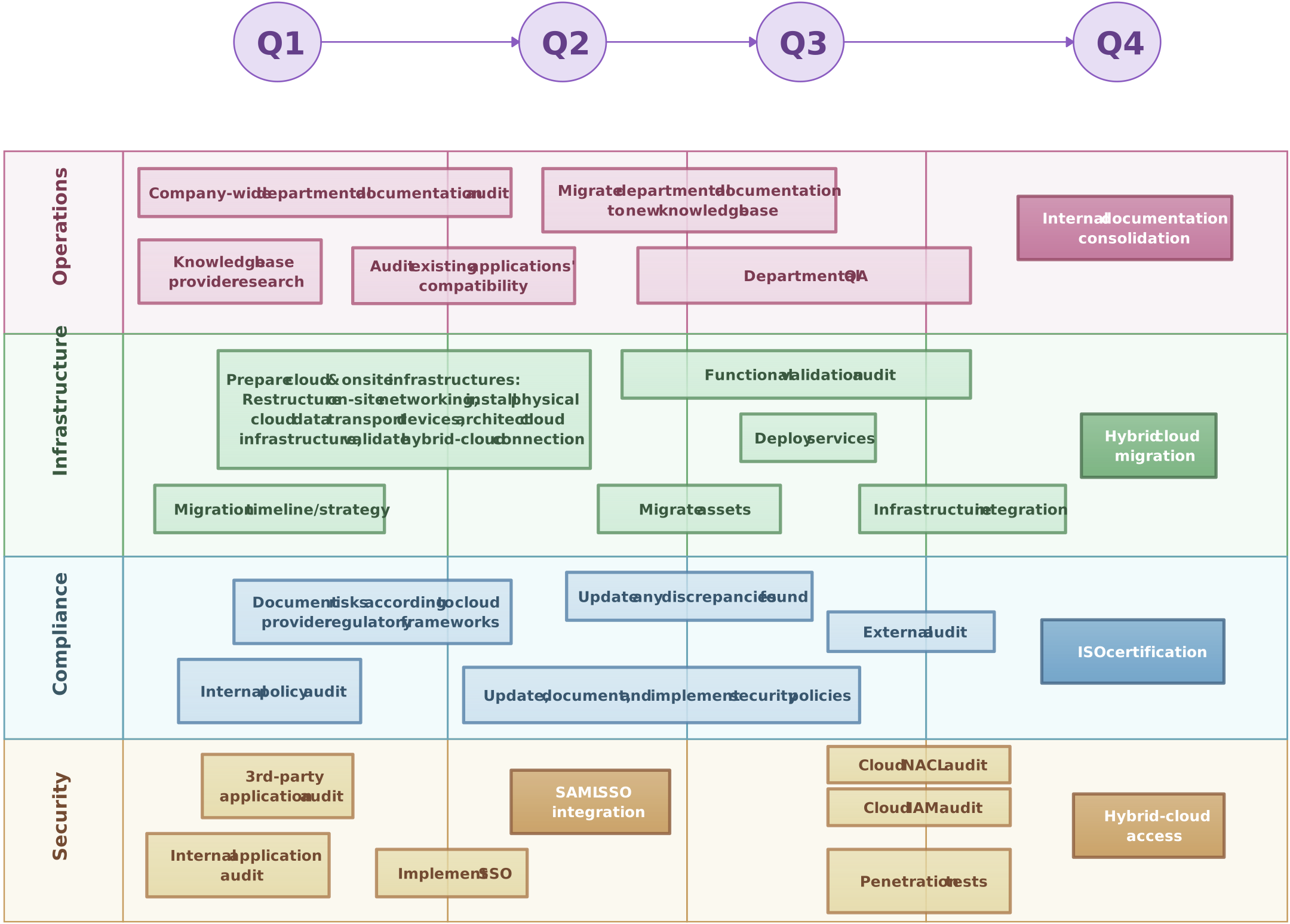
A technology roadmap centered on technology evolution, including platform migrations, infrastructure changes, system integrations, or compliance upgrades. It looks beyond delivery tasks and speaks to technical capability growth.
When to use it
- Large organizations with tech stacks that affect many products
- Teams preparing for scalability, platform shifts, or cloud adoption
- Long-term architectural changes (microservices, data pipelines)
- When you need to plan around dependencies and risk reduction
How to use it
- Start with key technology goals (scalability, modernization, compliance)
- Group work into phases such as “Foundational,” “Migration,” “Optimization”
- Map major dependencies (databases, APIs, vendor systems)
- Communicate at a high level—avoid task-level detail
| Pros | Cons |
| Gives clarity around technical direction | Can be slow and resource-heavy |
| Aligns architecture with product strategy | Often difficult to estimate |
| Reduces long-term risk & outages | Doesn’t speak well to customer value |
| Helps coordinate cross-team dependencies | Needs strong stakeholder buy-in |
Roadmaps organized by design
These roadmaps are structured by how information is visually presented—what stakeholders actually see. They’re optimized for communication clarity, not just planning.
Best for: exec reviews, stakeholder updates, marketing teams, customer-facing presentations.
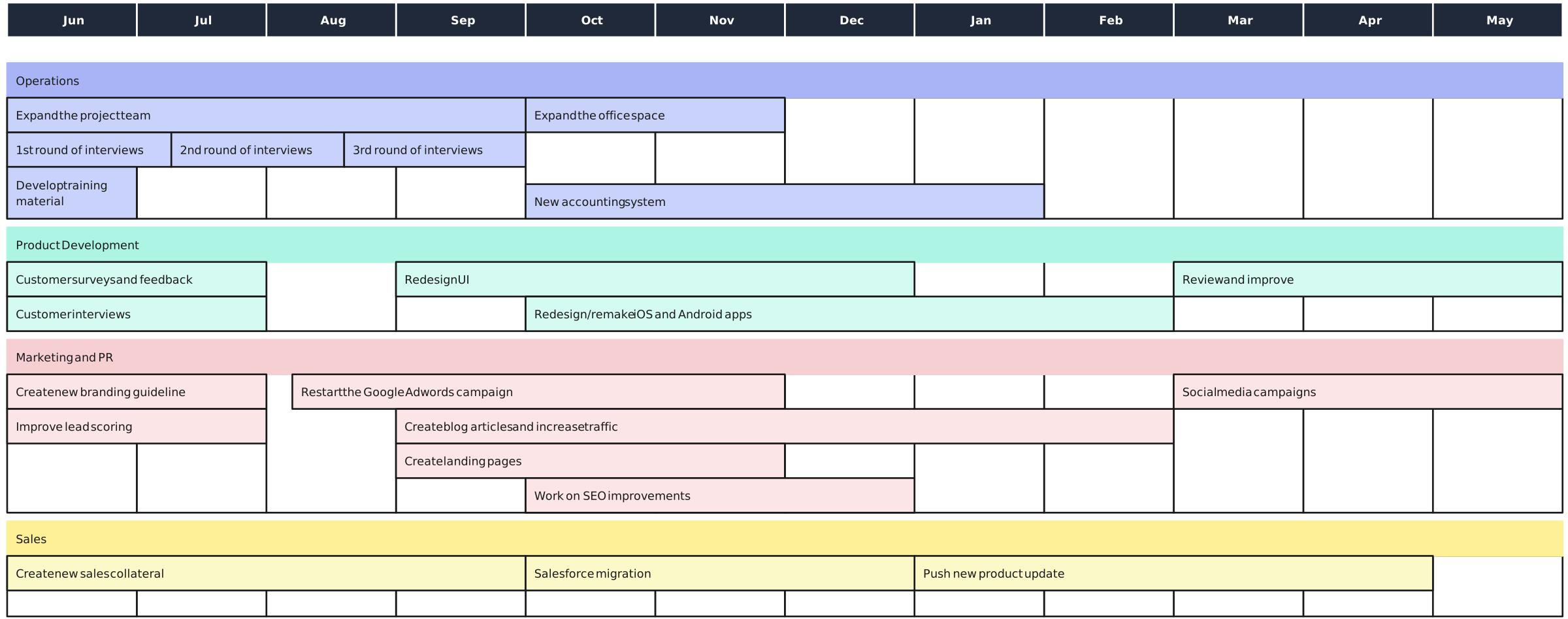
11. Timeline-based roadmap
What it is
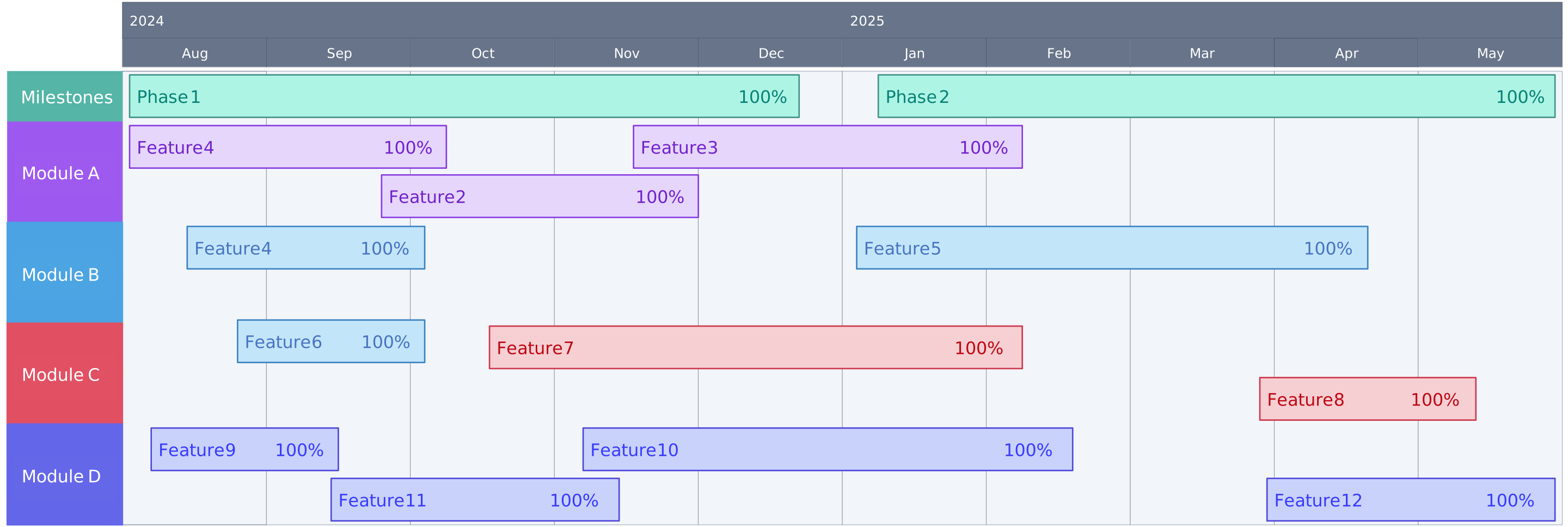
A roadmap that visualizes milestones and initiatives across specific time periods—months, quarters, or annual phases. It’s ideal when stakeholders expect clarity around when something will happen.
When to use it
- Mature products with predictable development cycles
- When customers, executives, or sales teams need dates
- For large initiatives that require planning across departments
- When aligning marketing, launch, and go-to-market activities
How to use it
- Define strategic time buckets (monthly, quarterly, yearly)
- Place initiatives, phases, or deliverables across those buckets
- Show dependencies and sequencing, not every task
- Update regularly as priorities shift
| Pros | Cons |
| Gives stakeholders clear time expectations | Easily mistaken for guarantees instead of forecasts |
| Works well for release planning & GTM | Rigid — rescheduling breaks trust |
| Good for external communication | Can force artificial deadlines |
| Helps align teams across departments | High maintenance if priorities change often |
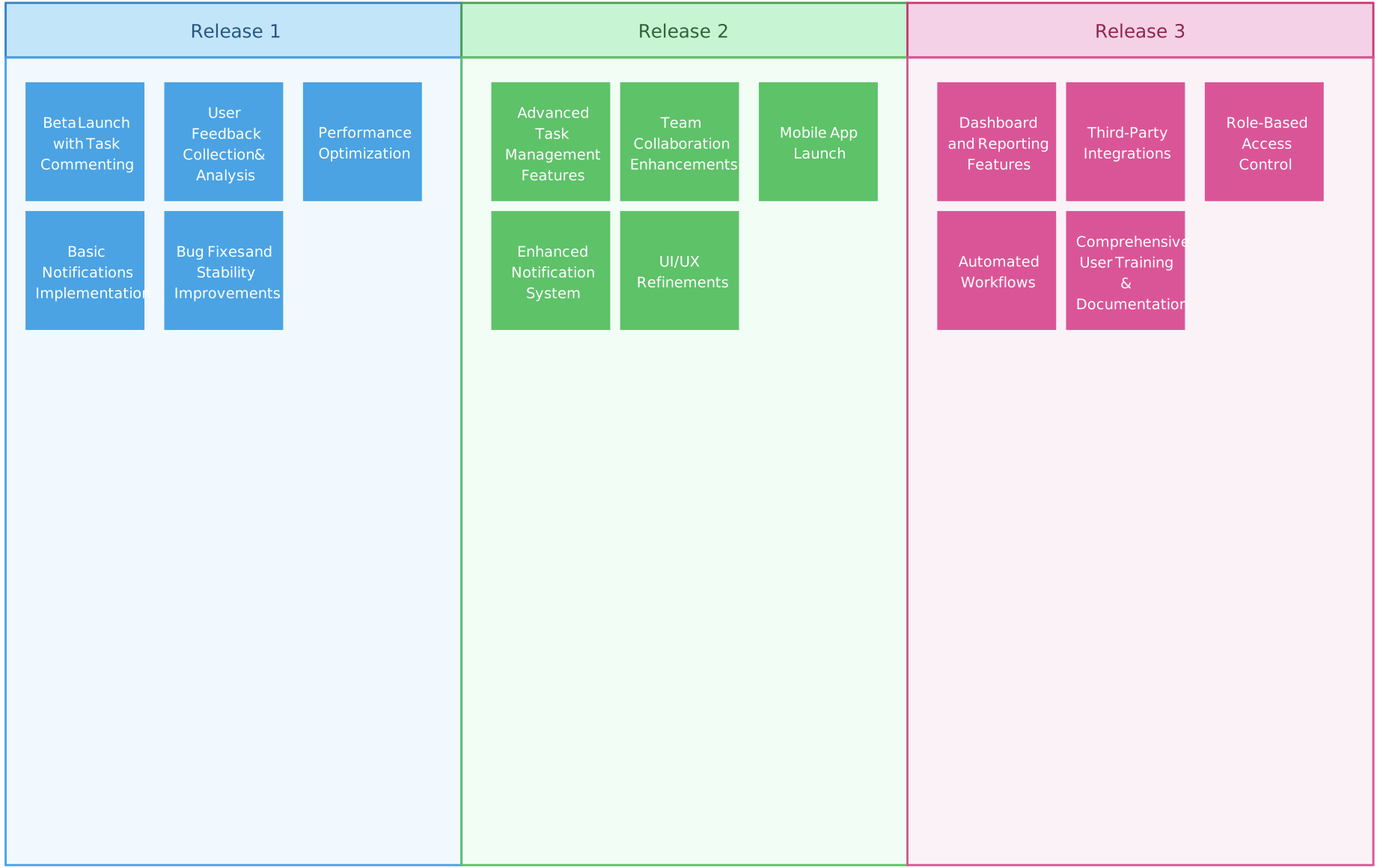
12. Release roadmap
What it is
A roadmap centered on product releases or version milestones. Instead of timeframes, it organizes work around finished deliverables—v1.1, v3.0, Beta, GA, etc.
When to use it
- SaaS or software products shipping packaged updates
- When users or partners care about version availability
- Hardware, embedded products, mobile apps with release schedules
- Pre-launch or improvement cycles
How to use it
- Define release stages (alpha → beta → GA)
- Assign epics, features, or fixes to each release
- Use dates only when essential; otherwise show sequence
- Communicate readiness criteria (performance, testing, compliance)
| Pros | Cons |
| Easy to communicate progress as tangible releases | Can become feature dumps |
| Works well for marketing & support teams | Encourages waterfall if not managed well |
| Helps coordinate QA, docs, and launches | Poor fit for discovery or experimentation |
| Simple structure stakeholders understand | Less strategic — focuses on output over outcomes |
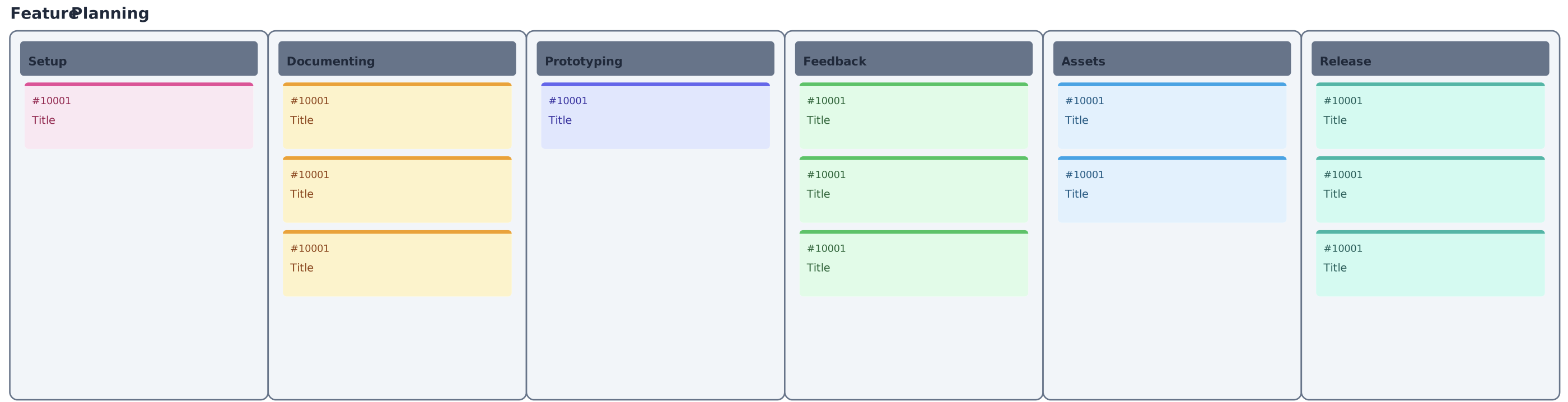
13. Feature-based roadmap
What it is
A roadmap that lists specific features, enhancements, or product areas the team intends to deliver. It’s concrete, detailed, and usually customer-facing. Great for clarity—dangerous if used as commitments.
When to use it
- When customers care about specific capabilities
- Support and sales teams want a “what’s coming” reference
- Product categories where feature parity matters (FinTech, SaaS, e-commerce)
- When you need visibility across product areas, not timelines
How to use it
- Group features under themes or user needs (analytics, onboarding, performance)
- Keep categories broad (“search,” “dashboards,” “billing”)
- Use “Now / Next / Future” instead of exact delivery dates
- Treat it as communication, not a contract
| Pros | Cons |
| Very easy to understand | Can encourage “feature factory” thinking |
| Great for customer-facing conversations | Ignores strategy and outcomes |
| Helps justify roadmap decisions | Often becomes a wishlist |
| Works well in support/sales enablement | Leads to disappointment if delayed |
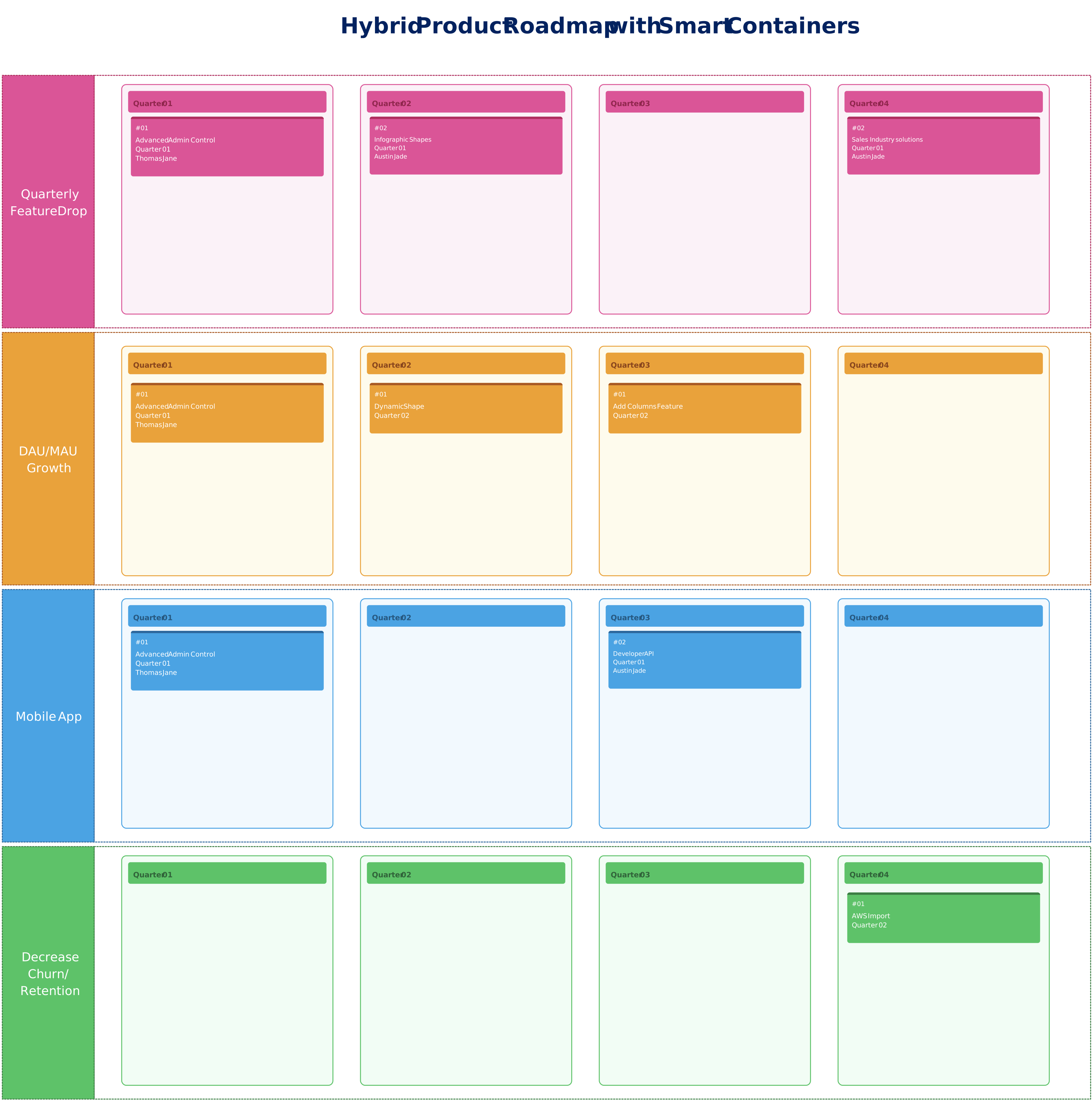
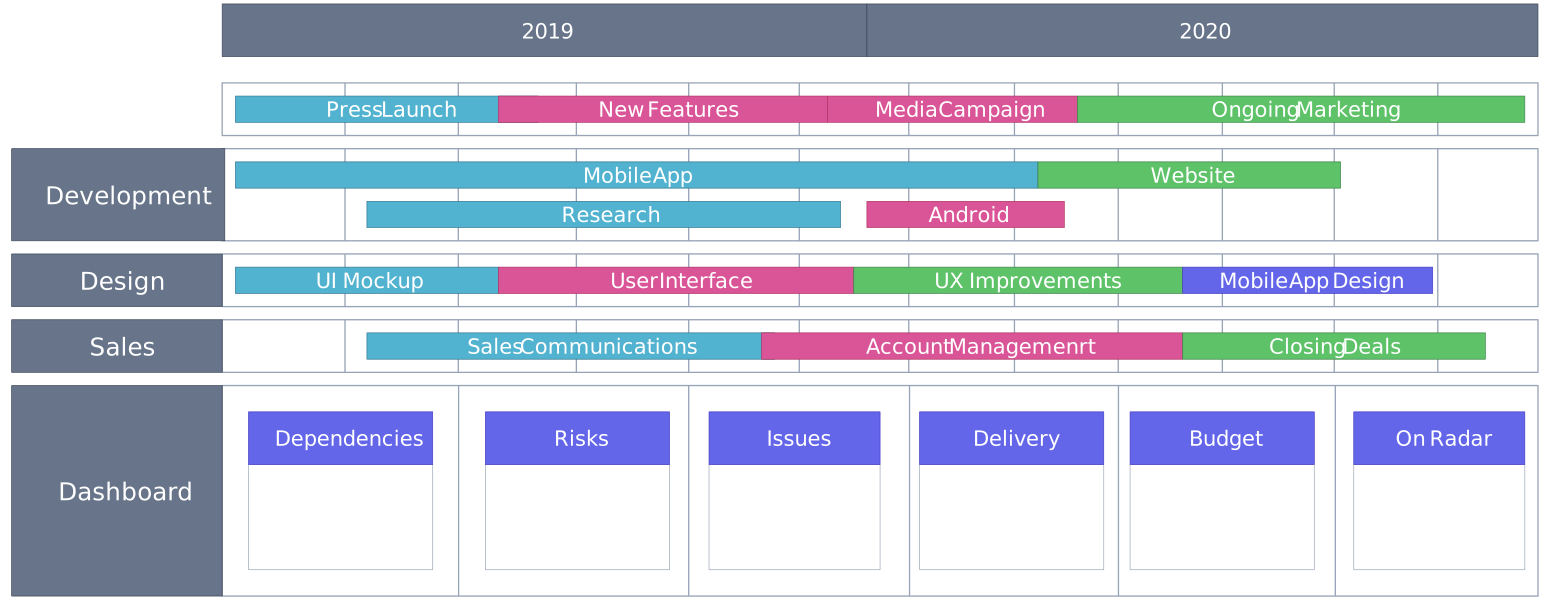
14. Portfolio roadmap
What it is
A high-level roadmap that displays multiple products, business units, or strategic initiatives in parallel. It shows how work streams relate, overlap, and compete for resources.
When to use it
- Enterprises with multiple product lines
- Startup scale-ups balancing core product vs experiments
- Leadership planning at the portfolio or program level
- When investments must be prioritized across teams
How to use it
- List products or initiatives as horizontal lanes
- Map strategic themes or milestones across each lane
- Highlight dependencies, risk, and capacity at portfolio level
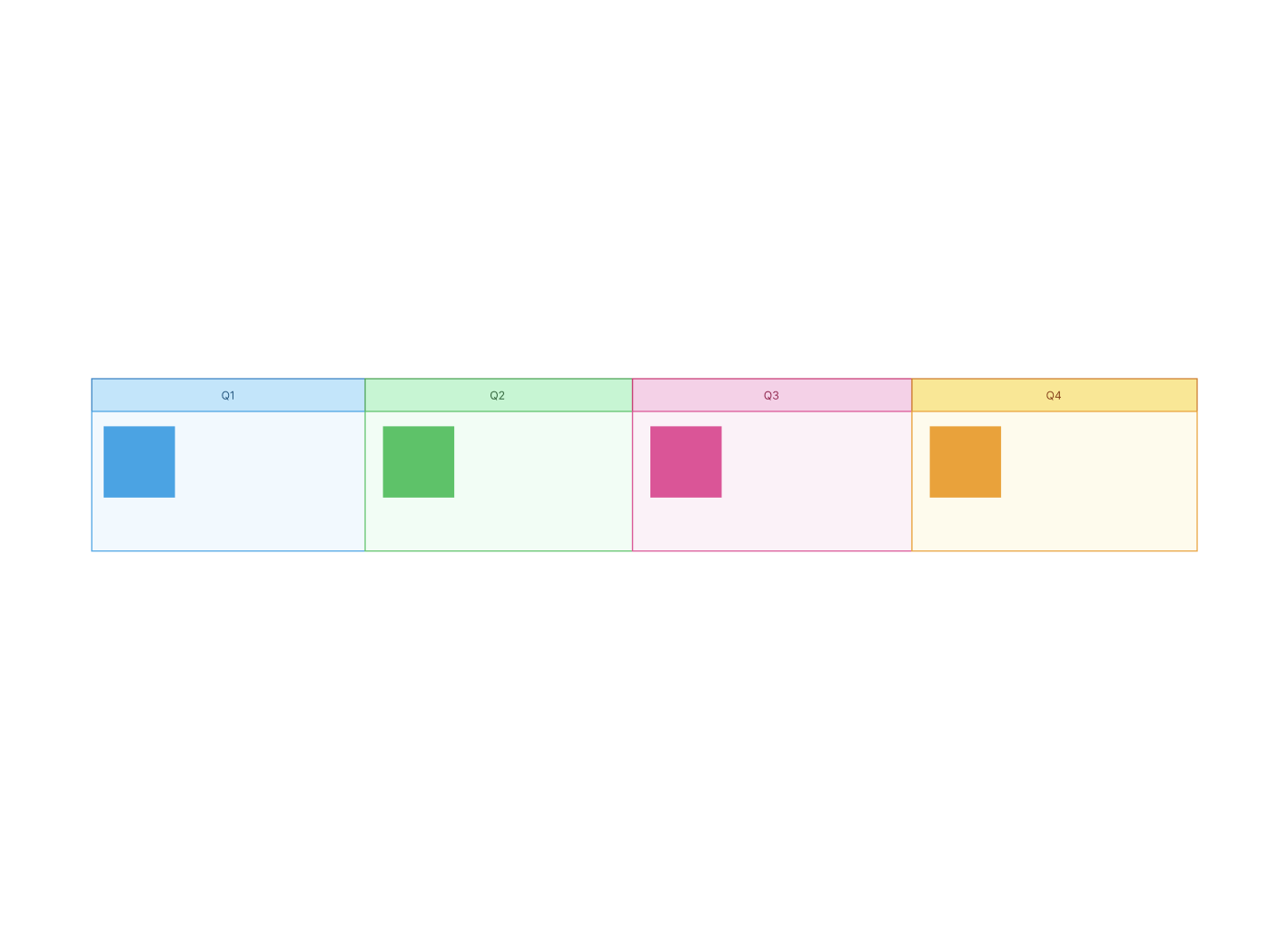
- Use time buckets (quarters) rather than specific dates
| Pros | Cons |
| Provides a strategic view across multiple products | Requires strong governance and alignment |
| Helps executives allocate resources | Easily becomes abstract or political |
| Makes dependencies visible | Not suitable for day-to-day execution |
| Supports big-picture decision making | Very hard to maintain without discipline |
Why Choose Creately to Create Your Next Product Roadmap
From planning to presentation, Creately’s free product roadmap software makes creating and sharing product roadmaps effortless and effective.
Drag-and-drop simplicity: Quickly map strategies, releases, or features without any design skills.
Pre-built templates: Start fast with ready-made roadmap examples—timeline, release, goal-oriented, and more.
AI-powered roadmap templates: Let AI generate structured product roadmaps instantly, suggesting priorities, dependencies, and initiatives to get you started.
Real-time collaboration: Work together with your team, comment on items, assign tasks, and stay aligned instantly.
Flexible views: Switch between Kanban, timeline, portfolio, or feature-based views to match your workflow.
Data-driven roadmaps: Add custom fields like owners, priorities, and metrics, keeping your roadmap actionable.
Seamless integration: Connect with tools like Jira, Slack, or GitHub to turn your roadmap into real work.
Share and present easily: Export or share live roadmaps for stakeholders without extra effort.
Using multiple types allows you to:FAQs About Product Roadmap Types
Can a product use multiple roadmap types?
How do I align multiple roadmap types?
What are the benefits of using multiple roadmap types?
Are timelines mandatory for all roadmap types?
How do roadmap types help with product strategy?
Who should be involved in creating product roadmaps?
What is the best tool for creating product roadmaps?