Once a matrix structure exists, governance determines whether it improves coordination or creates expensive ambiguity. Leaders need explicit rules for priorities, staffing, performance input, escalation, and workload review across functional and horizontal reporting lines.
This guide assumes the matrix model is already understood. It focuses on the operating rules HR and business leaders need to govern it, test it with a pilot, and review it as priorities change.
Matrix Organization Planning at a Glance
Good matrix planning follows six steps:
- Define the coordination problem the matrix must solve.
- Map vertical functions and horizontal teams.
- Clarify dual reporting and decision rights.
- Compare staffing, span, and workload implications.
- Test the model in a pilot or future-state scenario.
- Review and adjust as business priorities change.
The matrix works when leaders can explain who owns capability, who owns delivery, and how conflicts get resolved. Without that clarity, the structure becomes expensive ambiguity.
What to Include in a Matrix Planning Review
A useful matrix review should make the operating model visible.
Include:
- core functions and their people leadership responsibilities;
- products, programs, geographies, or client groups using shared talent;
- solid-line and secondary reporting relationships;
- staffing assumptions and role allocation logic;
- manager spans and team-load signals;
- decision-rights rules for priorities, staffing, performance input, and escalation;
- hiring and vacancy implications; and
- scenario options if more than one matrix design is plausible.
The span of control analysis guide is especially relevant because matrix structures can create hidden management load even when formal direct-report counts stay stable.
How to Govern a Matrix Organization
1. Define the problem the matrix must solve
Start with the coordination failure you are trying to fix. Examples include duplicated specialist hiring, competing product priorities, or regional teams waiting on centralized support.
A clear problem statement helps the team evaluate whether the matrix improves outcomes or only adds reporting complexity.
2. Map functions and horizontal work
Show which teams remain the primary capability homes and which horizontal structures need shared participation.
Typical vertical functions include:
- engineering;
- product;
- design;
- operations;
- finance; and
- HR or People teams.
Typical horizontal structures include:
- product lines;
- enterprise programs;
- strategic initiatives;
- regions;
- customer segments; or
- major accounts.
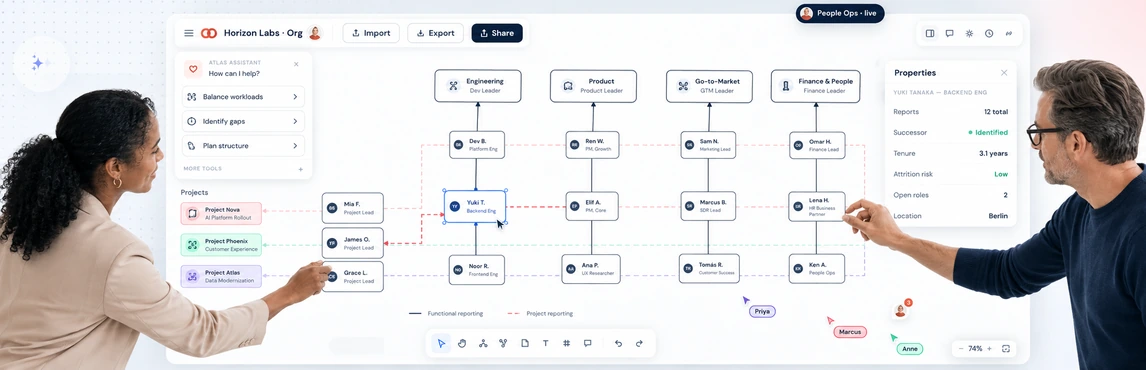
A visual model helps reviewers see where the same people or teams are likely to be pulled in several directions.
3. Clarify dual reporting and decision rights
Dual reporting is manageable only when people know what each manager actually owns.
| Decision area | Functional leader | Horizontal leader |
|---|---|---|
| Capability growth and standards | Usually primary owner | Informs needs and feedback |
| Day-to-day delivery priorities | Shared or defined by rule | Often primary owner for active initiative work |
| Staffing allocation | Shared with agreed escalation path | Shared with agreed escalation path |
| Performance contribution input | Primary review owner collects input | Provides structured delivery feedback |
| Conflict resolution | Escalates through agreed governance | Escalates through agreed governance |
The answer will vary by matrix type, but it must be stated explicitly.
4. Compare staffing and workload effects
A matrix can create invisible load because people may have only one formal manager but several meaningful sources of demand.
Review:
- formal direct-report spans;
- secondary reporting or coordination load;
- the number of initiatives drawing from the same specialist pools;
- roles likely to become chronic bottlenecks;
- vacancy and hiring pressure created by the design; and
- where additional leadership or coordination roles may be needed.
If you are also testing headcount tradeoffs, connect this work to headcount scenario planning.
5. Test the matrix before broad rollout
Instead of redesigning the whole company at once, model a future-state matrix scenario or pilot it with one business area.
Test questions include:
- Do people understand who sets priorities each week?
- Can functional and horizontal leaders resolve conflicts quickly?
- Do shared specialists become overloaded?
- Are hiring and vacancy needs becoming clearer or more confusing?
- Is the matrix improving speed, customer responsiveness, or resource allocation?
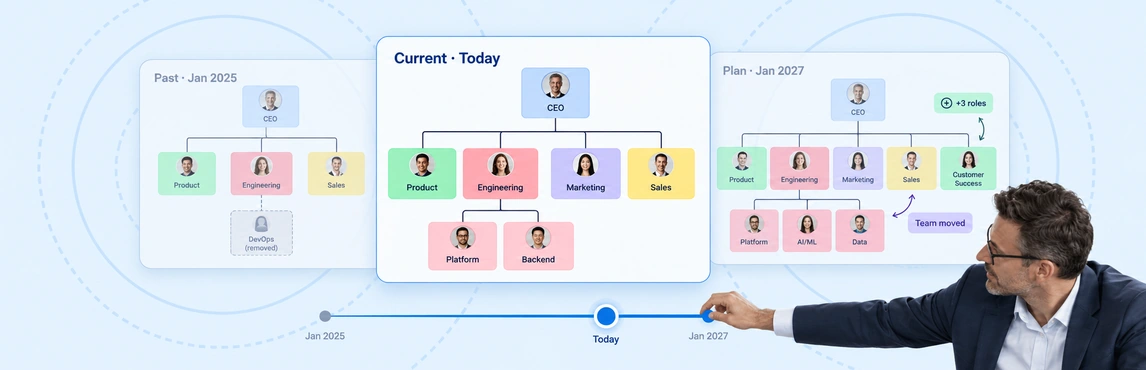
This is where scenario planning is more valuable than a static diagram. Leaders can compare a current-state structure with one or more matrix options before changing the live organization.
6. Review and adjust continuously
Matrix organizations drift quickly if priorities, products, or leaders change and the structure does not. Review the design on a regular cadence so the matrix stays purposeful.
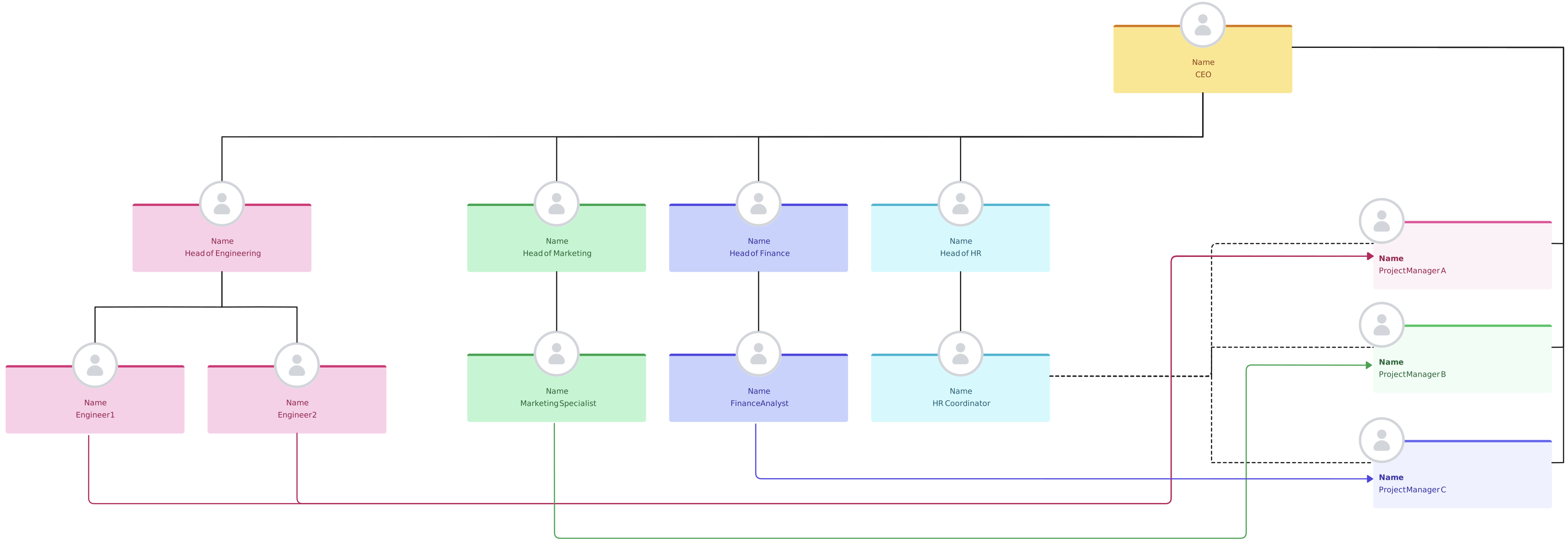
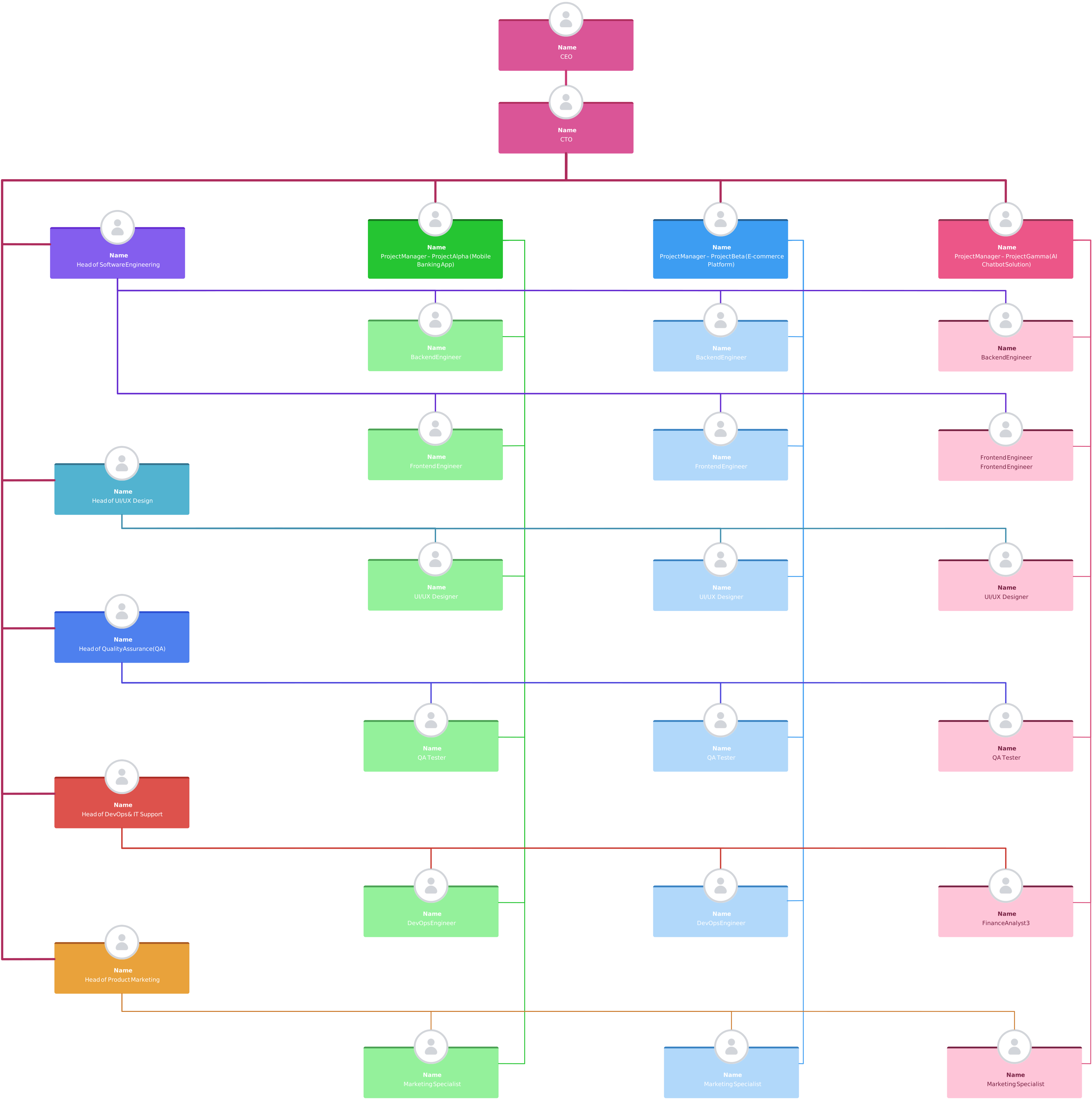
Matrix Templates for Governance Reviews
Use these templates to document reporting paths, test allocation rules, and review where shared employees may receive competing priorities.


Common Matrix Risks to Watch
Unclear accountability
If employees cannot tell who decides priorities, approves work, or owns career development, the matrix slows execution.
Hidden workload concentration
Formal spans may look healthy while a few specialists are stretched across too many initiatives.
Too many exceptions
When every team runs a different version of the matrix, the organization loses the consistency the model was supposed to create.
Reorg by dotted line only
Adding secondary relationships without changing decision rules rarely fixes the underlying coordination problem.
Where Atlas Fits in Matrix Organization Planning
Creately Atlas is designed as an always-current org-intelligence layer for HR and People leaders who need current organizational context without replacing the HRIS. In matrix planning, that positioning is useful when teams need:
- a current baseline of teams, roles, and reporting lines;
- future-state or scenario comparisons for alternative matrix designs;
- historical views for reviewing how the structure has evolved over time;
- governed collaboration across HR, functional leaders, and business stakeholders;
- field-pack style metadata for role allocation, initiative ownership, or planning notes; and
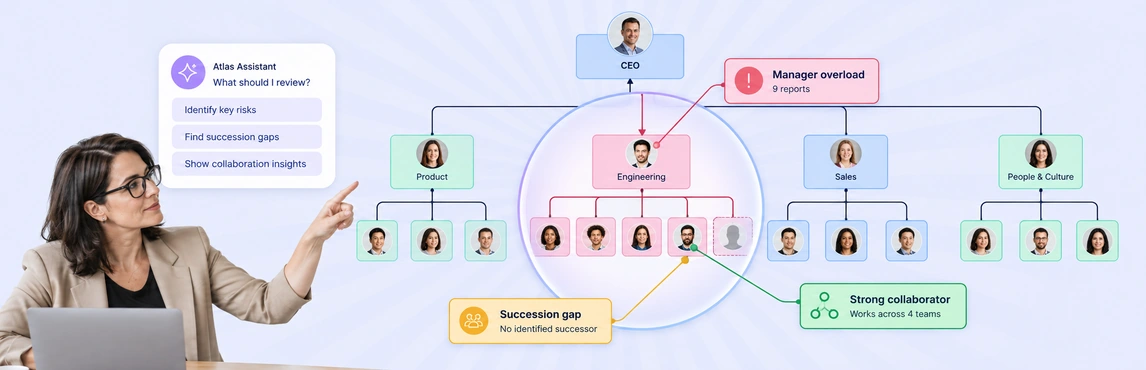
- AI-assisted org analysis to surface coordination hotspots, manager-load questions, or role overlaps for follow-up review.
Atlas should complement the HRIS rather than replace it. Use the system of record for approved people and position data, and use the planning layer to compare matrix options and governance choices.
Best Practices for Stronger Matrix Planning
Make the matrix earn its complexity
Use it only when it clearly improves coordination, resource sharing, or responsiveness.
Define escalation rules up front
Employees should know how conflicts get resolved before the first conflict happens.
Monitor both formal and practical load
Secondary reporting, program work, and specialist demand can matter as much as direct-report counts.
Pilot before scaling
A smaller pilot or scenario comparison reveals failure points earlier and with less disruption.
Keep reviewing the structure
A matrix should evolve as products, customers, and strategic priorities change.