When launching a product there aren’t guaranteed methods for success, especially since every product is unique and every product has a different audience of its own. But having a well-crafted plan to launch a product can help avoid failure.
In this guide to launching a new product, we will discuss how you can go about launching a new product and most importantly what visual tools you can use when developing and planning a product launch.
- How to Launch a New Product: Key Steps
- Key Factors to Consider Before Launching a Product
- The Importance of Visual Collaboration when Launching a Product
- Visual Tools and Tips to Use When Developing and Planning a Product Launch
- Best Practices to Follow When Launching a Product
- When to Delay a Product Launch
How to Launch a New Product: Key Steps
- Conduct market research: Carry out market research to identify customer needs, preferences, and behavior. This will help you to figure out if there is a market for your product, how to tailor your product to the market, etc.
- Develop a unique value proposition and positioning strategy: Define the unique value proposition of your product and how it differs from your competitors. Develop a positioning strategy that reaches out to your target audience.
- Design and develop the product: Create a prototype or minimum viable product (MVP).
- Conduct product testing and refinement: Test and refine the product based on customer feedback. This will help identify issues and refine the product based on customer needs.
- Develop a marketing plan: Determine your target audience and the most effective channels to reach them, and set a budget and timeline for the marketing campaign.
- Launch the product: Launch and monitor customer feedback and sales performance. Make adjustments as necessary.
- Continuously improve and iterate (if applicable): Gather feedback and insights to identify improvement areas or add new features. Keep it fresh and relevant to customers’ evolving needs and preferences.
Key Factors to Consider Before Launching a Product
Launching a new/revamped product requires much planning and preparation to increase the chances of success. Below are some factors to consider before launching a product.
- Identify your target audience: you must understand your target audience and their needs before launching a product. Conduct market research to determine your target audience’s preferences, pain points, and purchasing habits.
- Get to know your competition: it’s essential to know your competition and what they offer to differentiate your product.
- Figure out your product design: Your product design should be functional, aesthetically pleasing, and meet customers’ needs. Create a prototype and test it with a focus group to get feedback before launching.
- Determine the production and distribution: figure out how you will produce and distribute the product. You need to have a reliable production process in place, along with manufacturing, quality control, and shipping. Also, make sure to select the best distribution channels that will reach your target audience.
- Establish a pricing strategy: determine the price of your product based on production costs, market research, and competitor pricing. The price should be competitive while allowing you to make a profit.
- Develop marketing and promotional strategies: develop a marketing plan to create and generate interest in your product. Make sure to use various channels such as social media, a strong content marketing strategy, email marketing, and advertising to promote.
- Give attention to legal considerations: Ensure that your product complies with required regulations, standards, and intellectual property laws. Depending on the product, you may need to obtain patents, licenses, or trademarks before launching.
- Timing: the timing of your product launch can impact its success. Consider factors such as seasonality, current events, and industry trends.
Besides the above pointers, you may also want to pay attention to the budget, resources, and team needed to launch the product; customer service to address any issues or concerns; a post-launch plan that includes monitoring sales, collecting feedback, etc.; risk assessment to identify potential risks; and sustainability issues that may impact your product.
The Importance of Visual Collaboration when Launching a Product
Visual collaboration tools can be useful when launching a product as they allow teams to work together effectively and efficiently, regardless of the team’s physical location. Visual Collaboration platforms like Creately include the following tools to help as you navigate through your product launch.
- Real-time collaboration with virtual whiteboards, digital sticky notes, and project management tools that allow team members to collaborate in real-time from anywhere.
- Ability to visualize ideas, designs, and plans. This helps to identify potential issues and refine features, leading to better results.
- Team members can share ideas and concepts visually, making it easier for everyone to understand. This also helps to generate more creative and innovative ideas.
- Teams can quickly make changes and work on improvements before the launch. Team members can easily share, provide feedback and revise as necessary. Also, tools such as full version history ensure you can revert to previous iterations if required.
- Enable teams to work efficiently, leading to increased productivity. This saves time and resources.
Visual Tools and Tips to Use When Developing and Planning a Product Launch
Start with Market Research
Without proper market research, you will not be able to identify your target audience or your competitors. This will only increase the chances of a product launch failure. In market research, you will look into the following areas.
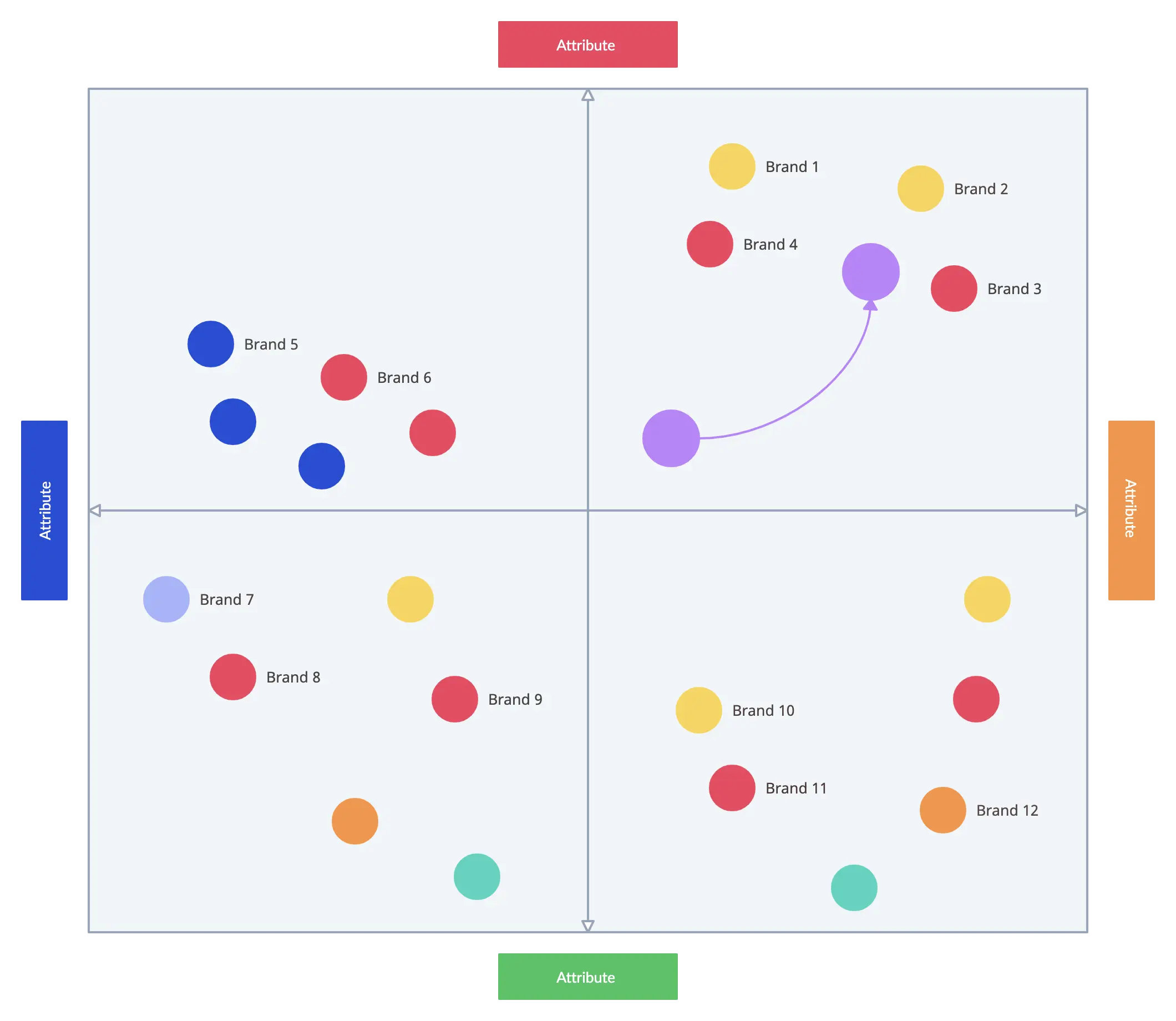
Identify Market Position
It’s important to understand how your average customer perceives the competing products/ brands in the marketplace.
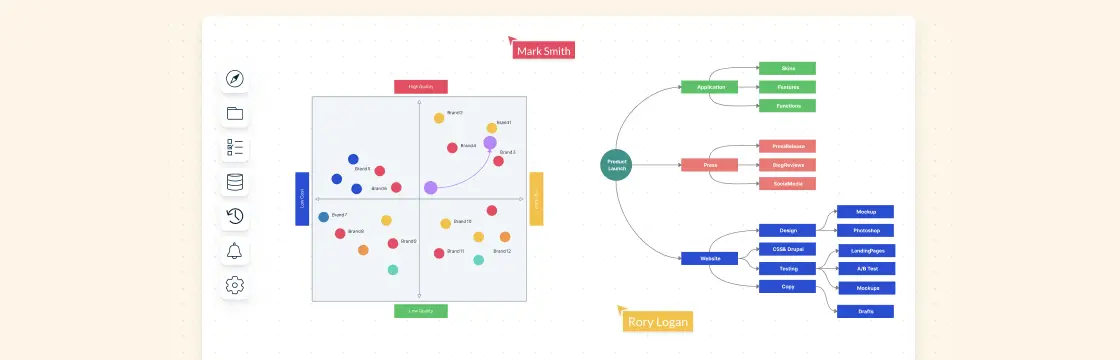
A great tool for this is the perceptual map. It helps you understand how your customer ranks you in terms of characteristics and in comparison to your competitors.
Segment Your Target Audience
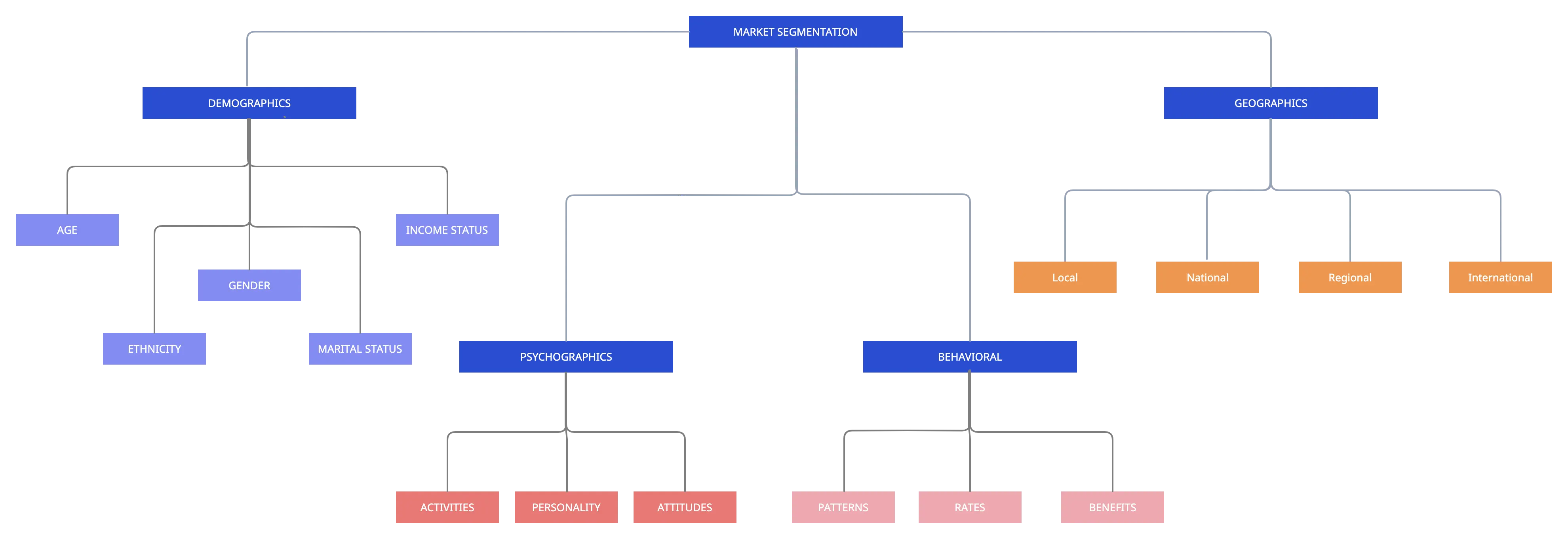
One of the important product launch steps is target audience research. How successful your product launch depends on how many people you will influence, with your promotional efforts. So get an idea of the type of people you will be targeting and how to approach them.
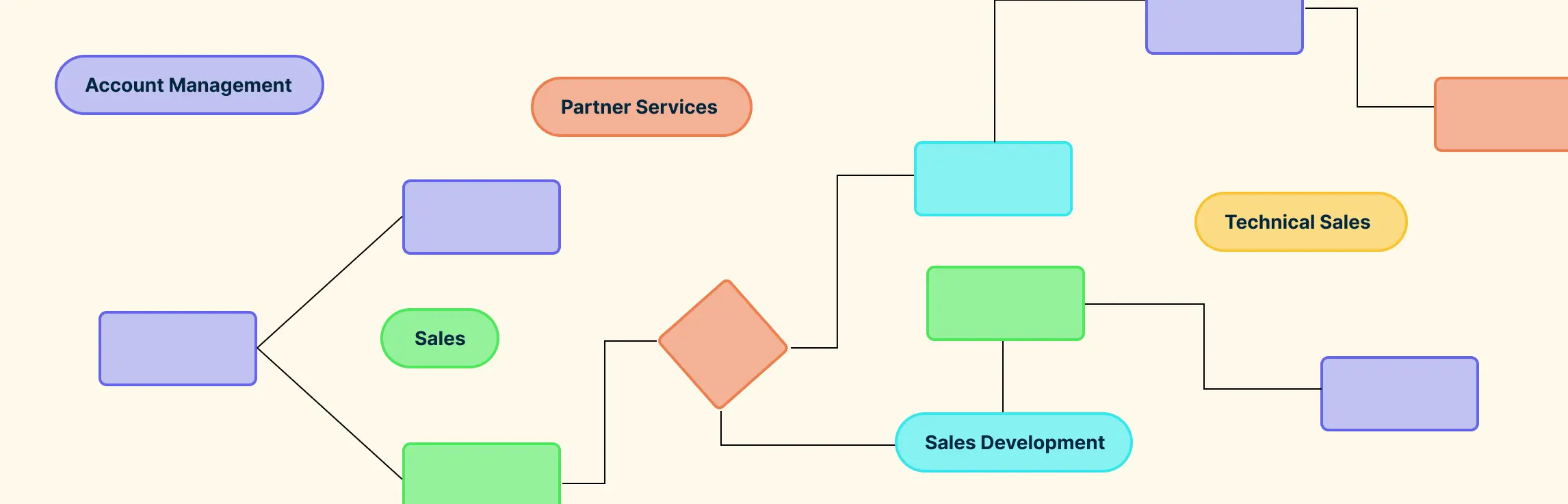
Do your customers share common characteristics? Interests? Do they belong to the same age category or come from the same geographical area? You can segment your audience based on different factors. Categorizing them using a diagram like this will make it easy to refer to.
Create Customer Personas
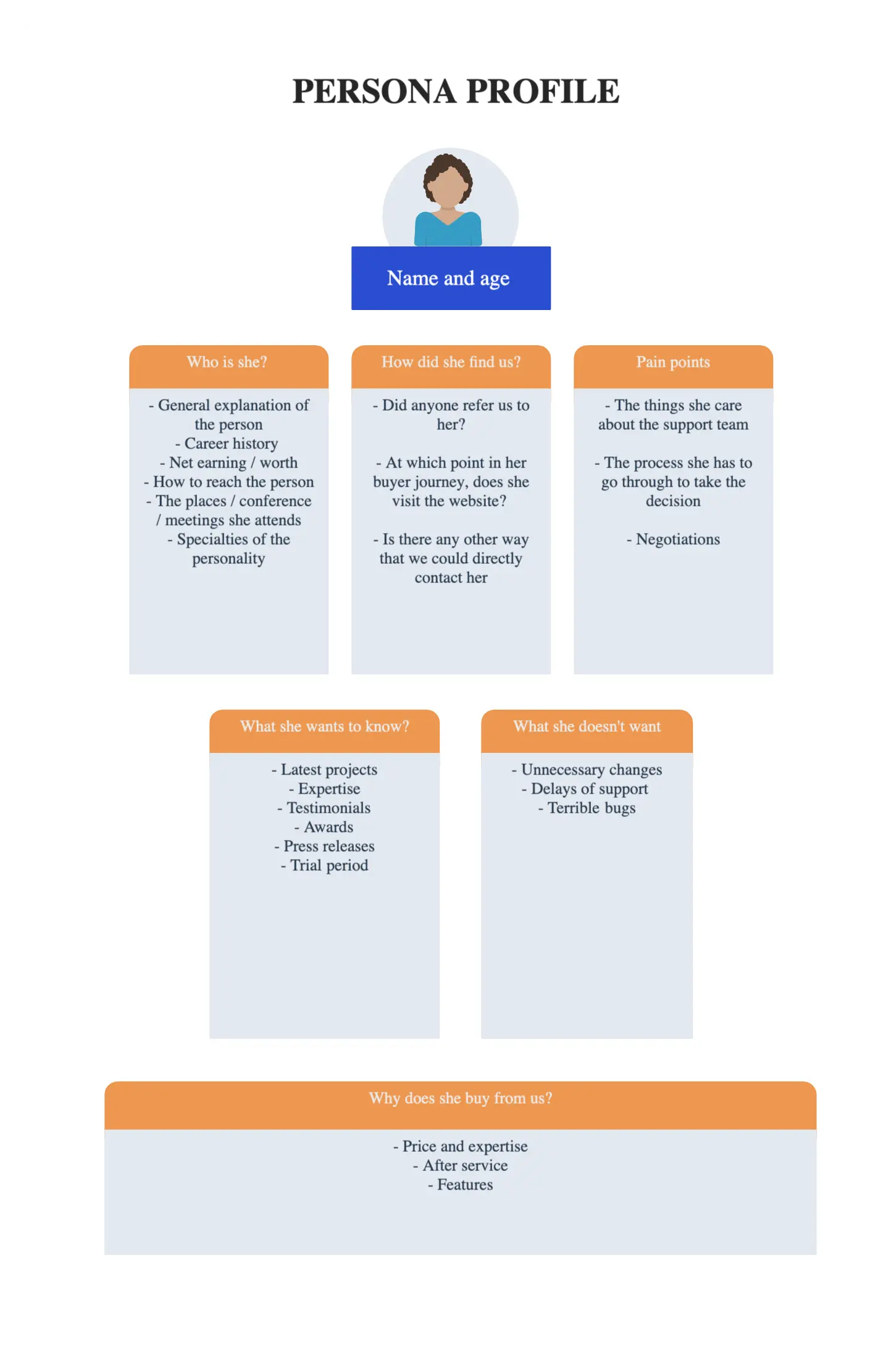
Go the extra step to create customer personas pertaining to each market segment you have identified. These will come in handy when you are creating your promotional and marketing strategies as well, as you would want to personalize the content you create to target each segment.
How to Create a Customer Persona
Step 1: Research your target audience. You can do this via phone calls, email surveys, or in-person interviews as well.
Step 2: Keep an eye out for important detail such as demographics, age, behaviors, characteristics, challenges, goals, etc.
Step 3: Create separate user personas for each segment you’ve identified.
Develop a Unique Value Proposition
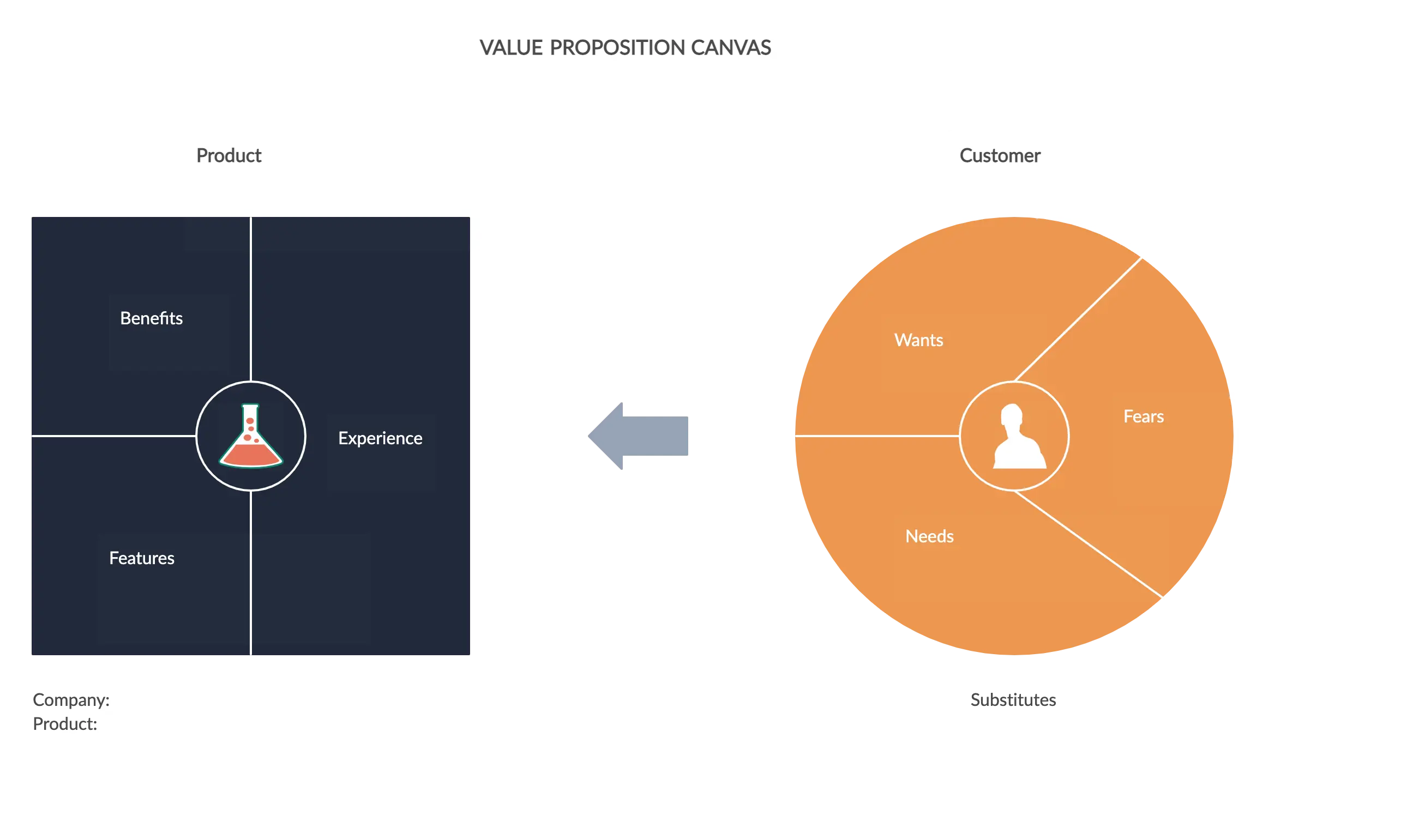
Now that you have a thorough knowledge of your competition, how you can rank better than them, your target audience, and their wants and needs, it’s time to combine them and create an effective value proposition.
How to Create a Value Proposition
Step 1: Identify the benefits your product offers and figure out how they can help the customers.
Step 2: Identify how your product is different from that of your competitors. Does it have unique features? Or is it the price range?
Step 3: What problems can your product or service solve? Your unique value proposition should show how your product can help solve these problems faced by your customers.
Step 4: Using a value proposition canvas like the one below, you can neatly organize all this data for a quick overview. It’ll help you combine these three elements and create a catchy unique value proposition.
Create a Product Development Roadmap
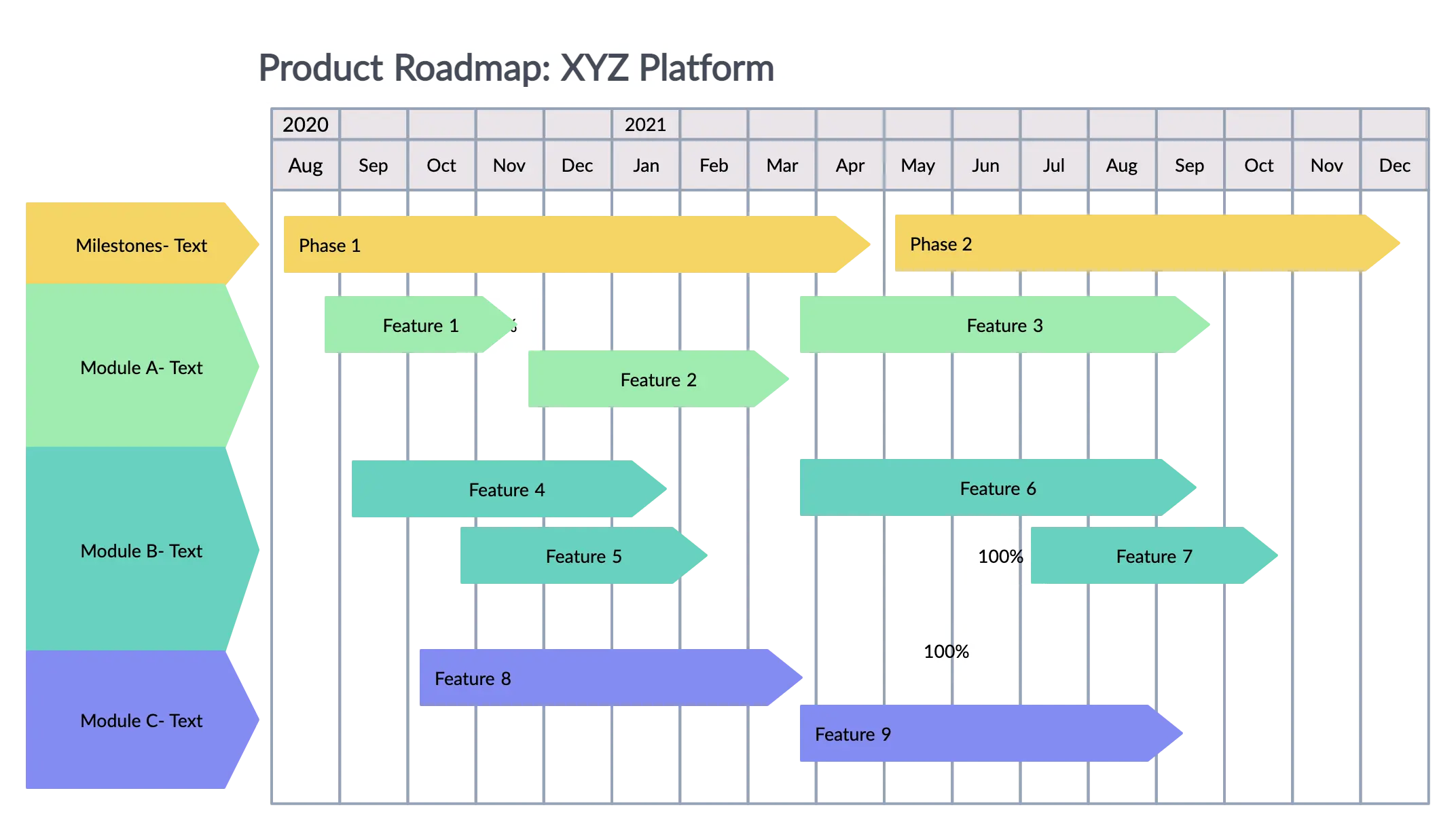
From development to the launch of the product, it takes a lot of work. Proper guidance and a streamlined process are necessary to keep everyone on track. This is where the product roadmap comes into play.
The product roadmap gives a quick overview of all aspects of the product development such as its features, timeline, resources, etc. It also helps stakeholder gain insight into how the product will develop in the months to come and track progress.
How to Create a Product Roadmap
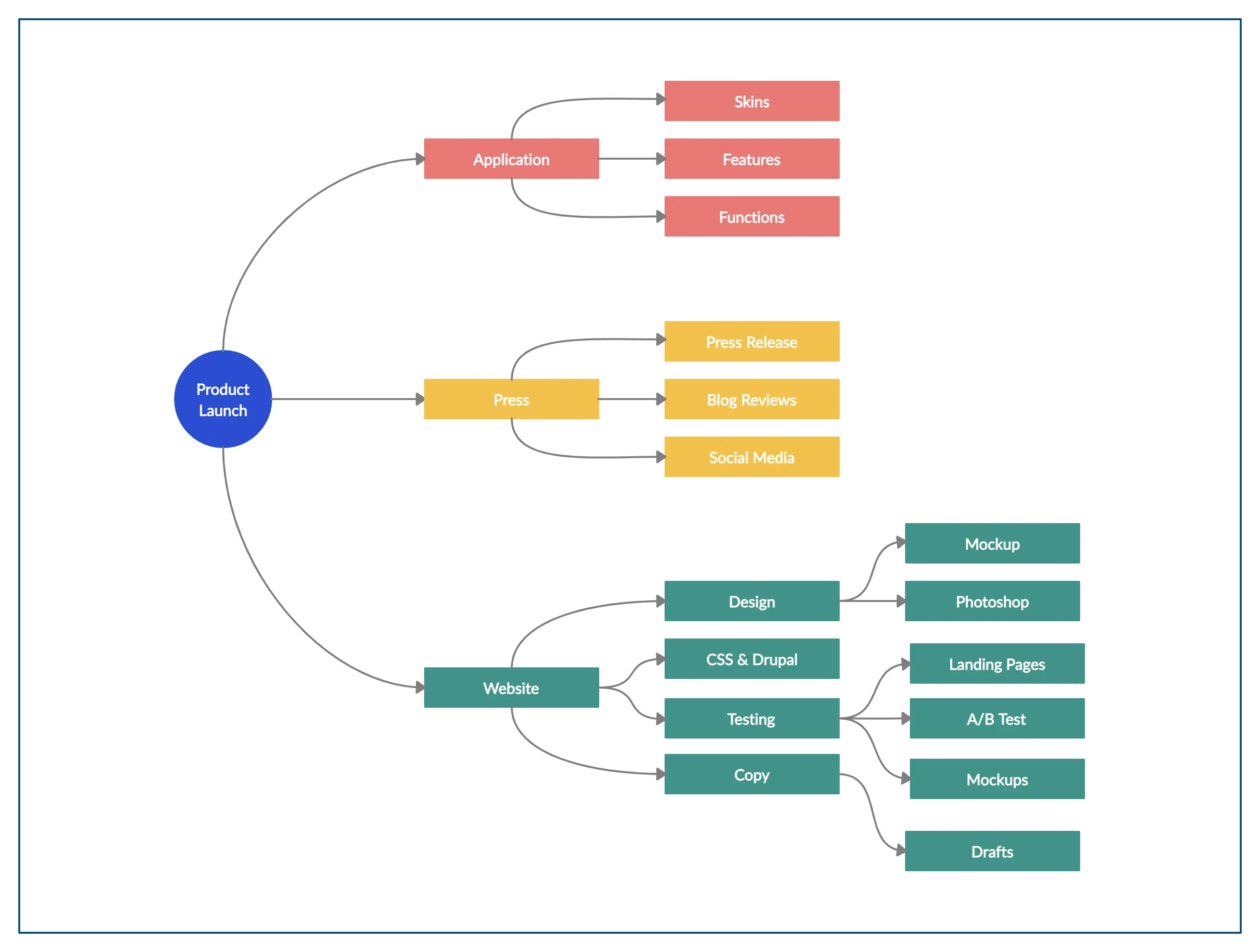
Step 1: Using a mind map you can break down complicated processes that you track in your roadmap to individual steps. This will make it easier for you to identify the tasks and allocate time.
Step 2: Assign a sensible timeframe for your initiatives. Instead of sticking to hard deadlines or specific dates, you can plot initiatives at a quarterly or monthly level.
Step 3: Alter your product roadmap to your audience. The detailed roadmap you show to your development team might not resonate with your investors. Tailor the product roadmap to show what the development means to each of them.
Keep Your Team Accountable
It’s important to make sure that everyone involved in product development and product launch projects has a well-defined goal. If they are unaware of the tasks assigned to them or the goal they are supposed to accomplish, your product roadmap could be in vain.
Map Out the Workflow for Reference
A process map or a flowchart outlining the process steps involved in the product launch project can be a useful source of reference for everyone involved. Anyone who is confused about the next phase or the step of the process can quickly refer to the process map. It can also help you with creating the product roadmap.
Release Process Workflow (Scroll on the Creately Viewer to read the diagram)
Refer to our Flowchart Tutorial and Process Mapping Guide to learn the proper way to create the workflow of your processes.
Assign Tasks to Each Individual
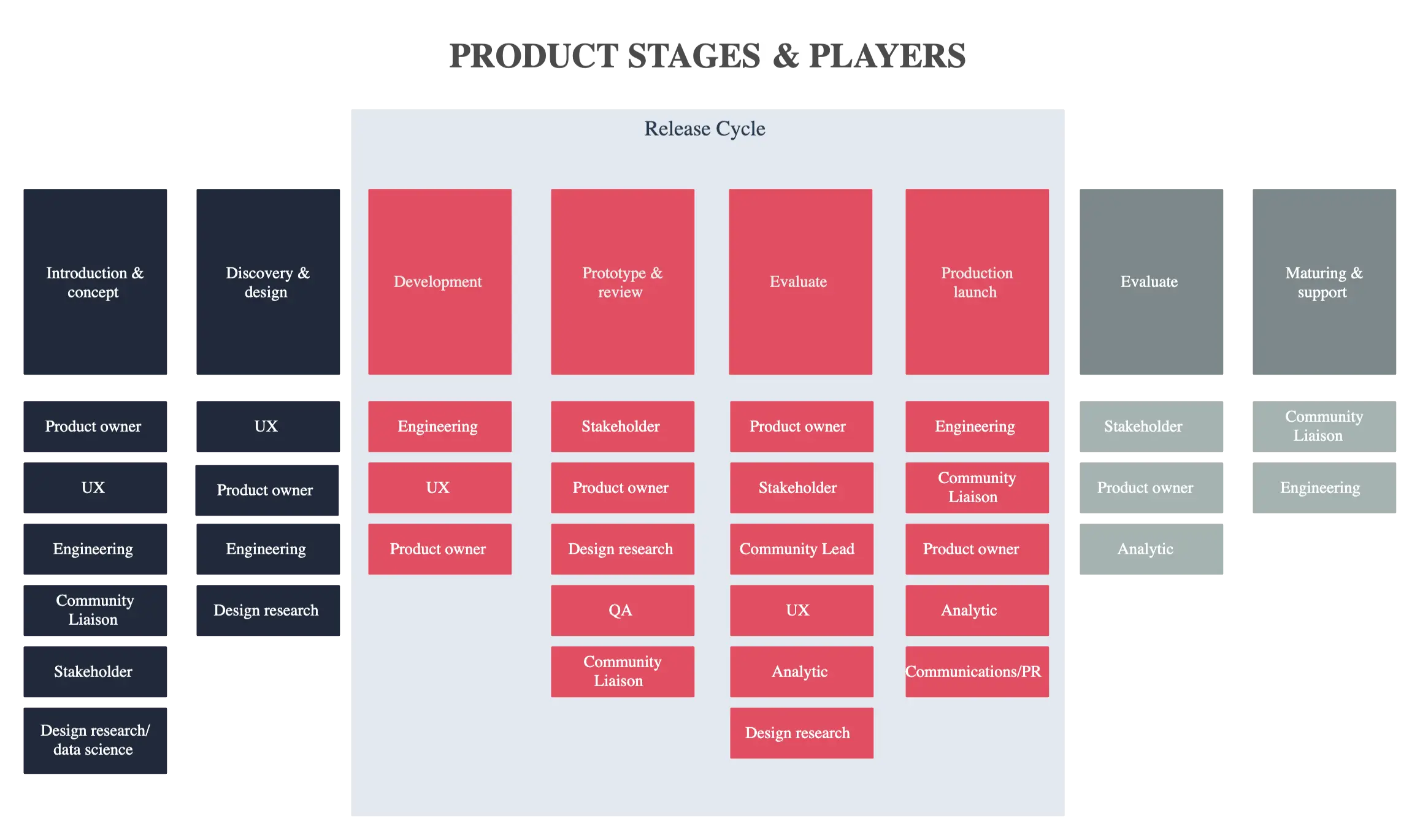
If there’s a well-defined process, it won’t create space for inefficiencies or complications. It’s important to clarify each stage of the process and the individuals responsible for each task – this will create a better understanding.
The following diagram highlights the product development stages and the key players involved. It helps clarify the tasks each individual is accountable for.
Plan Your Product Launch
From learning your target audience and your competitors to selecting the correct channels to promote your product, the product launch phase includes a lot of tasks. And it takes a lot of planning. Here’s how to simplify it.
Outline Your Product Launch Plan
As you brainstorm with your team, you might get flooded with many ideas – but you can’t go ahead with all of them. This is why you need to filter all ideas and create a plan that suits well with your target audience and market.
You can use a mind map like the one below to create an outline of your product launch plan.
Promotional Campaign Mind Map (Scroll on the Creately Viewer to read the diagram)
Create a Product Launch Schedule/ Timeline
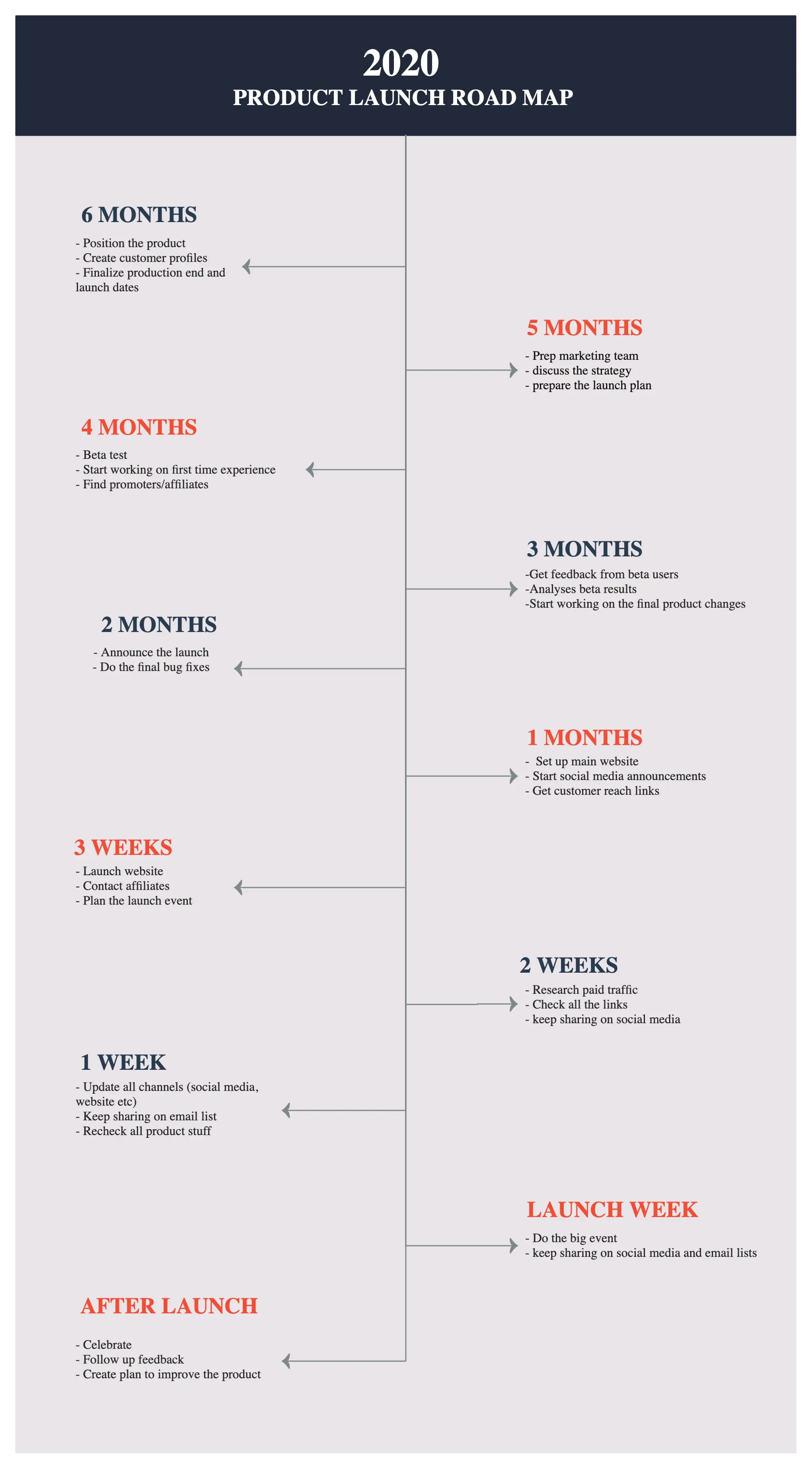
Having a product launch schedule will help you stay on track. Prior to creating your schedule, you need to set a launch date – once it’s known, you can create a timeline and plan everything that needs to be done for a successful product launch.
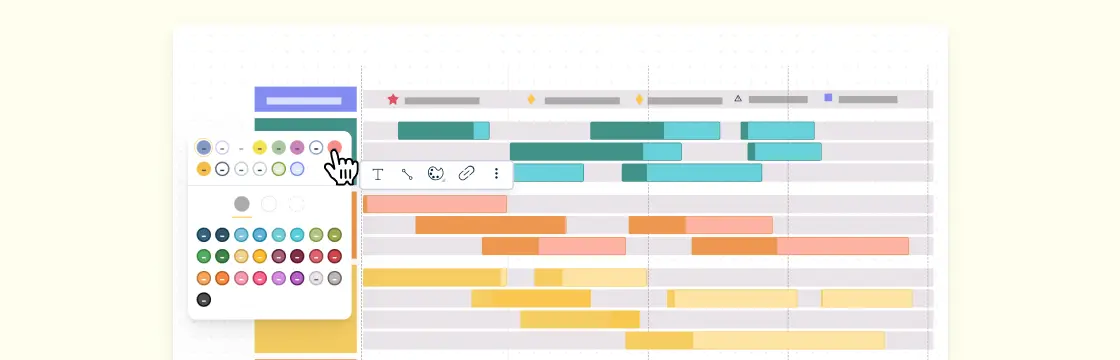
Along with the launch date, it’s important to allocate time for your pre-launch promotions as well. Use the product launch timeline below to plan your product launch.
Best Practices to Follow When Launching a Product
Launching a product can be a complex and exhaustive process. Here are a few general tips to ensure your launch proceeds without any major hiccups.
- Ensure your market research is comprehensive and covers all aspects, including customer needs, preferences, market gaps, etc.
- Differentiating is key. Therefore, ensure you have a unique value proposition and that the product messaging includes why your product differs from others.
- The marketing plan should be comprehensive, covering all effective channels.
- Set a realistic budget and timeline.
- Set pricing and distribution strategies that align with the marketing goals and target audience
- Plan for unexpected obstacles and setbacks. It’s always good to have contingency plans in place.
- Make sure to provide excellent customer service and support.
Below are a few examples of what you should know when launching a product by industry.
Launching a Product in the IT Industry
If you are part of the IT industry and plan on launching a tech or SaaS product, develop a clear value proposition for the product as part of your communication strategy. For example, when Tesla launched its Model S, the company focused on its long-range capabilities and sleek design. Also, employ press events and media coverage to create buzz and build excitement around the product. Remember that the work does not finish with the launch; therefore, make sure to use customer feedback and data to continuously improve the product to keep your customer satisfaction and engagement.
Launching a Digital Product
Creating a comprehensive marketing strategy is key to success when launching a digital project. This should include social media, influencer, email, and content marketing tactics. Include pre-launch teasers and promotions to generate excitement and build anticipation. Another important factor is to test the product thoroughly before launching. Carry out beta testing and quality assurance testing to ensure that the product is functional, user-friendly, and meets the needs of your target audience.
Launching a Product in the Fashion and Beauty Industry
Create a unique brand identity that sets your product apart from the get-go. For example, Glossier is known for natural beauty and minimalism, differentiating it from other beauty products. With the current trends, it is important to use influencer marketing and product reviews to generate interest and build trust. Almost all beauty products now use social media and influencer marketing to generate a healthy buzz. Also, don’t forget to participate in events and collaboration to build brand awareness and credibility. Many brands opt to collaborate with celebrities and appoint brand ambassadors to capture their interest.
When to Delay a Product Launch
- Issues with the product quality: if the product is not meeting quality standards or not cautioning as expected, it would be best to delay the launch until the issues are resolved. Rushing a product with quality issues can damage your reputation and harm sales.
- Competitor launching a similar product: if a competitor has recently launched a similar product, it would be better to delay the launch of your product to refine and differentiate it. This can help to avoid being overshadowed by the competition.
- Changing or volatile market conditions: if market conditions have changed since you began the development of the product, at times, it may be best to delay the launch. For example, if there has been a significant shift in consumer preference, adjust your product or marketing strategy.
- Resource availability If you are not able to allocate resources to support a successful launch, consider delaying. This may include resources related to budgets, staffing, or manufacturing capabilities.
- Legal or regulatory issues: if there are legal or regulatory issues, make sure they are resolved before the launch. Failure to comply with legal, regulatory requirements can result in fines or legal action.
- Negative feedback from beta testers or early adopters: if early feedback shows the product needs improvement, it may be necessary to delay the launch to make the required adjustments.
Add to the Guide to Launching a Product or Service
By incorporating the techniques and templates above you can simplify each product launch step while dramatically improving your new product launch strategy.
Have you got more ideas to add to the list? Go ahead and let us know in the comment section below.
Once your product starts selling, your next concern should be increasing your sales. Here’s how to optimize your sales processes to hit your targets easily.
FAQs About Launching a Product
What are the key steps involved in launching a new product
- Conducting market research
- Developing a unique value proposition and positioning strategy
- Designing and developing the product
- Conducting product testing
- Refining based on customer feedback
- Developing a marketing plan to promote the product
- Setting pricing and distribution strategies
- Launching the product and monitoring customer feedback and sales performance
- Continuously improving and iterating
How do I determine if there is a market for my new product?
What factors should I consider when setting a price for my product?
- The costs involved in developing, producing, and distributing the product
- The value proposition and unique features of the product compared to competitors
- The target customer demographic and their willingness to pay for the product
- The pricing strategies of competitors and the overall market trends
- The overall business goals and objectives, such as maximizing revenue or market share
What are some effective ways to generate buzz and interest for my new product?
- Social media and influencer marketing to reach a wider audience
- Offering early access or exclusive offers to early adopters
- Hosting events or product demos
- Launching a creative and engaging marketing campaign
- Partnering with complementary brands or businesses to expand the reach
How do I prepare for unexpected obstacles or setbacks during the product launch?
- Conduct thorough testing and quality control to identify and address any issues before the launch
- Develop contingency plans for potential problems or delays
- Communicate transparently with customers and stakeholders
- Continuously monitor and assess the performance