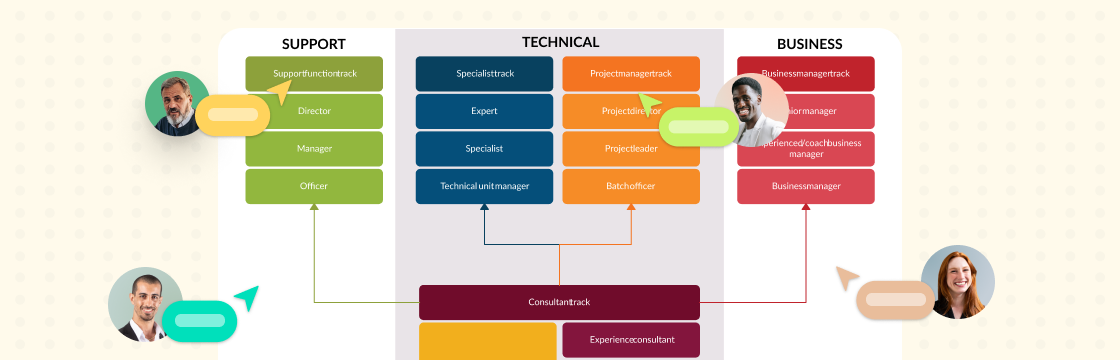
A successful career can greatly benefit from careful planning and constant adaptation. Keeping up with the fast-paced and competitive job market requires employees to continuously develop new skills and knowledge. In this guide we will explore how you can develop a strategic blueprint that guides individuals through the process of achieving their professional goals and provides structure and direction, helping you navigate the complexities of career development..
What is a Career Plan?
A career plan is a personalized roadmap, outlining the steps necessary to advance from one’s current position to the desired future role. It is a proactive and intentional approach to managing one’s career, involving a series of well-thought-out steps and milestones. A comprehensive career plan typically includes elements such as:
Self-Assessment: Identifying personal strengths, skills, interests, and values to align with potential career paths.
Goal Setting: Defining short-term and long-term career objectives, encompassing both professional and personal aspirations.
Skill Development: Identifying and acquiring the necessary skills and qualifications through education, training, and hands-on experiences.
Networking: Building and maintaining professional relationships to enhance opportunities for mentorship, collaboration, and career advancement.
Challenges and Opportunities: Anticipating and navigating challenges, while remaining open to emerging opportunities for growth and learning.
Timeframes: Establishing realistic timelines for achieving specific career milestones and adapting the plan as circumstances evolve.
Continuous Reflection: Regularly assessing progress, re-evaluating goals, and adjusting the career plan to stay aligned with evolving aspirations and market trends.
A well-crafted career plan provides individuals with a sense of direction, purpose, and control over their professional journey, helping them make informed decisions and navigate the complexities of the ever-changing job market.
The Role of a Career Plan
The role of a career plan in personal development is pivotal. It encourages self-reflection, helps identify strengths and areas for improvement, and sets a clear path for acquiring new skills and competencies. By setting specific, measurable, achievable, relevant, and time-bound (SMART) objectives, a career plan ensures that each step taken is intentional and contributes to overall career growth.
When considering long-term vs short-term career planning, it’s important to balance immediate objectives with future aspirations. Short-term plans might focus on developing specific skills or gaining experience in a particular area, while long-term plans look at the bigger picture, such as achieving a leadership position or transitioning to a new industry. Both are essential components of a comprehensive career plan template, ensuring a well-rounded approach to professional development.


Early Career: For those just starting out, templates should focus on skill development and networking opportunities. Goals might include completing specific training programs or attending industry events.
Mid-Career: At this stage, templates often shift towards advancement and specialization. Objectives could involve targeting a promotion, gaining expertise in a niche area, or expanding professional responsibilities.
Senior-Level: For seasoned professionals, career plan templates might center on leadership roles, mentoring others, or even planning for retirement. The emphasis is on legacy-building and strategic influence within the industry.
By utilizing a career plan template from Creately, you can visually map out these stages, ensuring that your career trajectory is not only planned but also adaptable. With features like real-time collaboration and an infinite canvas, you can easily share your evolving career plan with mentors or team members, and drag and drop tasks to adjust your path as needed. Remember, the best career plan is one that grows with you
Step-by-Step Guide to Creating Your Career Plan
A useful career plan connects a role you want with the skills, experience, and actions needed to get there. Start with one realistic next step; you can revise the plan as your interests or opportunities change.
- Assess where you are now. List your strengths, interests, experience, and the work you want to do more of. Ask a colleague or mentor for feedback if you need another perspective.
- Choose a direction. Name a target role or outcome and a timeframe. For example, “move from operations coordinator to project coordinator within a year” is easier to plan for than “grow my career.”
- Research the requirements. Compare your current skills with job descriptions, conversations with people in the role, and any qualifications your organization expects. Note the gaps you can address through work experience, training, or mentoring.
- Set milestones. Work backward from the goal. Decide what you will complete in the next three, six, and twelve months, and how you will know each milestone is met. A career pathway template can show how these steps connect.

- Turn milestones into actions. Give each action a deadline, a measure of progress, and any support you need. A career action plan template helps you keep those details together.

- Review and adjust. Check progress every quarter. Record what you completed, what got in the way, and whether the target role still fits. Change your next actions when circumstances change.
Career Plan Example: Moving into Project Coordination
An operations coordinator wants to move into a project coordinator role within twelve months. Their current strengths are scheduling and communicating with stakeholders; their gaps are tracking project risks and reporting progress.
| When | Action and milestone | Evidence of progress |
|---|---|---|
| Months 1–3 | Shadow a project coordinator and help maintain one project schedule. | A completed schedule and feedback from the project lead. |
| Months 4–6 | Take responsibility for a small project’s status updates and risk log. | Regular updates shared with the team and risks followed through. |
| Months 7–12 | Coordinate a small project from kickoff to handoff. | A completed project, documented results, and feedback on readiness for the role. |
At each quarterly review, they can update the actions and dates based on the work available. The example shows how a goal becomes a plan with visible evidence, rather than a fixed promise of promotion.
Choosing the Right Career Plan Template for Your Needs
Choosing the right career plan template is crucial for mapping out your professional journey effectively. Here are some factors to consider when selecting a template that best fits your needs:

Customization: A one-size-fits-all approach rarely works in career planning. Look for templates that allow you to tailor sections to your specific goals, skills, and experiences. Customization is key to creating a plan that truly reflects your unique career path.
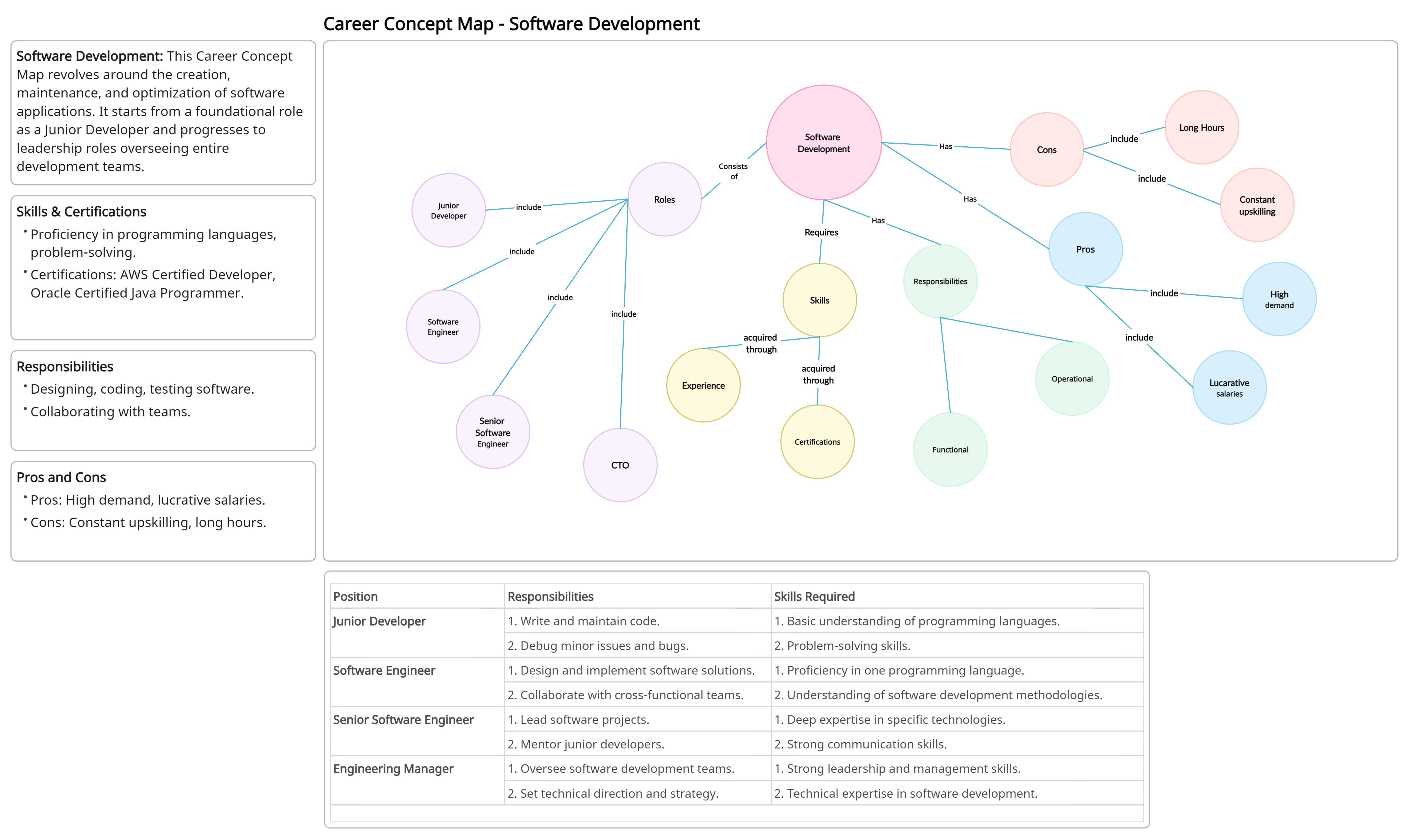
Compatibility with Your Industry: Different industries may require different focus areas. A career plan template for someone in tech might emphasize skill development in emerging technologies, whereas one for the creative industry might focus more on project portfolios.
For a role-specific example, see our HR career path guide for common roles, career tracks, and skills in human resources.
Ease of Use: The best career plan templates are intuitive and user-friendly. They should help you organize your thoughts without adding complexity to the planning process.
Visual Elements: For technically savvy product managers, visual elements such as charts and graphs can be particularly helpful in tracking progress and setting milestones. Creately’s visual collaboration features, like the infinite canvas and drag-and-drop tasks, make it an excellent tool for creating a dynamic and interactive career plan.
Remember, the goal is to find a career plan template that not only guides you but also inspires you to achieve your career aspirations. With the right template, you can chart a clear course for your professional growth.
Key Features of an Effective Career Map Template
A good career map template is more than just a static document; it’s a dynamic tool that evolves with your professional journey. Here are the essential components that make a career map template truly effective:
Flexibility: Your career is not set in stone, and neither should your career plan be. A high-quality template allows for adjustments as your goals and circumstances change.
Scalability: Whether you’re charting a path for the next year or the next decade, a good template scales with your ambitions, accommodating both short-term objectives and long-term aspirations.
Visual Elements: A picture is worth a thousand words, especially when it comes to planning. Incorporating visual elements like graphs, timelines, and color-coded sections can make your career plan more accessible and easier to digest at a glance.
Creately’s visual collaboration and diagramming software exemplifies these qualities, offering real-time collaboration and an infinite canvas that adapts to your career’s growth. You can easily modify your career plan, ensuring that your template is always up-to-date and reflective of your current goals.
Important Elements to Include in Your Career Plan
Crafting a comprehensive career plan is a strategic move for any ambitious professional. To ensure your career trajectory is not only aspirational but also achievable, consider these core elements:
Milestones and KPIs: Establish clear milestones to mark significant achievements and set Key Performance Indicators (KPIs) to measure progress. This could include targets like completing specific certifications or reaching a certain leadership level by a particular date.
Personal Strengths: Reflect on your unique skills and how they can be leveraged in your career. Are you a natural leader, a creative thinker, or a tech-savvy innovator? Recognizing and integrating your strengths into your career plan will guide you towards roles where you can excel.
Market Trends: Stay informed about industry trends and how they might impact your career. For instance, if you’re in tech, understanding the shift towards artificial intelligence could open up new career opportunities.
Your career is more than just a job; it’s an ongoing adventure shaped by your choices and the unexpected detours aren’t. A career plan is there to guide you through the bumps, turns, and scenic routes of your professional life. So, choose your path, adjust as needed, and let your career be a story of purpose, growth, and success. Happy crafting!