What is a Balanced Scorecard Strategy?
A balanced scorecard helps a leadership team test whether its strategy is working before financial results tell the whole story. It connects objectives, measures, targets, and initiatives across four perspectives. Kaplan and Norton introduced the framework to complement financial measures with customer, internal process, and learning measures (their explanation).
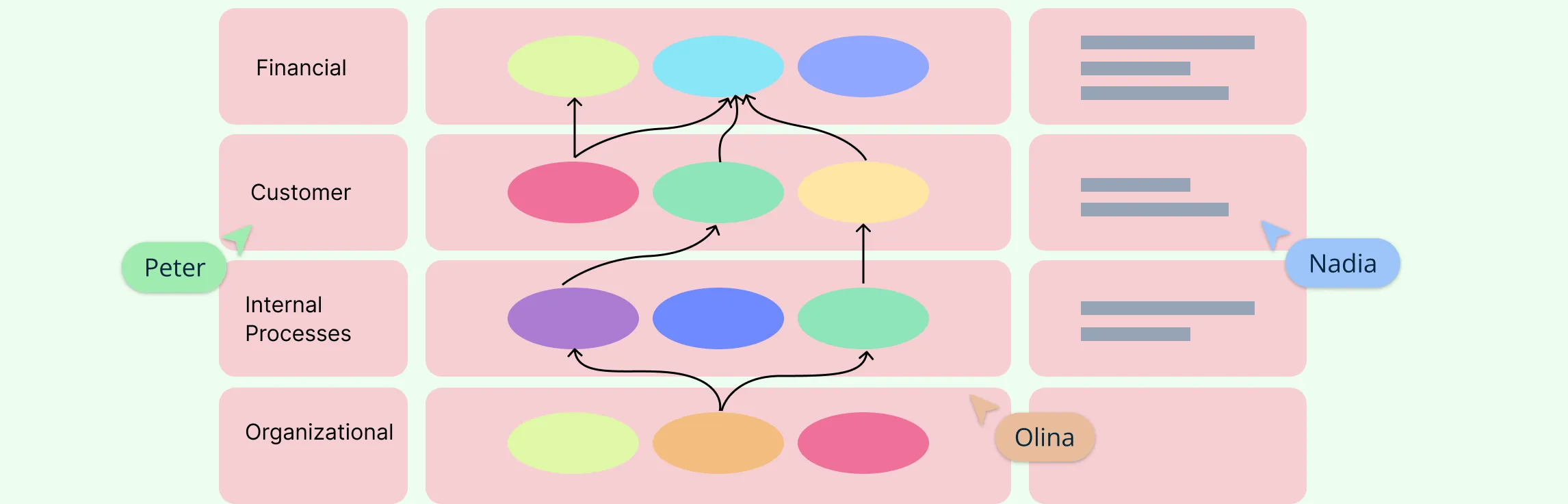
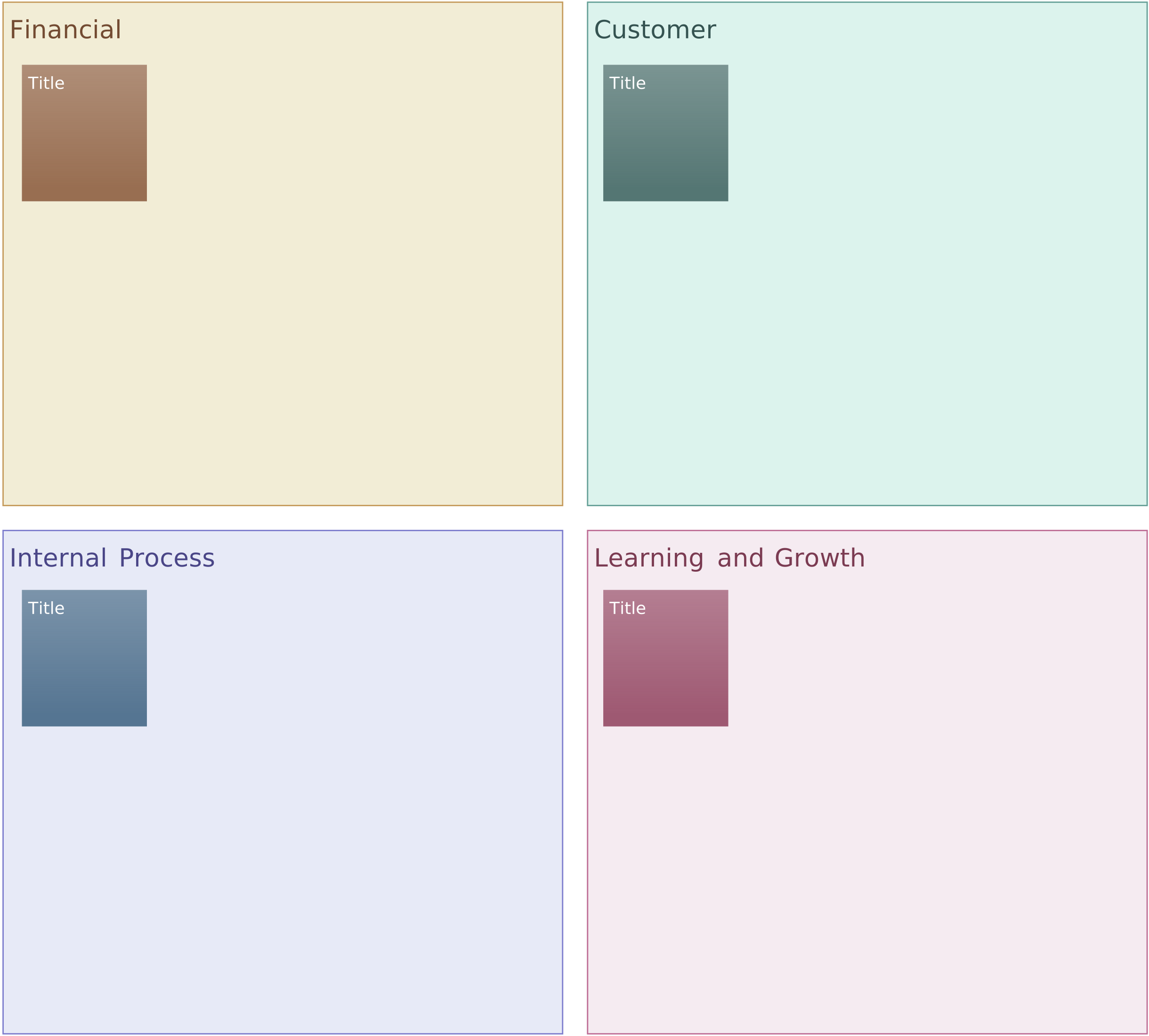
- Financial Perspective: Are the results supporting the strategy? Examples include revenue from returning customers and operating margin.
- Customer Perspective: Are customers getting the value promised? Examples include retention, satisfaction, and repeat purchase.
- Internal Process Perspective: Which processes must improve to deliver that value? Examples include order accuracy and cycle time.
- Learning and Growth Perspective: What capabilities will sustain the improvement? Examples include skills, training, and access to useful information.
The scorecard works best when each measure has an owner and a decision attached to it. The following illustrative example shows how a retailer might connect the four perspectives over a 12-month plan. These figures are fictional, not results from an actual business.
| Perspective | Objective | KPI | Current → 12-month target | Initiative | Owner |
|---|---|---|---|---|---|
| Learning and growth | Improve fulfillment skills | Staff completing quality-check training | 60% → 90% | Run monthly training and coaching | People lead |
| Internal process | Reduce order mistakes | Orders with a fulfillment error | 4% → 2% | Add a pick-and-pack check | Operations lead |
| Customer | Earn more repeat purchases | Customers buying again within 90 days | 24% → 30% | Improve post-purchase support | Customer experience lead |
| Financial | Grow revenue from returning customers | Annual repeat-customer revenue | $1.2m → $1.5m | Prioritize retention investments | Commercial lead |
The proposed logic runs from better-trained staff to fewer errors, a better customer experience, and stronger repeat revenue. A strategy map makes those assumed connections visible; the scorecard shows whether the measures move as expected. For the full build sequence, see how to create a balanced scorecard.


Key Benefits of Implementing a Balanced Scorecard Framework
Strategic clarity and alignment: Teams can see which objective their work supports and which measure will show progress.
Measurable execution: A baseline, target, owner, and initiative turn a broad ambition into a decision the team can revisit.
A wider view of performance: Customer and process measures can reveal a problem before it appears in revenue or margin.
Better decisions: A missed measure prompts a useful question: is the initiative failing, is the target unrealistic, or has the strategy changed?
Regular adjustment: Teams can change an initiative or measure when evidence shows it no longer serves the objective.
When to Utilize a Balanced Scorecard Methodology
The framework is most useful when several teams need to pursue one strategy and agree on what progress looks like.
Strategic planning and goal setting: Use it to turn a few priorities into objectives and measures across the four perspectives.
Aligning departments: Show how a process improvement or capability investment contributes to customer and financial outcomes.
Managing performance: Give each KPI a definition, data source, baseline, target, and owner so review meetings focus on decisions rather than competing numbers.
Learning from results: Use a regular review to change an initiative when the measure stays off target. A strategy map and scorecard can show whether the assumptions behind the plan still hold.

Real-World Examples of the BSC Strategy in Action
Tesco
Tesco described its Steering Wheel as a balanced scorecard that linked business plans to targets for customers, operations, people, and finance. Its 2003 annual report says the board reviewed progress quarterly; a later report shows that Tesco added community as a fifth segment. The useful lesson is that a scorecard can adapt its perspectives to a company’s strategy while keeping targets visible at different levels of the business. See Tesco’s 2003 annual report and 2010 corporate responsibility review.
Hilton Hotels
Hilton Hotels Corporation used a balanced scorecard to combine financial and competitive measures with customer satisfaction and loyalty measures. Its company backgrounder describes property-specific reports and a continuous improvement process. A Balanced Scorecard Hall of Fame case study says Hilton cascaded company-level measures to regions, hotels, and departments and distributed quarterly reports. The example shows why local teams need measures they can act on, alongside company-wide goals.
Duke Children’s Hospital
Duke Children’s Hospital used a balanced scorecard as part of a wider effort to bring clinicians and administrators around shared goals. In a first-person account, its chief medical director reported that the hospital moved from an $11 million annual operating loss in 1996 to a $4 million profit in 2000, while customer satisfaction and care-process measures improved. The account also describes a pilot, organizational changes, and process redesign. Those changes matter: the result should not be credited to a scorecard alone.
Practical Tips for Balanced Scorecard Strategic Planning
Set a review rhythm: Check KPI values and initiative status monthly, then reassess objectives, targets, and assumptions quarterly. Record the decision and owner after each review. The right cadence depends on how quickly a measure changes.
Bring in the people who own the work: Ask finance, operations, customer-facing teams, and people leads to challenge proposed measures and targets. A stakeholder engagement plan can clarify who contributes and who approves changes.
Map the assumed cause and effect: Use a strategy map template to show how capability investments may improve processes, customer outcomes, and financial results. If a high-level KPI is hard to interpret, a KPI tree template can help break it into contributing measures.
Define each measure: Write down its formula, source, reporting period, baseline, target, and owner. Otherwise, teams may compare numbers that were calculated differently.
Act on a missed target: Check the source data, investigate the process, and decide whether to change the initiative, target, or objective. Keep the reason beside the scorecard so the next review can assess the decision.
Why Use Creately for Your Balanced Scorecard Development
Creately gives a team a shared place to draw the scorecard, discuss the measures, and keep the decisions that follow each review beside the plan. Start with a template, then add the objectives, owners, and current values that match your strategy.
Pre-built Templates for Balanced Scorecards
Choose a balanced scorecard template that fits the discussion: the general layout for a leadership workshop, the manufacturing example for an operations plan, or the HR example for a people strategy. Replace its sample objectives and measures with your own rather than treating the example numbers as targets.
Collaborative Canvas for Multiple Perspectives
Invite the owners of financial, customer, process, and learning measures into the same workspace. They can review the diagram together and comment on a specific objective or KPI. This makes disagreements about the measure or its target visible before the scorecard is used in a review meeting.
Centralized Workspace for Strategic Goals:
Keep the scorecard and its strategy map in the same workspace. Use notes or linked documents for the KPI definition, source, owner, and decision history so a reviewer can understand what each number means.
Real-time Tracking and Performance Measurement Tools:
Add current values, targets, and review dates to the scorecard’s cards or data fields. Use a visible status, such as on track or at risk, to direct the next discussion. Update that status after checking the source data; a visual scorecard is only as current as the figures behind it.
Integration with Existing Workflows
If the team maintains KPI data in a spreadsheet or BI report, keep a link to that source beside the measure and agree who refreshes the scorecard before each review. Creately also supports data imports and connections for some workflows; confirm the connection and refresh behavior for your setup before relying on automatic updates.
AI-Powered Balanced Scorecard
The AI Balanced Scorecard Template can provide a first draft of perspectives, objectives, KPIs, and initiatives from a strategy prompt. Review every suggestion with the measure owner, check that the KPI has a reliable source, and set targets from your own baseline before using the draft to manage performance.
Free Balanced Scorecard Templates by Creately


Helpful Resources for Making Balanced Scorecards
Find out what our Balanced Scorecard Template can do for you.
Learn how to make balanced scorecards with this step-by-step guide.
Use these professionally designed balanced scorecard templates to get started.
FAQs about the Balanced Scorecard Strategy
What are common challenges in implementing a Balanced Scorecard in strategic management?
What types of organizations use the Balanced Scorecard approach?
Who created the Balanced Scorecard and when?
What is the difference between a Balanced Scorecard and a Strategy Map?
Resources
- Kaplan, Robert S., and David P. Norton. Using the Balanced Scorecard as a Strategic Management System. Harvard Business Review.
- Tesco PLC. Annual Report and Financial Statements 2003 and Corporate Responsibility Review 2010.
- Balanced Scorecard Collaborative. Hilton Hotels Corporation: A Balanced Scorecard Hall of Fame Profile.
- Meliones, Jon. Saving Money, Saving Lives. Harvard Business Review, 2000.