Visual brainstorming techniques use maps, notes, diagrams, and other spatial formats to help teams generate and connect ideas. This guide covers 13 methods, including mind mapping, brainwriting, reverse brainstorming, and affinity mapping, so you can choose a format for your goal.
If a product team asks how to reduce first-week user drop-off, starting with open discussion may produce the same familiar answers. A short brainwriting round gives everyone time to contribute; a mind map reveals where users get stuck; an affinity diagram groups the suggestions before anyone chooses what to build. Use a different method when you need a different kind of answer.
13 Brainstorming Techniques to Generate Better Ideas Faster
The table highlights some of the 13 numbered techniques, a bonus prompt set, and a decision tool to use afterward.
| Method | Best used when | What the team produces |
|---|---|---|
| Brainwriting | A few voices dominate discussion, or the group needs independent ideas | A pool of written suggestions that others can build on |
| Mind mapping | The problem has several connected parts | Branches that show themes, gaps, and relationships |
| SCAMPER (bonus) | An existing product, service, or process needs fresh options | Changes prompted by seven specific questions |
| Round robin | Everyone needs an equal turn to contribute | One idea per person per round |
| Affinity mapping | The team has many unsorted notes or research observations | Named clusters of related ideas |
| Decision matrix (follow-up) | The group has shortlisted options and needs to choose | A comparison against agreed criteria |
Brainwriting, mind mapping, SCAMPER, and round robin help generate options. Affinity mapping organizes them. A decision matrix helps select among them after the creative round. Keep evaluation out of the first pass so the team has enough alternatives to compare.
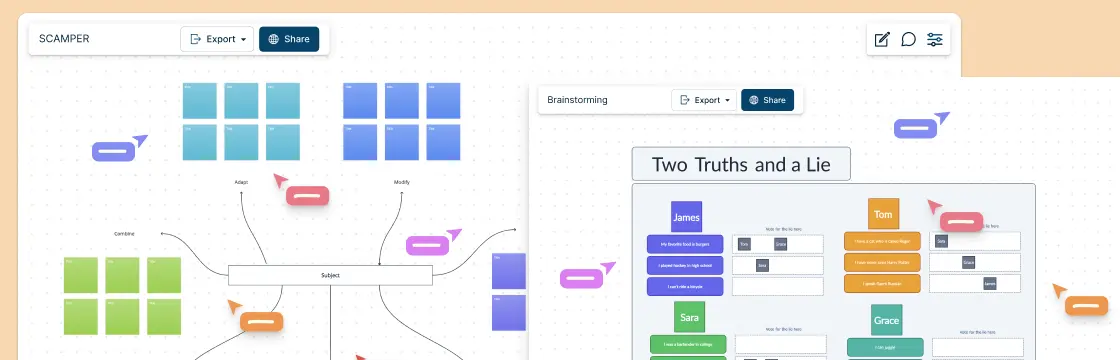
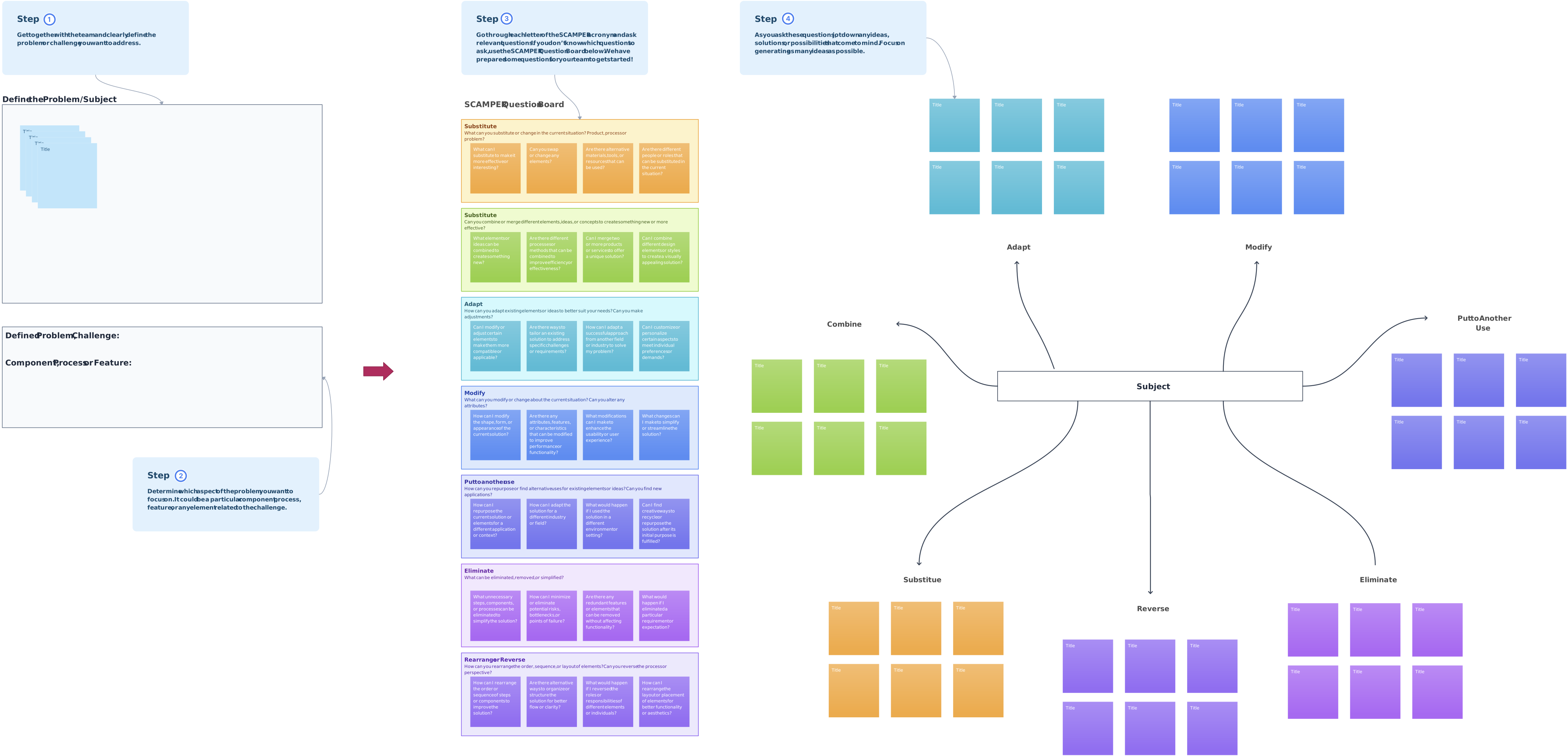
As a bonus beyond the 13 numbered methods, try SCAMPER. Take an existing experience and ask what to Substitute, Combine, Adapt, Modify, Put to another use, Eliminate, or Reverse. On the onboarding problem, the team might eliminate a mandatory setup step, combine the welcome email with a first-task checklist, or reverse the sequence by letting people try a sample workspace before creating their own. Write one possibility under each prompt before judging feasibility. Creately’s SCAMPER examples and templates provide a space for each prompt; the brainstorming guide covers the wider workshop process.

- 1. Brainwriting
- 2. 5 Whys Analysis
- 3. Starbursting
- 4. Mind mapping
- 5. Affinity Diagram
- 6. Rolestorming
- 7. Gap Filling
- 8. Brain-Netting
- 9. Round Robin Brainstorming
- 10. Rapid Ideation
- 11. Reverse Brainstorming
- 12. Stepladder Brainstorming
- 13. SWOT Analysis
- What are Your Favorite Brainstorming Techniques?
1. Brainwriting
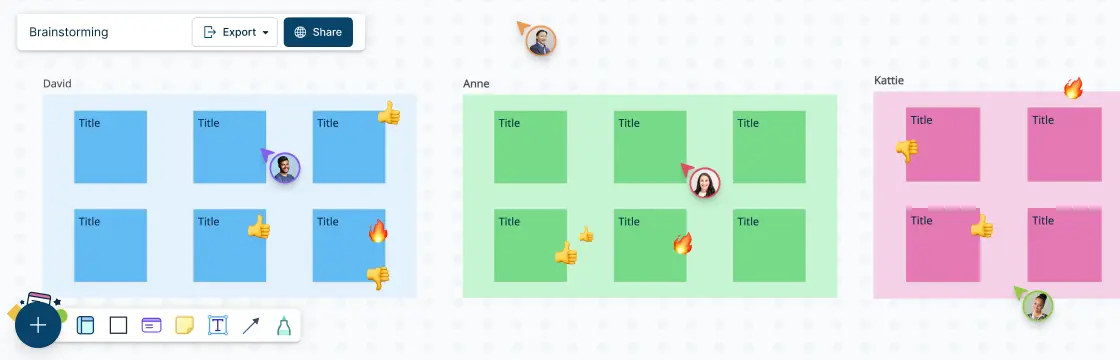
Brainwriting gives each person quiet time to think before the group discusses ideas. It works well when people need space to contribute without being interrupted or influenced by the first suggestion.
- Write a specific prompt, such as “How could we help a new user complete their first task?”
- Give each participant a few minutes to write three ideas in their own area of the brainwriting template.
- Rotate the ideas. Ask the next person to add a variation or build on one suggestion, then repeat once or twice.
- Read the full set together before grouping or evaluating it.
For the onboarding example, one person might suggest a guided first task; the next could add an optional sample project. Both ideas remain visible for the next stage.
2. 5 Whys Analysis
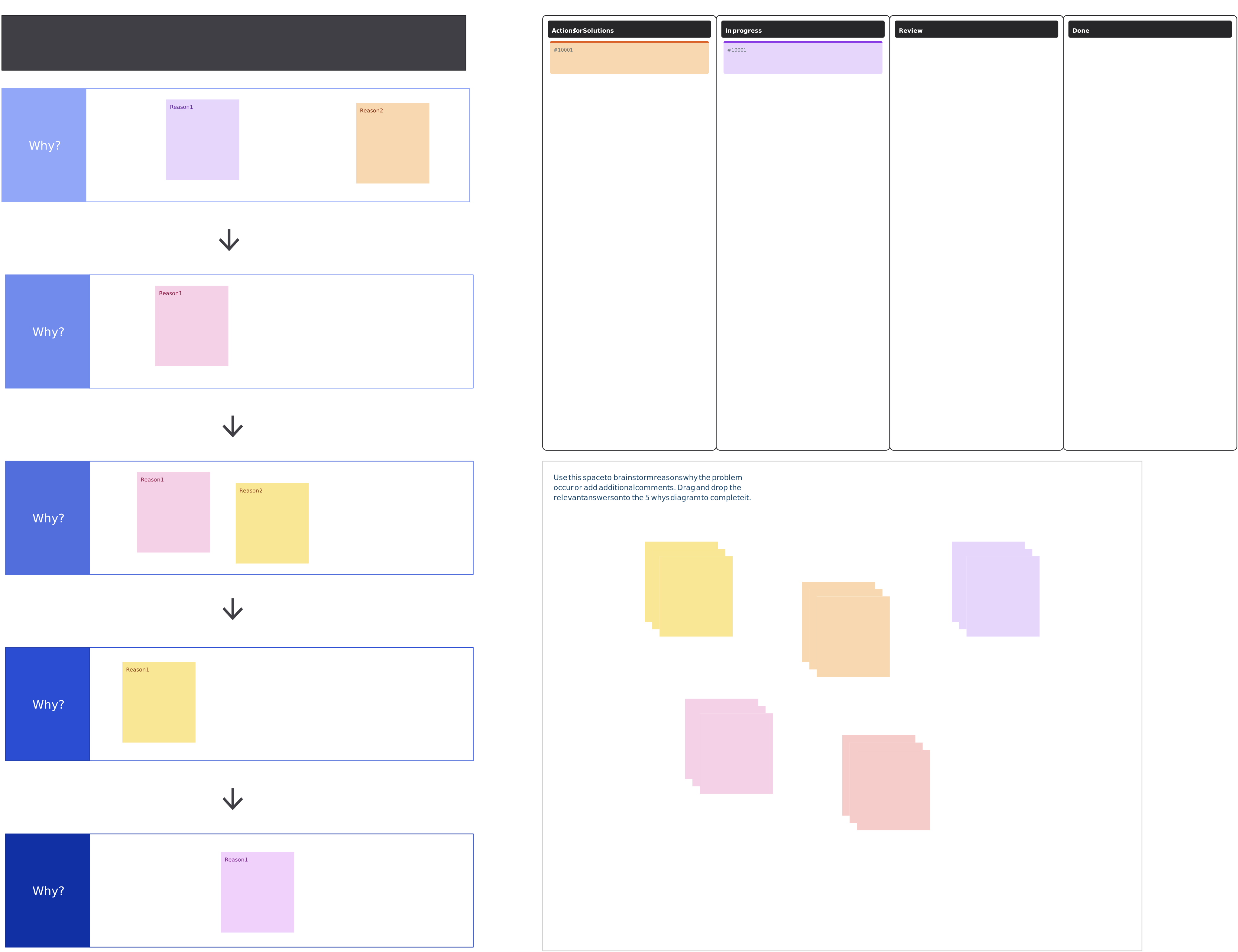
The 5 whys analysis is a problem-solving technique used to brainstorm the root causes of an issue by repeatedly asking “why” until the underlying cause is revealed. It’s a structured approach that helps teams dig deeper into a problem’s layers to understand not just the symptoms but the fundamental reasons behind them.
By continuously probing for deeper insights with each “why” question, teams can find the true origin of a problem and develop effective solutions to address it. This method encourages critical thinking and a holistic understanding of complex issues, making it a valuable tool for process improvement and troubleshooting in various industries and contexts.
3. Starbursting
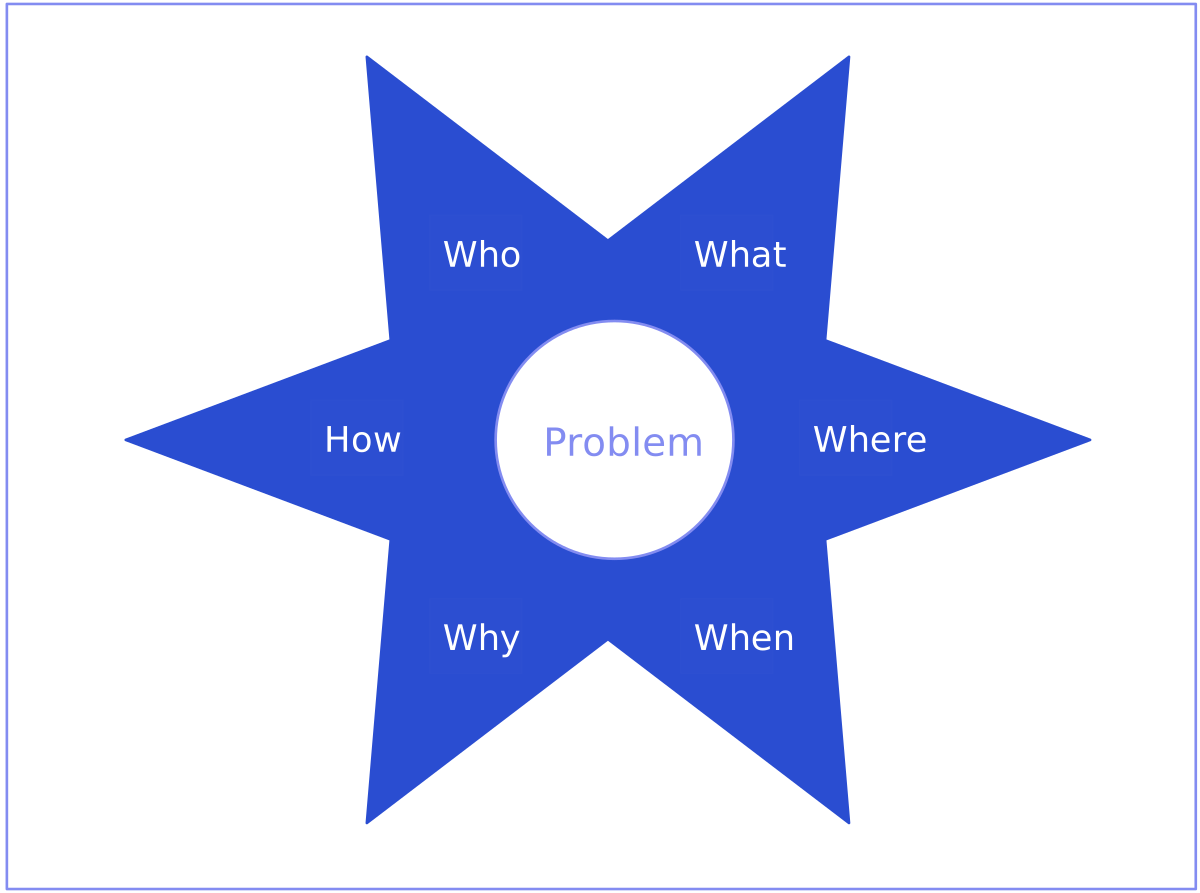
Starbursting is a brainstorming technique used to generate comprehensive ideas about a specific topic, question, or concept. It involves creating a star-like diagram with the central question or topic at the center and spokes radiating outward, each representing a specific aspect or dimension of the topic. Participants then brainstorm questions related to each aspect, effectively “bursting” out from the central theme.
The purpose of starbursting is to explore a topic from multiple angles, consider various perspectives, and make sure that all relevant aspects are thoroughly examined. It gets participants to think critically, ask probing questions, and generate an array of ideas. Starbursting is often used in problem-solving, idea generation, and decision-making processes.
4. Mind mapping
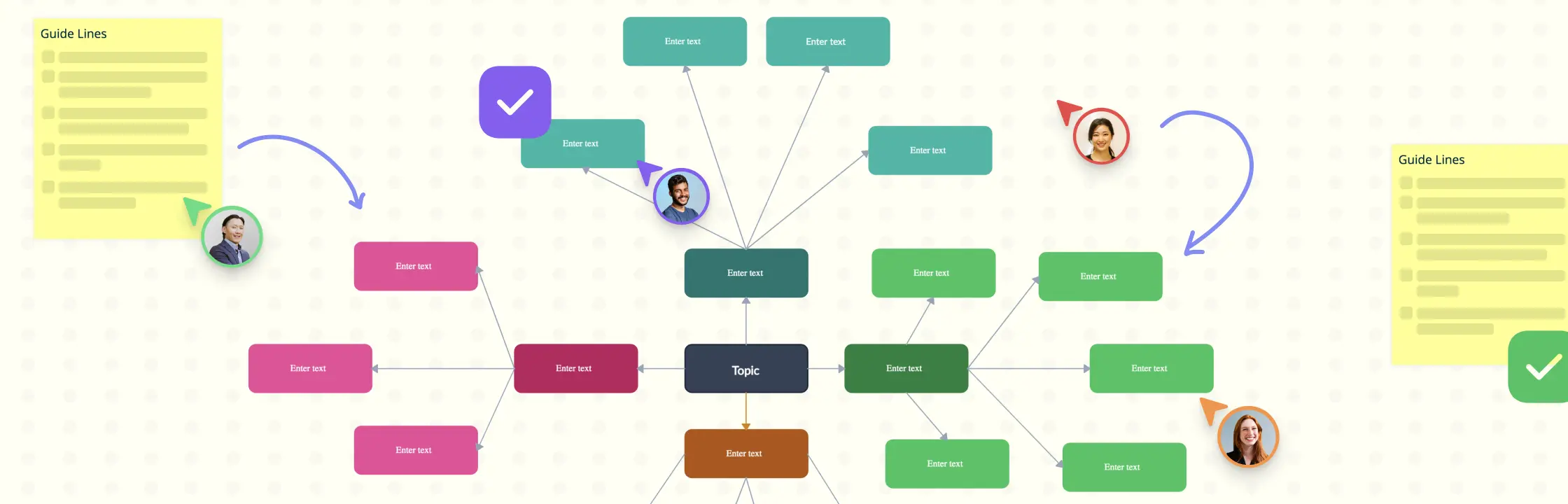
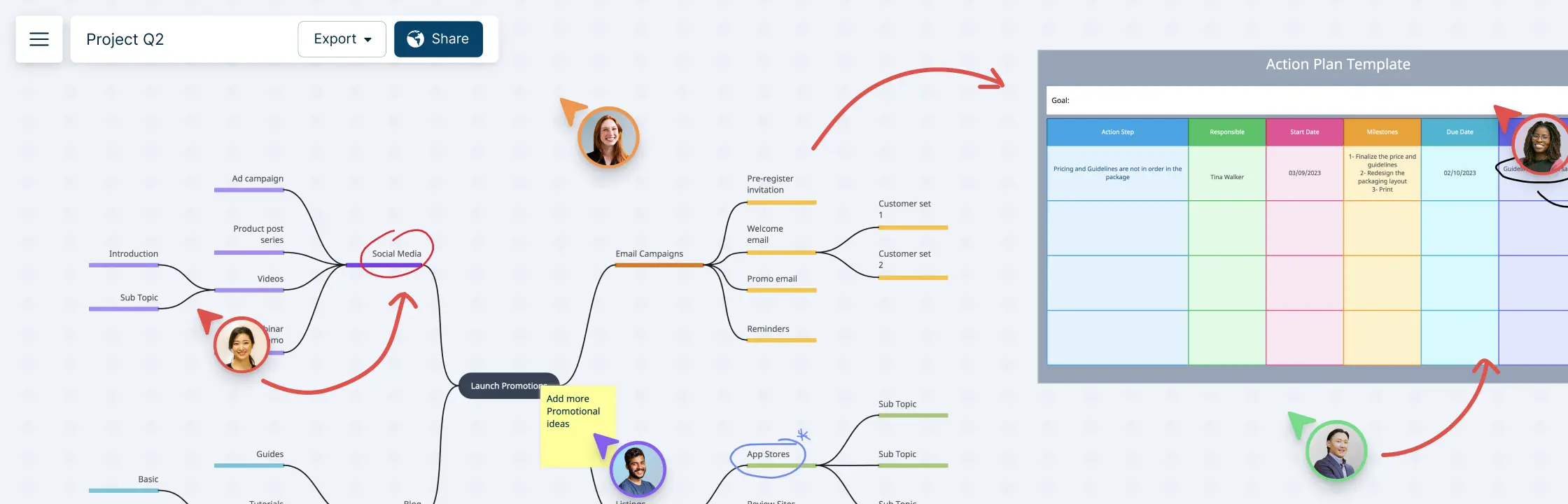
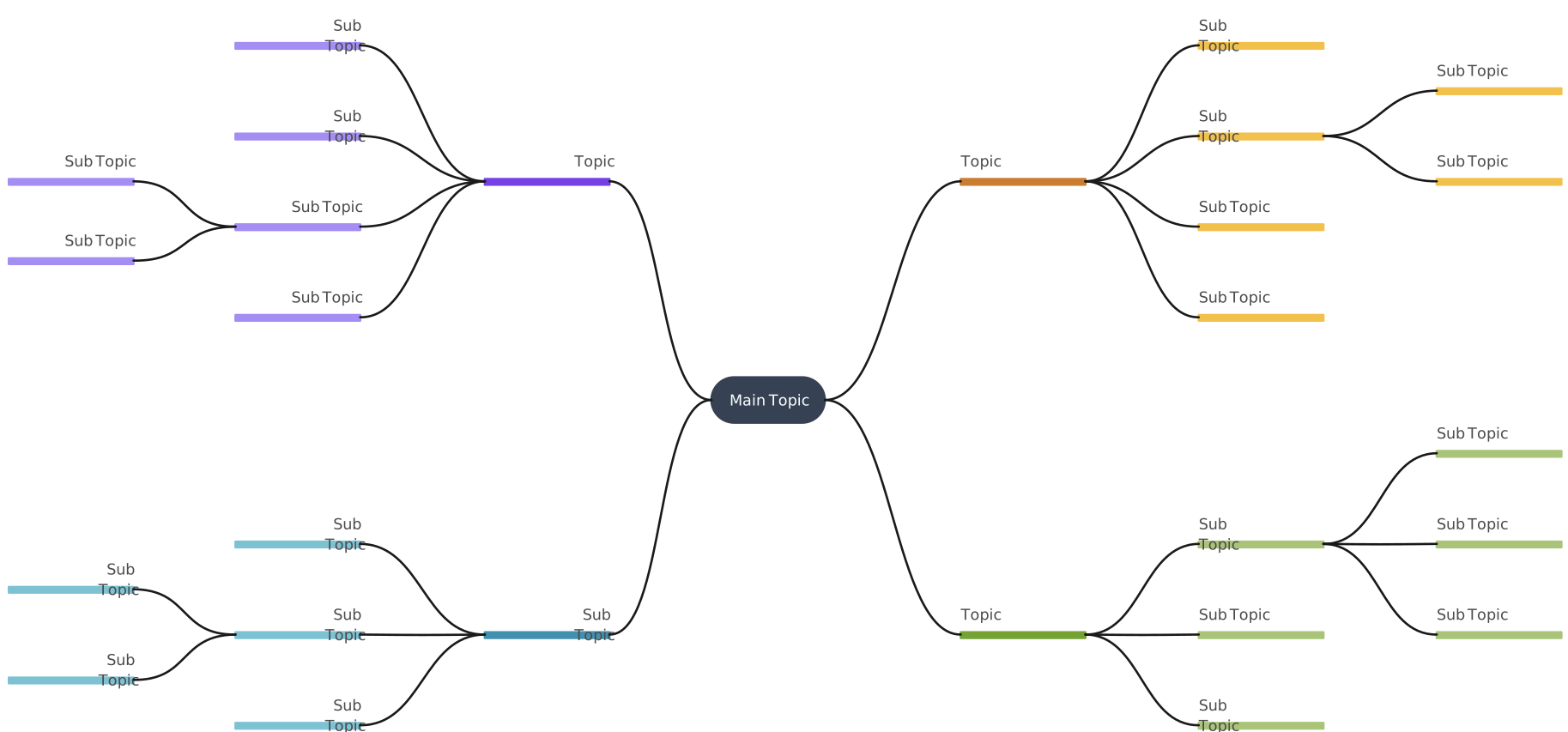
A mind map helps when a question has several connected parts. Put “first-week user experience” in the center, then branch into sign-up, first task, help, and return visits. Add the team’s ideas under each branch. If a suggestion touches two branches, draw the connection rather than forcing it into one category.
Use the map to spot thin branches and ask where the team needs more ideas. In Creately, teammates can add branches on the same canvas and leave comments beside an idea that needs explanation. The goal at this stage is to expose relationships, not rank solutions.
5. Affinity Diagram
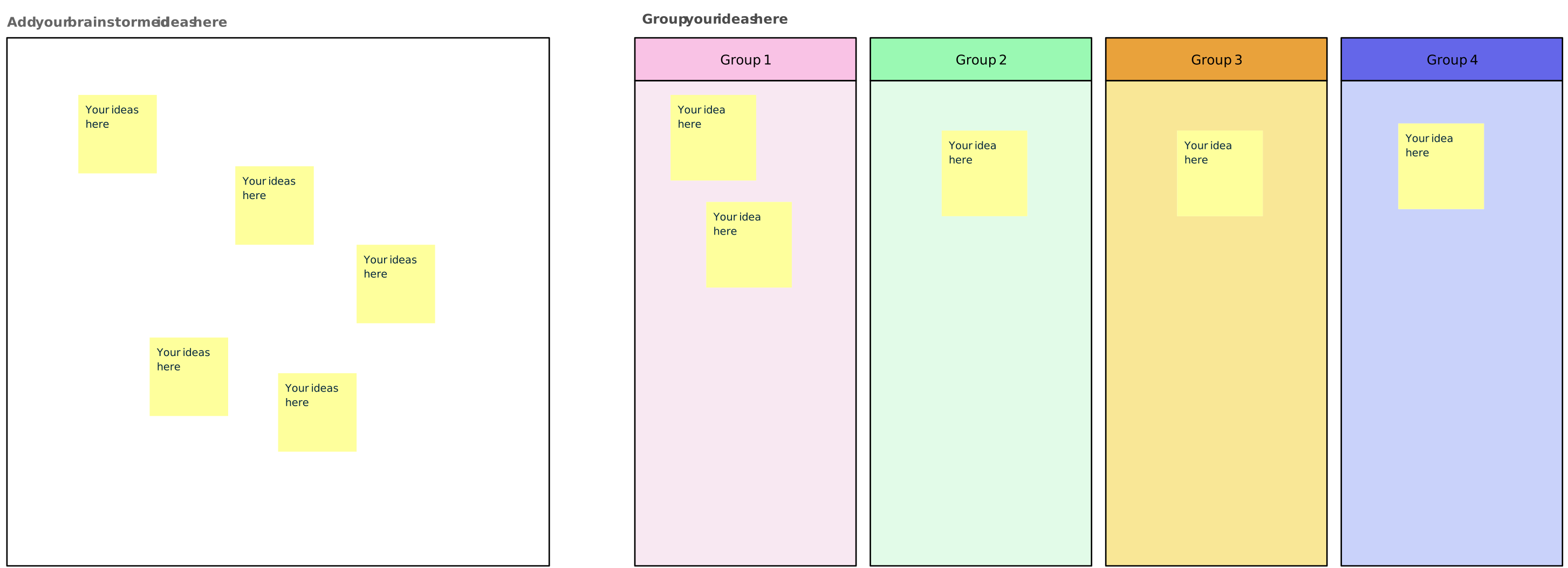
An affinity diagram helps the team make sense of a large pool of notes. Bring the ideas from brainwriting or the mind map onto one board. Move similar notes together without deciding on category names first; then label each cluster and discuss any note that could belong in more than one place.
For the onboarding example, suggestions might cluster around “first task,” “help when stuck,” and “reasons to return.” Those labels make patterns visible, but they are not a vote. Keep unusual ideas nearby until the group has checked whether they suggest a new theme.
6. Rolestorming
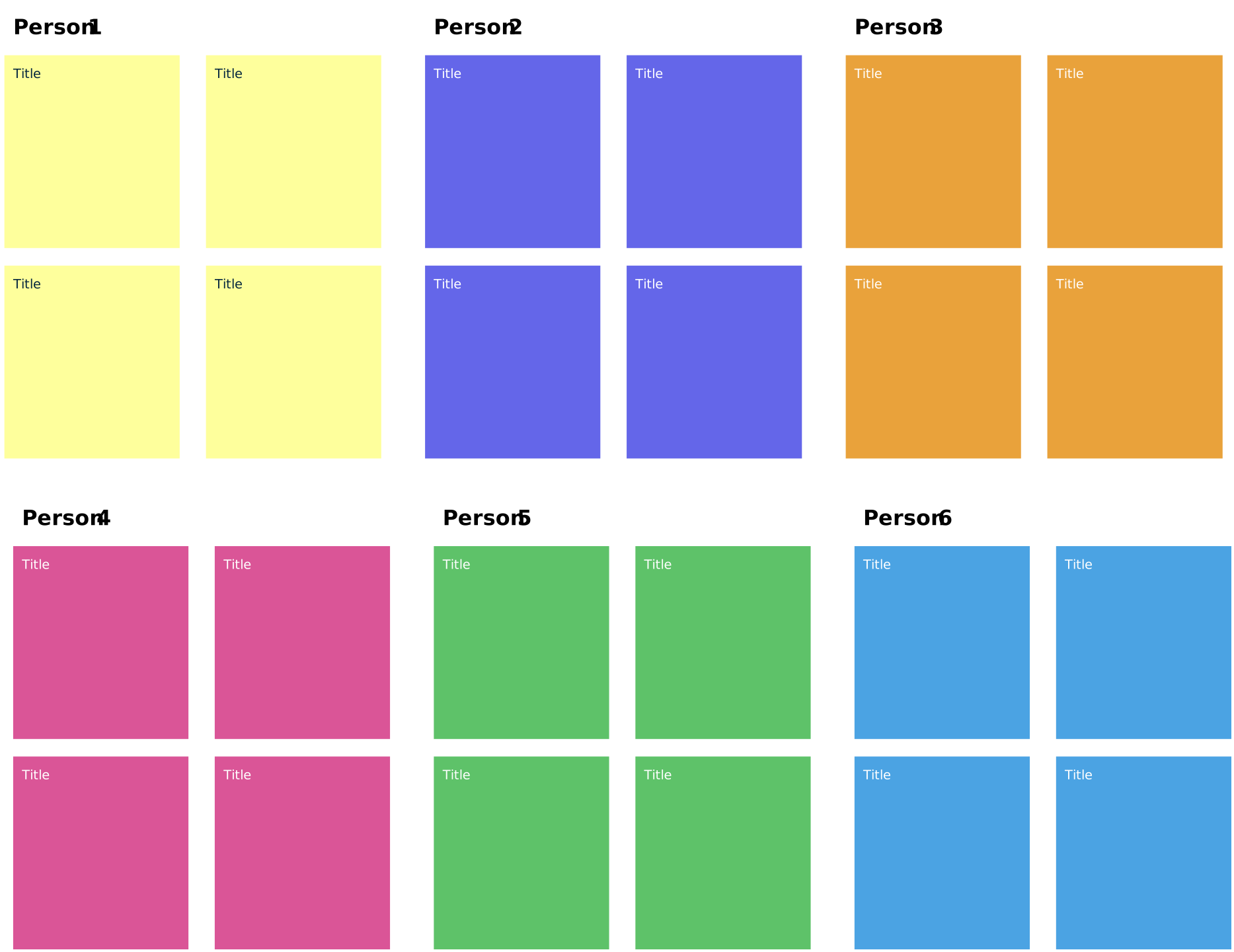
Rolestorming is a creative problem-solving technique that encourages participants to step into different roles or personas to brainstorm new ideas and perspectives. Unlike traditional brainstorming, where participants share ideas from their own viewpoints, rolestorming requires individuals to temporarily adopt a persona or occupation that is related or unrelated to the problem at hand.
By doing so, they can generate fresh ideas and viewpoints that they might not have considered otherwise. This technique leverages creativity and empathy to uncover innovative solutions by looking at the problem through different lenses, ultimately leading to more diverse and inventive ideas.
7. Gap Filling
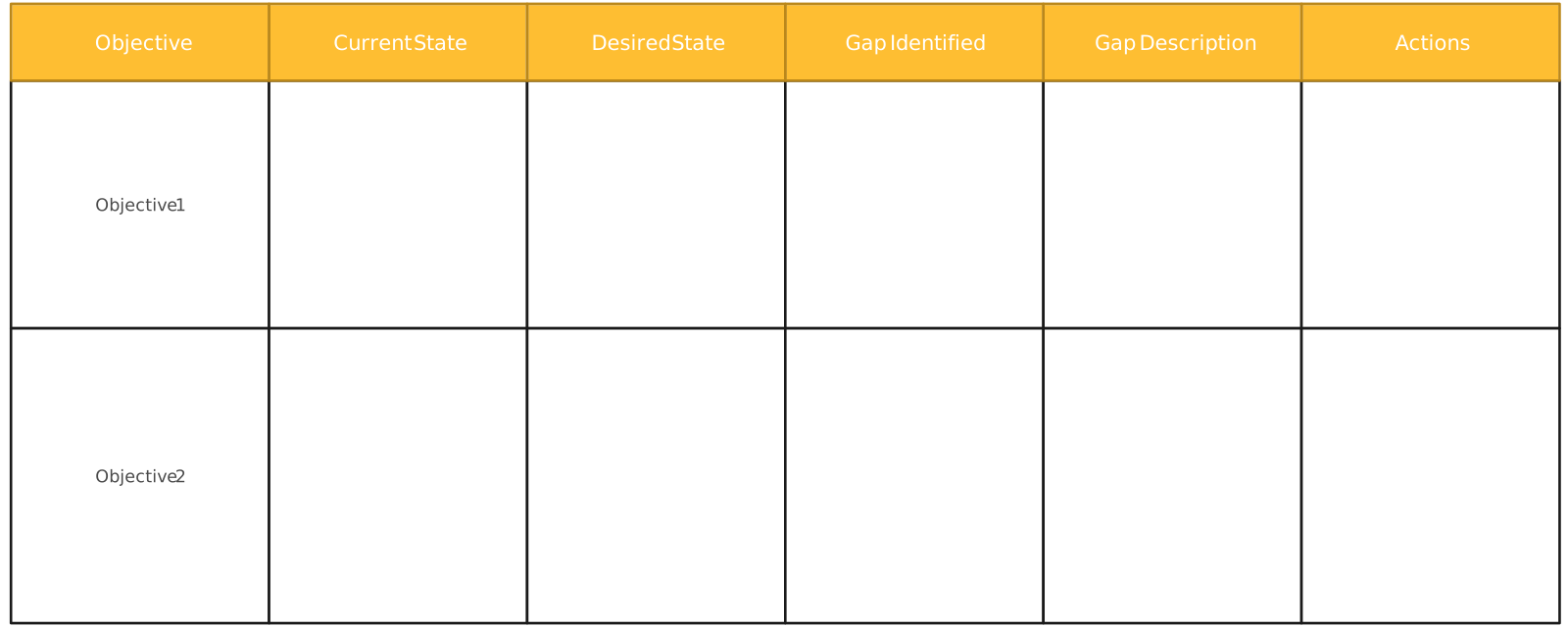
Gap filling is a problem-solving process that involves brainstorming missing or incomplete information or resources in a particular context or situation and taking steps to address those gaps. It is about recognizing what is needed to bridge the difference between the current state and the desired outcome.
Gap filling can occur in various contexts, such as in project management, education, or even personal development. It often involves a gap analysis of the existing situation, determining what elements are lacking, and then developing strategies or actions to fill those gaps and move closer to achieving a specific goal. It is a proactive approach to problem-solving that aims to optimize a situation by addressing deficiencies or shortcomings.
8. Brain-Netting
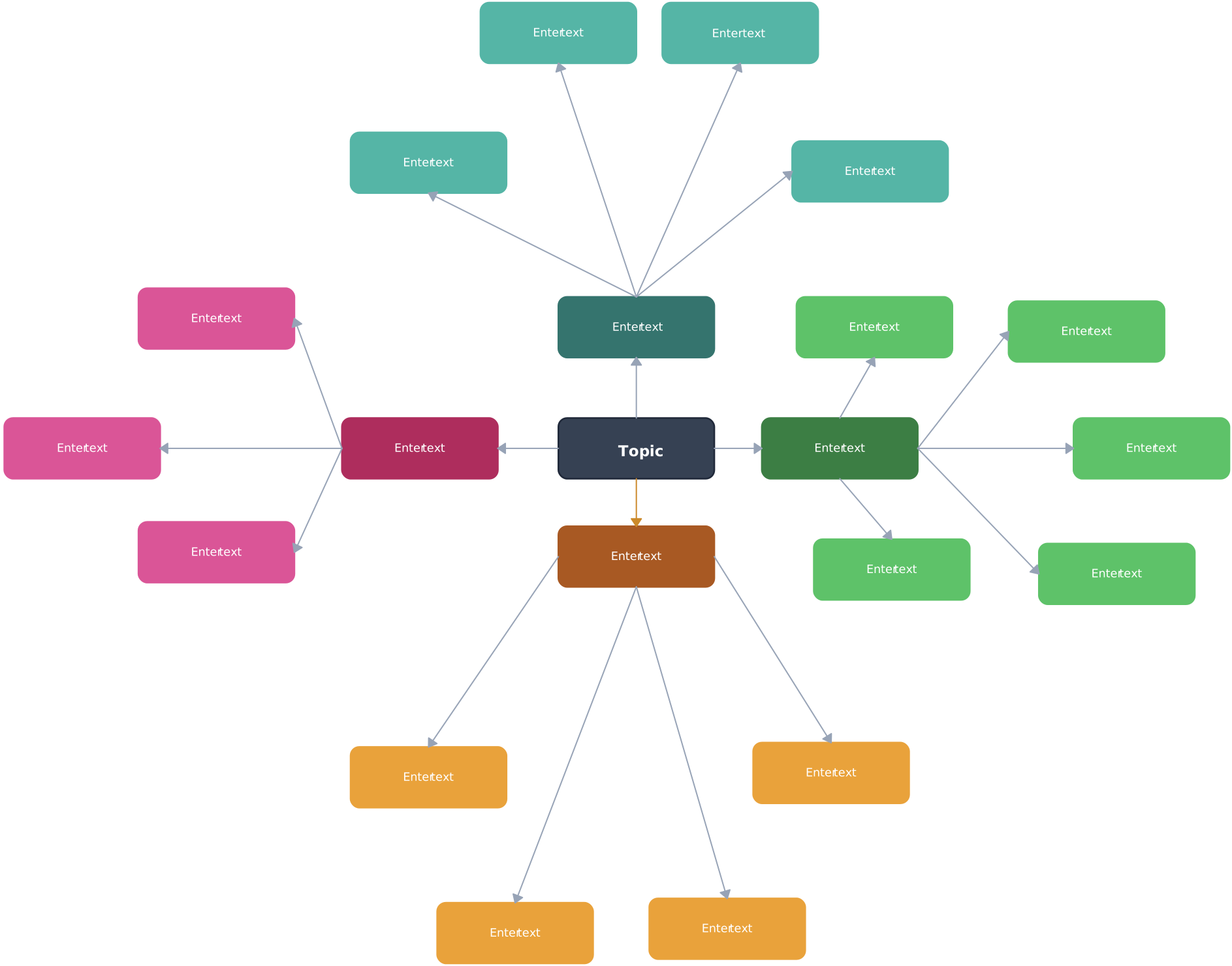
Brain-netting is an online brainstorming or collaborative thinking technique facilitated through digital tools and platforms. It allows individuals or teams to collectively generate, share, and develop ideas or solutions in a dematerialized, digital environment.
Brain-netting is particularly useful when physical presence is challenging or impossible due to geographical distances or other constraints. It leverages the convenience and accessibility of online communication and collaboration tools like Creately to facilitate productive brainstorming and group reflection sessions, enabling participants to work together effectively despite being in different locations.
9. Round Robin Brainstorming
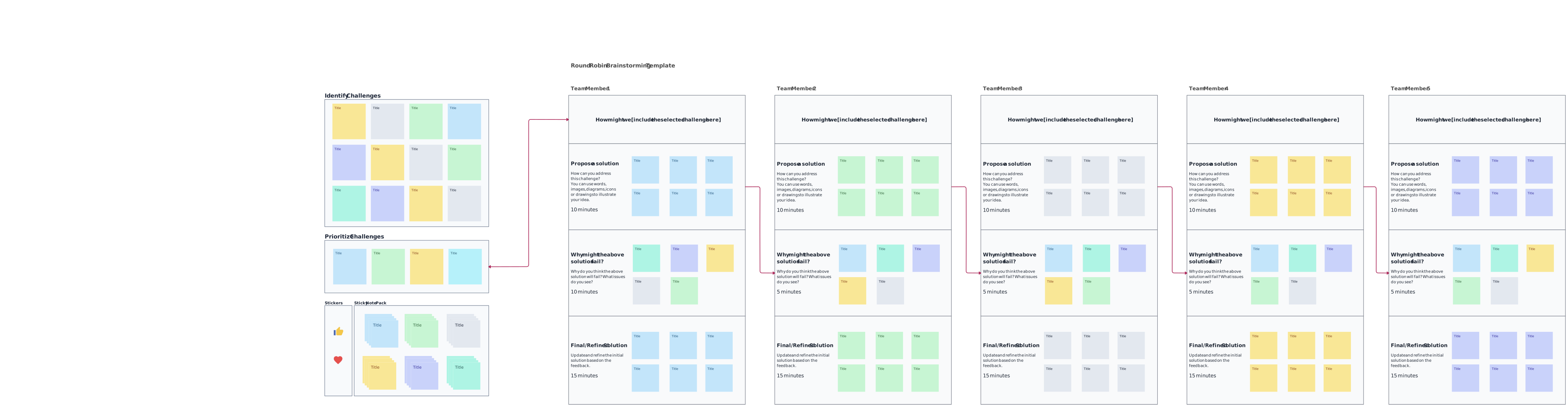
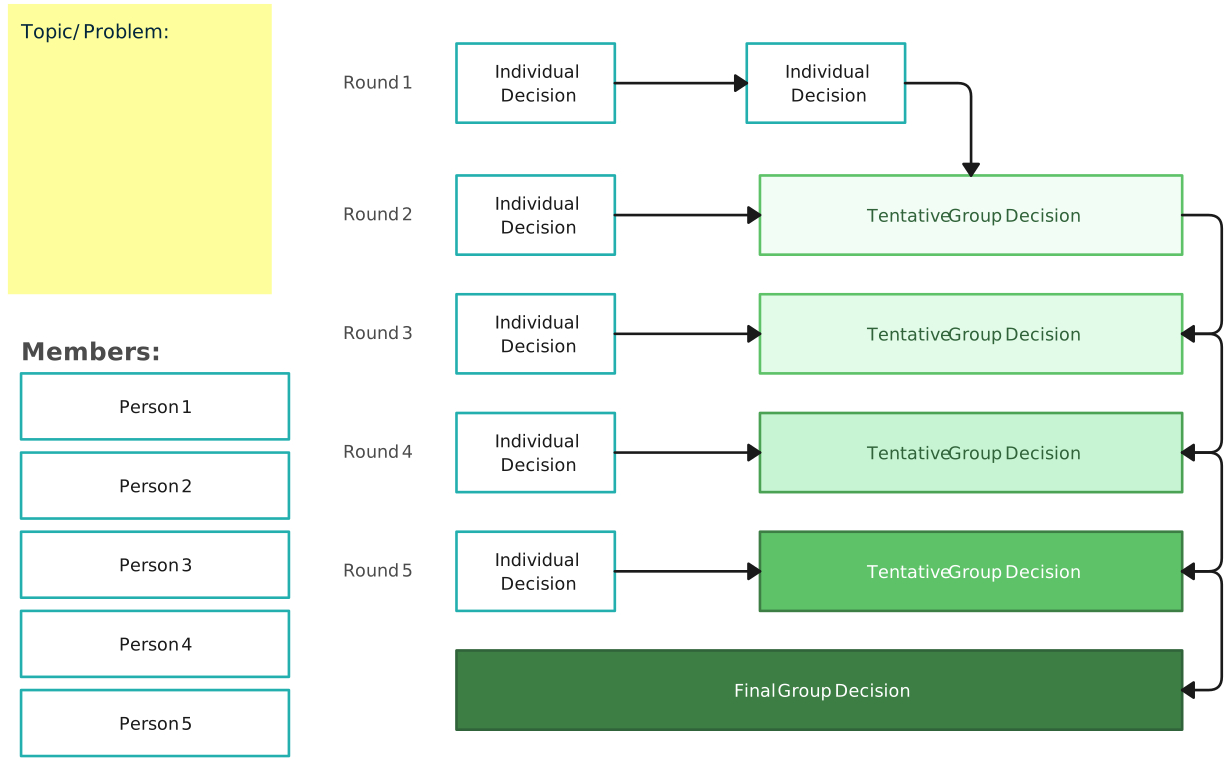
Round robin gives everyone one turn before anyone takes a second. Use it when a live group needs balanced participation and the question is specific enough for quick responses.
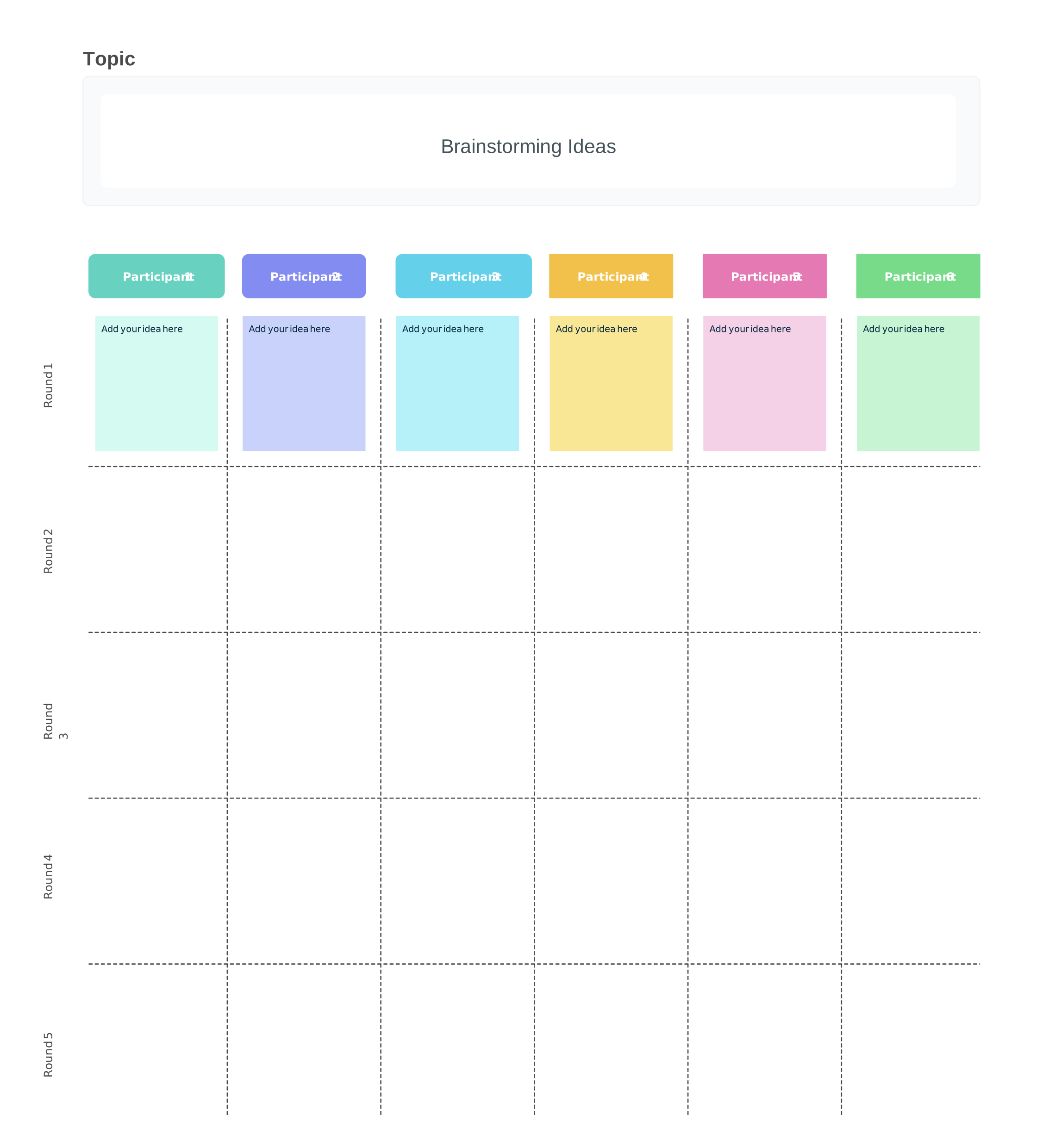
Ask, “What is one thing that might stop a new user from finishing a first task?” Record one answer from each person in the round robin template below. Go around again to collect possible fixes. Participants can pass and return on the next round; the facilitator should hold discussion and critique until the round ends. This keeps early suggestions from setting the direction for everyone else.
10. Rapid Ideation
Rapid ideation is a creative process in which individuals or teams generate a multitude of ideas quickly and without extensive analysis or evaluation. The goal is to encourage free-flowing, unfiltered idea generation.
During rapid ideation, participants focus on quantity over quality, aiming to generate as many ideas as possible within a short period. This approach often involves setting a time limit and encouraging participants to think creatively and spontaneously. Rapid ideation can be a valuable technique for brainstorming, problem-solving, or generating innovative solutions, as it allows for the exploration of a wide range of possibilities and can lead to unique insights.
11. Reverse Brainstorming
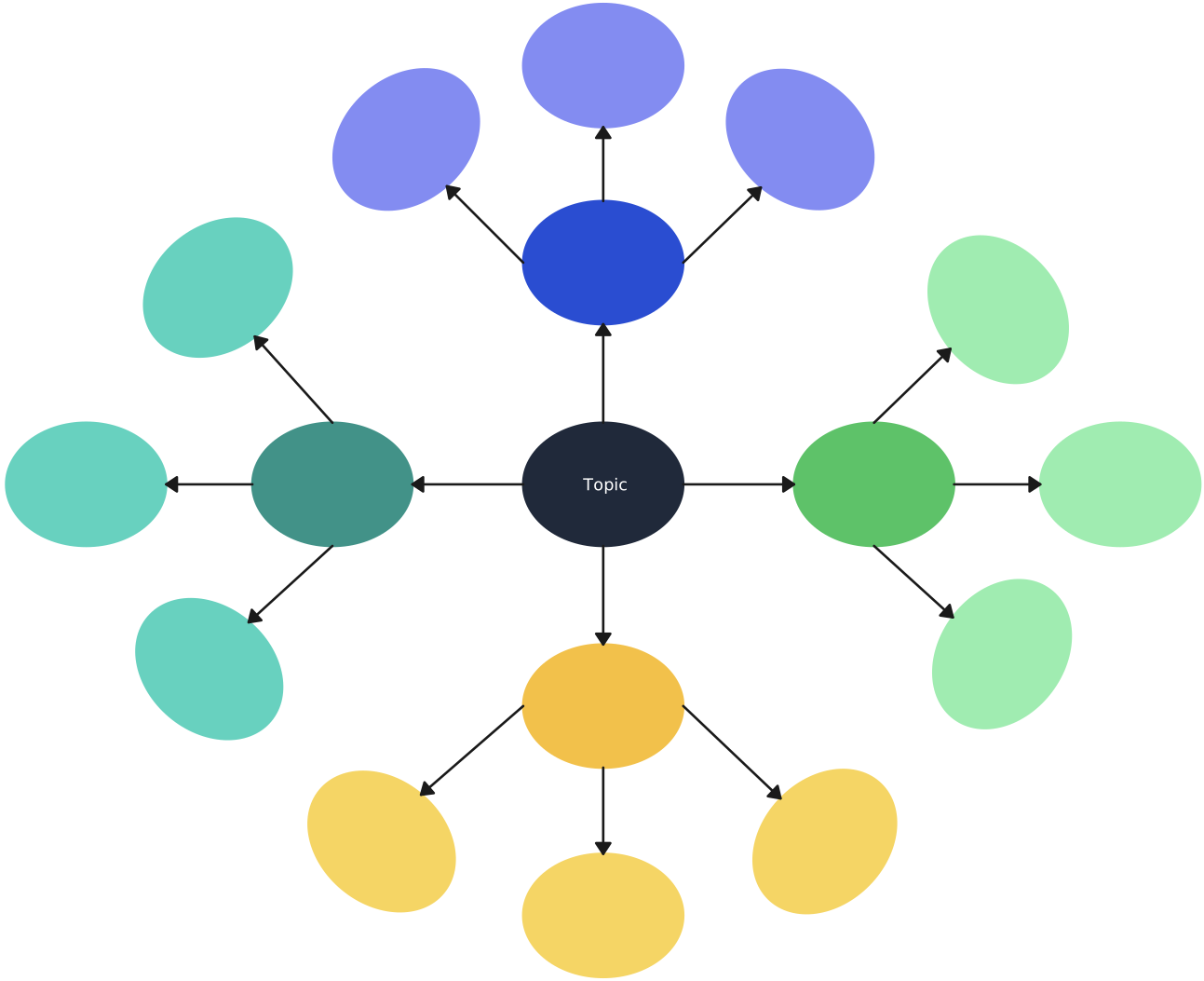
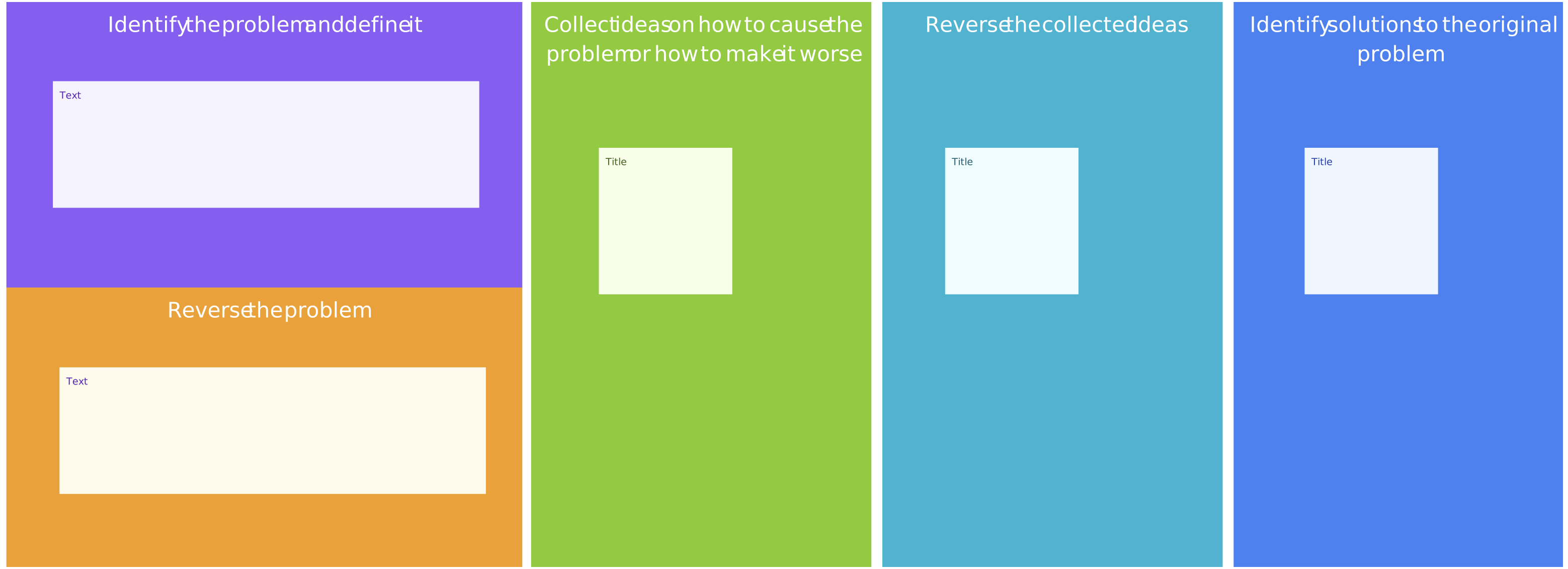
Reverse brainstorming is a technique used to explore a problem or challenge by intentionally generating ideas that are the opposite or counter to the desired outcome. Instead of seeking solutions, participants in a reverse brainstorming session focus on identifying potential causes or factors that contribute to the problem.
This process involves encouraging participants to think creatively and even humorously about how to worsen the situation. By doing so, the group can gain a deeper understanding of the problem’s root causes and develop insights into what needs to be avoided or corrected to achieve the desired outcome. Reverse brainstorming can serve as a valuable tool for problem analysis and can lead to more effective problem-solving strategies.
12. Stepladder Brainstorming
Stepladder brainstorming is a structured approach to group idea generation. It encourages all team members to participate actively in the brainstorming process. In this method, a core group of team members starts by discussing the problem at hand. Afterward, one member, referred to as the “stepladder,” leaves the group temporarily and then returns to share their ideas. The key is that this returning member first discusses their ideas with the initial group members before rejoining the larger group. This process continues as additional team members step out, discuss ideas, and return to contribute their insights.
Stepladder brainstorming has several advantages. It ensures that all team members have a chance to participate and prevents one or two dominant voices from steering the discussion. It also encourages diverse thinking as individuals bring fresh perspectives and ideas back to the group. This structured approach can lead to more comprehensive idea generation and a richer exploration of the topic.
13. SWOT Analysis
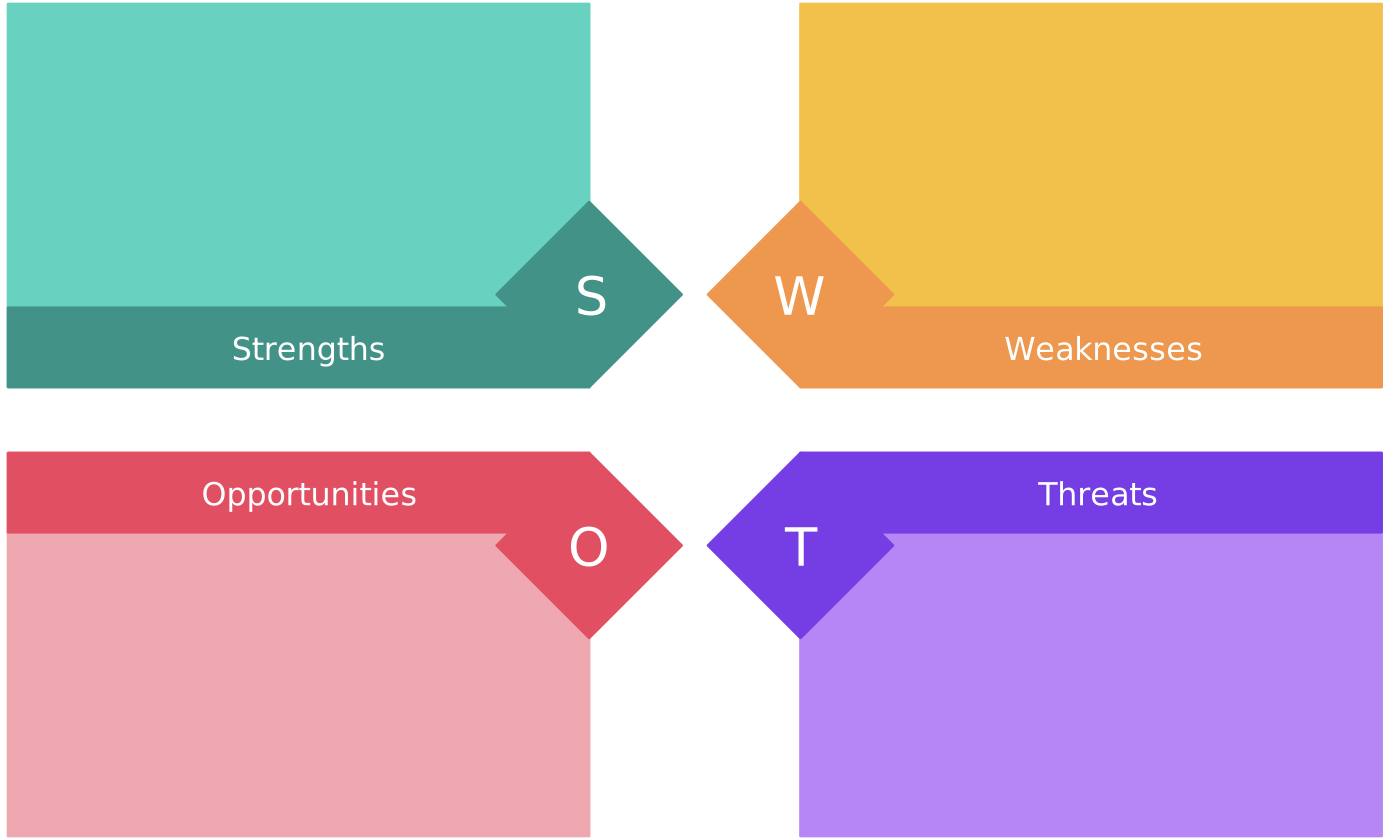
A SWOT analysis is a tool used to assess a situation or decision by examining its inherent strengths, weaknesses, opportunities, and threats. It can be applied to various scenarios, such as personal decision-making, project planning, or evaluating a course of action.
Strengths: These are the inherent advantages or positive qualities of the situation being considered. They represent the aspects that are favorable, beneficial, or advantageous.
Weaknesses: These are the internal limitations, shortcomings, or drawbacks of the situation.
Opportunities: Opportunities are external factors or conditions that could be leveraged to benefit the situation. They represent chances for growth, improvement, or positive outcomes.
Threats: Threats are external factors or potential obstacles that may pose challenges or risks to the situation. They are factors to be aware of and mitigate if possible.
A SWOT analysis helps individuals or teams make more informed choices by systematically considering these four dimensions. It encourages critical thinking, thorough examination, and a balanced assessment of the situation at hand.
What are Your Favorite Brainstorming Techniques?
Choose a technique for the problem in front of you. Use brainwriting or round robin to hear from everyone, a mind map or SCAMPER to explore possibilities, and affinity mapping when the notes become hard to scan. You can run these stages on one Creately canvas: start with an editable template, collect ideas with notes or diagram shapes, invite collaborators to add context, and comment on ideas that need clarification.
When the group has a shortlist, move from generation to selection. Agree on criteria before scoring: for the onboarding example, you might compare expected user benefit, implementation effort, and how confidently each idea can be tested. Put the top options in a decision matrix and score them against those criteria. A high score is a prompt for discussion, not proof that an idea will work.
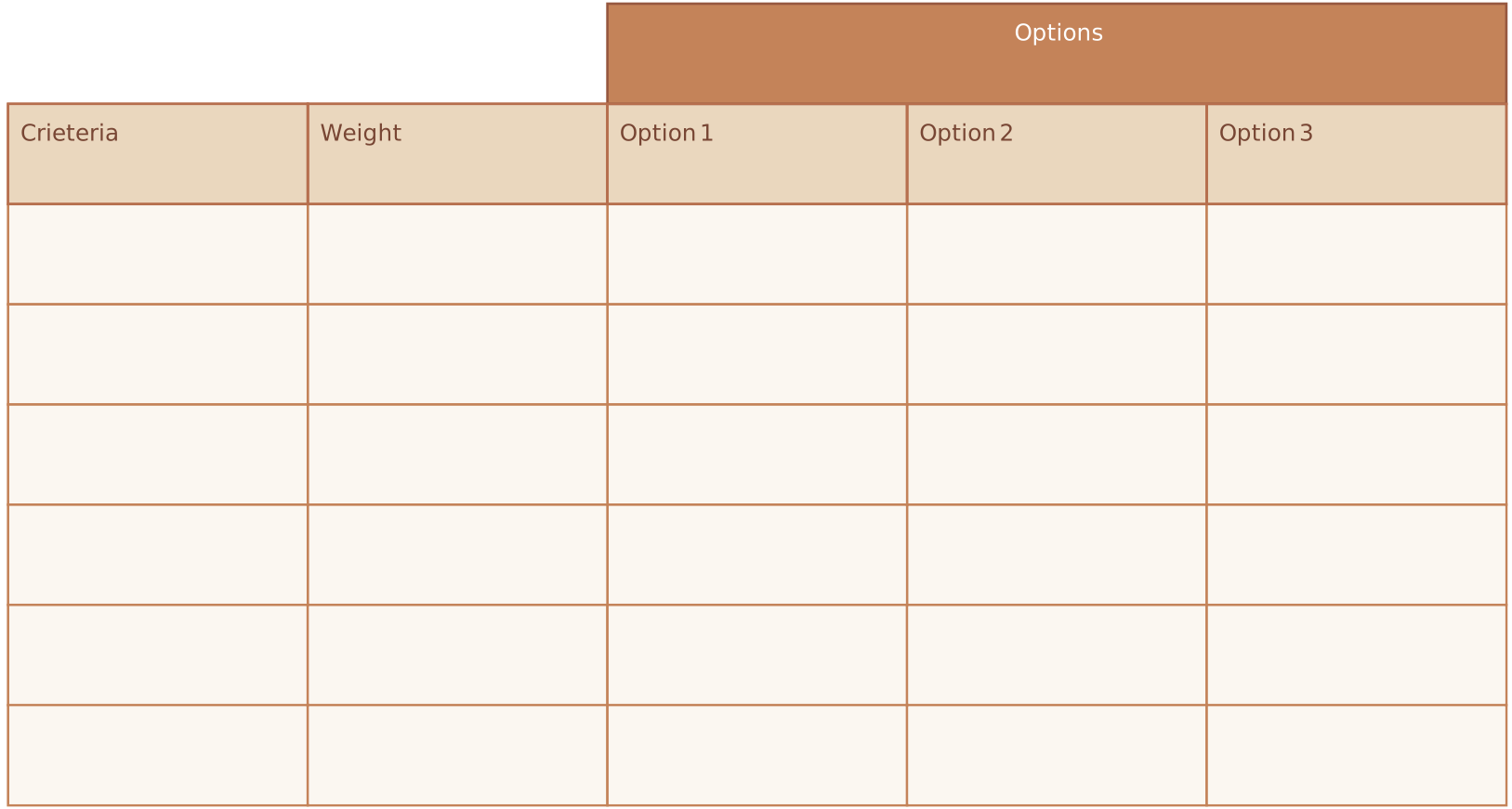
The next steps after brainstorming cover prioritization, owners, testing, and action planning in more detail. Keep the original board beside the decision so the team can see where the chosen option came from.