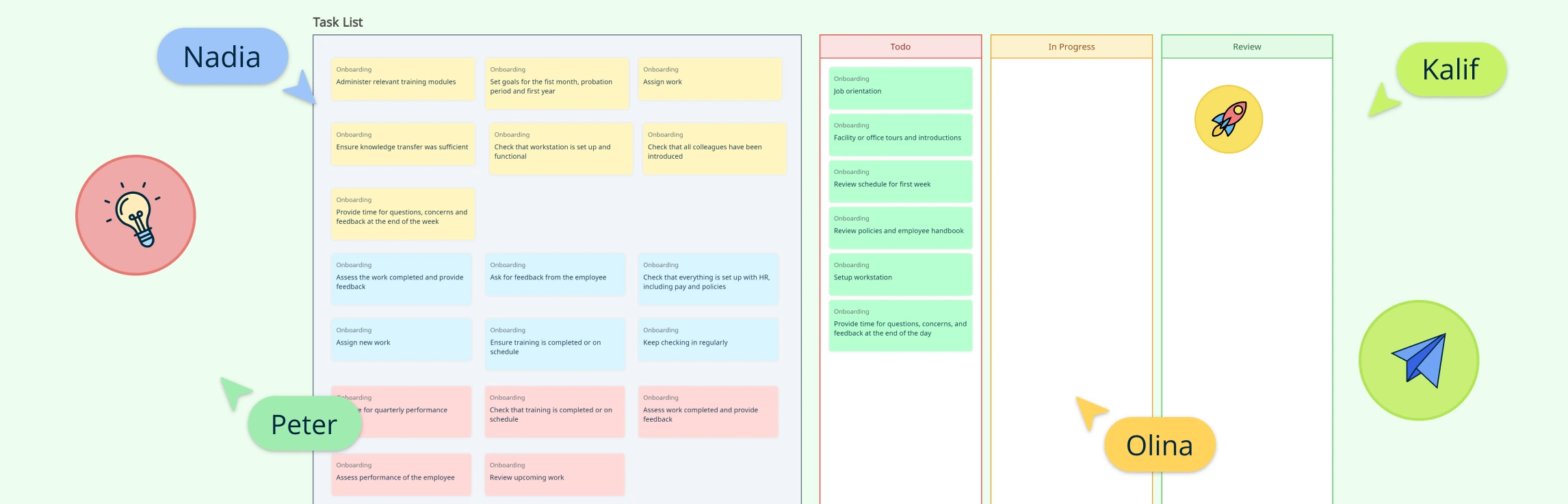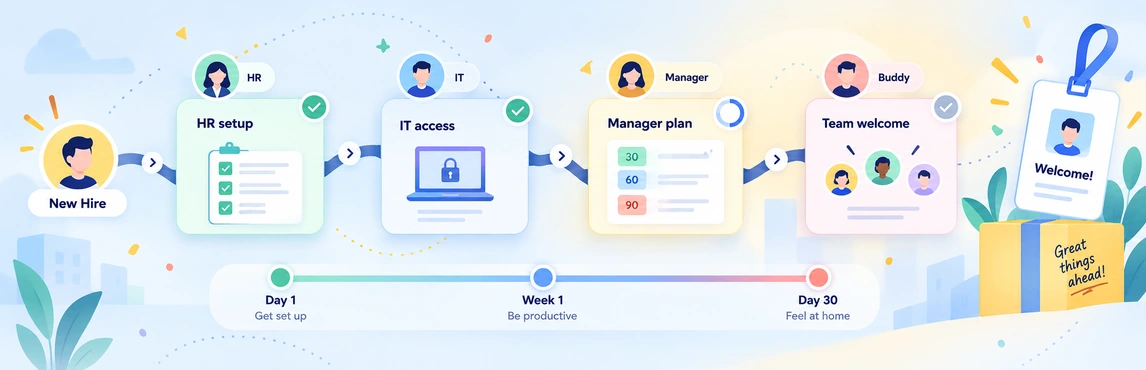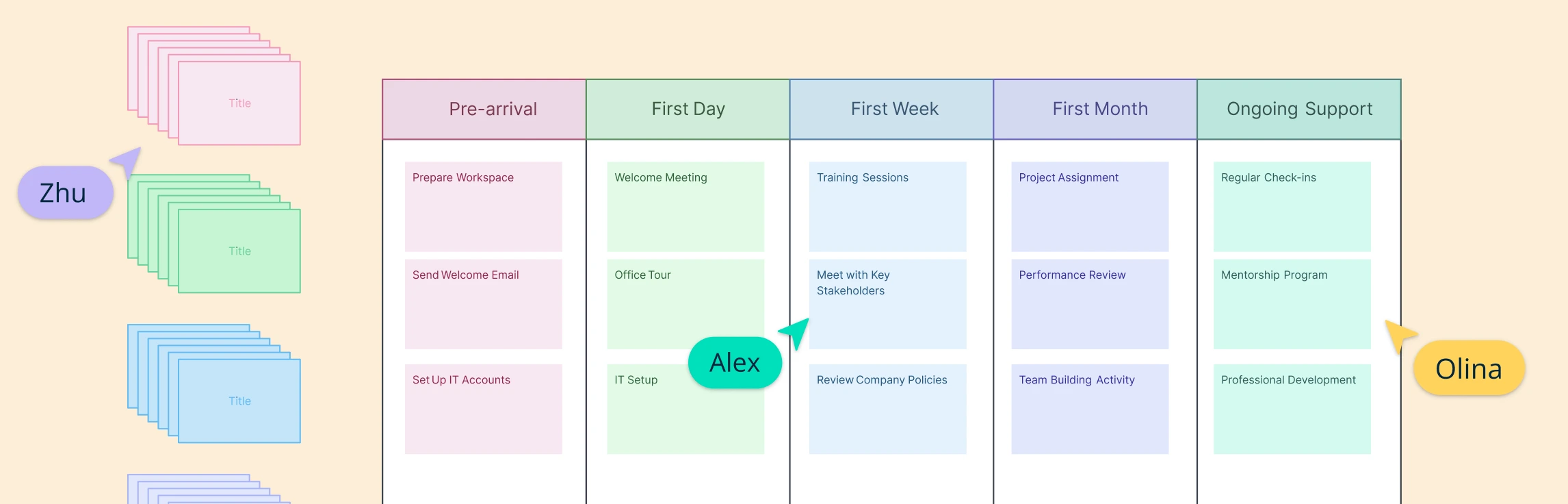
Effective onboarding helps new employees understand their roles, access the resources they need, and build working relationships. A structured employee onboarding process also gives HR, managers, IT, and other teams a consistent way to coordinate their responsibilities. This guide explains how to identify gaps, address common challenges, and streamline onboarding while keeping owners, handoffs, checklists, and supporting resources connected.
Why Streamline the Onboarding Process
- Supporting Employee Retention: A comprehensive onboarding process can help new employees feel welcomed, prepared, and supported. Track retention alongside feedback and other workforce data rather than assuming onboarding is the only reason employees stay or leave.
- Improving Employer Branding: A positive onboarding experience can reinforce the employer brand when it reflects the culture and commitments communicated during recruitment.
- Improving Employee Satisfaction: Clear expectations, relevant resources, training, and access to support can help new employees feel more confident as they settle into their roles.
- Reducing Time to Productivity: A structured process can reduce avoidable delays in access, training, and role clarification, helping new hires work toward defined performance expectations.
How to Review the Onboarding Process to Identify Gaps
Follow these steps to identify gaps in your current approach, areas for improvement and inefficiencies in your onboarding process.
Step 1. Collect Feedback from Multiple Sources
- New Hires: Use surveys, interviews, or onboarding diaries to capture real-time experiences.
- Managers & Mentors: Get insights on how prepared new hires are, what support they need, and any observed friction.
- HR/Admin Staff: Identify backend delays (e.g., delays in IT setup, document collection).
Step 2. Analyze Key Onboarding Metrics
- Time to Productivity: How long until a new hire performs core responsibilities independently?
- Checklist Completion Rates: Which tasks are consistently delayed or skipped?
- Engagement Metrics: Attendance in onboarding sessions, platform usage (LMS, HR tools).
- Retention Data: Are turnover rates high within the first 90 days?
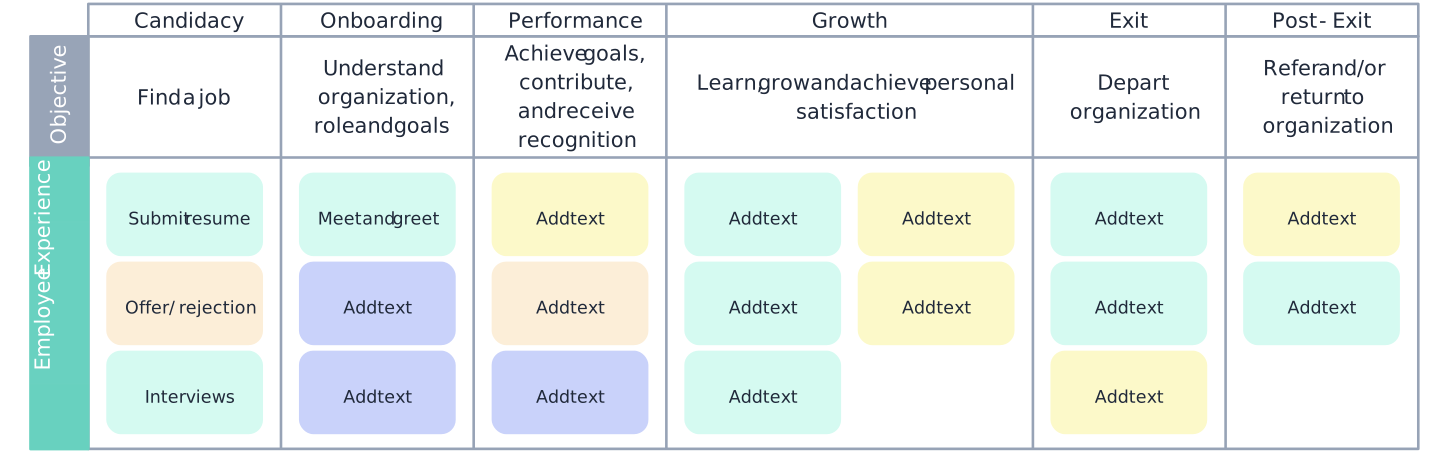
Step 3. Map the End-to-End Journey
Create an employee journey map that outlines each step from pre-boarding to full ramp-up. Include the owner of each stage, the teams involved in handoffs, and links to relevant policies, checklists, or training resources. Look for:
- Bottlenecks (e.g., delayed laptop setup)
- Redundancies (e.g., repeating company intro in multiple sessions)
- Gaps (e.g., lack of culture onboarding or missed compliance training)
Step 4. Evaluate Role-Specific Effectiveness
Generic onboarding often misses role-specific nuances. Interview team leads and compare:
- Is onboarding tailored for different job functions?
- Are sales, engineering, and support staff receiving what they need to succeed?
Step 5. Implement Feedback Loops and Iteration
- Hold regular review cycles (e.g., quarterly onboarding retrospectives).
- Invite new hires, managers, HR, IT, and other process participants to comment on the stages they experienced.
- Assign an accountable process owner to evaluate feedback and incorporate agreed changes into the map, checklist, content, timelines, or tools.
- Keep review notes and supporting resources connected to the onboarding process so the documentation remains current between review cycles.
- Test a clearly defined change where appropriate, while following employment, privacy, accessibility, and internal review requirements.
Understanding the Common Challenges of Employee Onboarding
- Compliance and Coordination Failures: Disorganized onboarding often leads to missed legal, administrative, or safety requirements—opening the door to compliance issues.
- Communication Gaps: Without structured communication strategies, new hires may feel left in the dark—confused about processes, policies, or who to talk to.
- Delayed IT and Systems Access: Hold-ups in providing tools, credentials, or software significantly impede productivity and slow down integration.
- Insufficient Role-Specific Training: Generic onboarding fails to address the unique skills and knowledge needed for different roles, leaving employees unprepared and less efficient.
- Lack of Clarity and Personalization: A one-size-fits-all approach undermines the new hire’s understanding of expectations and company culture, making it harder for them to engage and contribute meaningfully.
Strategies for Streamlining the Onboarding Process
Enhance Pre-Boarding Engagement
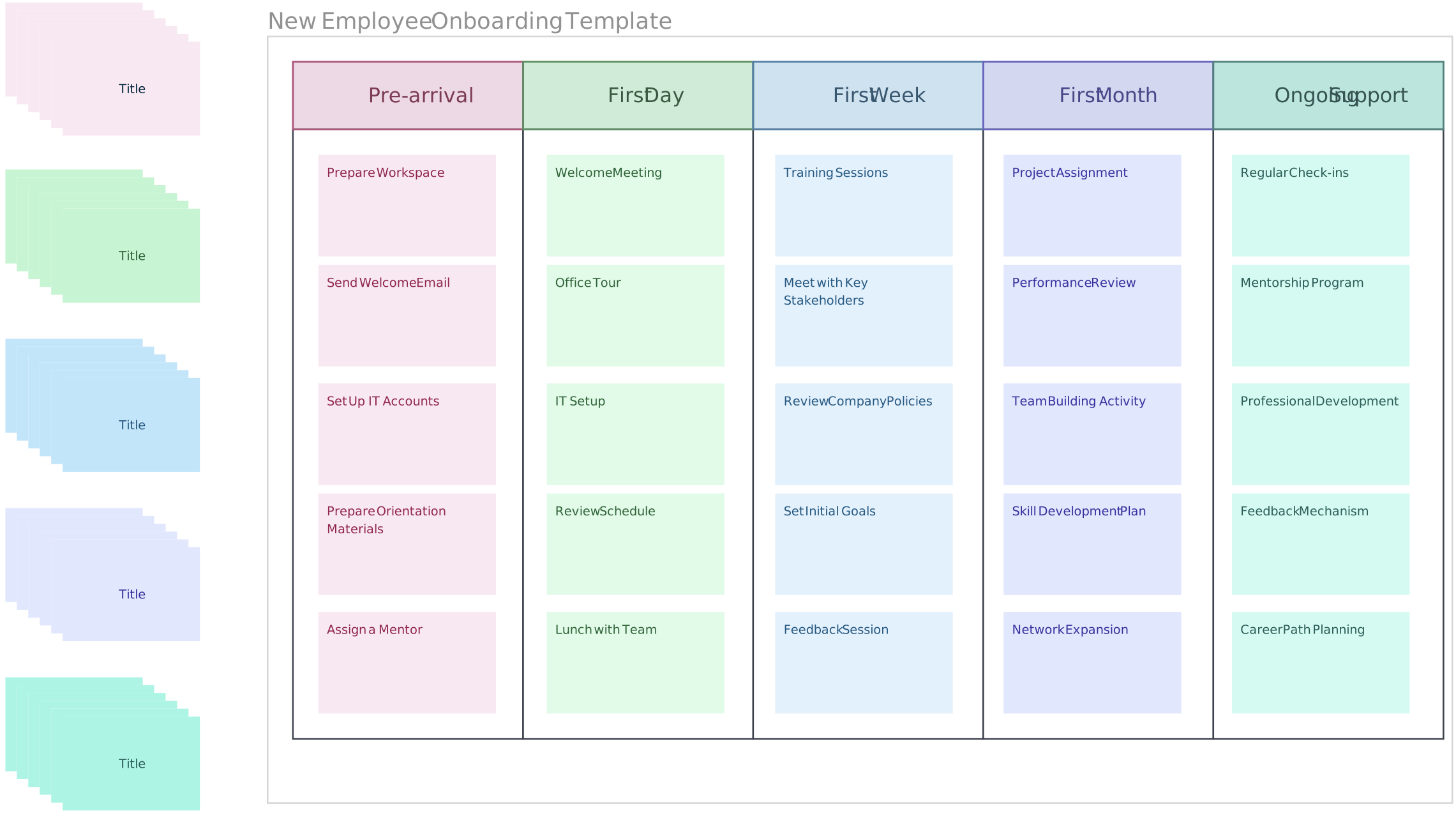
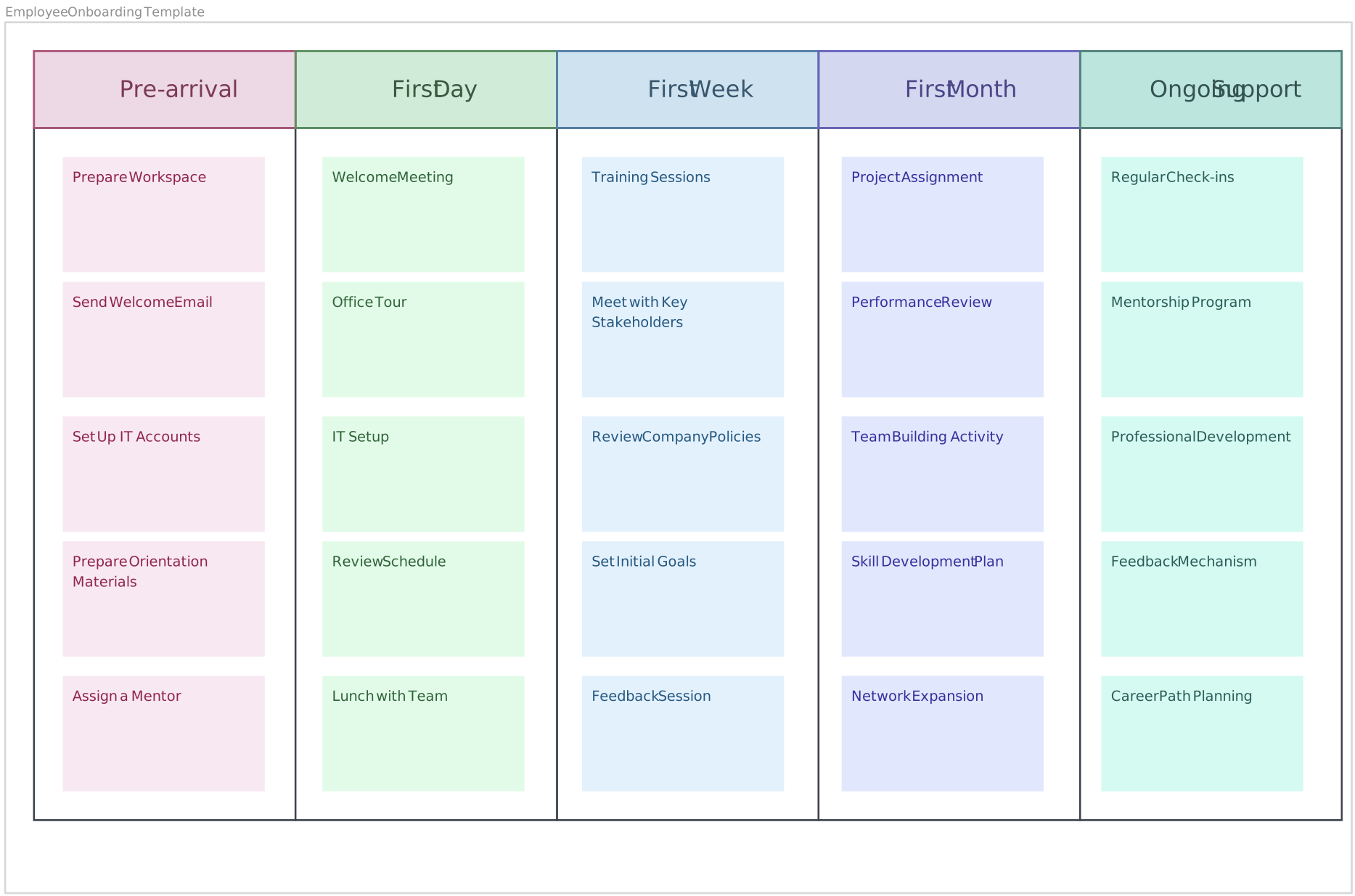
Start building the employee experience before day one. A strong pre-boarding phase can include welcome emails, company information, required paperwork, and introductions through meet-and-greets or videos. Handling appropriate setup tasks early can reduce first-day uncertainty and leave more time for connection and role clarity. An employee onboarding template helps teams standardize the essential steps while adapting them to the role and location.

Automate and Centralize Task Management
Manual onboarding administration can be time-consuming and prone to missed handoffs. Use an HR or onboarding system to automate suitable execution tasks, such as collecting forms, sending notifications, or initiating access requests. Use Creately’s visual process workspace to map the onboarding flow, clarify owners and handoffs, and keep notes, links, and relevant files connected to each part of the process. Teams can edit together and use comments and @mentions to review changes, while the process owner maintains the agreed version. Creately documents and coordinates the workflow; it does not replace the HR, identity, or provisioning systems that execute it.
Implement a Structured, Role-Based Plan
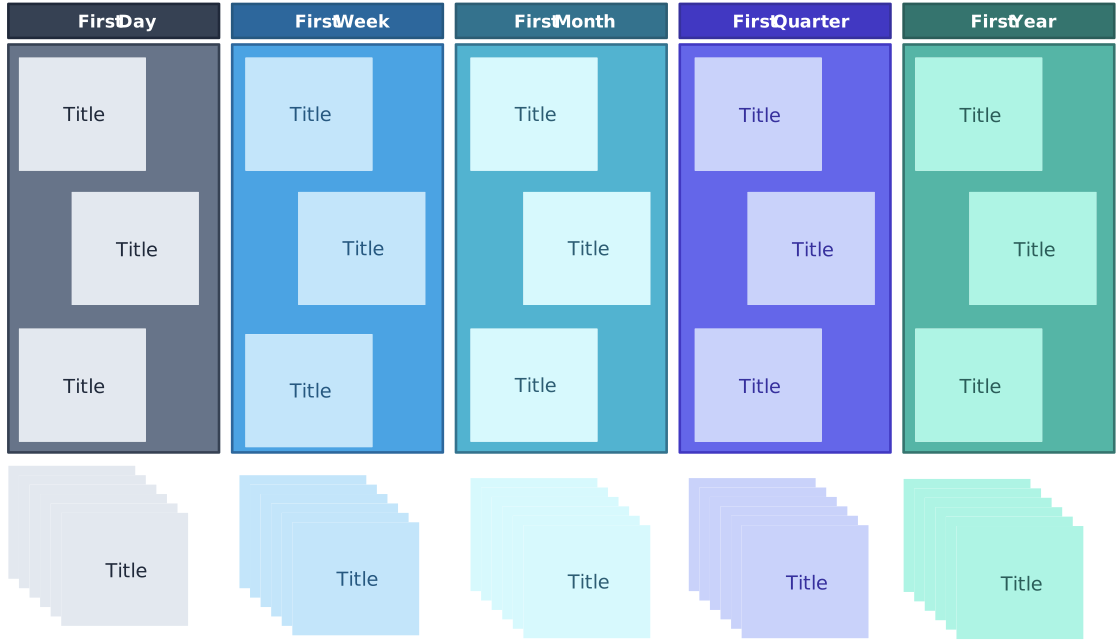
Outline clear expectations and training goals for the first 30, 60, and 90 days, adapting the timeline to the role or department. Break training into manageable phases and connect it to the employee’s responsibilities and appropriate performance expectations. An employee journey map can show how onboarding activities and development support extend beyond the initial orientation period.
Personalize Onboarding Journeys
Tailor the onboarding process to relevant roles, departments, locations, and accessibility needs. Define appropriate paths with role-specific tasks, training, contacts, and resources, while avoiding unnecessary collection of personal data. Explain how each employee’s responsibilities contribute to team and organizational goals.
Maintain Clear, Timely Communication
Use automated and personalized communication to keep new hires informed and engaged. Schedule timely messages such as preboarding details, onboarding reminders, and welcome notes from leadership. Customize messages by role or department to ensure relevance, while maintaining a consistent flow of information from offer acceptance to day one and beyond.
Leverage Analytics and Feedback Loops
Continuously improving onboarding requires data. Track metrics such as task completion rates, time to first contribution, and feedback from new hires through surveys or pulse check-ins. Look for patterns that signal friction like bottlenecks in IT setup or unclear role expectations, and iterate based on these insights. Feedback loops give new hires a voice, while analytics help HR fine-tune the process to be more efficient and effective over time.
Promote Culture Through Community-Building
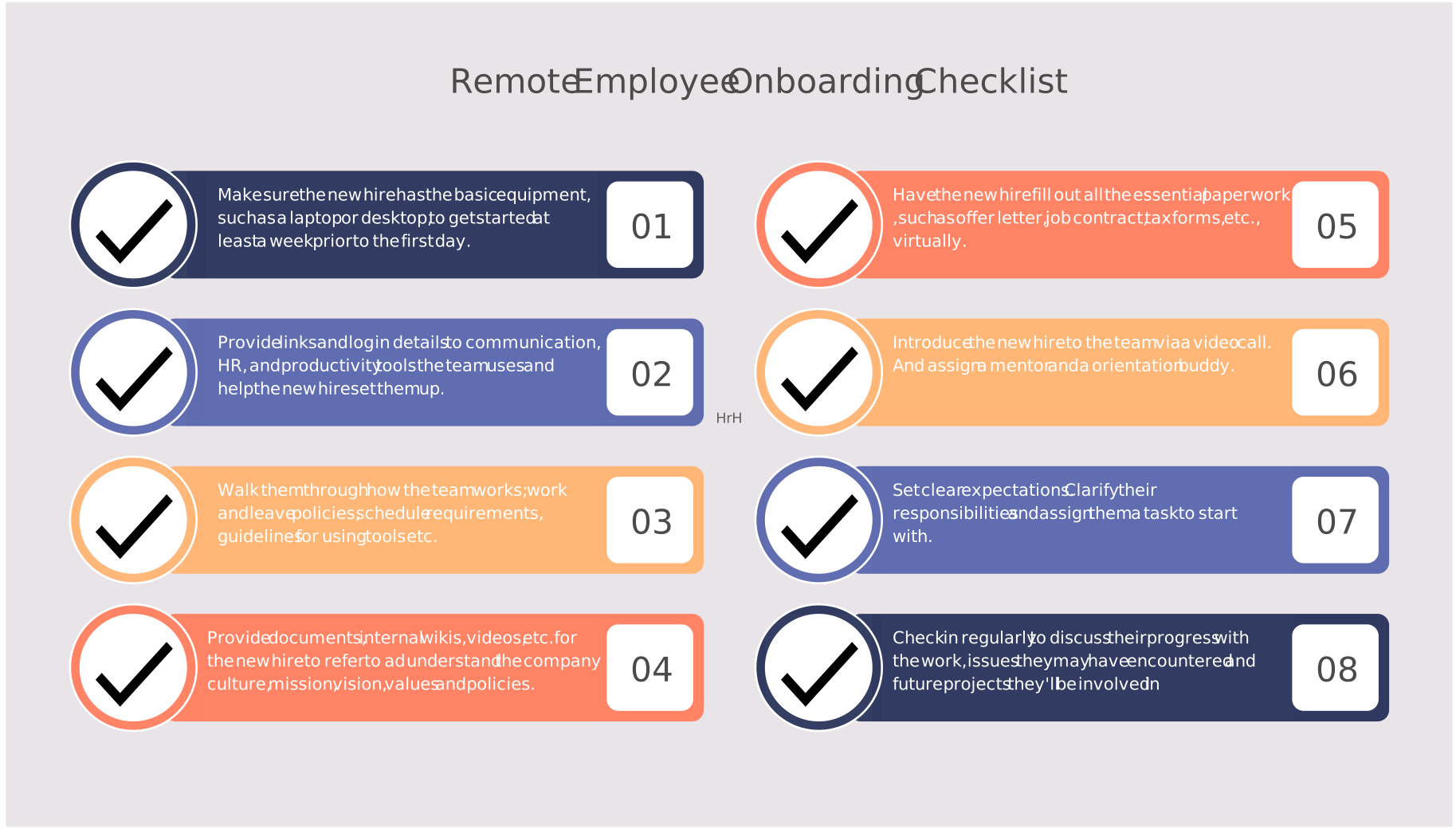
Building relationships and understanding company culture can require deliberate support during remote onboarding. Assign onboarding buddies or mentors as personal points of contact. Schedule appropriate team activities, encourage participation in internal communities, and share examples of how the organization’s values appear in everyday work. Ask new hires what helps them feel included rather than assuming the same activities work for everyone.
Use Creately’s AI-Powered Onboarding Template
Use Creately’s AI employee onboarding template to create a draft onboarding flow from a description of the role, department, and goals. Review the generated structure with HR, managers, IT, and other process owners, then adapt its steps, owners, handoffs, and resources to your policies and the employee’s needs. AI-generated content is a starting point and should be checked for accuracy, completeness, privacy, accessibility, and compliance before use.
How to Measure the Effectiveness of an Onboarding Program
Measuring the effectiveness of your new onboarding program is crucial in order to streamline onboarding even further.
Time to Productivity
Time to productivity estimates how long it takes a new employee to meet clearly defined expectations for their role. Agree on meaningful indicators with the manager before comparing results; a shorter time is not automatically better if essential learning or support is skipped. 30-60-90 day plans can help communicate milestones and expectations.
Turnover Rate of New Employees
A high turnover rate among new employees may signal problems with role clarity, support, recruitment expectations, management, or other aspects of the employee experience. Review retention patterns by role, location, manager, or hiring period where sample sizes and privacy requirements allow. Gather feedback during the employee exit process to investigate causes rather than attributing every departure to onboarding.
Employee Onboarding Satisfaction
Gather feedback from new hires through surveys, interviews, pulse check-ins, or retrospective meetings. Ask about role clarity, access to tools, training relevance, manager support, belonging, and unresolved questions. Use the responses alongside completion, performance, and retention data; satisfaction alone does not establish that onboarding caused a later outcome.
Benchmarking Against Industry Standards
Compare your onboarding process with your own historical results and relevant external research. Account for differences in role complexity, location, employment type, organizational size, and measurement methods. Benchmarks can prompt useful questions, but internal goals and new-hire feedback should determine what success means for your organization.
Free Templates to Streamline Onboarding


Helpful Resources for Employee Onboarding and Exit
Learn how to make remote employee onboarding efficient through best practices.
Learn how to make an employee’s exit from your organization as smooth as their onboarding.
Browse our collection of free and fully-customizable onboarding templates.
FAQs about Streamlining the Onboarding Process
What does it mean to streamline the onboarding process?
What are common bottlenecks in onboarding?
Can an onboarding template help streamline the process?
What metrics should I track to evaluate onboarding efficiency?
Resources
Petrilli, Sara, et al. “Digital Onboarding: Facilitators and Barriers to Improve Worker Experience.” Sustainability, vol. 14, no. 9, 8 May 2022, https://doi.org/10.3390/su14095684.
Vitla, Surendra. “Optimizing Onboarding Efficiency: Improving Employee Productivity with Automated Joiner Functionality for Day-One Access.” Turkish Journal of Computer and Mathematics Education (TURCOMAT), vol. 14, no. 03, 8 July 2023, https://doi.org/10.61841/turcomat.v14i03.14966.